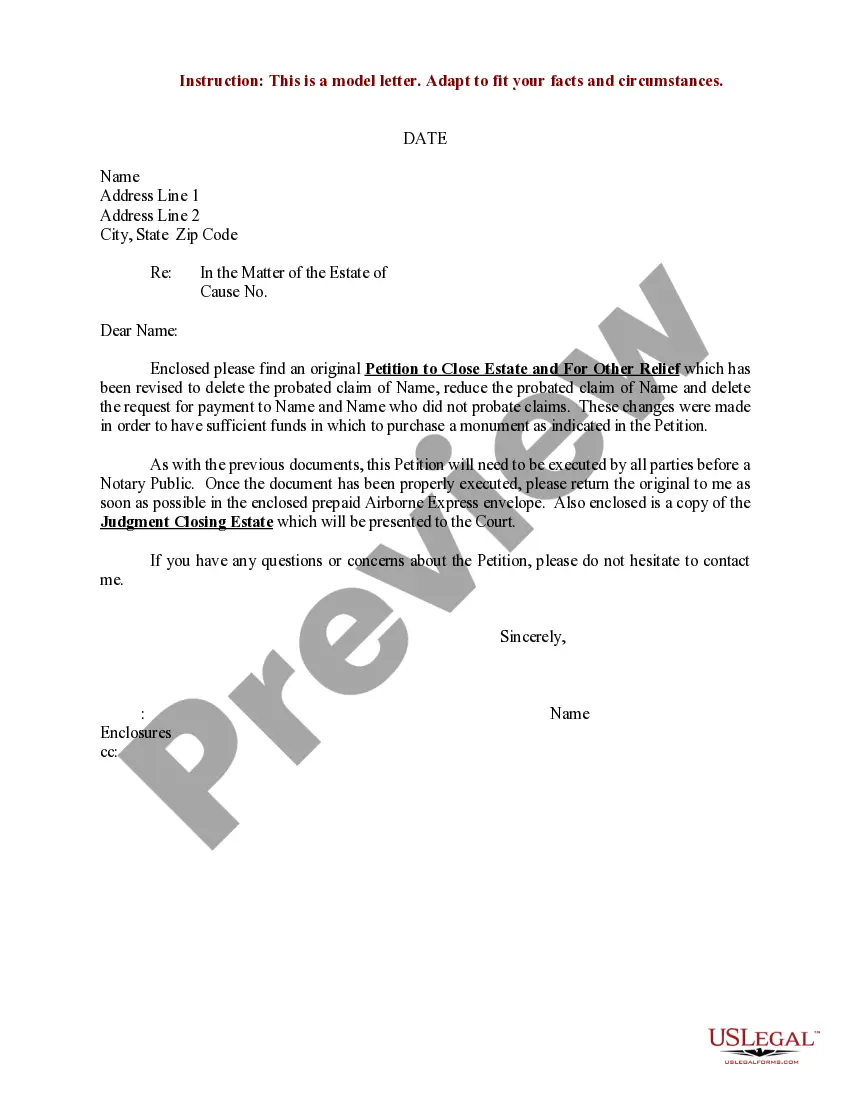
Personal Property Statement Withdrawal In Ohio
Description

Get your form ready online
Our built-in tools help you complete, sign, share, and store your documents in one place.
Make edits, fill in missing information, and update formatting in US Legal Forms—just like you would in MS Word.
Download a copy, print it, send it by email, or mail it via USPS—whatever works best for your next step.
Sign and collect signatures with our SignNow integration. Send to multiple recipients, set reminders, and more. Go Premium to unlock E-Sign.
If this form requires notarization, complete it online through a secure video call—no need to meet a notary in person or wait for an appointment.
We protect your documents and personal data by following strict security and privacy standards.

Make edits, fill in missing information, and update formatting in US Legal Forms—just like you would in MS Word.

Download a copy, print it, send it by email, or mail it via USPS—whatever works best for your next step.

Sign and collect signatures with our SignNow integration. Send to multiple recipients, set reminders, and more. Go Premium to unlock E-Sign.

If this form requires notarization, complete it online through a secure video call—no need to meet a notary in person or wait for an appointment.

We protect your documents and personal data by following strict security and privacy standards.
Looking for another form?


Form popularity
FAQ
While there is no state in the U.S. that doesn't have property taxes on real estate, some have much lower property tax rates than others. Here's how property taxes are calculated. The effective property tax rate is used to determine the places with the lowest and highest property taxes in the nation.
Just like bankruptcy is used to stop mortgage foreclosures, and give you up to 5 years to catch up missed payments, chapter 13 bankruptcy can also be used the same way to stop a tax foreclosure in Ohio. At any time prior to the actual sheriff's sale, you can file a chapter 13 bankruptcy to stop the sale.
You can't deduct capital losses on the sale of personal use property. A personal use asset that is sold at a loss generally isn't reported on your tax return unless it was reported to you on a 1099-K and you can't get a corrected version from the issuer of the form.
Who is eligible for the Homestead Exemption program? Those eligible must be 65 years of age or older or be permanently or totally disabled, meet annual state set income requirements, and own the home where they live as of January 1st or the year in which they apply.
The tangible personal property tax was replaced with the Commercial Activity Tax (CAT). The CAT is an annual tax imposed on the privilege of doing business in Ohio, measured by gross receipts from business activities in Ohio.
Tangible Personal Property Tax Phase Out The tangible personal property tax was replaced with the Commercial Activity Tax (CAT). The CAT is an annual tax imposed on the privilege of doing business in Ohio, measured by gross receipts from business activities in Ohio.
Who Has To File a Return? All estates not excluded above, residing in Ohio or earning or receiving income in Ohio, must file an Ohio Fiduciary Income Tax Return (Ohio form IT 1041) for the taxable year.
The employee should check each box in Section III that applies to them. Categories of workers that are exempt from Ohio withholding taxes include agricultural workers, domestic service workers, providers of low-income services, foreign government services, underage paper deliverers, and non-trade services.
(A) "Personal property" includes every tangible thing that is the subject of ownership, whether animate or inanimate, including a business fixture, and that does not constitute real property as defined in section 5701.02 of the Revised Code.
Ing to Ohio Instructions for Form IT 1040, “Every Ohio resident and part year resident is subject to the Ohio Income tax.” Every full-year resident, part year resident and full year nonresident must file an Ohio tax return if they have income from Ohio sources.