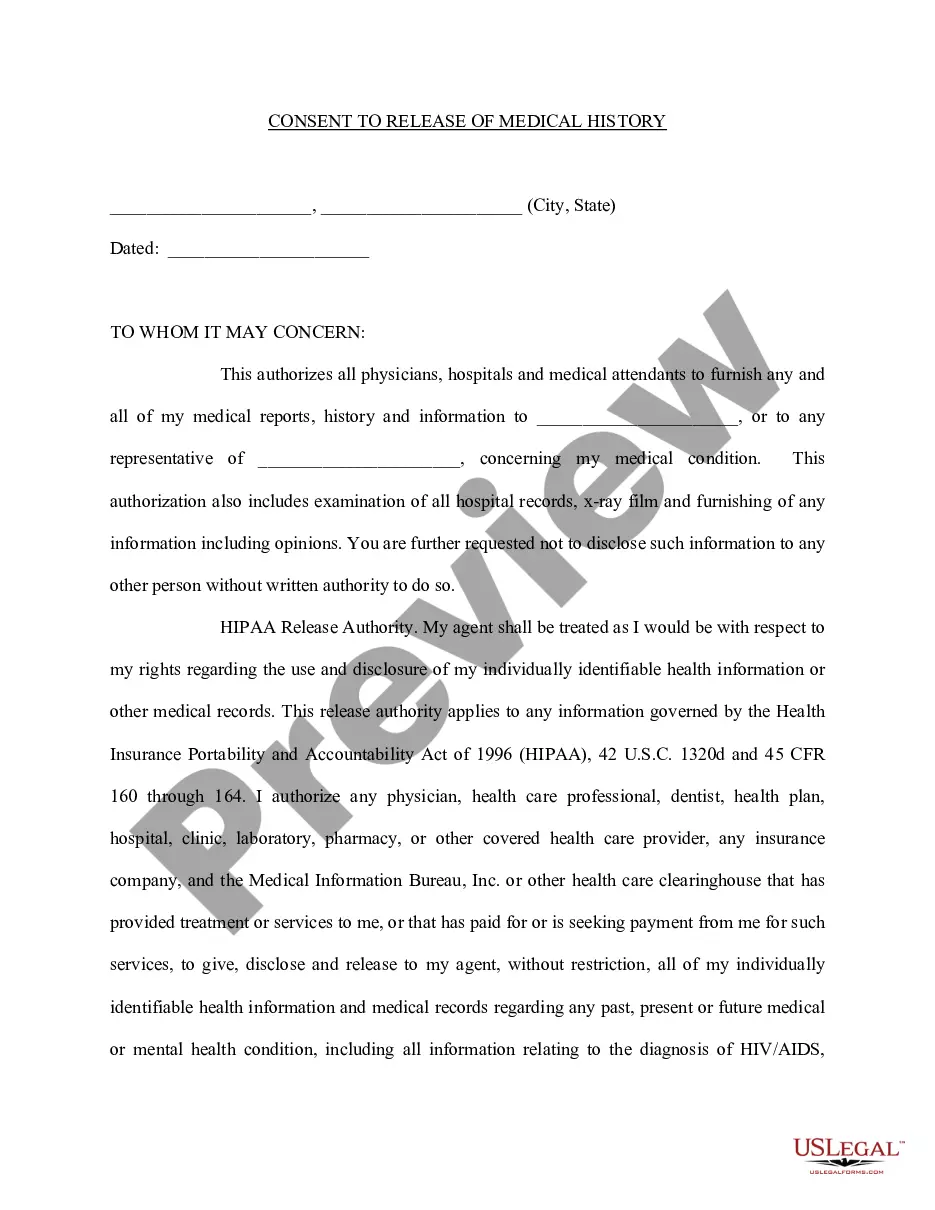
Retirement Letter Vs Resignation Letter In Middlesex
Description
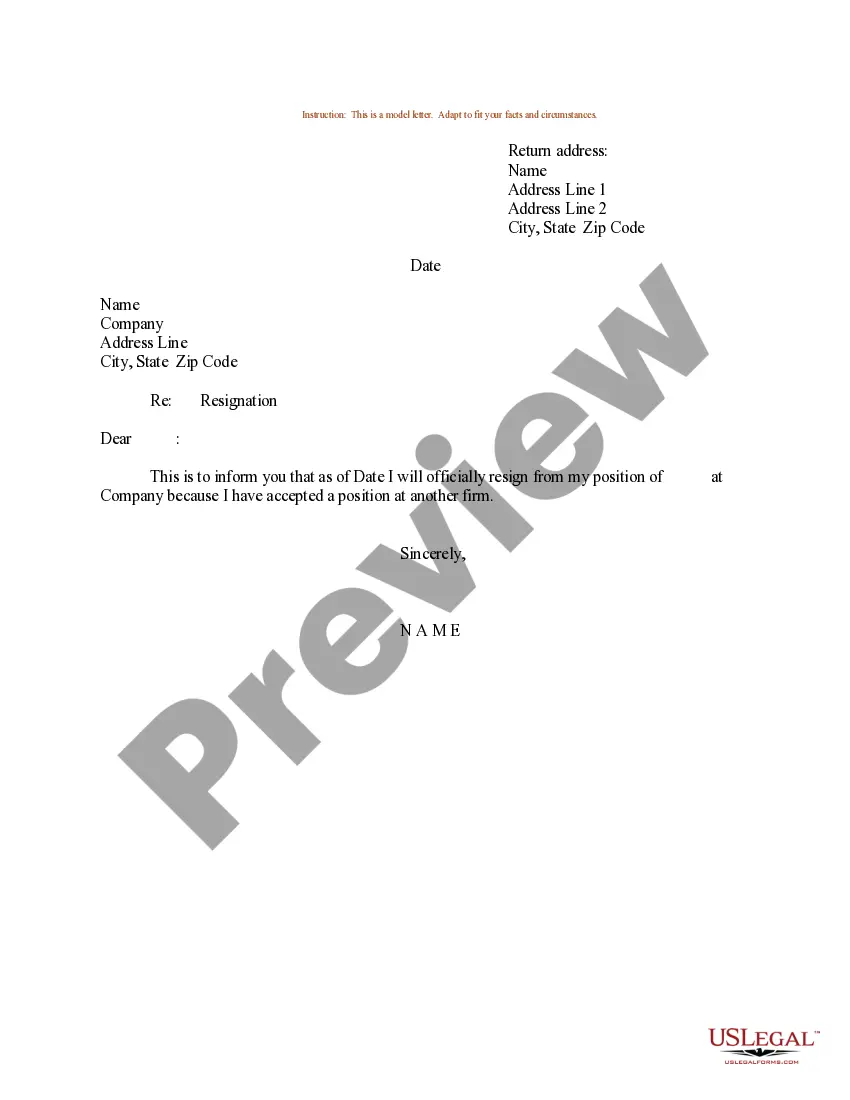
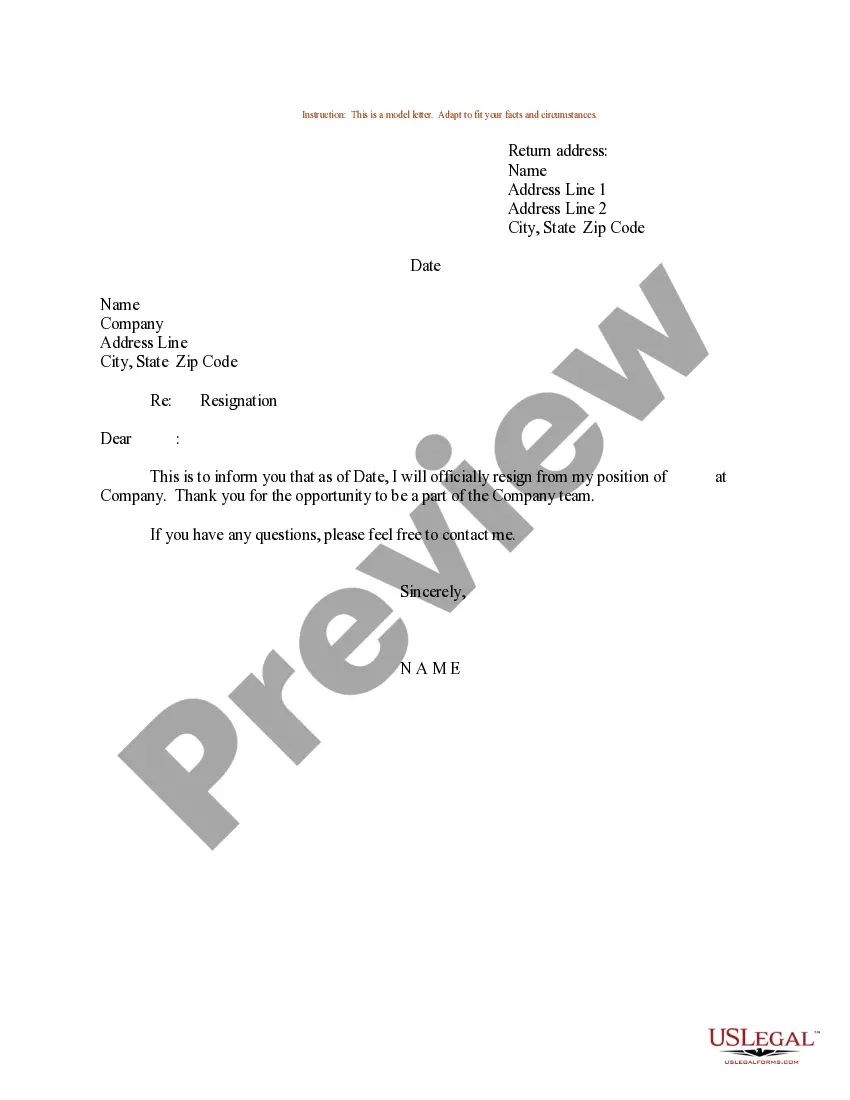
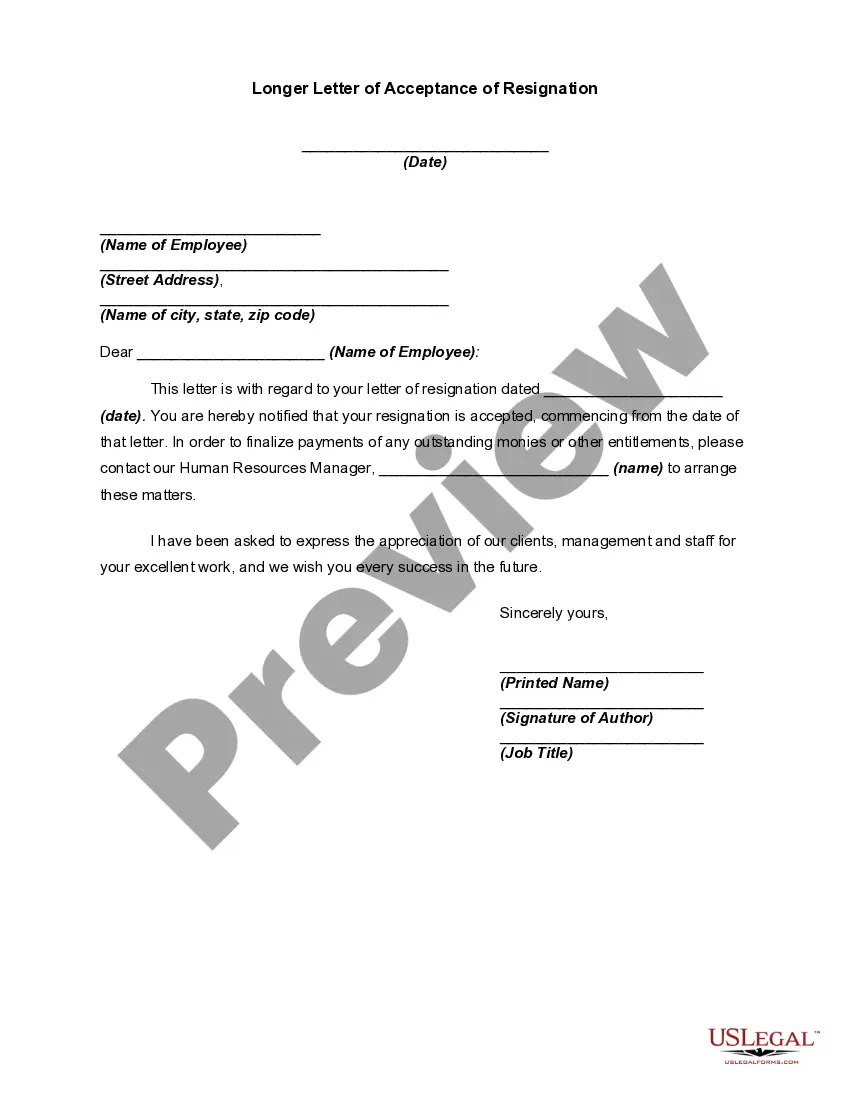

Get your form ready online
Our built-in tools help you complete, sign, share, and store your documents in one place.
Make edits, fill in missing information, and update formatting in US Legal Forms—just like you would in MS Word.
Download a copy, print it, send it by email, or mail it via USPS—whatever works best for your next step.
Sign and collect signatures with our SignNow integration. Send to multiple recipients, set reminders, and more. Go Premium to unlock E-Sign.
If this form requires notarization, complete it online through a secure video call—no need to meet a notary in person or wait for an appointment.
We protect your documents and personal data by following strict security and privacy standards.

Make edits, fill in missing information, and update formatting in US Legal Forms—just like you would in MS Word.

Download a copy, print it, send it by email, or mail it via USPS—whatever works best for your next step.

Sign and collect signatures with our SignNow integration. Send to multiple recipients, set reminders, and more. Go Premium to unlock E-Sign.

If this form requires notarization, complete it online through a secure video call—no need to meet a notary in person or wait for an appointment.

We protect your documents and personal data by following strict security and privacy standards.
Looking for another form?








Form popularity
FAQ
Your completed retirement application with your signature is equivalent to a letter of resignation. If you're ever eligible for a federal retirement benefit, you should not resign from your position. Instead, you should plan on submitting a retirement application at a later date.
It's essential to give your employer enough notice to maintain goodwill and aid in the transition period. If you know you're retiring at the end of this year, consider drafting your letter at least a month or so in advance. Even longer doesn't hurt.
Follow these steps to resign gracefully and leave your job in a positive manner: Notify your supervisor. Tell your supervisor you intend to leave your job before notifying your coworkers and clients. Submit your resignation letter. Work through your notice period. Return any company property. Take personal items home.
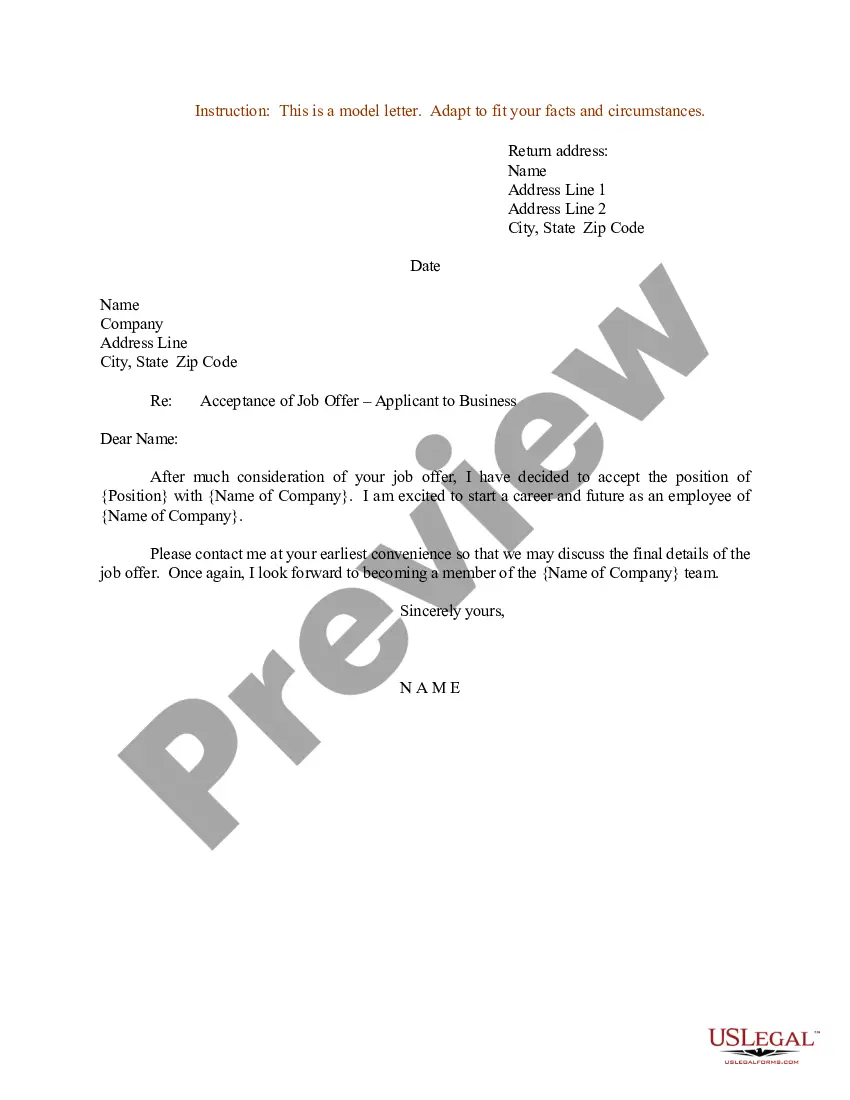
Among the many other things on your to do list for retirement, you must notify your employer. Often, they require you to submit an official retirement letter of resignation. Even if writing a retirement resignation letter isn't required, it's the considerate thing to do!
When resigning from a job, it's generally more professional to use the term ``resignation'' rather than ``quit.'' Here are the steps to follow for a proper resignation:
In addition, you need to have attained a certain age or have served for a specific duration to retire. On the other hand, to resign means you voluntarily quit your job, and as a result, you're not entitled to the same benefits as a retiree.
A notice of intent to retire on a specific date is essentially a resignation letter. The basic difference is you are also indicating you want to trigger any additional benefits your employer may offer, such as a pension.
Your decision should be based on your financial situation, career goals, health, and personal circumstances. If you're nearing retirement age and have the financial means, retirement might be the better option. If you want to explore new opportunities or have other personal reasons, resigning could be more suitable.
Members with at least twenty years of creditable service are eligible to retire at any age. A member's monthly retirement allowance is calculated using the member's age at retirement, years of creditable service, and amount of the member's high, three-year average salary.
You are eligible for retirement from the Massachusetts State Employee Retirement System (MSERS) at any age with twenty or more years of state service or at age 55 or 60 (depending on hire date) with 10 or more years of state service.