Requesting Discovery Form For Personal Injury Courts In Chicago
Description
Get your form ready online
Our built-in tools help you complete, sign, share, and store your documents in one place.
Make edits, fill in missing information, and update formatting in US Legal Forms—just like you would in MS Word.
Download a copy, print it, send it by email, or mail it via USPS—whatever works best for your next step.
Sign and collect signatures with our SignNow integration. Send to multiple recipients, set reminders, and more. Go Premium to unlock E-Sign.
If this form requires notarization, complete it online through a secure video call—no need to meet a notary in person or wait for an appointment.
We protect your documents and personal data by following strict security and privacy standards.

Make edits, fill in missing information, and update formatting in US Legal Forms—just like you would in MS Word.

Download a copy, print it, send it by email, or mail it via USPS—whatever works best for your next step.

Sign and collect signatures with our SignNow integration. Send to multiple recipients, set reminders, and more. Go Premium to unlock E-Sign.

If this form requires notarization, complete it online through a secure video call—no need to meet a notary in person or wait for an appointment.

We protect your documents and personal data by following strict security and privacy standards.
Looking for another form?






Form popularity
FAQ
Illinois law allows for some latitude in the statute of limitations on personal injury actions through what is commonly known as the "discovery rule." The discovery rule allows the statute of limitations to be extended from the time of the injury to the time of the discovery of the injury.
If the other side will not produce the discovery, then the proper mechanisms is to file a Motion to Compel with the court. In that motion, you will argue that the other said has failed to provide the documents you are seeking and that the Court should force them to do so.
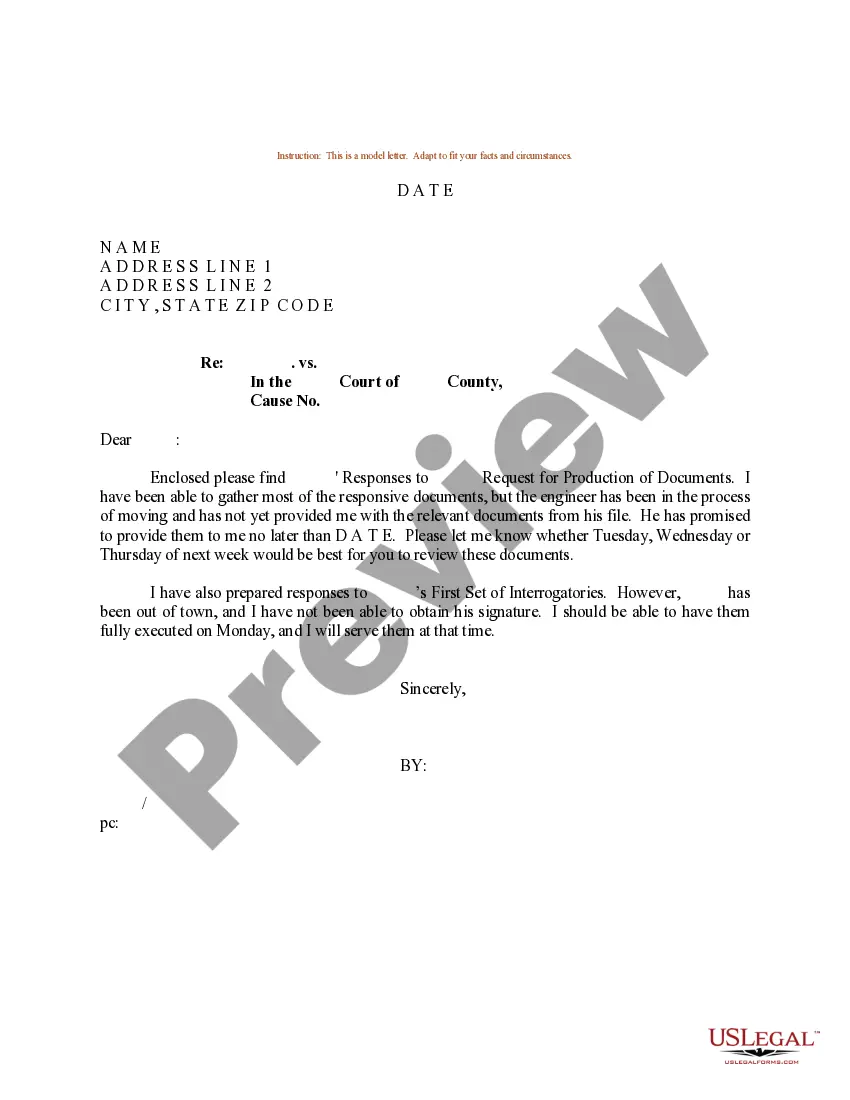
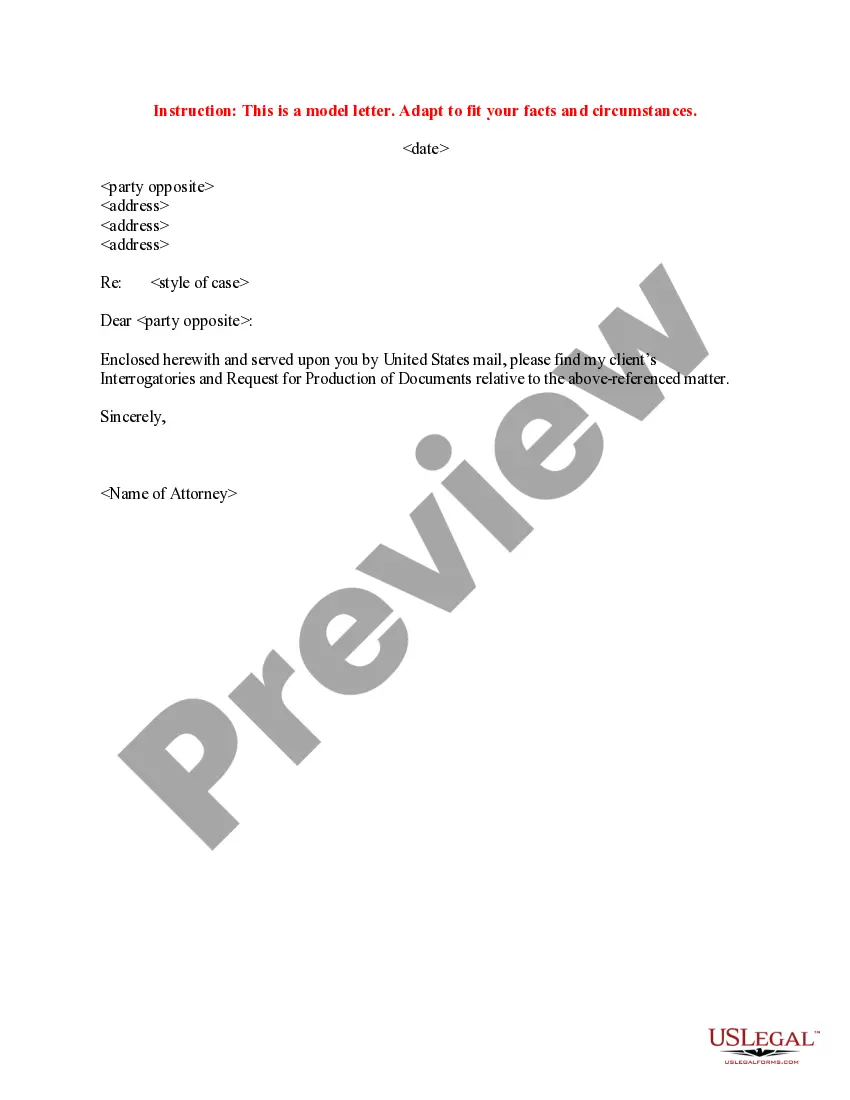
After you complete your response to any request for written discovery, you must provide your response to the other side by serving the other side. You can serve the other side by mail. This means another adult, not you, mails your response to the other side.
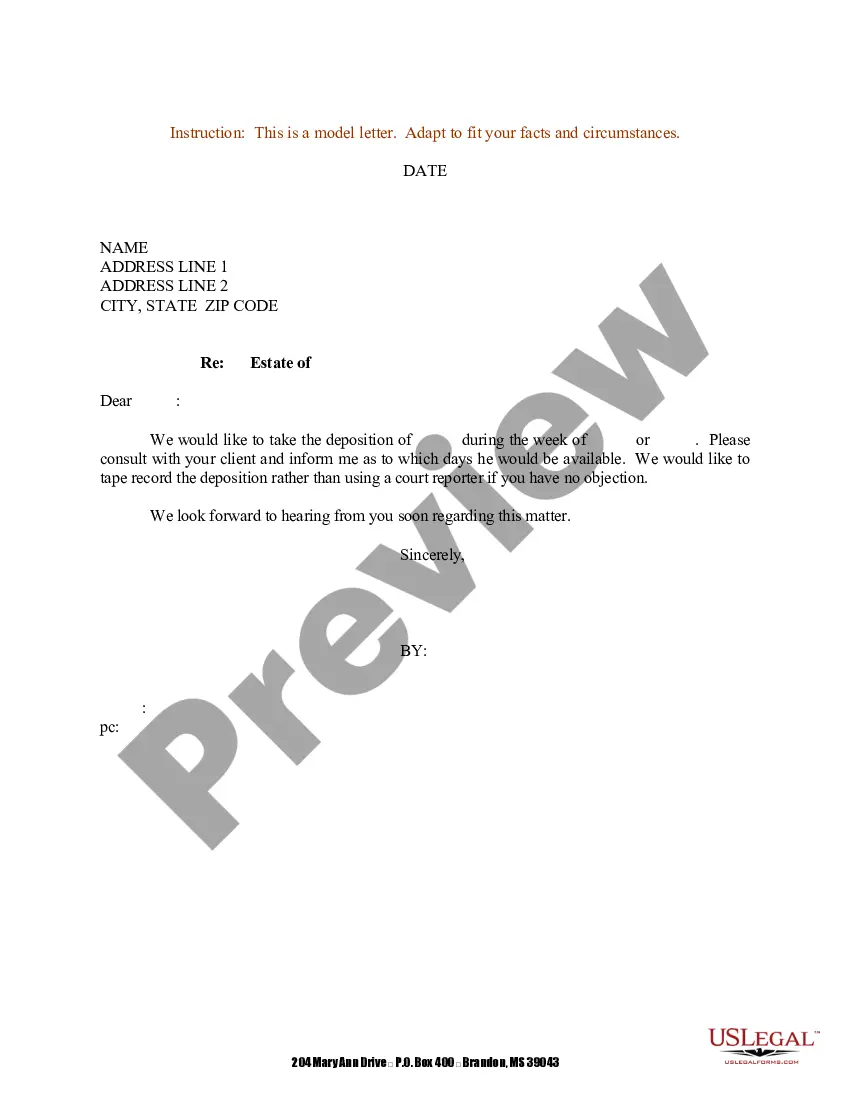
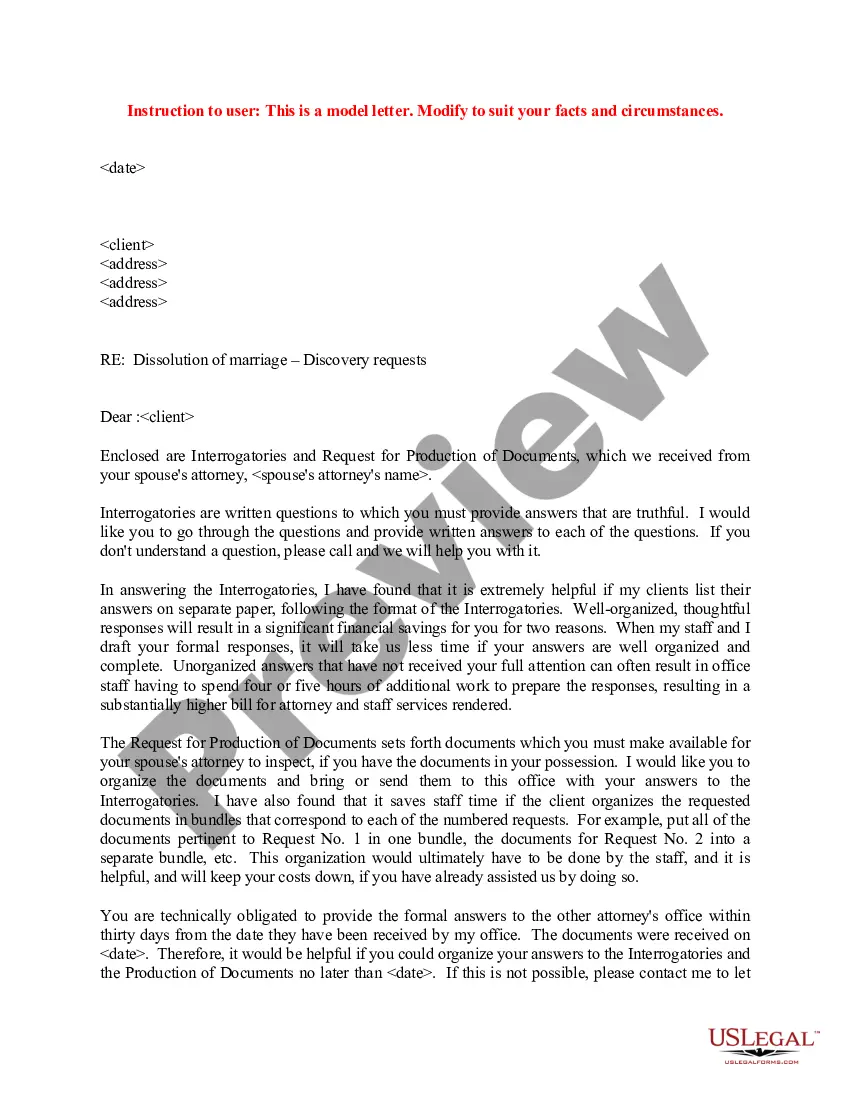
How Does Discovery Work? There are four main types of discovery requests: (1) depositions; (2) interrogatories; (3) requests for admissions; and (4) requests for the production of documents. Depositions are formal witness interviews.
How Long Do You Have to File a Personal Injury Suit in Illinois? The statute of limitations on personal injury in Illinois is 2 years. That means that victims have 2 years from the time of an incident to file a lawsuit.
Federal Rule of Civil Procedure 5(b)(2)(D) states, in relevant part, that a party may serve pleadings or discovery on an adverse party by, "delivering a copy by any other means, including electronic means, consented to in writing by the person served.
The discovery phase in personal injury cases can take months or even years. The parties to the case have a right to evidence that will help them prove their case. Discovery allows both sides to interview potential witnesses and review potential evidence that may be helpful or harmful to their case.
Unless your written response includes only objections without any factual assertions, it must be verified. This means it must include a statement under the penalty of perjury that your response is true and correct. (CCP § 2031.250). Failure to include this verification has the same effect as not responding at all.
The discovery phase in personal injury cases can take months or even years. The parties to the case have a right to evidence that will help them prove their case. Discovery allows both sides to interview potential witnesses and review potential evidence that may be helpful or harmful to their case.
The first phase of the discovery process is the written discovery phase. During this phase, your attorney may send and receive requests to produce documents, requests for admissions of facts, and written interrogatories.

