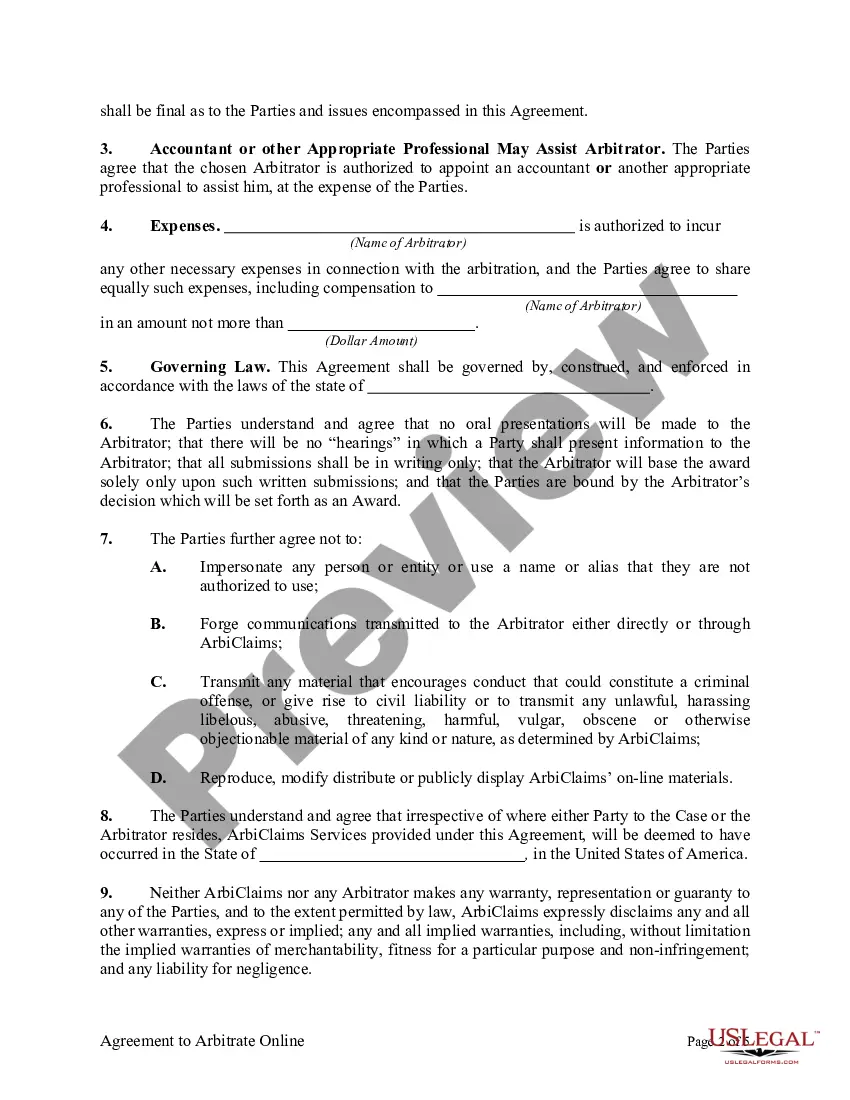
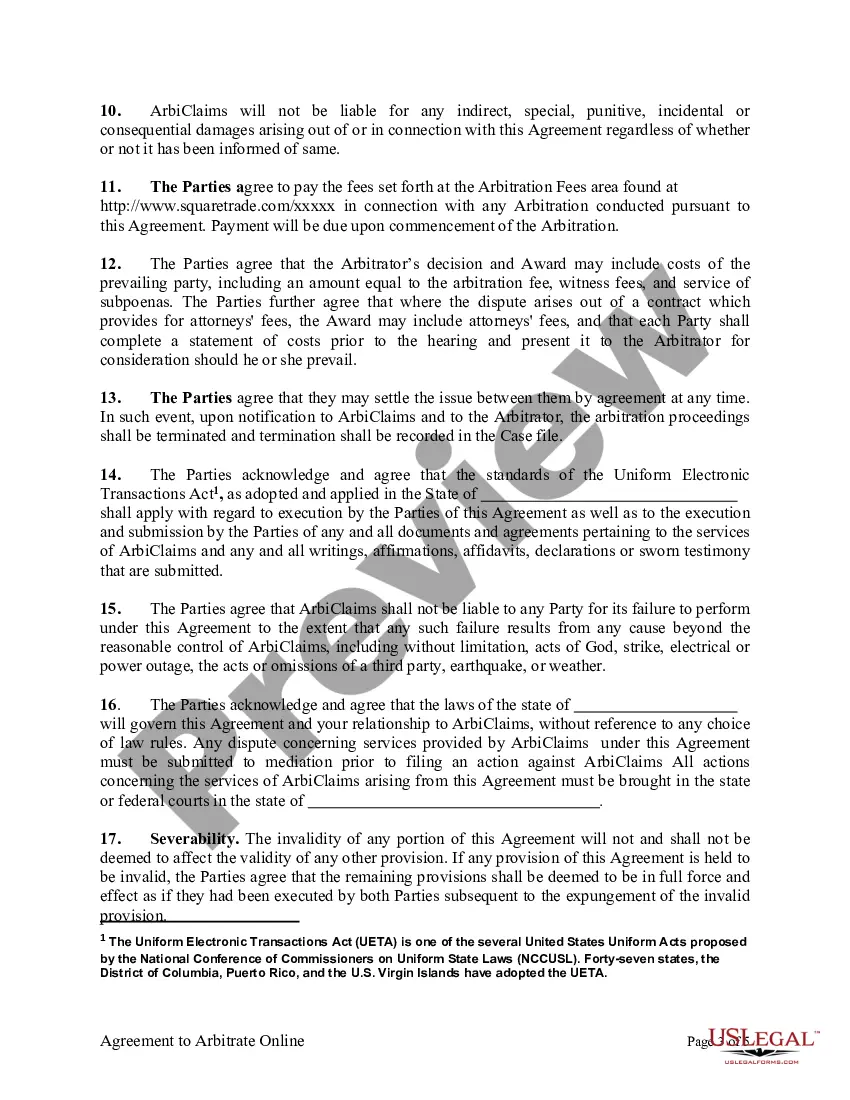
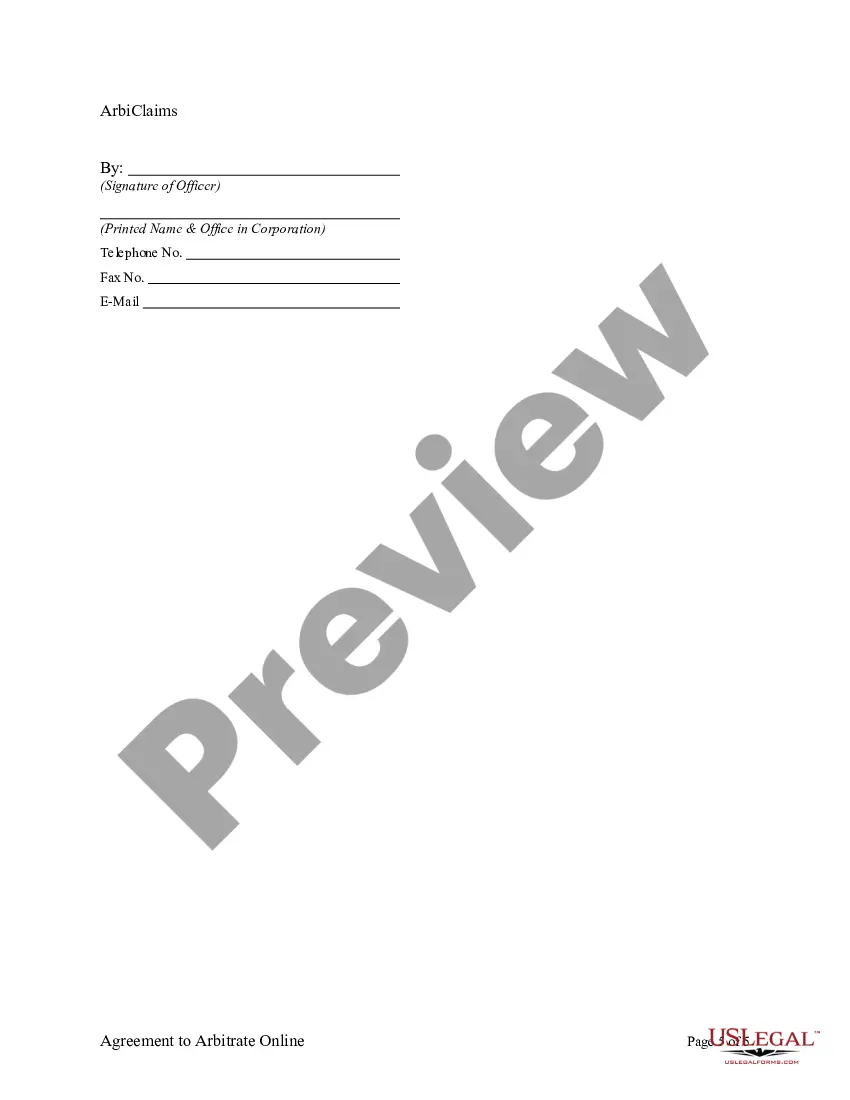
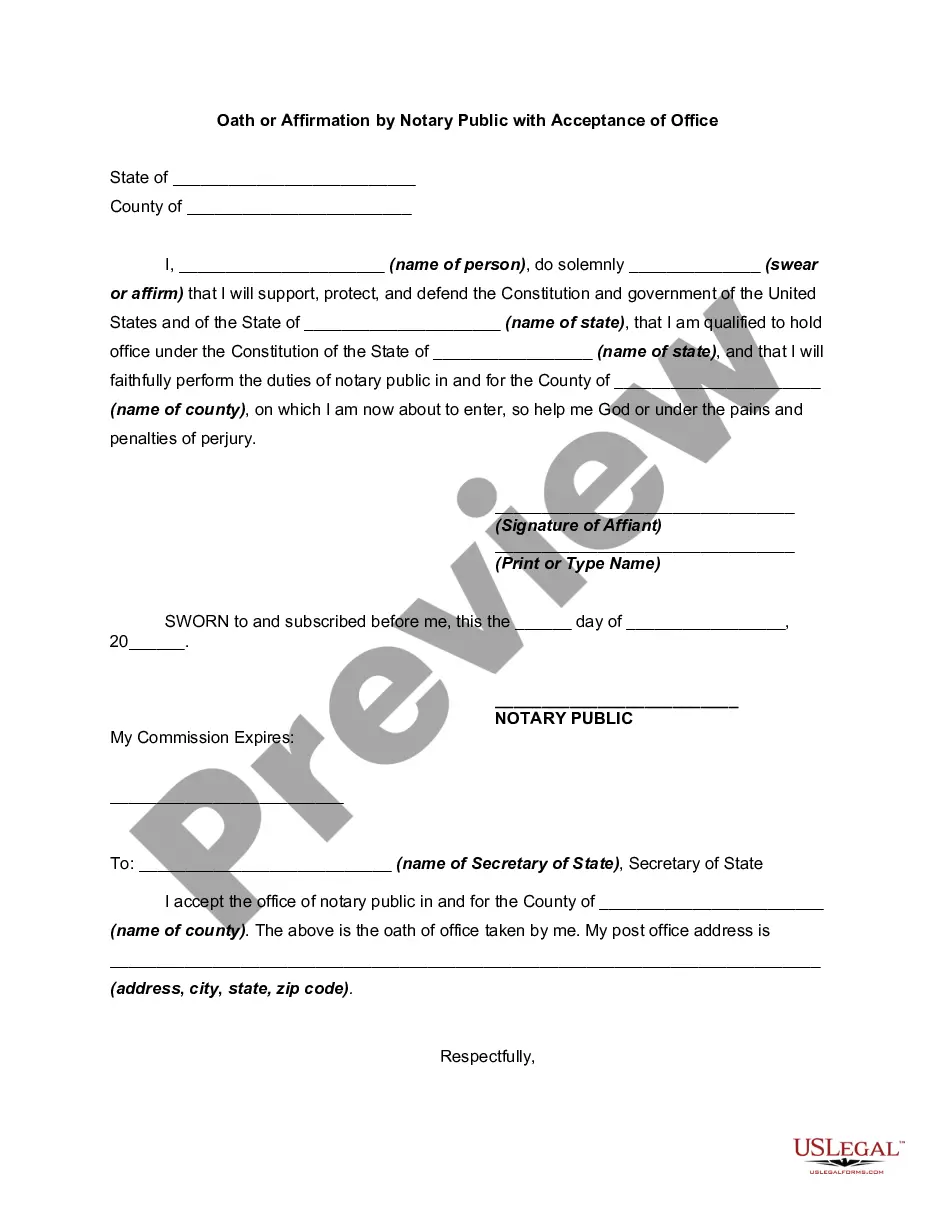
Agreement Arbitration Sample For Divorce In Utah
Description





Get your form ready online
Our built-in tools help you complete, sign, share, and store your documents in one place.
Make edits, fill in missing information, and update formatting in US Legal Forms—just like you would in MS Word.
Download a copy, print it, send it by email, or mail it via USPS—whatever works best for your next step.
Sign and collect signatures with our SignNow integration. Send to multiple recipients, set reminders, and more. Go Premium to unlock E-Sign.
If this form requires notarization, complete it online through a secure video call—no need to meet a notary in person or wait for an appointment.
We protect your documents and personal data by following strict security and privacy standards.

Make edits, fill in missing information, and update formatting in US Legal Forms—just like you would in MS Word.

Download a copy, print it, send it by email, or mail it via USPS—whatever works best for your next step.

Sign and collect signatures with our SignNow integration. Send to multiple recipients, set reminders, and more. Go Premium to unlock E-Sign.

If this form requires notarization, complete it online through a secure video call—no need to meet a notary in person or wait for an appointment.

We protect your documents and personal data by following strict security and privacy standards.
Looking for another form?







Form popularity
FAQ
With that said, the general rule, even for short-term marriages, is 50/50 division. However, in some very short-term marriages, the courts may put spouses back into the financial position they were in before the marriage – that is, each spouse gets the asset that belonged to him/her at the beginning of the marriage.
Property is divided by the Utah courts during a divorce. Divorce laws in Utah state that marital property should be divided equitably. This means that a Utah court could decide that it is fair to split the marital property 50-50, or they may decide that one party deserves more than 50% of the property.
Either party can ask the court to bifurcate the case by filing a Motion to Grant Divorce and Decide Other Issues Later. Utah Rule of Civil Procedure 42.
Utah law does not require a marriage be “long term” before a court can award alimony. Rather length of the marriage is but one of many factors the court considers in deciding whether to award alimony (and if so how long and the amount).
A "stipulation" is a written agreement that shows the parties agree about everything requested in the Petition to Modify Divorce Decree. The parties can agree on everything in the Petition to Modify Divorce decree before it is filed. In that case, they can file a stipulated petition.
For couples going through separation and family breakdown, arbitration can provide a useful way forward. It is certainly worth considering if you would like to avoid court proceedings. The process can be used to resolve financial and child-related issues.
The phrase divorce stipulation (or divorce stipulation agreement) is another name for a divorce settlement agreement. This is a document where divorcing spouses explain everything they agree to. A judge will usually approve your divorce stipulation so that you can avoid trial.
