Agreement To Arbitrate In Phoenix
Description

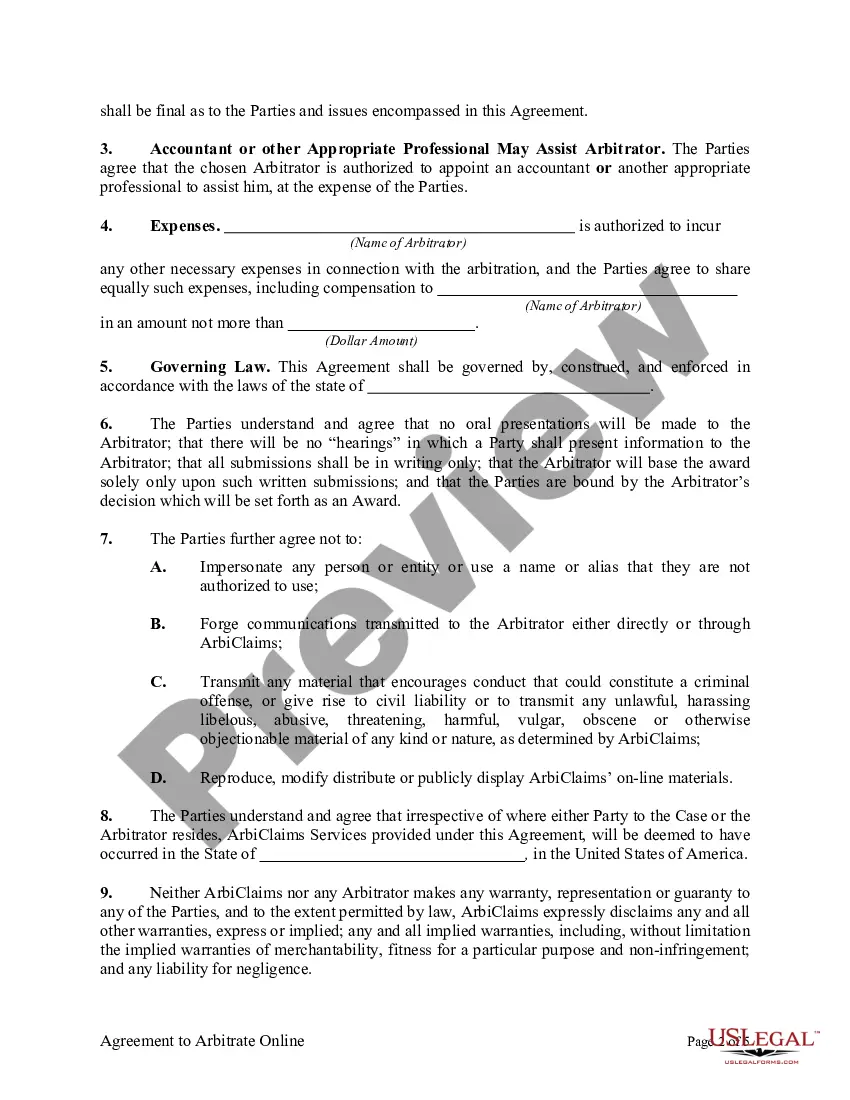
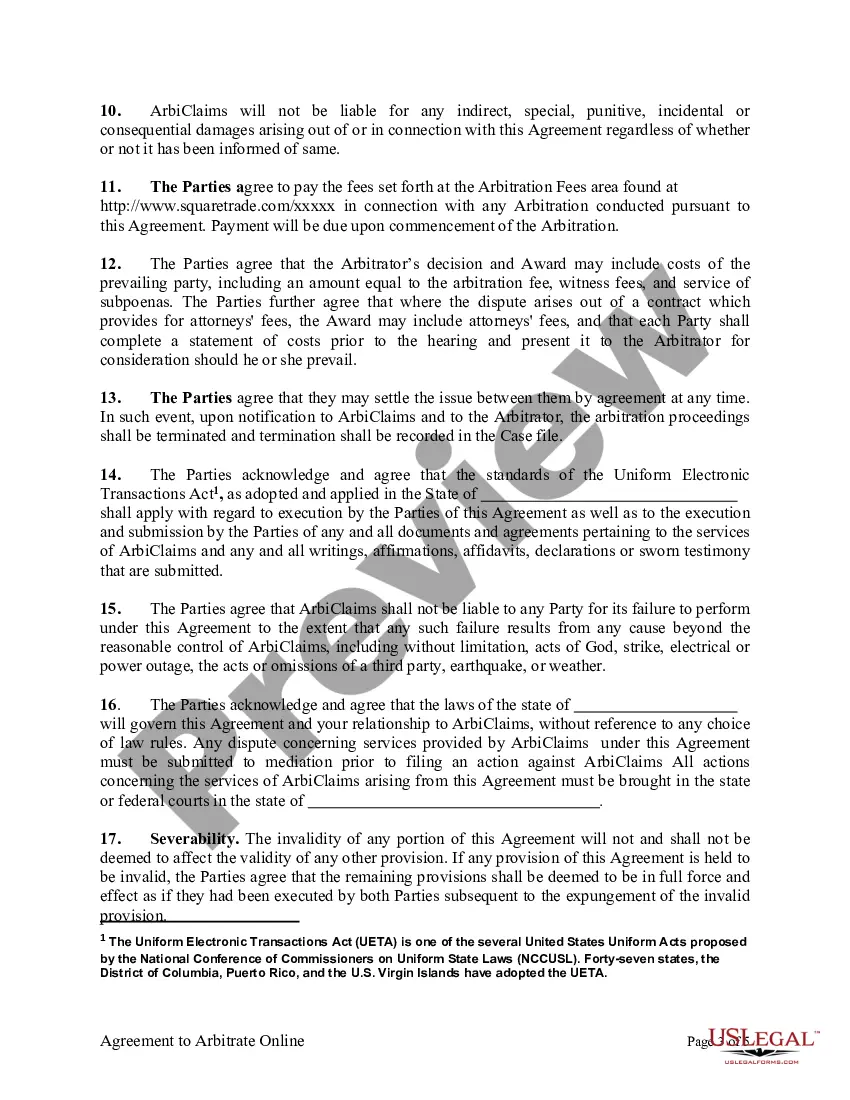

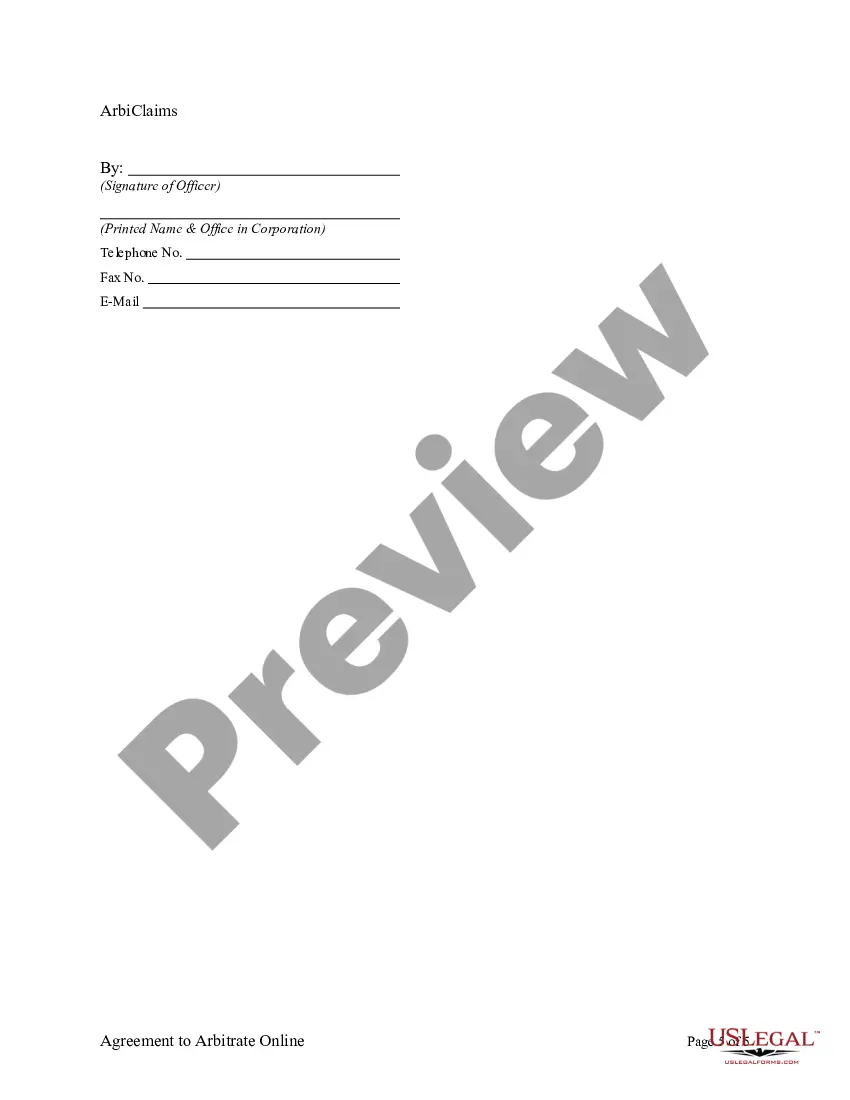



Get your form ready online
Our built-in tools help you complete, sign, share, and store your documents in one place.
Make edits, fill in missing information, and update formatting in US Legal Forms—just like you would in MS Word.
Download a copy, print it, send it by email, or mail it via USPS—whatever works best for your next step.
Sign and collect signatures with our SignNow integration. Send to multiple recipients, set reminders, and more. Go Premium to unlock E-Sign.
If this form requires notarization, complete it online through a secure video call—no need to meet a notary in person or wait for an appointment.
We protect your documents and personal data by following strict security and privacy standards.

Make edits, fill in missing information, and update formatting in US Legal Forms—just like you would in MS Word.

Download a copy, print it, send it by email, or mail it via USPS—whatever works best for your next step.

Sign and collect signatures with our SignNow integration. Send to multiple recipients, set reminders, and more. Go Premium to unlock E-Sign.

If this form requires notarization, complete it online through a secure video call—no need to meet a notary in person or wait for an appointment.

We protect your documents and personal data by following strict security and privacy standards.
Looking for another form?
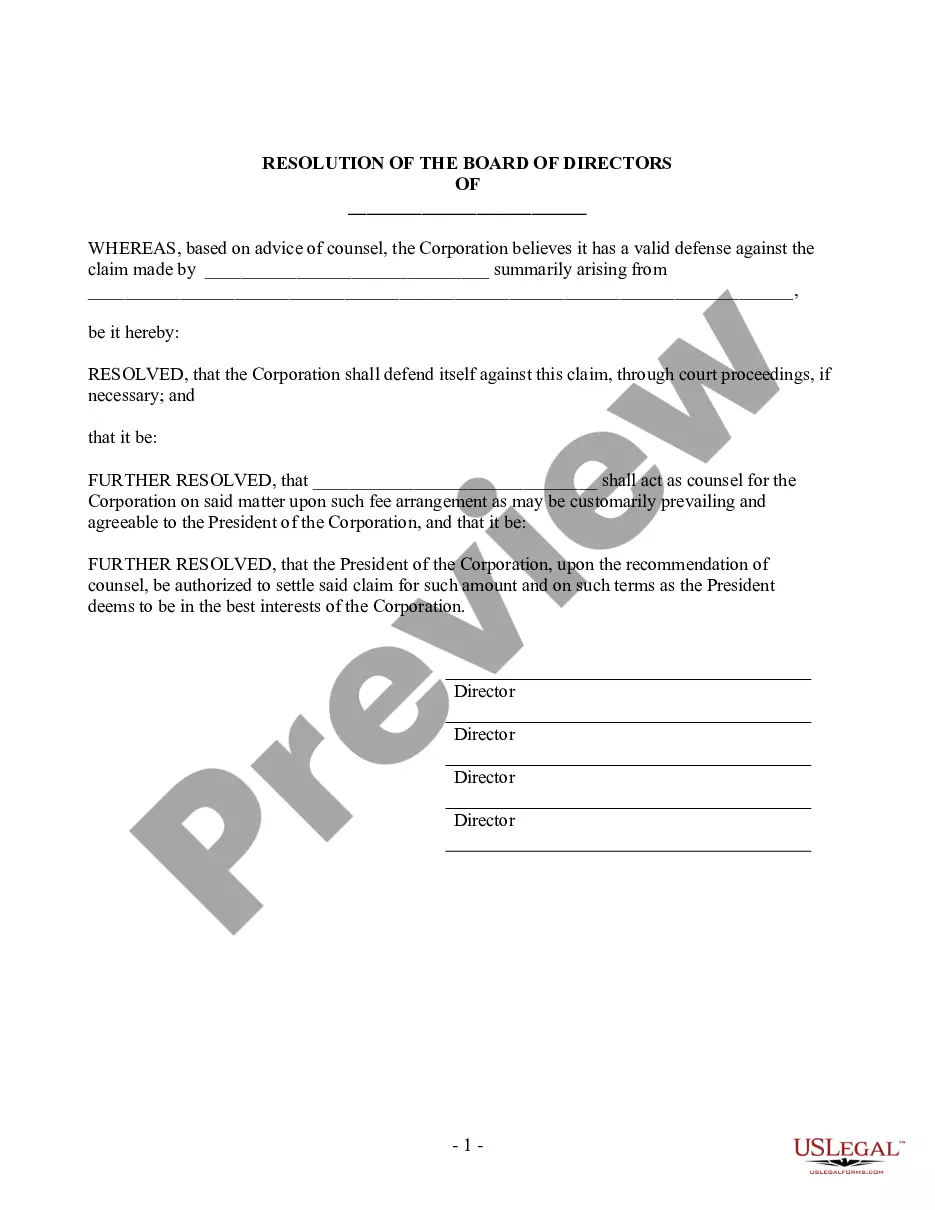



Form popularity
FAQ
If possible, avoid the use of technical jargon or "shop talk." Remember that the arbitrator may not know the details of your work or the Postal Service. However, if you must use "shop talk" to clarify a point, be sure to briefly define what you mean.
Arizona generally recognizes arbitration agreements as enforceable and irrevocable contracts, absent legal or equitable reasons to justify their unenforceability, where the following elements are present: (1) a mutuality of obligation; (2) formal requirements such as writing and signature; (3) consideration by both ...
Arbitration might be the right choice for some cases. Limited discovery rights and costs might be useful when less is at stake. Arbitration might feel less adversarial, which could be an advantage where ongoing relationships are hoped to be preserved. Arbitration lends some confidentiality.
Amount in Controversy. All civil cases filed with the Clerk of the Court in which the Court finds or the parties agree that the amount in controversy does not exceed $50,000 shall be subject to the provisions of A.R.S. § 12-133 and Rules 72 to 77 of the Arizona Rules of Civil Procedure governing compulsory arbitration.
Arbitration does not require the use of court rules or procedures and is viewed as a simplified private court proceeding. Each side will present their case to the arbitrator who will then decide the issue. Once the matter is decided the case is over and in most cases the court will enforce the arbitrators decision.
The final decision on whether or not to initial an arbitration provision depends upon your view of the advantages and disadvantages of arbitration. There is no “right” answer. You need to consider what will be important to you if a dispute arises.
Opting out of the arbitration agreement isn't damaging to you. You can always do arbitration if you would prefer that, although if you'd like to join class actions or sue the judge will throw out your case if you are still in this agreement.
If one party feels the decision is erroneous, there is very limited opportunity to correct it. There are many cases in which arbitration can become more expensive than court proceedings. Quality arbitrators can demand substantial fees that would not apply in court.
If neither party appeals the decision, it will be binding, like an order by a judge. However, a party unhappy with the arbitrator's decision can request a new trial before a judge.
Arbitration might be the right choice for some cases. Limited discovery rights and costs might be useful when less is at stake. Arbitration might feel less adversarial, which could be an advantage where ongoing relationships are hoped to be preserved. Arbitration lends some confidentiality.
