Agreement To Arbitrate Meaning In Ohio
Description





Get your form ready online
Our built-in tools help you complete, sign, share, and store your documents in one place.
Make edits, fill in missing information, and update formatting in US Legal Forms—just like you would in MS Word.
Download a copy, print it, send it by email, or mail it via USPS—whatever works best for your next step.
Sign and collect signatures with our SignNow integration. Send to multiple recipients, set reminders, and more. Go Premium to unlock E-Sign.
If this form requires notarization, complete it online through a secure video call—no need to meet a notary in person or wait for an appointment.
We protect your documents and personal data by following strict security and privacy standards.

Make edits, fill in missing information, and update formatting in US Legal Forms—just like you would in MS Word.

Download a copy, print it, send it by email, or mail it via USPS—whatever works best for your next step.

Sign and collect signatures with our SignNow integration. Send to multiple recipients, set reminders, and more. Go Premium to unlock E-Sign.

If this form requires notarization, complete it online through a secure video call—no need to meet a notary in person or wait for an appointment.

We protect your documents and personal data by following strict security and privacy standards.
Looking for another form?




Form popularity
FAQ
Opting out of the arbitration agreement isn't damaging to you. You can always do arbitration if you would prefer that, although if you'd like to join class actions or sue the judge will throw out your case if you are still in this agreement.
If a court finds any evidence of substantive unconscionability, it will deem the agreement unenforceable. It does not take more than a low level of substantive unconscionability for the agreement to be thrown out.
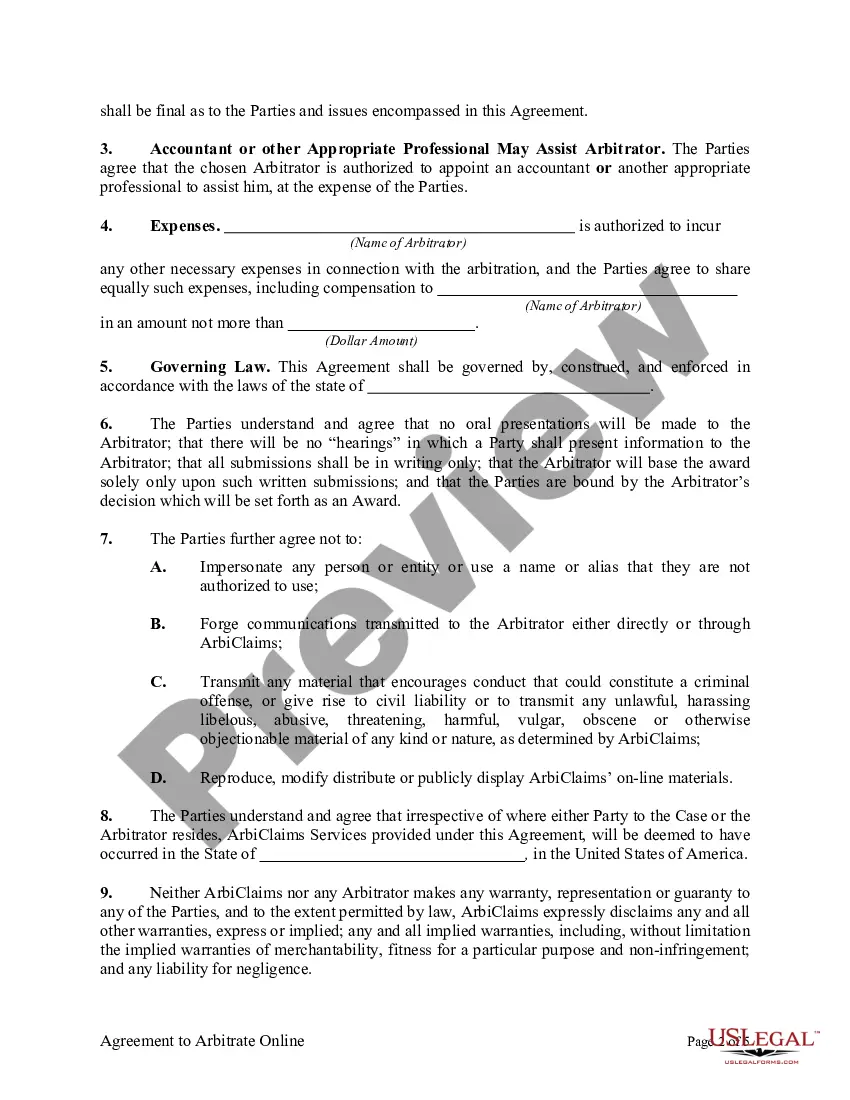
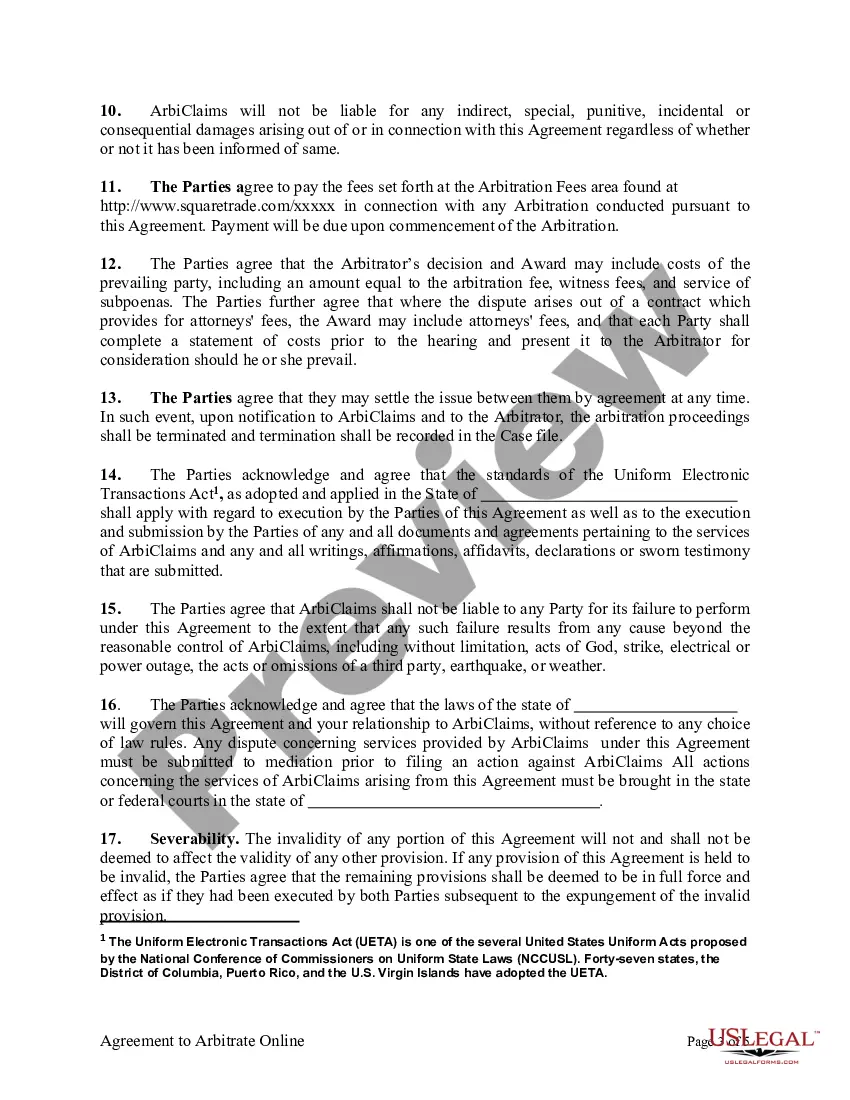
Arbitration agreements require that persons who signed them resolve any disputes by binding arbitration, rather than in court before a judge and/or jury. What is binding arbitration? Binding arbitration involves the submission of a dispute to a neutral party who hears the case and makes a decision.
Arbitration agreements are a way that employers try to avoid being sued by employees for employment law violations, such as wage and hour violations or sexual harassment.
Even if you don't currently have a dispute with the company, it is a good idea to opt out of the forced arbitration clause to preserve your options. You can always agree later to use an arbitrator to resolve any dispute. Moreover, if you have opted out, you will have more negotiating power if there is a problem.
You can always agree to arbitration later if your lawyer advises you it's a good choice in the particular situation you find yourself in. There's no benefit to you in doing so months or years ahead of time.
Ohio has a public policy favoring the enforcement of arbitration provisions in contracts and ORC 2711.01(A) provides that such provisions will be enforced unless grounds exist in law or equity for revocation of the contract.
Arbitration might be the right choice for some cases. Limited discovery rights and costs might be useful when less is at stake. Arbitration might feel less adversarial, which could be an advantage where ongoing relationships are hoped to be preserved. Arbitration lends some confidentiality.
If the arbitration is mandatory and binding, the parties waive their rights to use the court system and have a judge or jury decide the case. If the arbitrator's award is unfair or illogical, a consumer may well be stuck with it without a chance for recourse.
Should you sign an arbitration agreement? If you agree to engage in a possible future arbitration voluntarily, mutually determine the ground rules of arbitration and agree to choose an impartial arbitrator together, you are likely to find arbitration to be not only inexpensive and fast but also fair.
