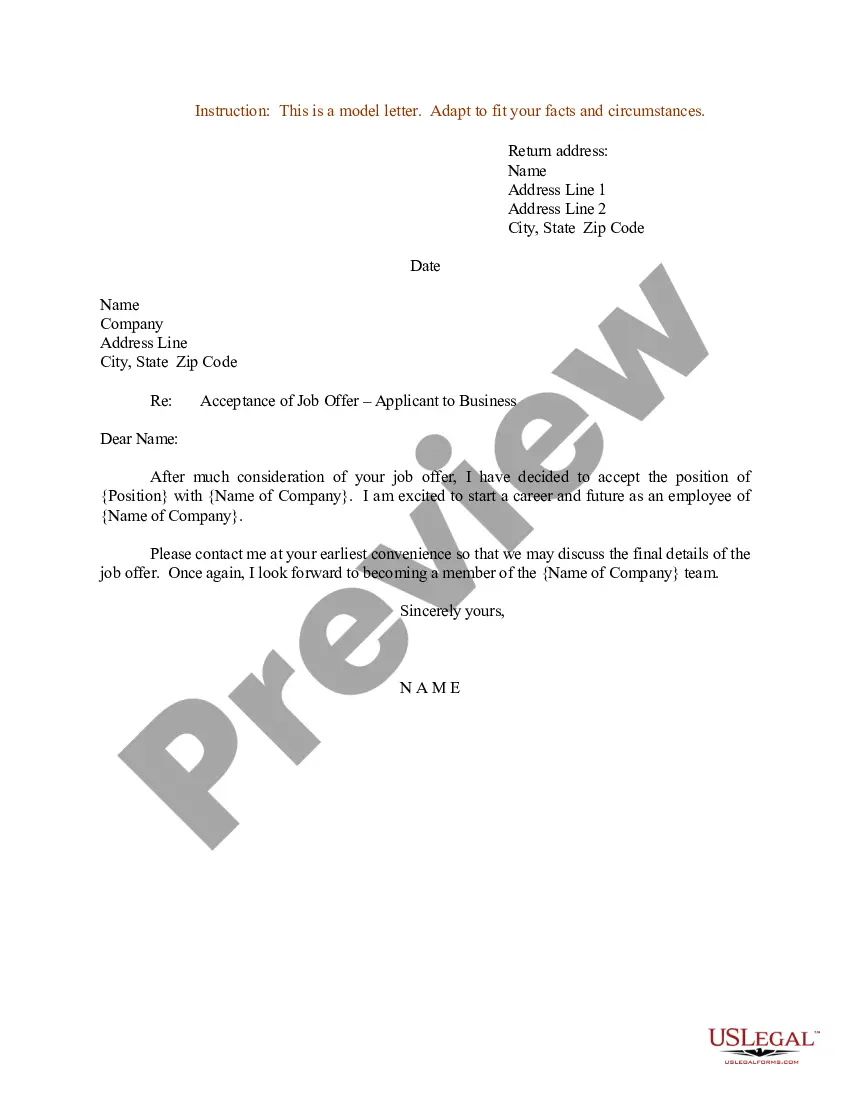
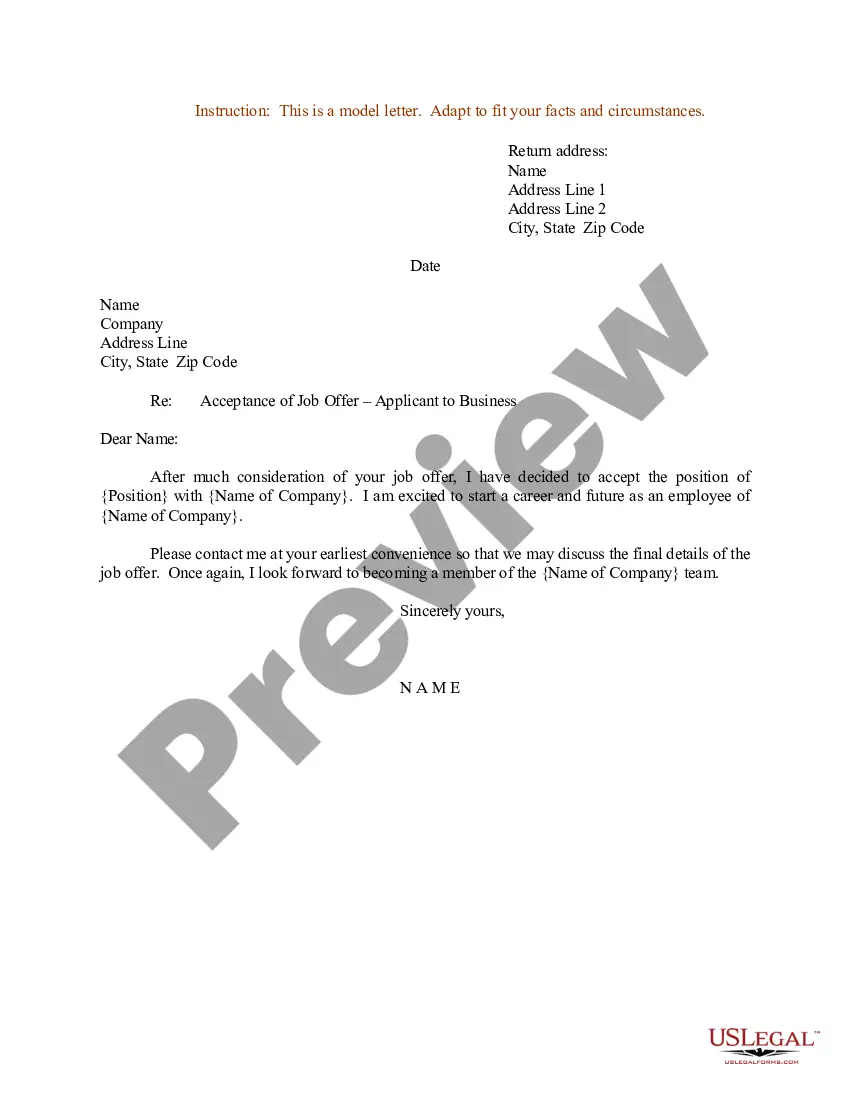
Letter Acceptance Offer Contract With Realtor In Chicago
Description

Get your form ready online
Our built-in tools help you complete, sign, share, and store your documents in one place.
Make edits, fill in missing information, and update formatting in US Legal Forms—just like you would in MS Word.
Download a copy, print it, send it by email, or mail it via USPS—whatever works best for your next step.
Sign and collect signatures with our SignNow integration. Send to multiple recipients, set reminders, and more. Go Premium to unlock E-Sign.
If this form requires notarization, complete it online through a secure video call—no need to meet a notary in person or wait for an appointment.
We protect your documents and personal data by following strict security and privacy standards.

Make edits, fill in missing information, and update formatting in US Legal Forms—just like you would in MS Word.

Download a copy, print it, send it by email, or mail it via USPS—whatever works best for your next step.

Sign and collect signatures with our SignNow integration. Send to multiple recipients, set reminders, and more. Go Premium to unlock E-Sign.

If this form requires notarization, complete it online through a secure video call—no need to meet a notary in person or wait for an appointment.

We protect your documents and personal data by following strict security and privacy standards.
Looking for another form?







Form popularity
FAQ
How to draft a contract between two parties: A step-by-step checklist Know your parties. Agree on the terms. Set clear boundaries. Spell out the consequences. Specify how you will resolve disputes. Cover confidentiality. Check the legality of the contract. Open it up to negotiation.
Real estate offer letter templates vary, but make sure to include the following elements: Introduce yourself professionally. Provide details of the offer. Explain the contingencies. Flex the financials. Close the deal. Put a signature on it.
Required Elements of a Real Estate Contract To establish legality, a real estate contract must include a legal purpose, legally competent parties, agreement by offer and acceptance, consideration, and consent.
Writing your own contracts is perfectly possible, and legal. But it's also an incredibly bad idea. There's two reasons for this: Property law is complicated. Because it's such a fundamental part of legislation, it's often lots and lots of different laws layered on top of each other.
Always thank the seller for their time and thoroughly proofread what you've written. Decide How You Want The Letter To Look. Introduce Yourself. Share Your Love For The Home. Describe How You'd Live In The House. Explain Your Offer. Express Gratitude. Read Over Your Letter. Deliver The Letter To The Seller.
If it`s slightly low I`d probably say something along the lines of ``Thanks for the offer, but looking to get a bit more out of the (item)''. You could perhaps provide a counter offer, up to you. If it`s really low, like insanely low, I wouldn`t bother replying.
Here is what you will need to include: Sender and recipient information (names, companies, addresses, contact information) Detailed description of the reasons you are requesting to terminate the contract. Explanation of the specific ways the agent breached the contract or behavior that was unacceptable.
When a qualified homebuyer makes an offer, you can respond in one of three ways: Take the offer as it is – For any buyer making an offer, this is the best-case scenario. Make a counteroffer – While some bids may be close to what you're looking for, others may include a few deal breakers on your end.
The absolute best practice is to initial every page, sign the offer rejected, and then return the entire offer. If you're buried in offers, though, you can consider other options. You never want to be in a position of telling the Real Estate Commission, a judge, or a jury,” I didn't have time to do it right.”
