Listing Agreement Document Without Comments In San Diego
Description

Get your form ready online
Our built-in tools help you complete, sign, share, and store your documents in one place.
Make edits, fill in missing information, and update formatting in US Legal Forms—just like you would in MS Word.
Download a copy, print it, send it by email, or mail it via USPS—whatever works best for your next step.
Sign and collect signatures with our SignNow integration. Send to multiple recipients, set reminders, and more. Go Premium to unlock E-Sign.
If this form requires notarization, complete it online through a secure video call—no need to meet a notary in person or wait for an appointment.
We protect your documents and personal data by following strict security and privacy standards.

Make edits, fill in missing information, and update formatting in US Legal Forms—just like you would in MS Word.

Download a copy, print it, send it by email, or mail it via USPS—whatever works best for your next step.

Sign and collect signatures with our SignNow integration. Send to multiple recipients, set reminders, and more. Go Premium to unlock E-Sign.

If this form requires notarization, complete it online through a secure video call—no need to meet a notary in person or wait for an appointment.

We protect your documents and personal data by following strict security and privacy standards.
Looking for another form?






Form popularity
FAQ
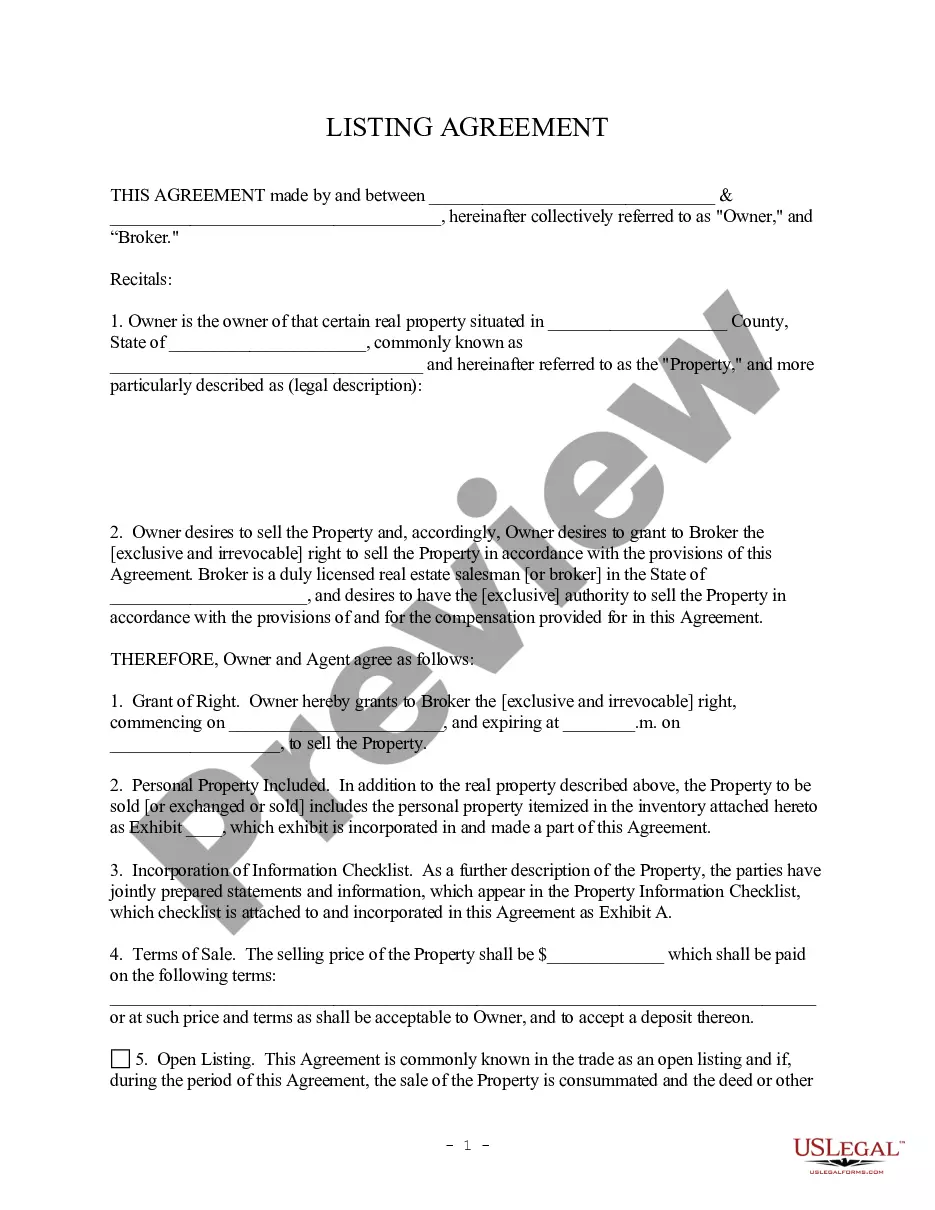
An exclusive right-to-sell listing is the most commonly used real estate contract. With this type of listing agreement, one broker is authorized as the seller's sole agent and has exclusive authorization to represent the property.
Exclusive right to sell listing agreement An exclusive right to sell listing is the most widely-used listing agreement. Under this agreement, the broker has the exclusive right to market the property for a specified period of time.
An exclusive right-to-sell listing is the most commonly used contract. With this type of listing agreement, one broker is appointed the sole seller's agent and has exclusive authorization to represent the property.
Listing agreements often include clauses regarding confidentiality, emphasizing that sensitive information about your property or personal circumstances should be handled discreetly.
The answer is the age of the seller. Information needed for the listing agreement includes lot size, possibility of seller financing, and the property taxes. The age of the seller is not needed.
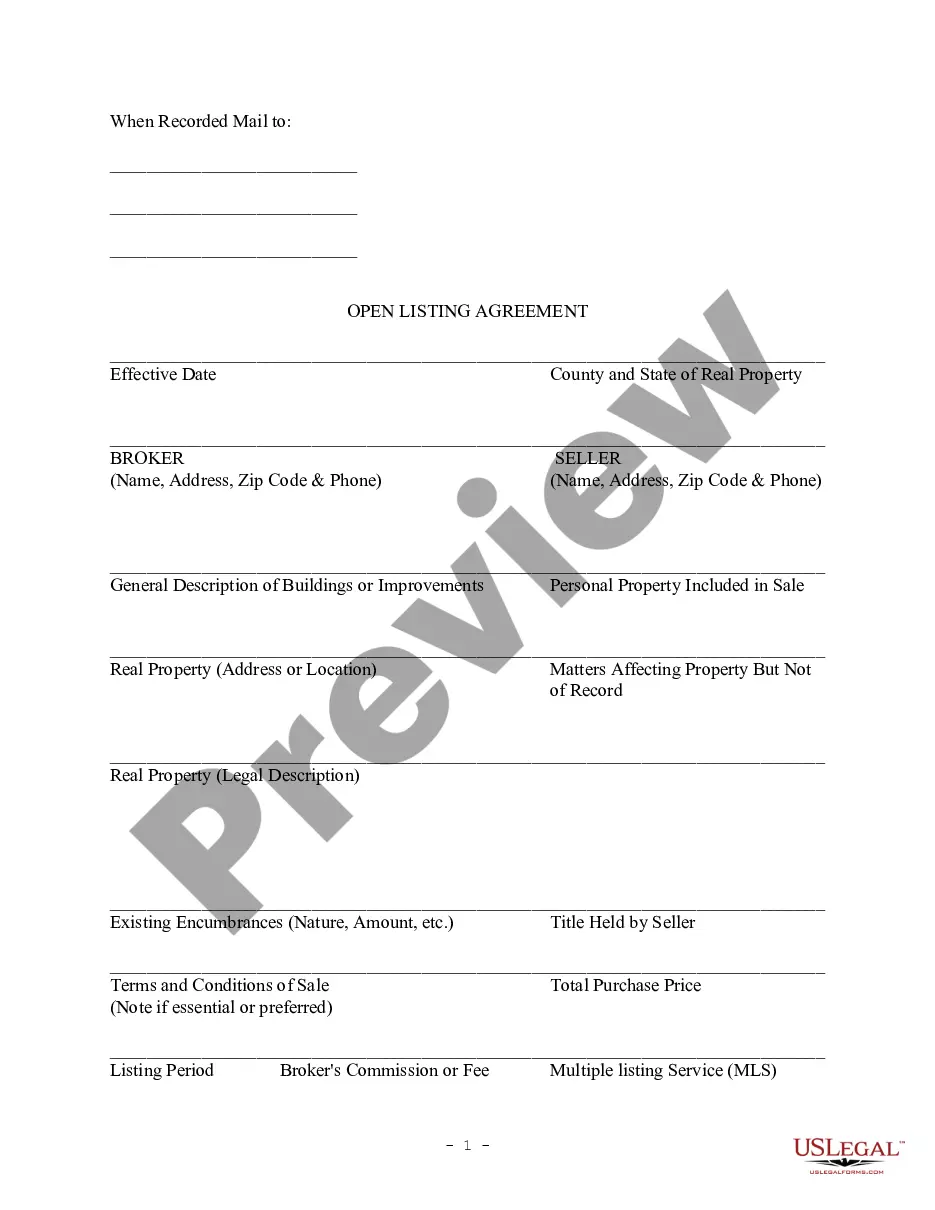
Types of Listing Agreements Exclusive Right to Sell Listing. As the most commonly used listing agreement, the Exclusive Right to Sell Listing's name pretty much says it all. Open Listing. An Open Listing Agreement is the exact opposite of an Exclusive Right to Sell Listing Agreement. Exclusive Agency Listing.
The most predominant listing agreement in California is the Exclusive Right to Sell Agreement. This agreement entitles the listing agent to a commission regardless of who finds the buyer, granting them exclusive marketing rights for the home. Other types of agreements exist but are less common.
Every valid contract in California needs to have four essential elements. (1) The parties must be capable of contracting, (2) the parties must consent to the contract, (3) the contract must have a lawful object (they cannot be for illegal services), and (4) the contract must be supported by consideration.
Final answer: The component that is not required in most listing agreements is the naming of an escrow company. Most listing agreements typically include identification of the property, compensation details and signatures, although the escrow company is usually determined later in the selling process.

