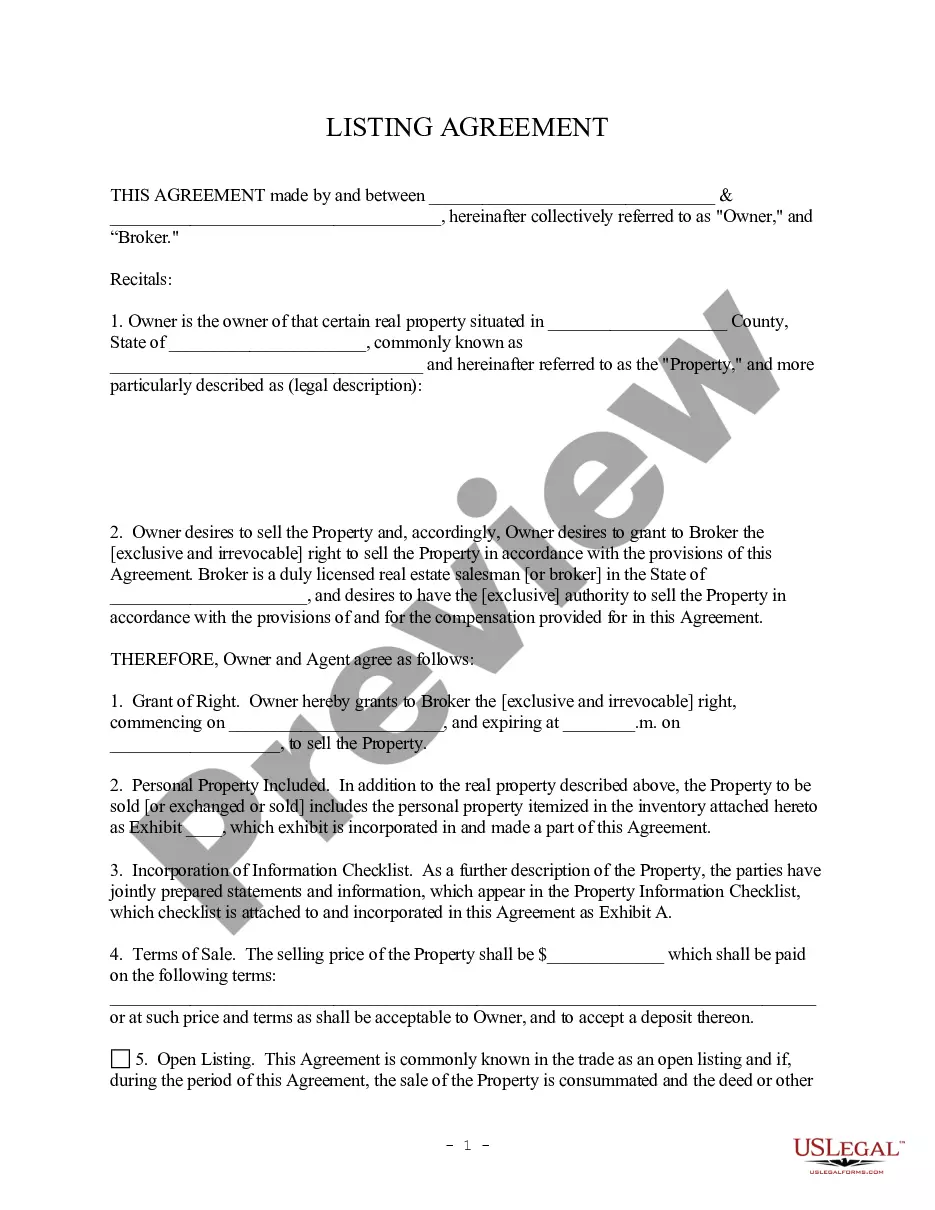
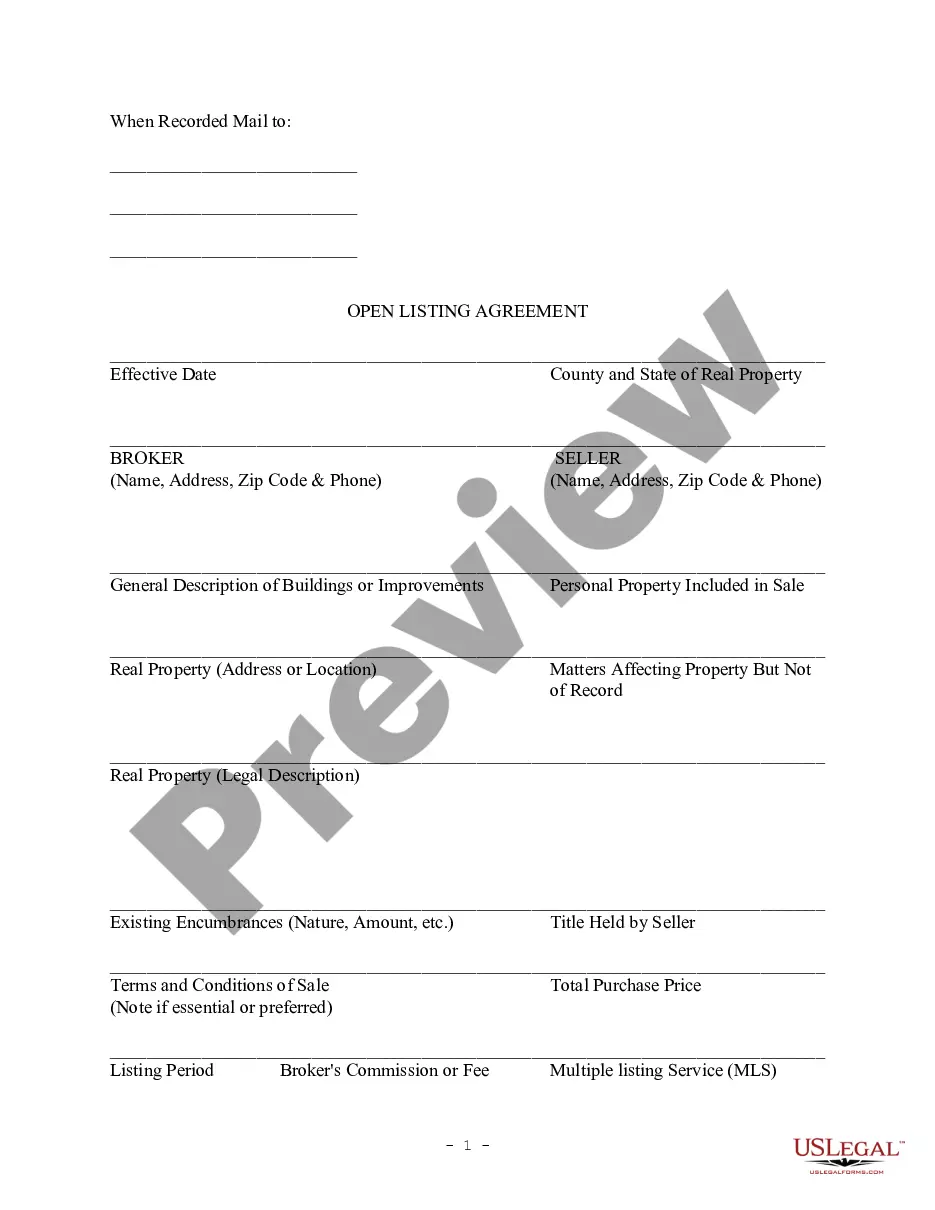
Listing Agreement Contract With Corporate Governance In Montgomery
Description
Get your form ready online
Our built-in tools help you complete, sign, share, and store your documents in one place.
Make edits, fill in missing information, and update formatting in US Legal Forms—just like you would in MS Word.
Download a copy, print it, send it by email, or mail it via USPS—whatever works best for your next step.
Sign and collect signatures with our SignNow integration. Send to multiple recipients, set reminders, and more. Go Premium to unlock E-Sign.
If this form requires notarization, complete it online through a secure video call—no need to meet a notary in person or wait for an appointment.
We protect your documents and personal data by following strict security and privacy standards.

Make edits, fill in missing information, and update formatting in US Legal Forms—just like you would in MS Word.

Download a copy, print it, send it by email, or mail it via USPS—whatever works best for your next step.

Sign and collect signatures with our SignNow integration. Send to multiple recipients, set reminders, and more. Go Premium to unlock E-Sign.

If this form requires notarization, complete it online through a secure video call—no need to meet a notary in person or wait for an appointment.

We protect your documents and personal data by following strict security and privacy standards.
Looking for another form?






Form popularity
FAQ
The listing remains in effect until the property is sold. Another broker from the firm will work with the seller. The agency immediately terminates. The agency will terminate when the seller lists the property with another broker."
The most important factors to consider in a residential listing agreement are the length of the agreement, the commission rate, and the terms, such as the duties and responsibilities of the real estate agent and broker. The termination clause, detailing under what conditions the contract can be ended, is also crucial.
To be legally enforceable, a listing agreement must satisfy four requirements. It must contain a property description, include a promise of compensation, specify a fixed figure for the compensation (either a percentage or a dollar amount), and be in writing and signed by the seller.
A listing agreement is a contract between a property owner and a real estate broker that authorizes the broker to represent the seller and find a buyer for the property.
The principal parties to the contract are the listing broker and the client. The client may be buyer, seller, landlord or tenant in the proposed transaction. Legally, the broker is the client's agent. The principal party on the other side of the transaction is a customer or a potential customer, called a prospect.
However, the most common length of such agreements is around 90 to 180 days (3 to 6 months). This duration is often considered reasonable as it allows the agent an adequate timeframe to market and sell the property effectively.
Typical time frames for agreements range from three to six months, though they can be shorter or longer.
Also, under the statute of frauds, a listing agreement must be in writing and must be signed by the seller. (If the property has more than one owner, only one of them has to sign the listing.)
The duration of buyers' agency agreements can vary, but you may see agents ask for a 90-day commitment. You can negotiate the length of the agreement, especially in a buyer's market.
There is no standard time for these agreements. We have seen agents present agreements to their clients ranging from 60-days up to 1- year. In our opinion, you should not be signing contracts for more than 4 months when you first start working with a listing agent.

