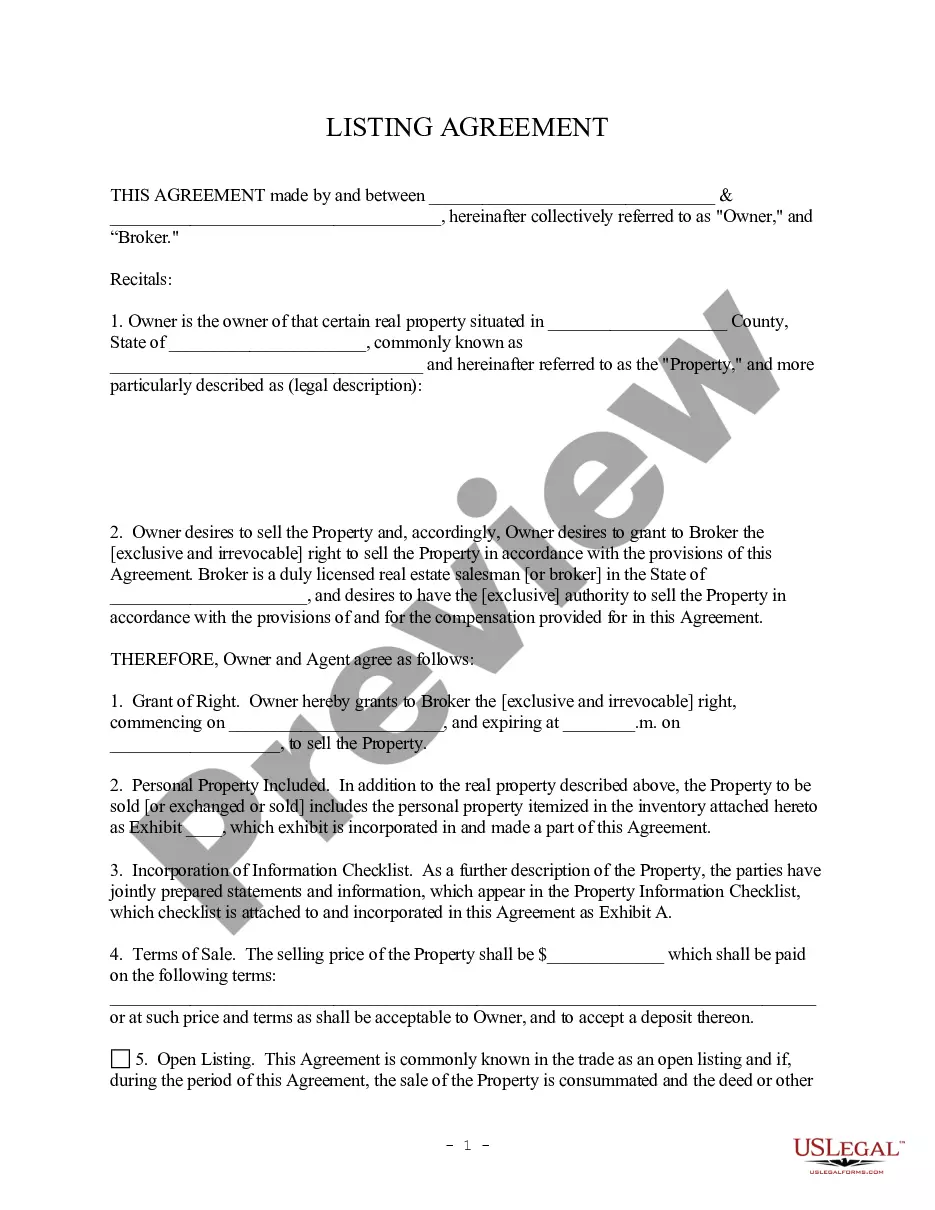
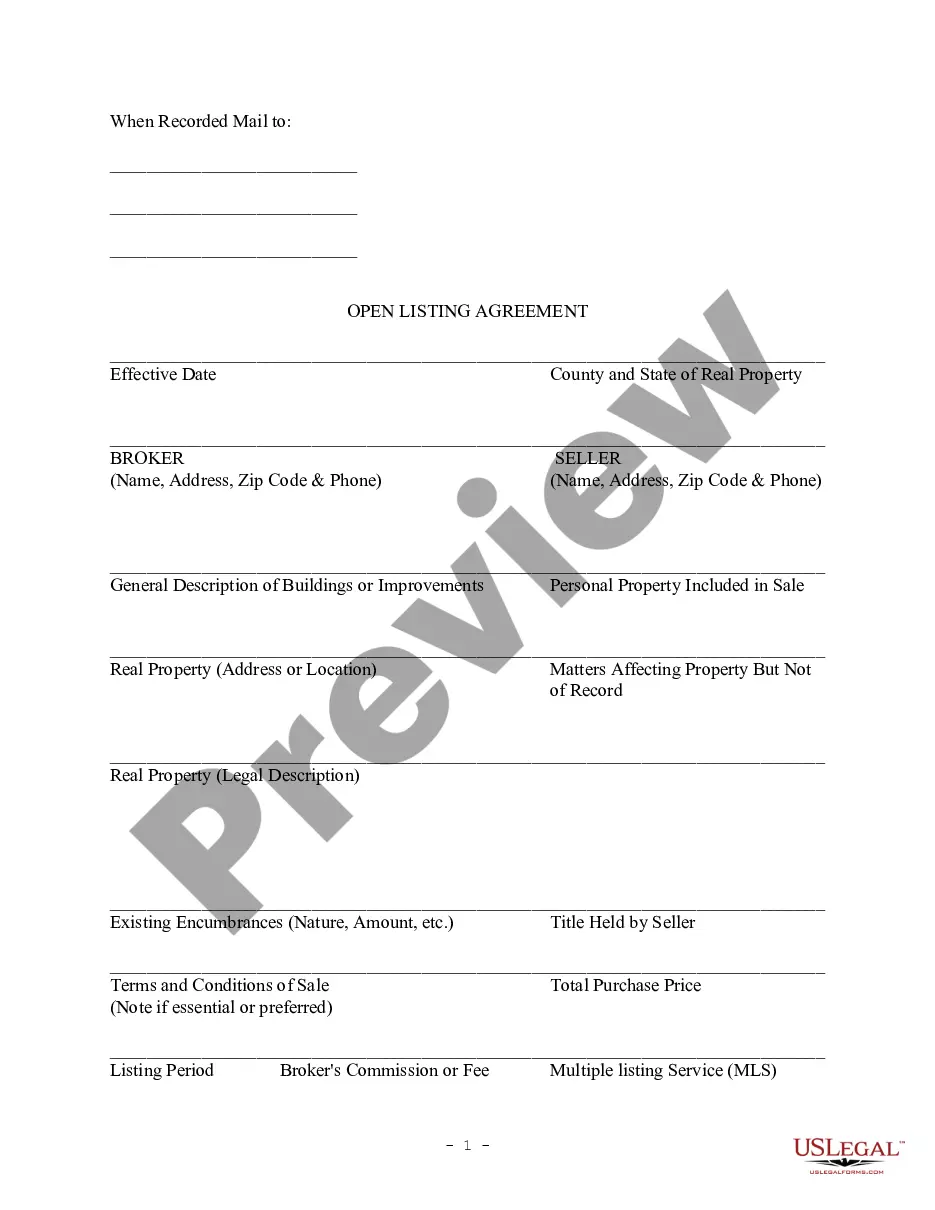
Listing Agreement Form With Bse In Kings
Description

Get your form ready online
Our built-in tools help you complete, sign, share, and store your documents in one place.
Make edits, fill in missing information, and update formatting in US Legal Forms—just like you would in MS Word.
Download a copy, print it, send it by email, or mail it via USPS—whatever works best for your next step.
Sign and collect signatures with our SignNow integration. Send to multiple recipients, set reminders, and more. Go Premium to unlock E-Sign.
If this form requires notarization, complete it online through a secure video call—no need to meet a notary in person or wait for an appointment.
We protect your documents and personal data by following strict security and privacy standards.

Make edits, fill in missing information, and update formatting in US Legal Forms—just like you would in MS Word.

Download a copy, print it, send it by email, or mail it via USPS—whatever works best for your next step.

Sign and collect signatures with our SignNow integration. Send to multiple recipients, set reminders, and more. Go Premium to unlock E-Sign.

If this form requires notarization, complete it online through a secure video call—no need to meet a notary in person or wait for an appointment.

We protect your documents and personal data by following strict security and privacy standards.
Looking for another form?









Form popularity
FAQ
Yes. As of this writing, there are no state or federal laws prohibiting pocket listings. However, the NAR effectively banned pocket listings for their members with their Clear Cooperation Policy. They claim they implemented the policy to reinforce the benefits of cooperation for the consumer.
Although they're not illegal, an off-market listing can be more troublesome than what it's worth. If you're considering a pocket listing for your home, ask your real estate agent about their experience with pocket list real estate.
The NAR banned pocket listings as part of its Clear Cooperation Policy, in an effort to prevent dual agency issues and promote fairness in the housing market. But not all pocket listings violate MLS rules or state laws.
Under KREC regulations and laws, such things as open listings, exclusive listings, pocket listings, so called advertising agreements and/or any other type of agreement or listing is permissible as long as they comply with the terms of KREC regulations and statutes.
Are pocket listings illegal or unethical? Pocket listings aren't illegal by law, but were banned by the National Association of Realtors (NAR) in 2019. This means that licensed Realtors can no longer hold onto properties for longer than a day before adding them to the MLS.
Open Listing Open listings are essentially the opposite of exclusive right to sell agreements. Open listings are often used when someone prefers to go the for sale by owner route. They let the owners sell the house on their own, while also letting multiple brokerages market the home for sale.
Best Definition of an Exclusive Right-to-Sell Listing The best definition is: an agreement in which the seller guarantees the named broker receives a commission if the property is sold, regardless of who brings the buyer.
Exclusive right-to-represent contracts. This is the most common buyer-broker agreement between home buyers and brokers. This agreement outlines the obligations of the broker, the broker-agent relationship, and the responsibilities of the buyer.
Open listing: Definition An open listing enables multiple real estate agents to try to sell your home. This setup gives the seller the ability to work with multiple agents at once. This differs from an exclusive listing, in which the seller works exclusively with one listing agent to find a buyer.
An exclusive right to sell agreement gives one real estate agent and their brokerage the sole right to market and sell a property. That agent is guaranteed a commission on the sale as long as it occurs during the duration of the contract, even if they did not bring in the buyer.

