Listing Agreement Form For Rental Property In Alameda
Description

Get your form ready online
Our built-in tools help you complete, sign, share, and store your documents in one place.
Make edits, fill in missing information, and update formatting in US Legal Forms—just like you would in MS Word.
Download a copy, print it, send it by email, or mail it via USPS—whatever works best for your next step.
Sign and collect signatures with our SignNow integration. Send to multiple recipients, set reminders, and more. Go Premium to unlock E-Sign.
If this form requires notarization, complete it online through a secure video call—no need to meet a notary in person or wait for an appointment.
We protect your documents and personal data by following strict security and privacy standards.

Make edits, fill in missing information, and update formatting in US Legal Forms—just like you would in MS Word.

Download a copy, print it, send it by email, or mail it via USPS—whatever works best for your next step.

Sign and collect signatures with our SignNow integration. Send to multiple recipients, set reminders, and more. Go Premium to unlock E-Sign.

If this form requires notarization, complete it online through a secure video call—no need to meet a notary in person or wait for an appointment.

We protect your documents and personal data by following strict security and privacy standards.
Looking for another form?








Form popularity
FAQ
Though notarization is not required, it may still be a good idea to have a notary present in order to verify the identities of all signers.
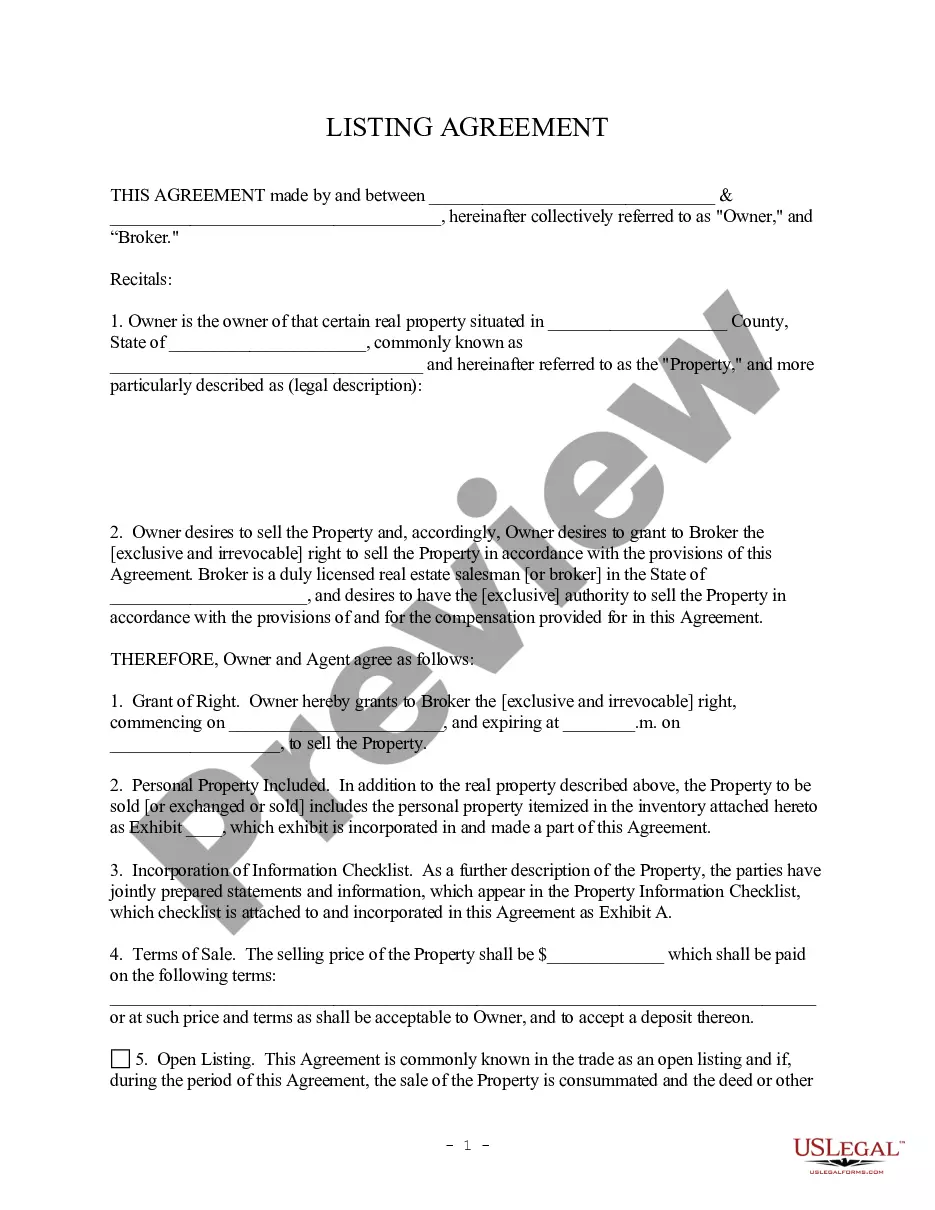
A listing agreement is an example of an agency relationship that is created by express agency. In this context, express agency arises when the principal explicitly states their intention to create an agency relationship with the agent through a written or verbal agreement.
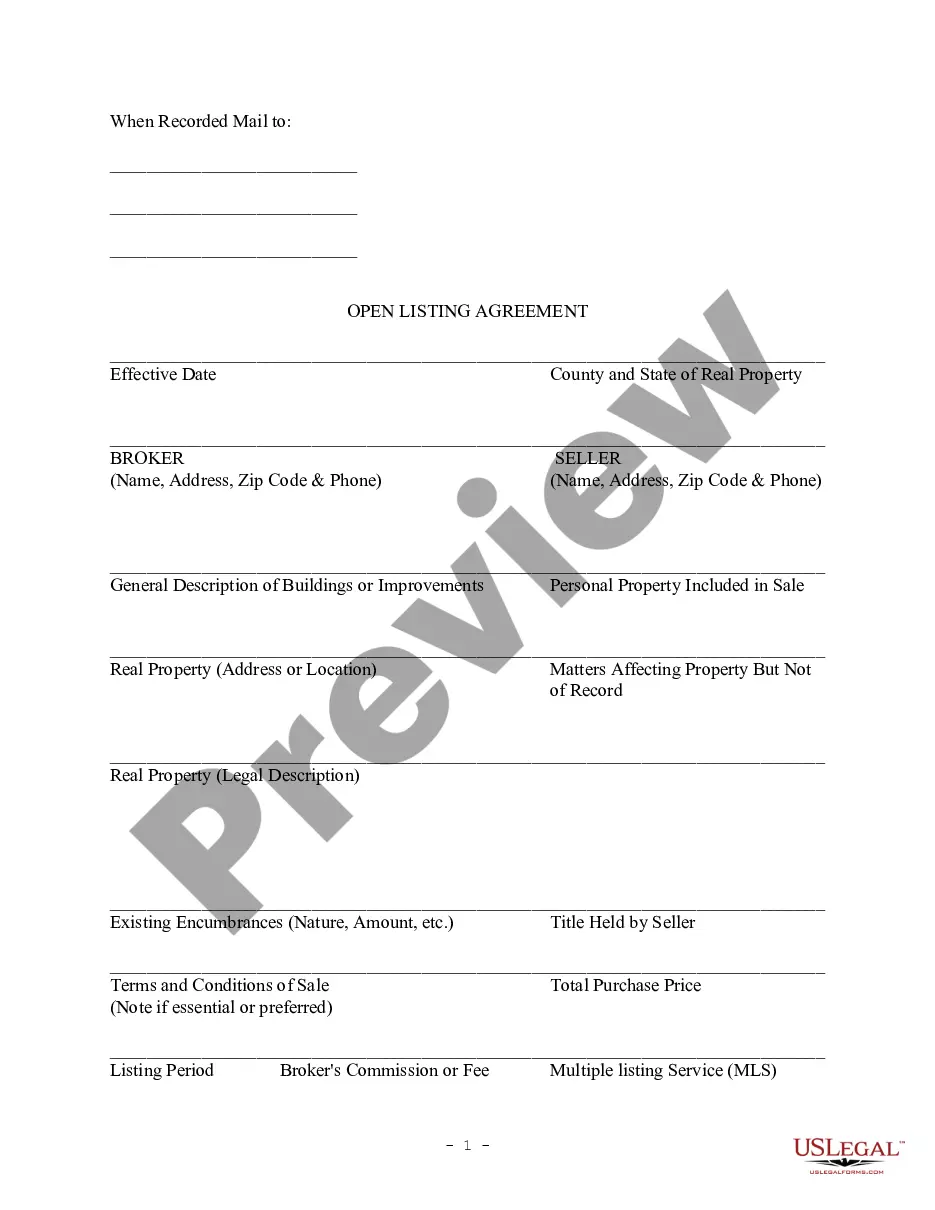
A listing agreement is between the parties that own a property and the agents or brokers who will find a buyer for it. Typically, a real estate listing agreement involves the property owner and a real estate agent. The property owner, or seller, grants the agent the right to market and sell the property.
What to include in an apartment lease agreement. Tenant information. Include each tenant's full name and contact information. Rental property description. List the apartment's location, all common areas, parking spaces, and included facilities. Security deposit. Monthly rent amount. Utilities. Lease term. Policies. Late fees.
Once you've written out all the terms of your contract you can put it into a contract form by either using an online template or contacting a real estate attorney to help you draft the contract. A real estate attorney is the safe choice to make sure your contract follows local laws and will be legally binding.
You could have your own rental agreement provided both the owner and the tenent has to read and understand it, then mutually agree and both have to sign it, if possible, with one or two eyewitnesses, so that, in case of any legal dispute, the court could refer it to eyewitnesses.
How to Create a Landlord Verification Form Address the landlord. Include the tenant's details. State the tenant's consent. Inquire about rental history. Certify Answers: Include a statement at the bottom for the landlord to sign, certifying the accuracy of their responses to each question.
Once you've written out all the terms of your contract you can put it into a contract form by either using an online template or contacting a real estate attorney to help you draft the contract. A real estate attorney is the safe choice to make sure your contract follows local laws and will be legally binding.
A change of terms would require the approval of both parties (landlord and tenant). Some leases do contain a clause allowing the landlord to change the terms, but these are usually not true leases. If your agreement has a similar clause than either party may change the terms by giving notice.

