Trial Continuance Without A Lawyer In California
Description

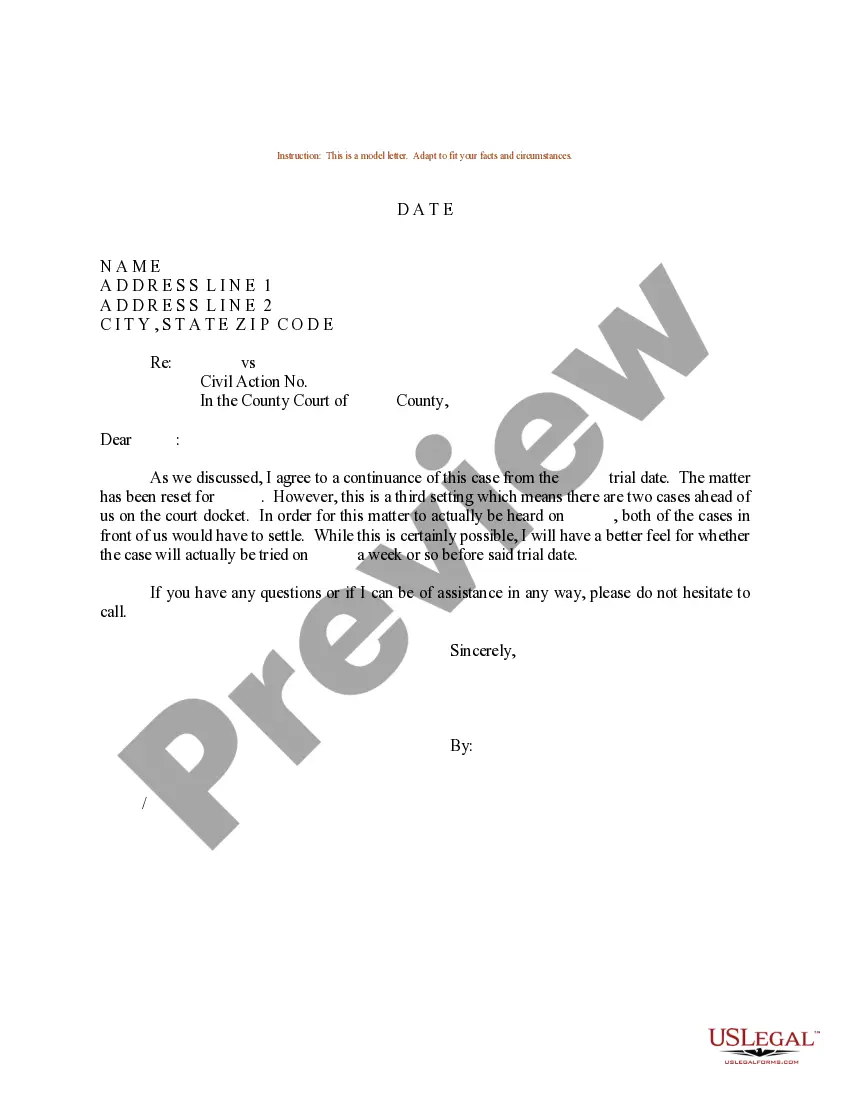
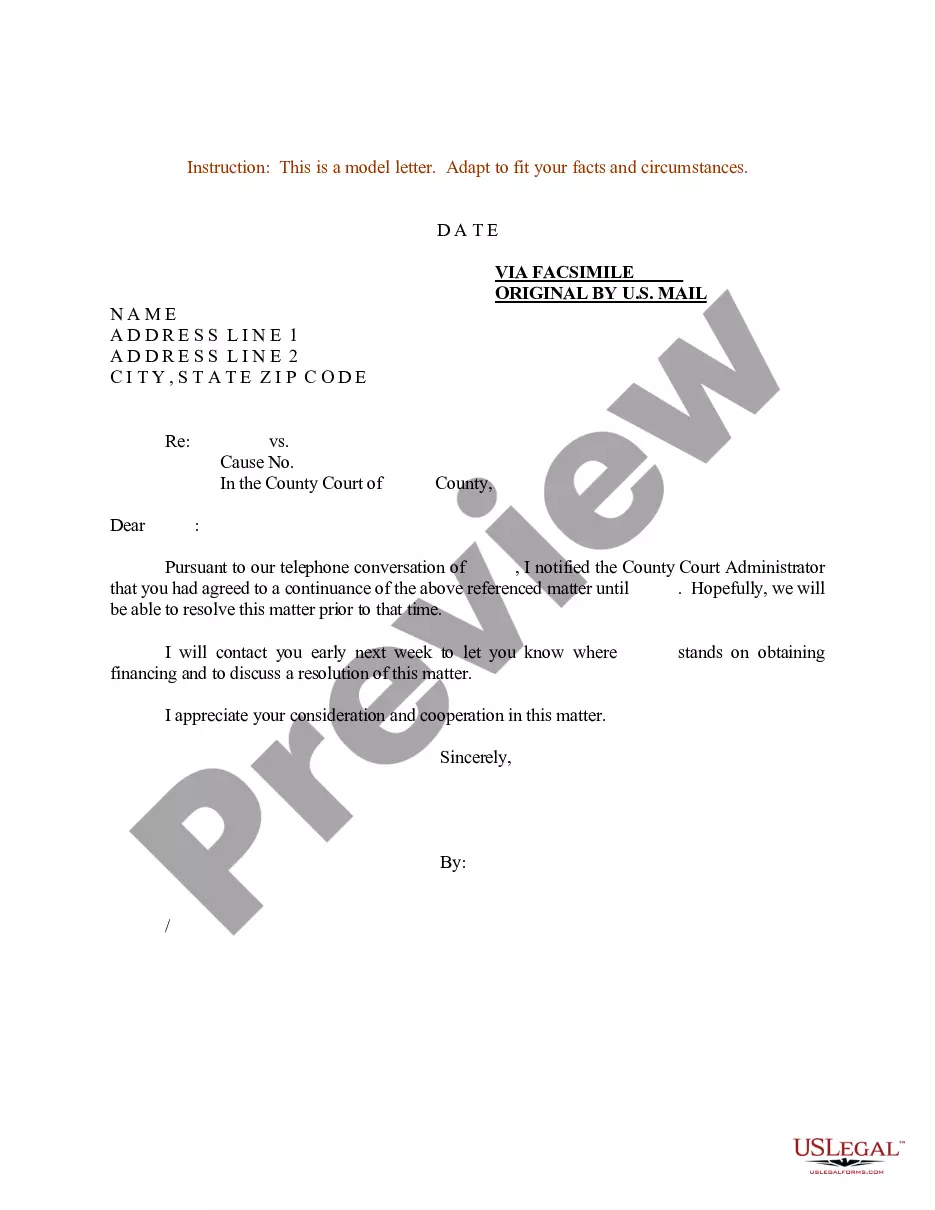
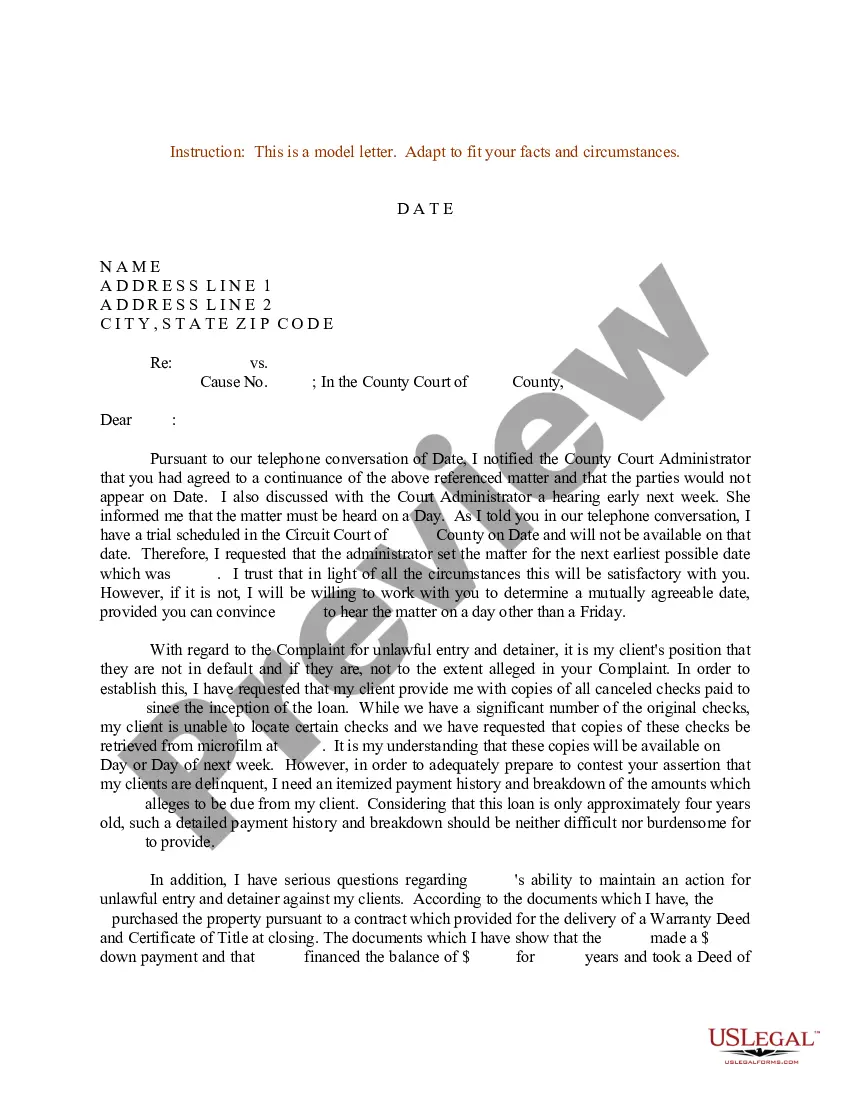
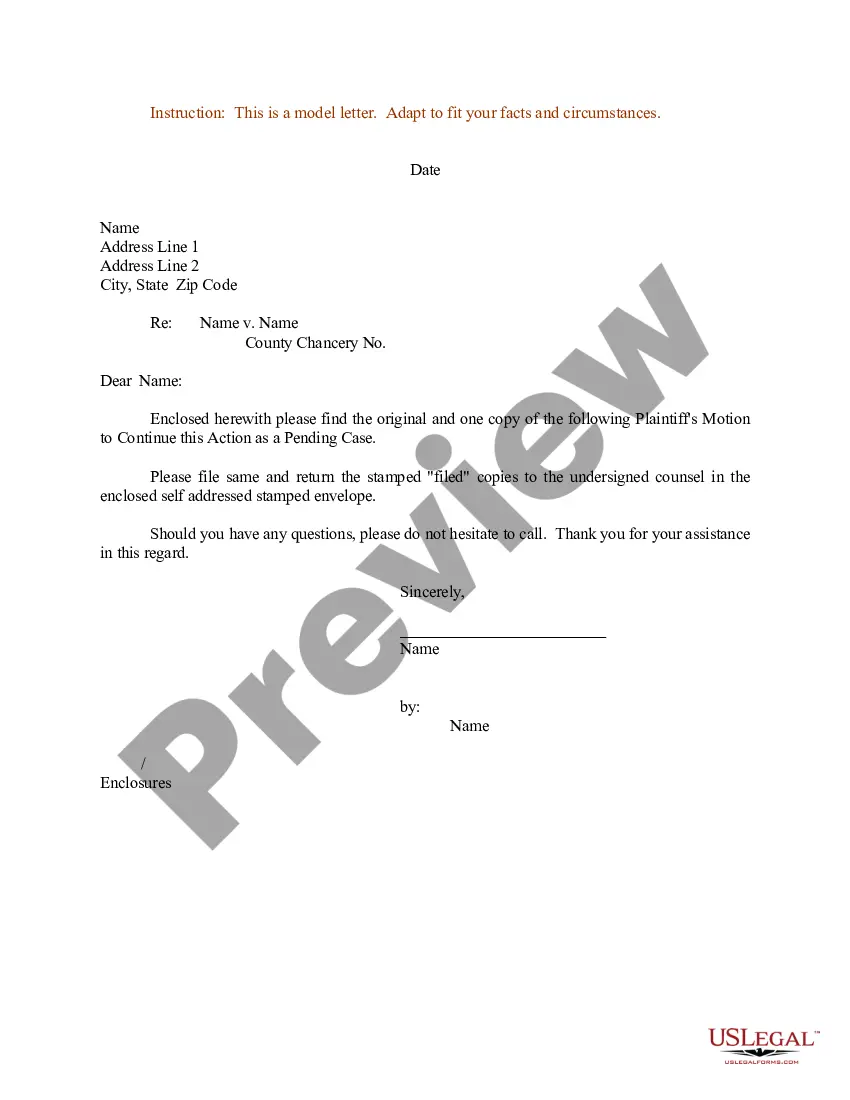
Get your form ready online
Our built-in tools help you complete, sign, share, and store your documents in one place.
Make edits, fill in missing information, and update formatting in US Legal Forms—just like you would in MS Word.
Download a copy, print it, send it by email, or mail it via USPS—whatever works best for your next step.
Sign and collect signatures with our SignNow integration. Send to multiple recipients, set reminders, and more. Go Premium to unlock E-Sign.
If this form requires notarization, complete it online through a secure video call—no need to meet a notary in person or wait for an appointment.
We protect your documents and personal data by following strict security and privacy standards.

Make edits, fill in missing information, and update formatting in US Legal Forms—just like you would in MS Word.

Download a copy, print it, send it by email, or mail it via USPS—whatever works best for your next step.

Sign and collect signatures with our SignNow integration. Send to multiple recipients, set reminders, and more. Go Premium to unlock E-Sign.

If this form requires notarization, complete it online through a secure video call—no need to meet a notary in person or wait for an appointment.

We protect your documents and personal data by following strict security and privacy standards.
Looking for another form?






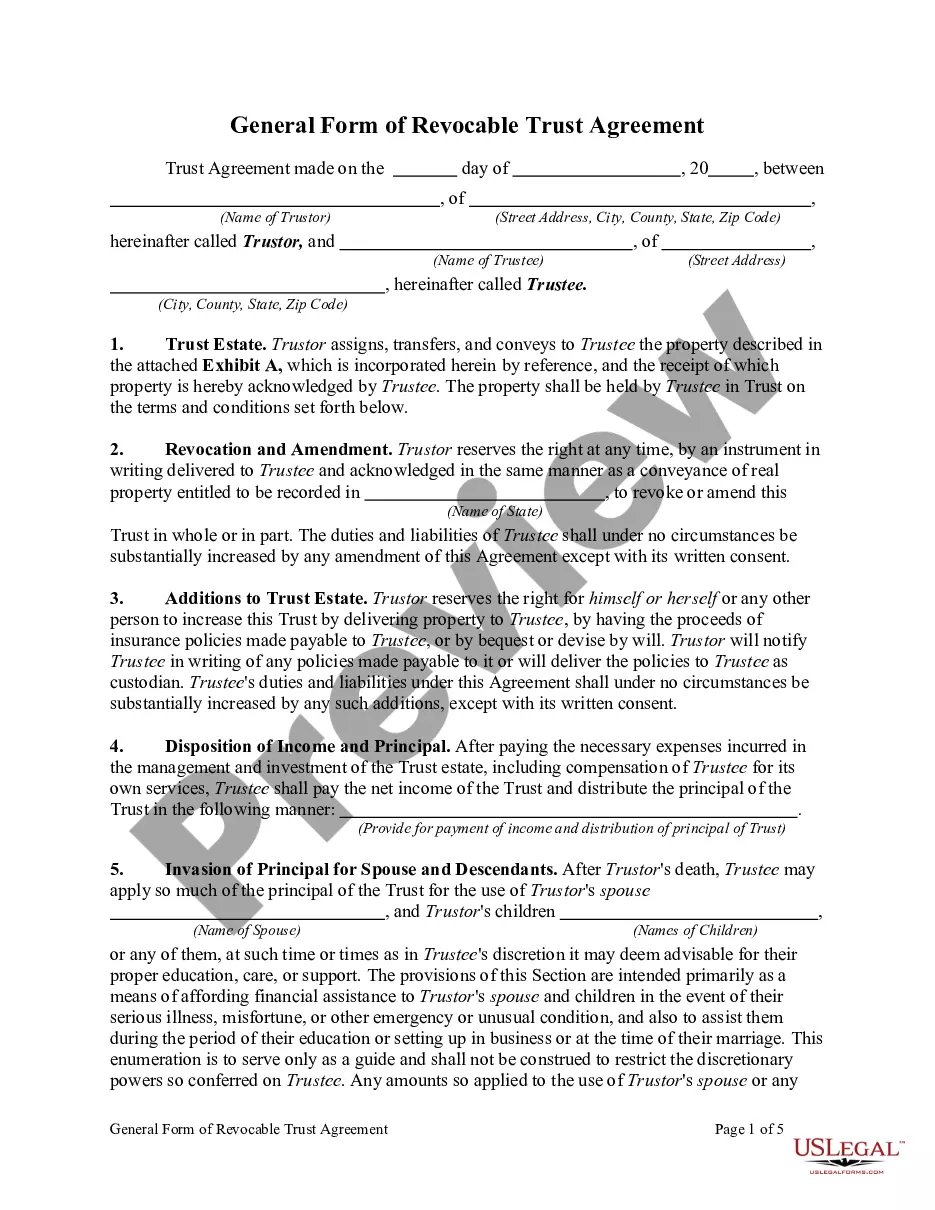


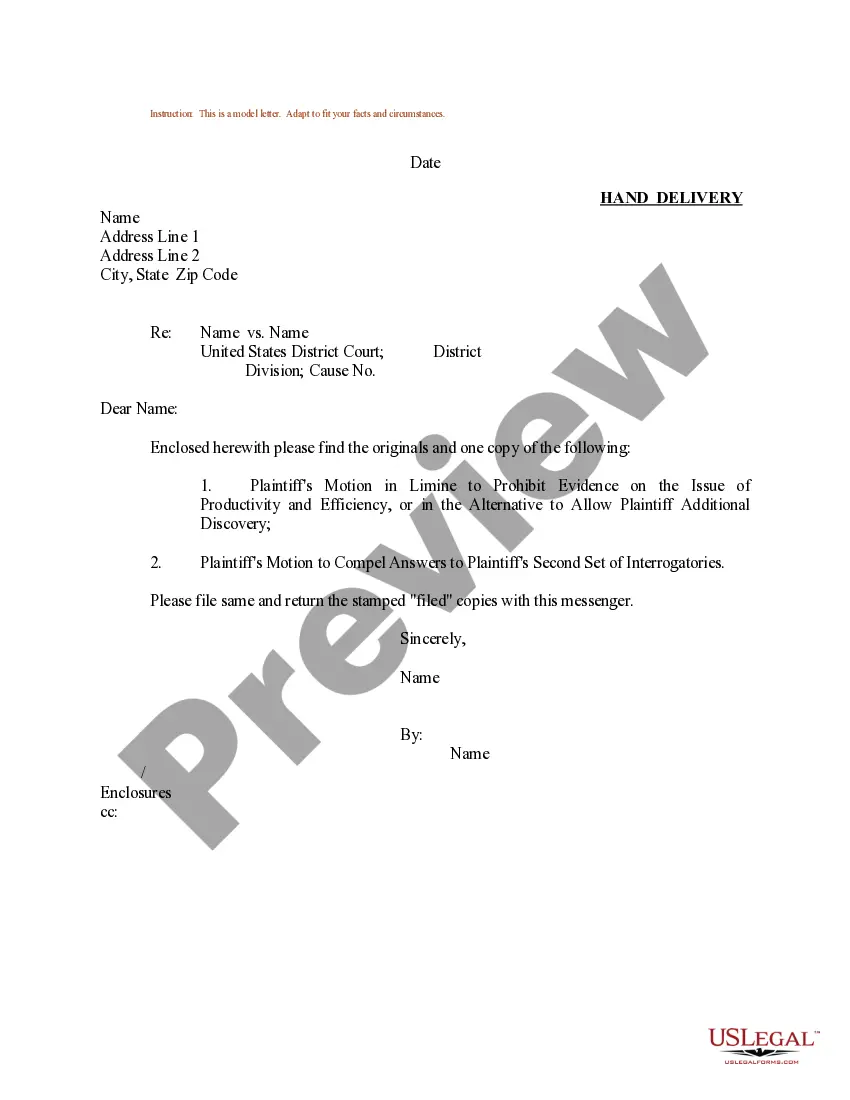
Form popularity
FAQ
A party seeking a continuance of the date set for trial, whether contested or uncontested or stipulated to by the parties, must make the request for a continuance by a noticed motion or an ex parte application under the rules in chapter 4 of this division, with supporting declarations.
Many wonder if its possible to win a case without the assistance of a lawyer. The question that often comes to mind is, Has anyone ever won a case representing themselves in court? The answer is yes.
Rule 3.1332(c) of the California Rules of Court (CRC) allows the court to grant a continuance before or during trial on an affirmative showing of good cause. Each request for continuance must be considered on its own merits.
Some of the reasons that might necessitate a continuance include: You need additional time to secure an attorney to represent you in court. You need more time to gather evidence because the other side has been stalling on discovery requests. You need more time to locate witnesses who are critical to your case.
If you're a defendant without an attorney. You can only request a continuance for your first courtMoreIf you're a defendant without an attorney. You can only request a continuance for your first court date.
1. Medical condition; 2. Significant changes in the circumstances; 3. Scheduling conflict. 4. Lack of preparation. You must request a continuance at least 5 business days prior to the hearing (if you are doing this in writing); if you are planning to just call, you can do so no later than 2 days prior to the hearing.
If the prosecution or defense needs extra time to prepare for a hearing or trial in a criminal case, they can ask the judge for a continuance. But they need to have a good reason, otherwise, the judge can deny the request.
Absolutely. You would just need to draft it and explain why you need the continuance.
Circumstances that may indicate good cause for a continuance include the unavailability of an essential witness (CRC 3.1332 (c)(1)); the unavailability of a party because of death, illness, or other excusable circumstances (CRC 3.1332 (c)(2)); or a significant, unanticipated change in the status of the case as a result ...

