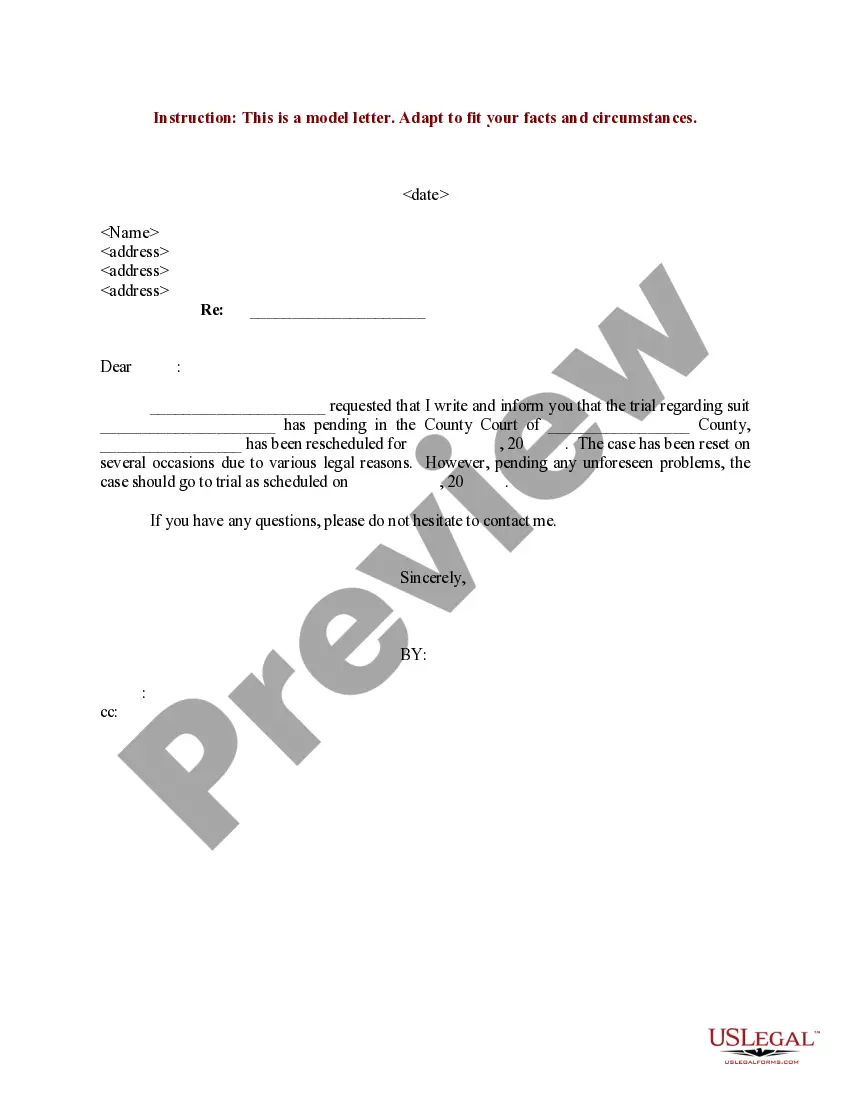
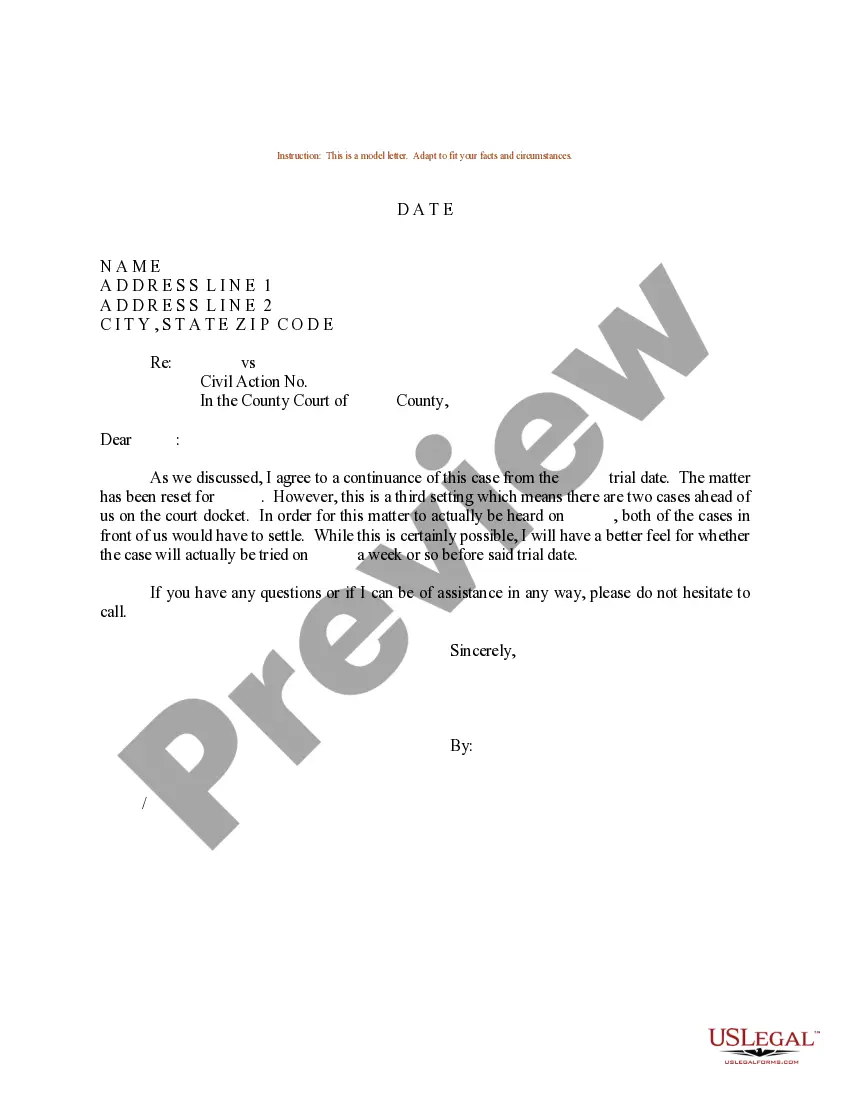
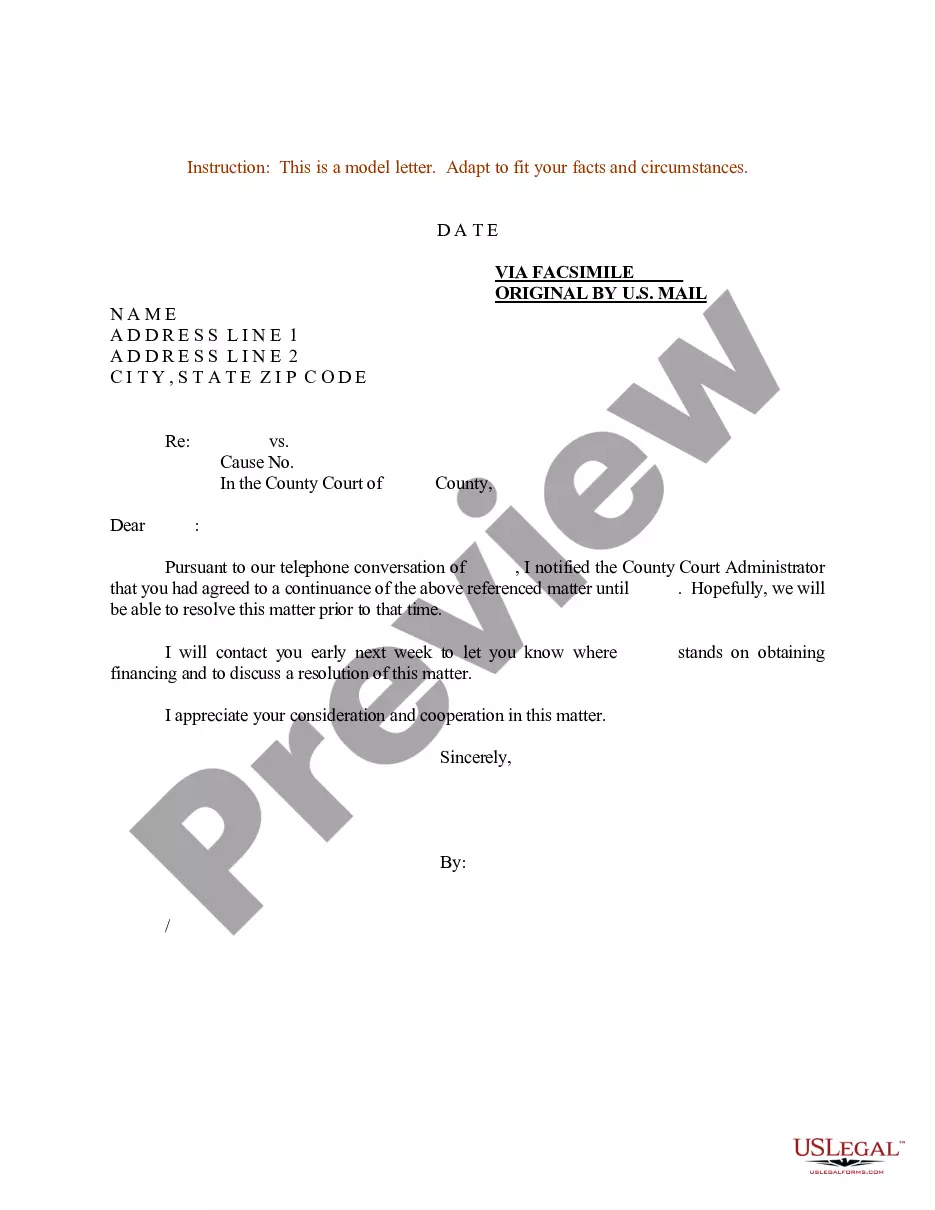
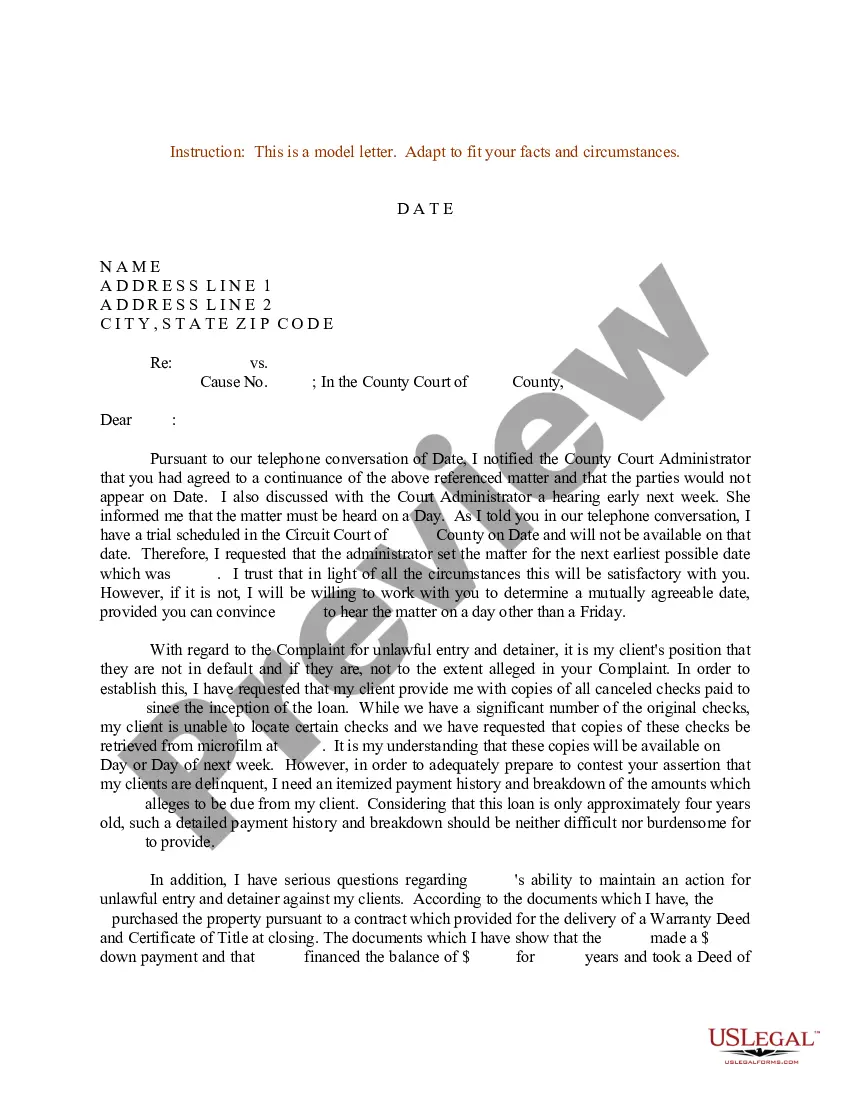
Trial Continuance Without Evidence In Arizona
Description
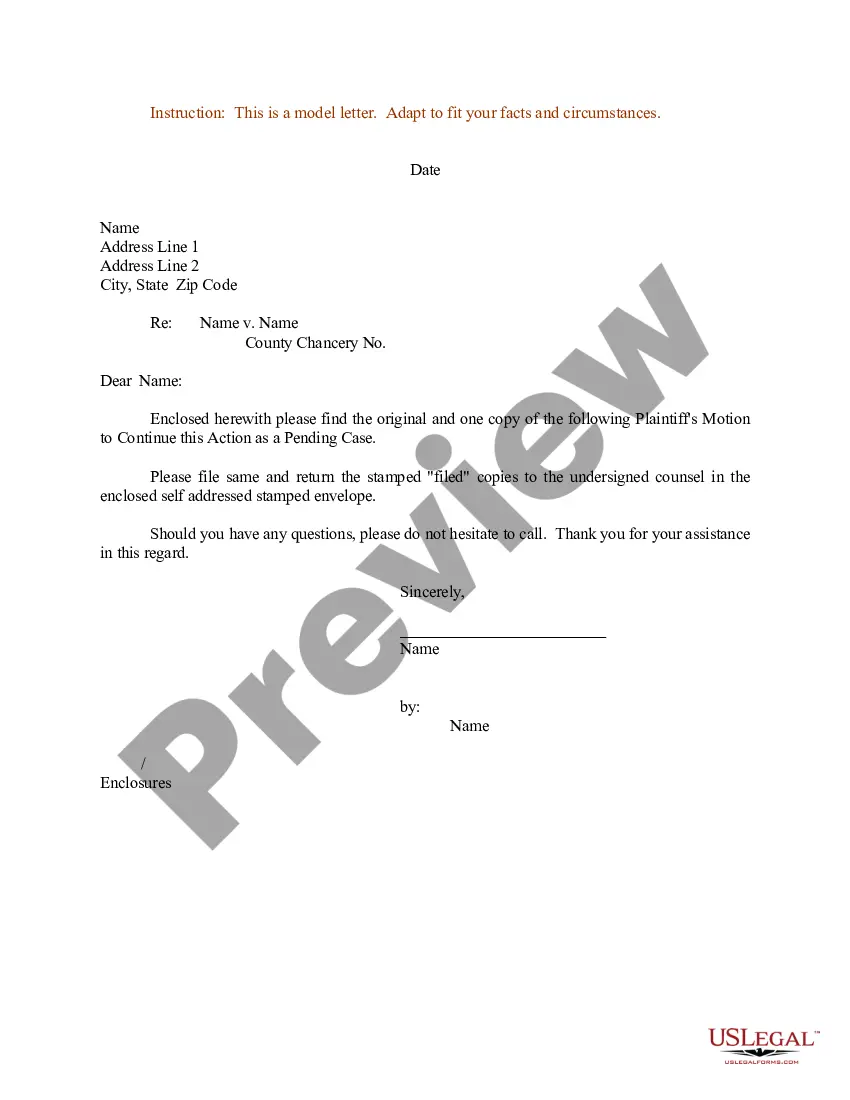
Get your form ready online
Our built-in tools help you complete, sign, share, and store your documents in one place.
Make edits, fill in missing information, and update formatting in US Legal Forms—just like you would in MS Word.
Download a copy, print it, send it by email, or mail it via USPS—whatever works best for your next step.
Sign and collect signatures with our SignNow integration. Send to multiple recipients, set reminders, and more. Go Premium to unlock E-Sign.
If this form requires notarization, complete it online through a secure video call—no need to meet a notary in person or wait for an appointment.
We protect your documents and personal data by following strict security and privacy standards.

Make edits, fill in missing information, and update formatting in US Legal Forms—just like you would in MS Word.

Download a copy, print it, send it by email, or mail it via USPS—whatever works best for your next step.

Sign and collect signatures with our SignNow integration. Send to multiple recipients, set reminders, and more. Go Premium to unlock E-Sign.

If this form requires notarization, complete it online through a secure video call—no need to meet a notary in person or wait for an appointment.

We protect your documents and personal data by following strict security and privacy standards.
Looking for another form?
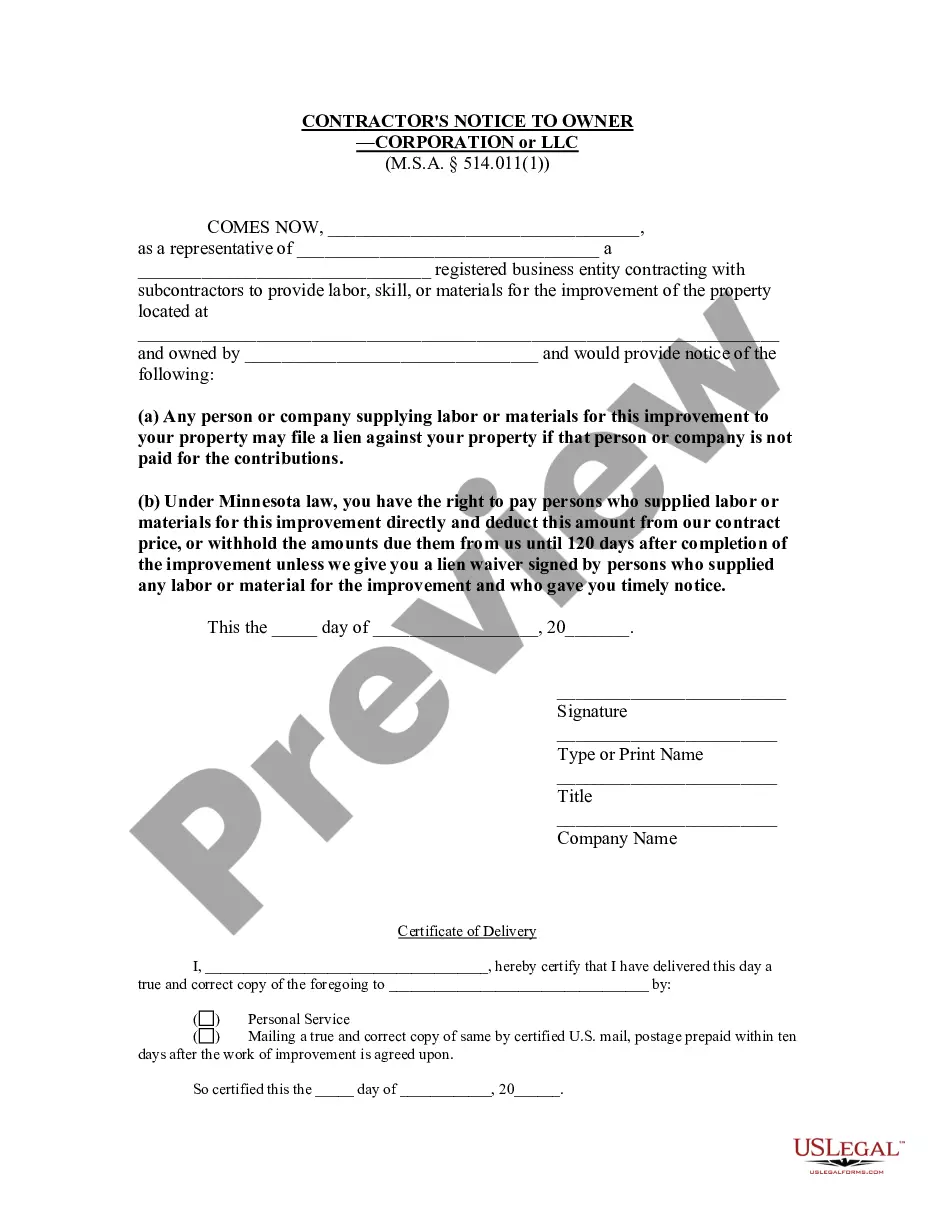




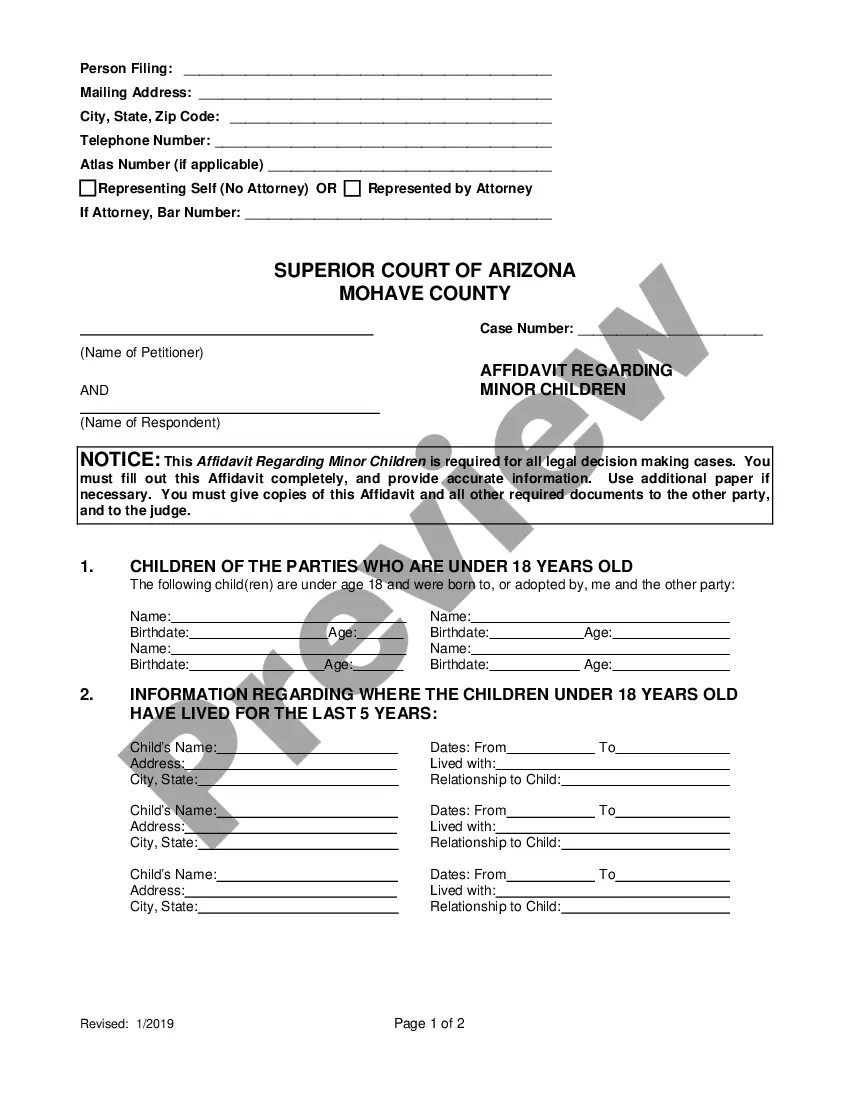




Form popularity
FAQ
Rule 3.1332(c) of the California Rules of Court (CRC) allows the court to grant a continuance before or during trial on an affirmative showing of good cause. Each request for continuance must be considered on its own merits.
Every matter submitted for determination to a judge of the superior court for decision shall be determined and a ruling made not later than sixty days from submission thereof, in ance with Section 21. Article VI of the Arizona Constitution.
What Is Considered a “Good Cause?” Either the defendant or prosecution needs more time to prepare for trial; The defendant became ill or experienced an unexpected life change; Witnesses cannot be tracked down or cannot attend the scheduled court date; The defendant needs more time to retain a lawyer;
A motion for reconsideration may be properly denied if based on unraised facts known to the movant prior to entry of judgment.
(c) Timing. A party desiring reconsideration of a decision must file a motion for reconsideration in the appellate court within 15 days after the appellate court enters its decision. A party may amend a motion for reconsideration only with the appellate court's permission.
You'll need to file a request with the court. This is usually done in the form of a written motion, which is a formal request to the court to make a particular decision. Your motion should explain why you need more time and how long of a delay you are requesting.
The deadline to file a Motion for Reconsideration will be a certain period of time after the judge has issued the order that you would like to have reconsidered or after you are served with the order, often between 14 and 30 days. You may want to speak with a lawyer in your state about the time line to file a motion.
– The motion for reconsideration shall be filed within fifteen (15) days from notice of the decision or resolution and a copy thereof shall be served on the adverse party. The period of filing a motion for reconsideration is non-extendible.
Is there any civil rule or what law that governs asking for continuance 1. Medical condition; 2. Significant changes in the circumstances; 3. Scheduling conflict. 4. Lack of preparation.

