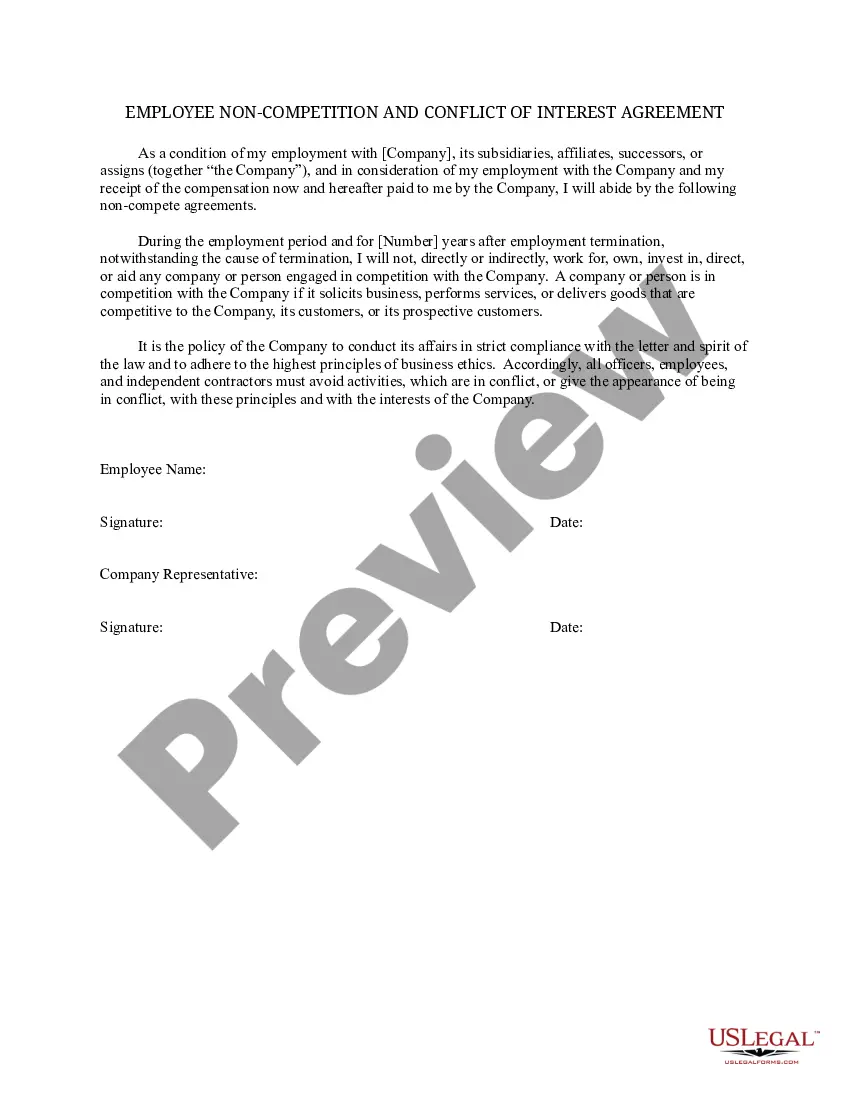
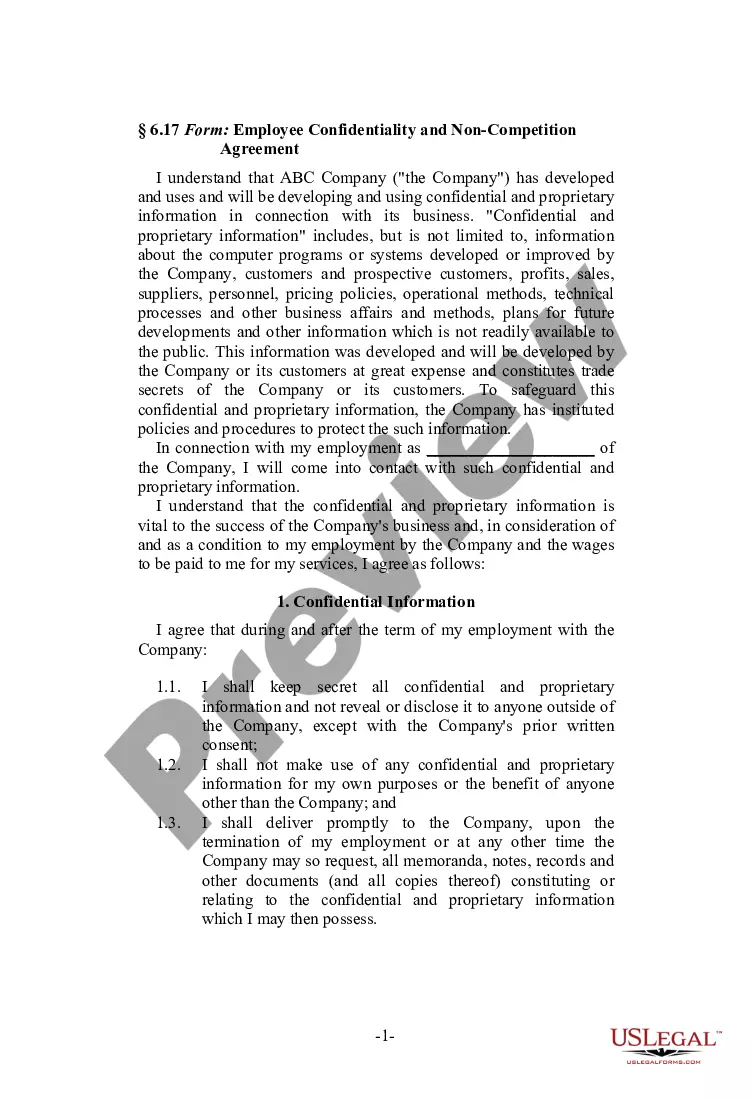
Competition Noncompetition For 2023 In Clark
Description

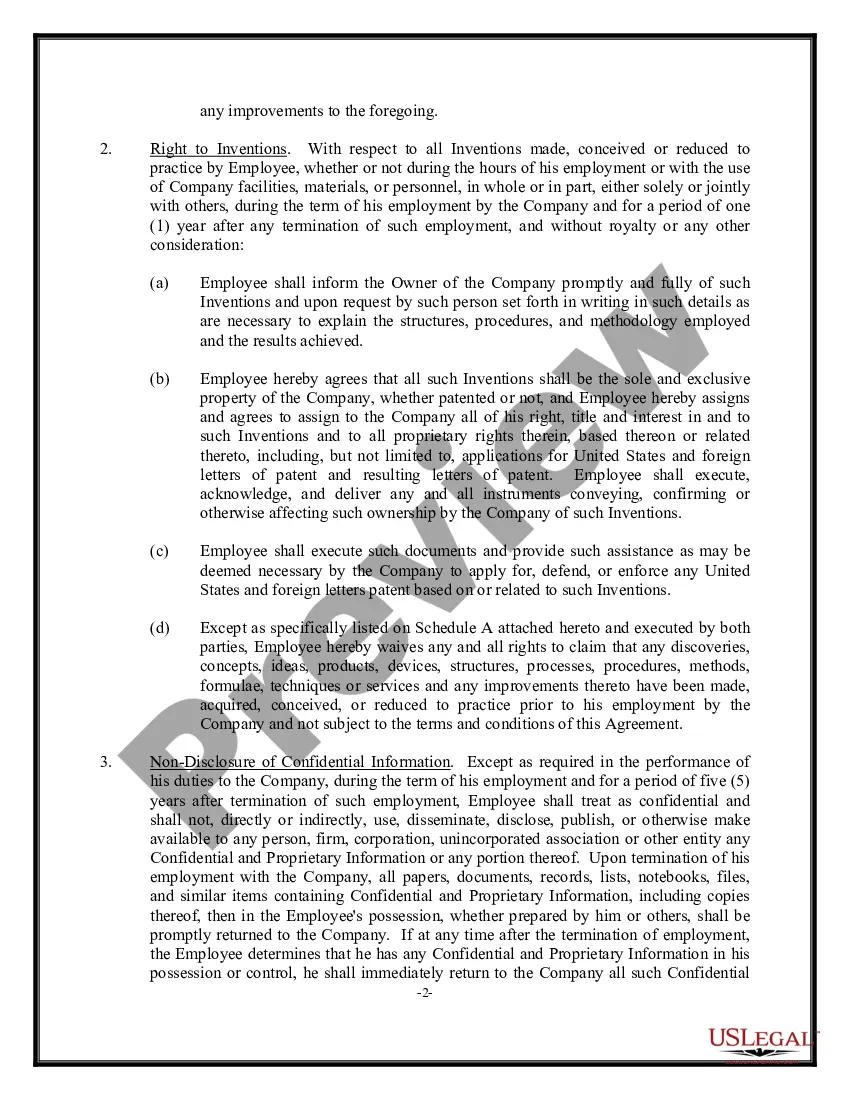
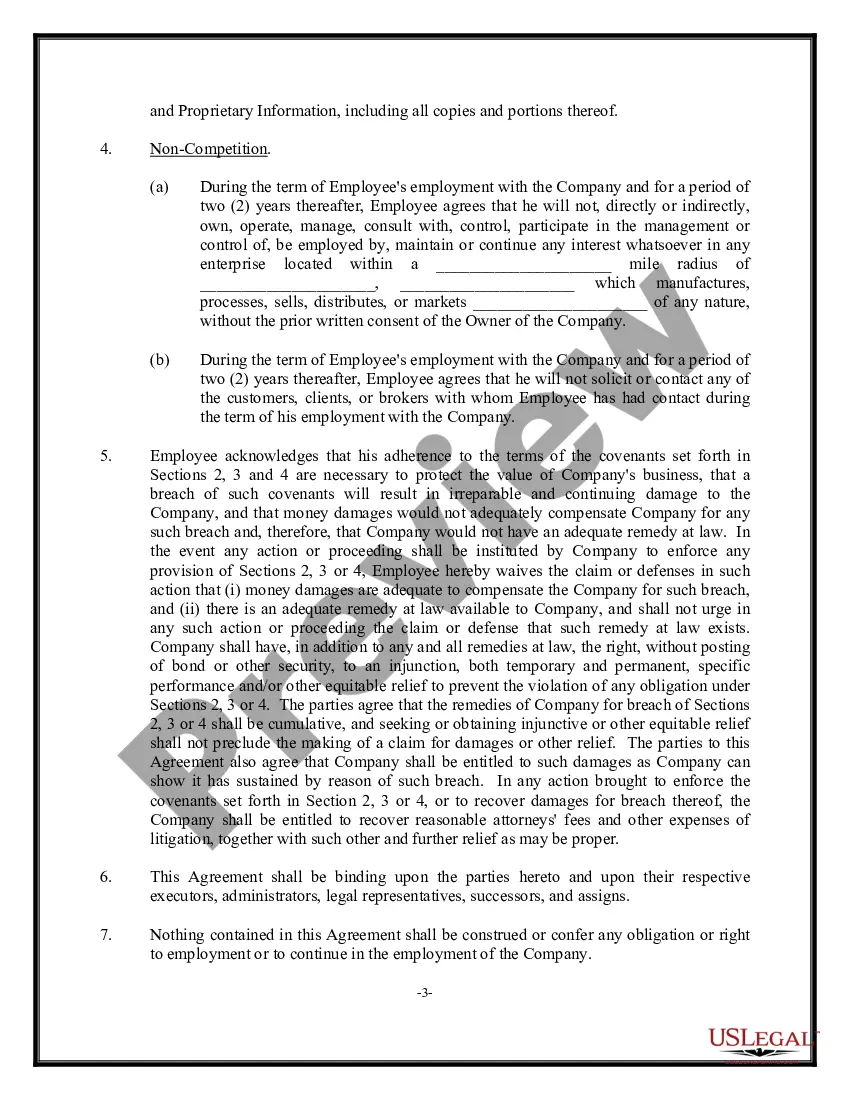
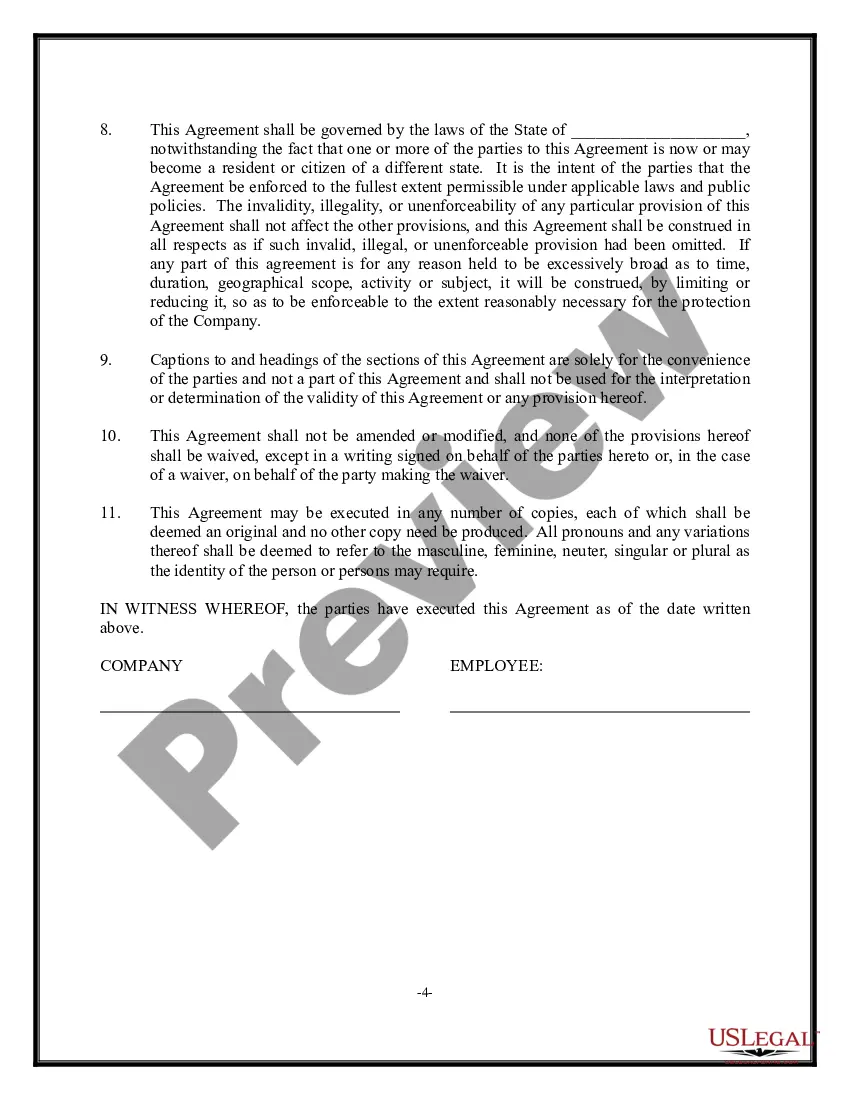
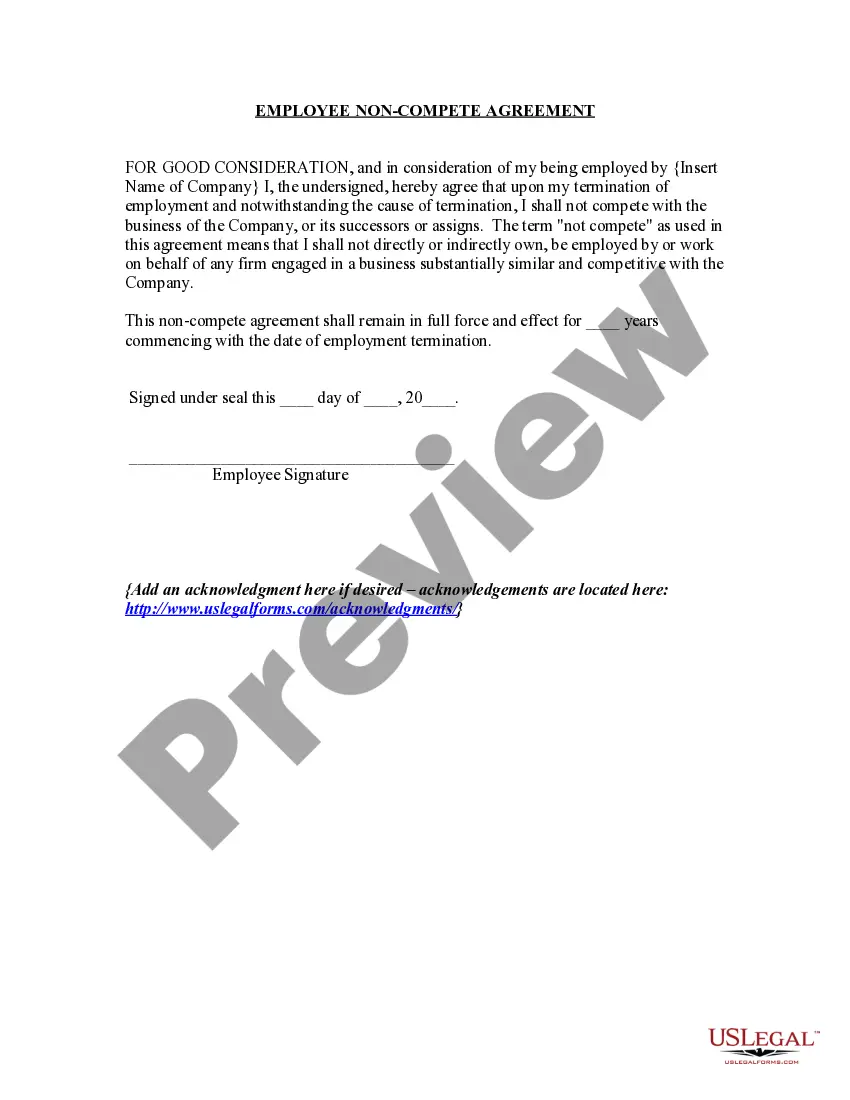
Get your form ready online
Our built-in tools help you complete, sign, share, and store your documents in one place.
Make edits, fill in missing information, and update formatting in US Legal Forms—just like you would in MS Word.
Download a copy, print it, send it by email, or mail it via USPS—whatever works best for your next step.
Sign and collect signatures with our SignNow integration. Send to multiple recipients, set reminders, and more. Go Premium to unlock E-Sign.
If this form requires notarization, complete it online through a secure video call—no need to meet a notary in person or wait for an appointment.
We protect your documents and personal data by following strict security and privacy standards.

Make edits, fill in missing information, and update formatting in US Legal Forms—just like you would in MS Word.

Download a copy, print it, send it by email, or mail it via USPS—whatever works best for your next step.

Sign and collect signatures with our SignNow integration. Send to multiple recipients, set reminders, and more. Go Premium to unlock E-Sign.

If this form requires notarization, complete it online through a secure video call—no need to meet a notary in person or wait for an appointment.

We protect your documents and personal data by following strict security and privacy standards.
Looking for another form?








Form popularity
FAQ
In Canada, the enforceability of non-compete agreements is quite strict. Courts are cautious and will only enforce such agreements if they protect a legitimate business interest.
Non-compete agreements are a critical aspect of employment contracts in Arkansas: They govern the ability of employees to compete with their employers after leaving a job. Because of this, understanding these agreements is vital for employees to protect their rights and future career opportunities.
Instead, as of writing, prevailing Philippine case law confirms that non-compete agreements are legally valid and binding in the country as a contractual stipulation under Philippine civil law, and not under its labour code.
Under the Noncompete Rule, the FTC adopted a comprehensive ban on new noncompetes with all workers, including senior executives. The final Noncompete Rule provides that it is an unfair method of competition—and therefore a violation of Section 5—for employers to enter into noncompetes with workers.
In the UK, non-compete clauses are prima facie unenforceable, unless the employer can show that the restriction is reasonable. Despite certain challenges with proving reasonableness, non-competes are still widely used in the UK and across many jurisdictions in the world.
Now that the FTC is permanently enjoined from enforcing the rule, (unless and until a successful FTC appeal), non-competes return to the status quo and are legal and enforceable on the same terms as they were before the FTC passed the non-compete rule.
How To Legally Get Out of a Non-Compete Agreement Get a New Job That Doesn't Involve Competitive Activities. Prove That Your Former Employer Breached the Contract. Argue That the Non-Compete Provision Isn't Enforceable. Show That Your Previous Employer Has No Legitimate Business Interests.
If an employee breaches a non-compete clause, you may have grounds for taking them to court. A court could oblige them to stop breaching the term, and you may also be able to have your legal costs covered.
Decision staying the effective date of the FTC's noncompete rule. "The Court sets aside the Non-Compete rule. Consequently, the Rule shall not be enforced or otherwise take effect on its effective date of September 4, 2024 or thereafter.
