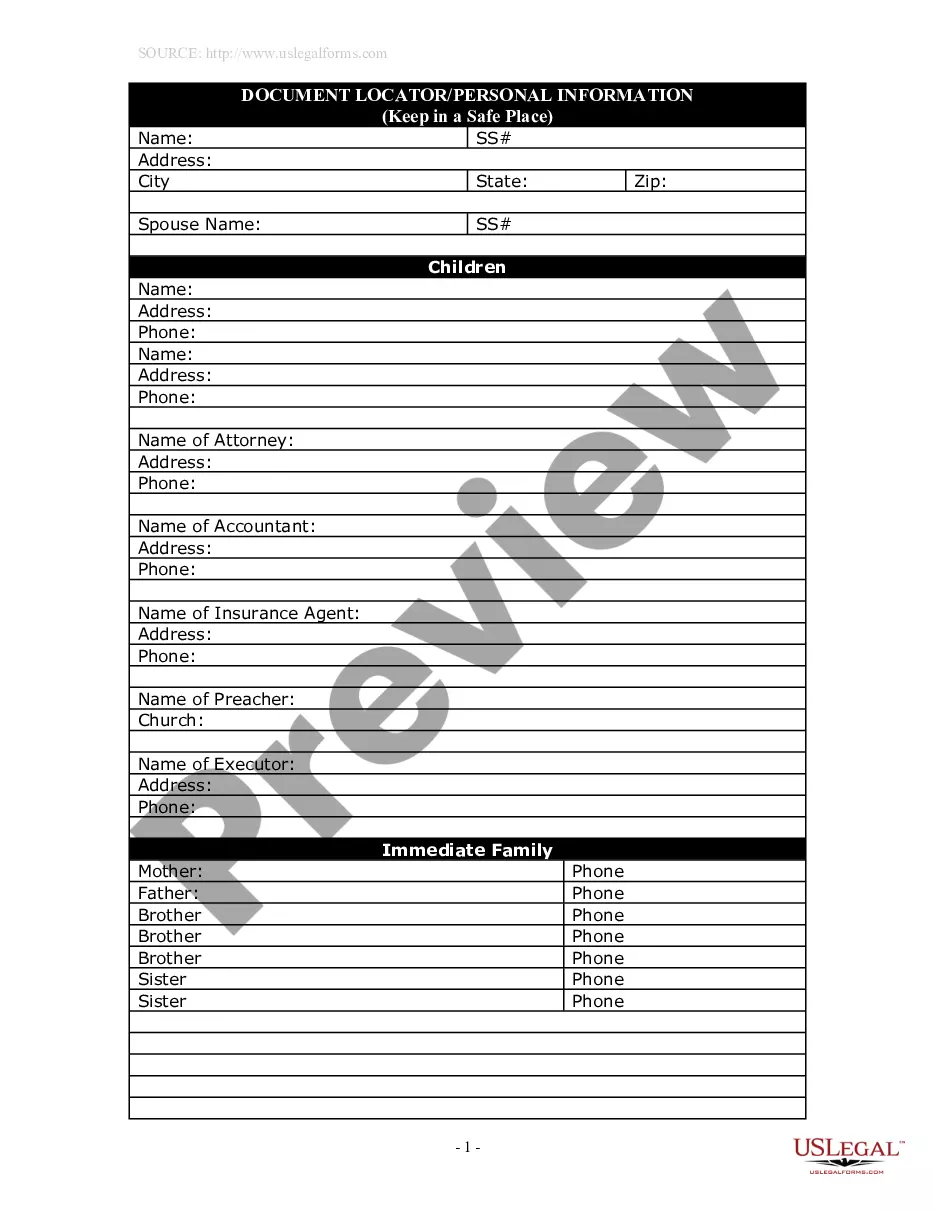
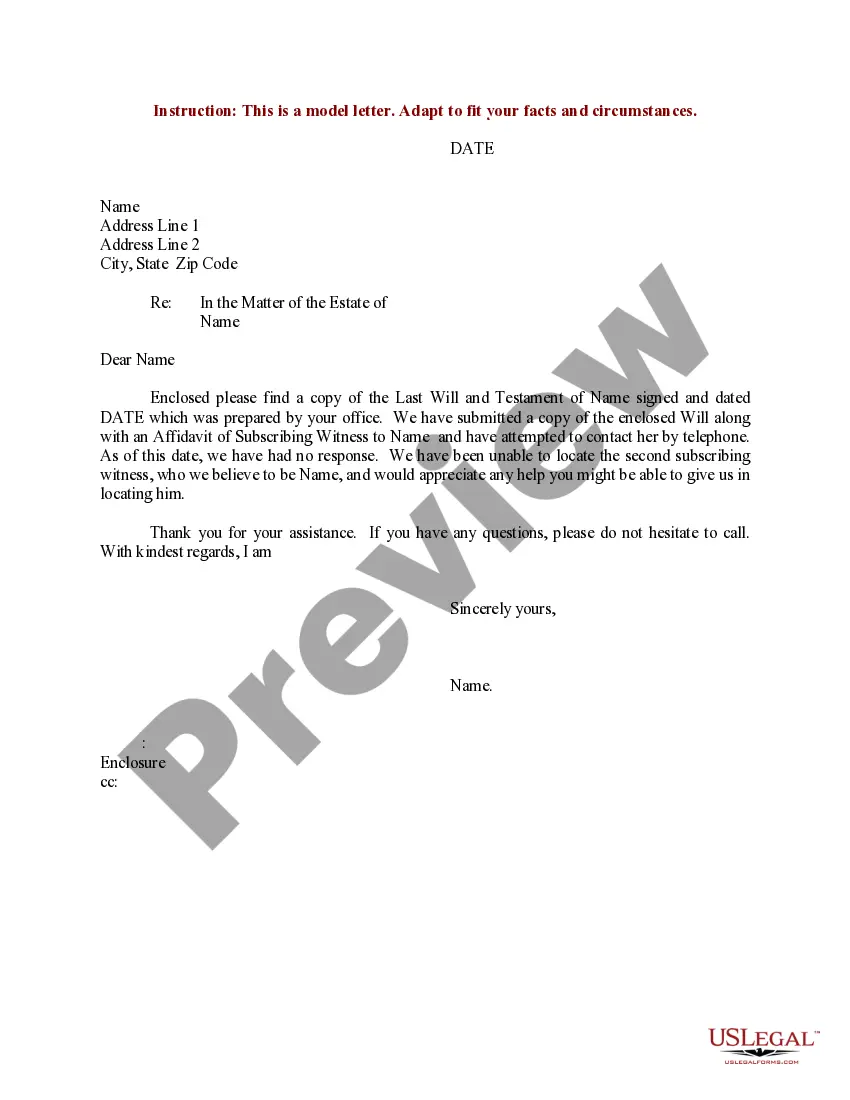
Sample Letter regarding Last Will and Testament with Affidavit of Subscribing Witness
About this form
This Sample Letter regarding Last Will and Testament with Affidavit of Subscribing Witness is a template designed to communicate important legal information regarding a deceased person's will. This form serves as a sample letter to accompany the Last Will and Testament, providing a clear channel for notifying involved parties about the will and the efforts made to locate witnesses. It is crucial for ensuring the proper handling of an estate and differs from other legal documents by combining elements of formal notification and request for assistance in the will execution process.
What’s included in this form
- Date of the letter
- Recipient's name and address
- Subject line indicating the estate matter
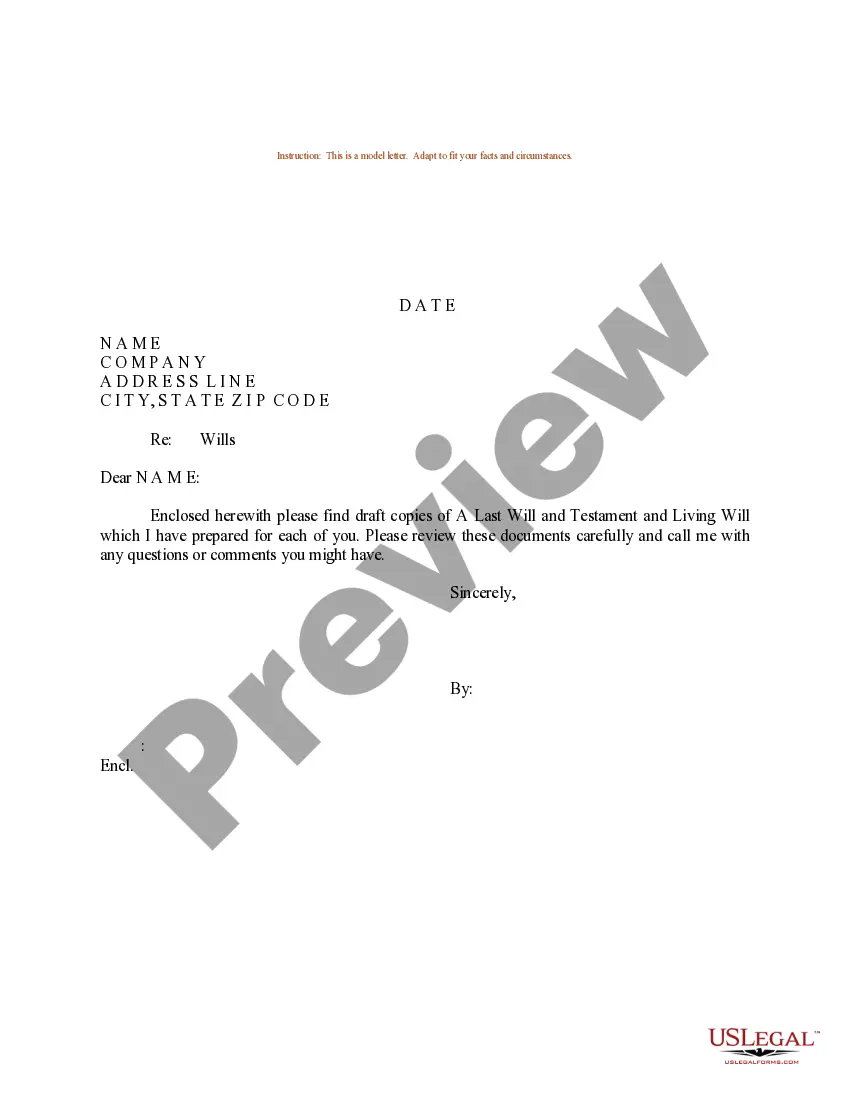
- Enclosure notice regarding the Last Will and Testament
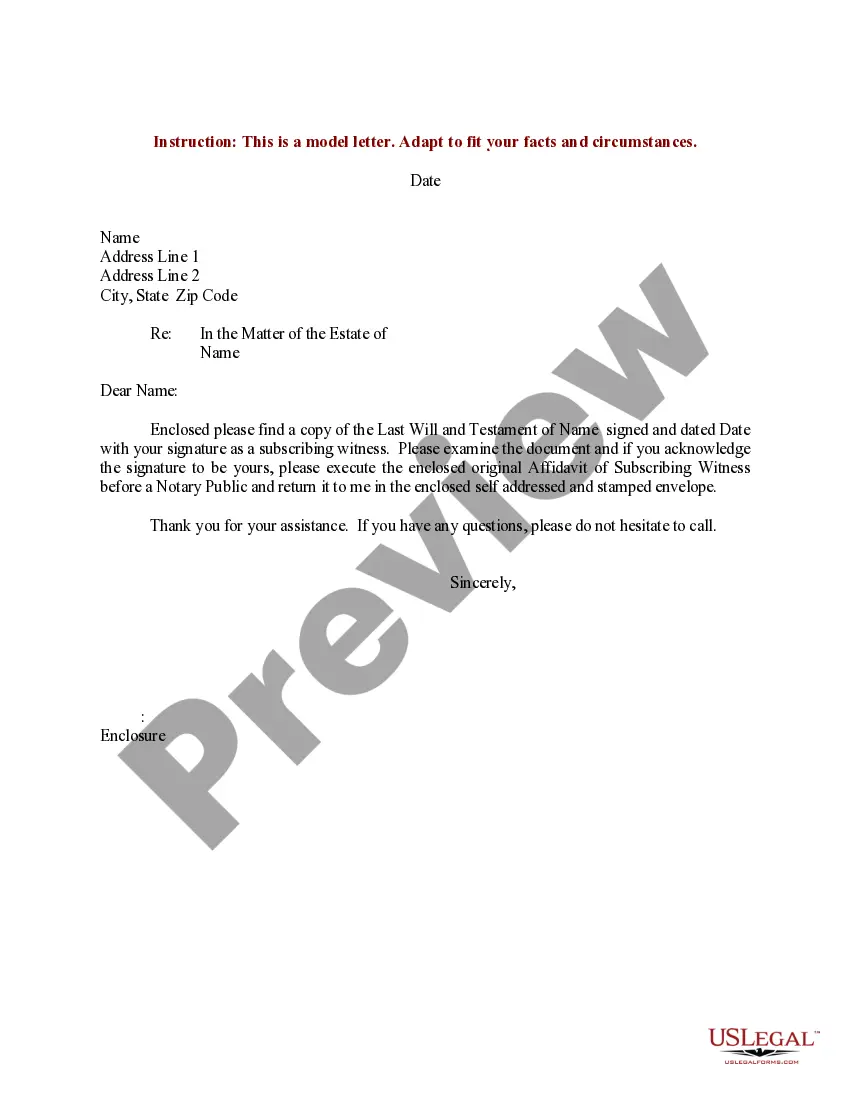
- Request for locating a subscribing witness
- Closing remarks and contact information for further questions
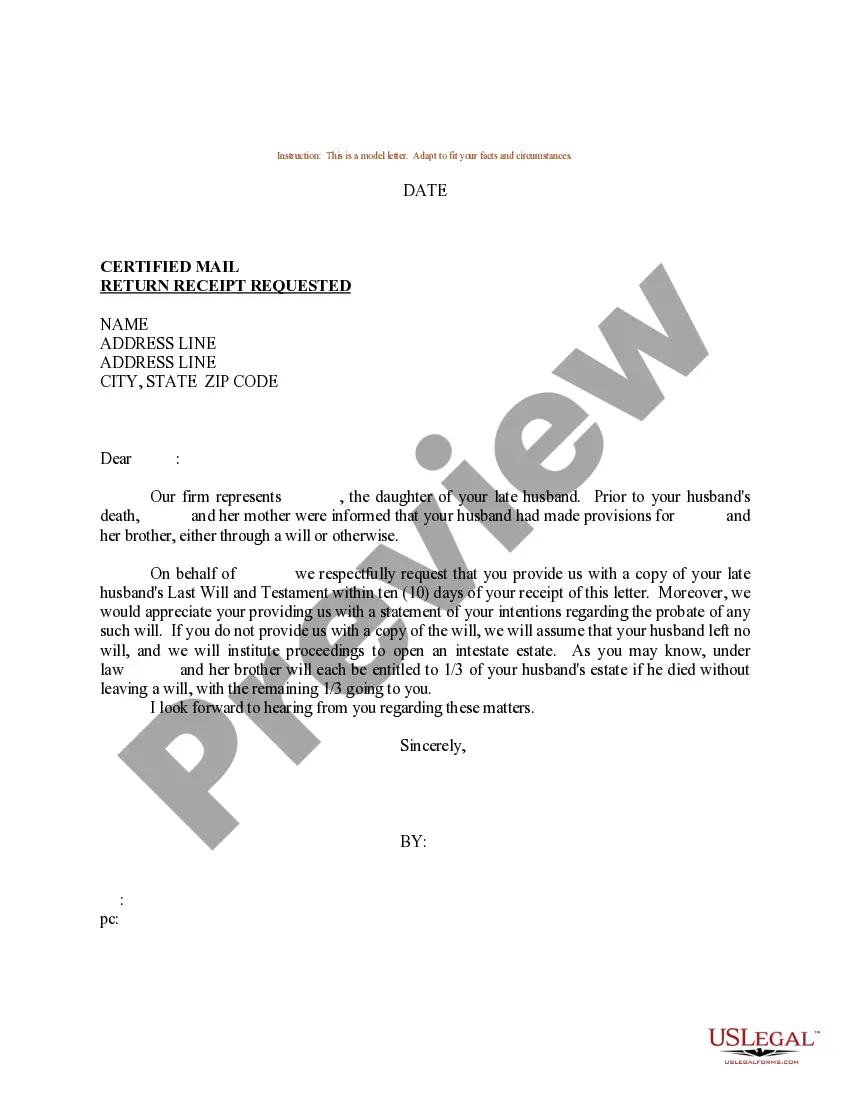
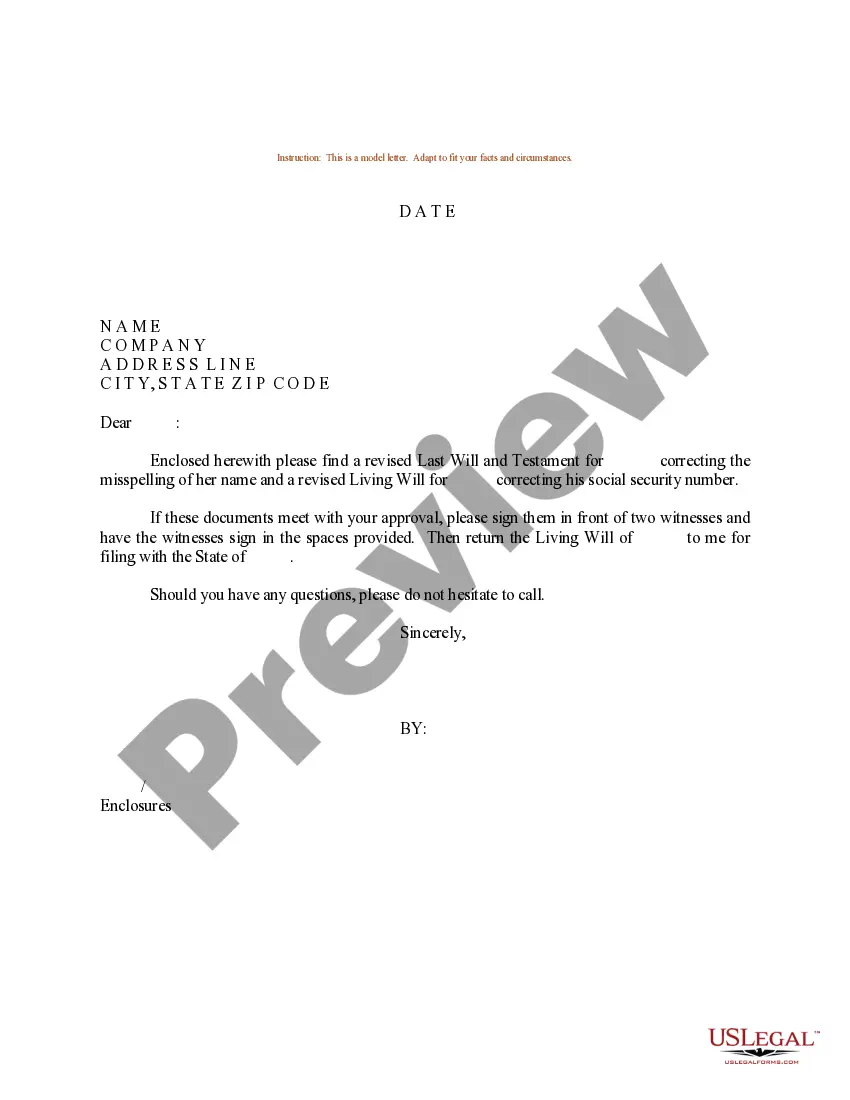
When this form is needed
This form is used when informing involved parties, such as legal representatives or family members, about the existence of a will and the necessary steps for its execution. It is particularly relevant when there are issues related to locating subscribers or witnesses to the will, ensuring all legal obligations are met in the distribution of the decedent's estate.
Who needs this form
- Executors or personal representatives of an estate
- Family members or heirs of the decedent
- Legal professionals managing the estate's affairs
- Anyone needing to communicate details regarding the Last Will and Testament
How to complete this form
- Enter the date at the top of the letter.
- Provide the name and address of the recipient.
- State the subject line indicating the estate matter.
- Include the enclosed Last Will and Testament details.
- Request assistance in locating the needed subscribing witness.
- Close with your contact information for follow-up queries.
Does this document require notarization?
This form must be notarized to be legally valid. US Legal Forms provides secure online notarization powered by Notarize, allowing you to complete the process through a verified video call.
Get your form ready online
Our built-in tools help you complete, sign, share, and store your documents in one place.
Make edits, fill in missing information, and update formatting in US Legal Forms—just like you would in MS Word.
Download a copy, print it, send it by email, or mail it via USPS—whatever works best for your next step.
Sign and collect signatures with our SignNow integration. Send to multiple recipients, set reminders, and more. Go Premium to unlock E-Sign.
If this form requires notarization, complete it online through a secure video call—no need to meet a notary in person or wait for an appointment.
We protect your documents and personal data by following strict security and privacy standards.

Make edits, fill in missing information, and update formatting in US Legal Forms—just like you would in MS Word.

Download a copy, print it, send it by email, or mail it via USPS—whatever works best for your next step.

Sign and collect signatures with our SignNow integration. Send to multiple recipients, set reminders, and more. Go Premium to unlock E-Sign.

If this form requires notarization, complete it online through a secure video call—no need to meet a notary in person or wait for an appointment.

We protect your documents and personal data by following strict security and privacy standards.
Typical mistakes to avoid
- Failing to adequately explain the purpose of the letter.
- Not including complete contact information.
- Omitting important details about the enclosed documents.
- Neglecting to follow up if responses are not received.
Advantages of online completion
- Instant access to a professionally drafted template.
- Customizable to fit specific needs and circumstances.
- Downloadable and easy to print for convenience.
- Eliminates the need to write from scratch, saving time and effort.
Legal use & context
Using this letter can help clarify the intentions behind a will, promote transparency in estate handling, and assist in fulfilling legal obligations to inform involved parties.
What to keep in mind
- This letter is essential for formal communication regarding estate management.
- Confirm the inclusion of the Last Will and Testament and Affidavit.
- Focus on clarity and completeness in your correspondence.
- Be aware of any local laws affecting the use of this form.
Looking for another form?

Form popularity
FAQ
Notarizing a will is not necessary as long as your will has been properly constructed and witnessed; the court will view it as a legally binding document. However, you may still want to include a self-proving affidavit and get your will notarized, since it can help the probate process move faster.
A self-proving affidavit is a document, signed by you and two witnesses, that verifies under oath that your witnesses saw you sign your will and that it's legally valid. Generally speaking, your self-proving affidavit must be notarized, meaning you and the witnesses sign it in front of a notary public.
In some states, a will is self-proving when two witnesses sign under penalty of perjury that they observed the willmaker sign it and that he told them it was his will. If no one contests the validity of the will, the probate court will accept the will without hearing the testimony of the witnesses or other evidence.
Yes! Your Free Will Kit will be delivered to you at no-cost, no purchase necessary.
Choose an online legal services provider or locate a will template. Carefully consider your distribution wishes. Identify a personal representative/executor. Understand the requirements to make your will legal. Make sure someone else knows about your will. Consult a lawyer if you have a more complicated estate.
Find an online template or service. Make a list of your assets. Be specific about who gets what. If you have minor children, choose a guardian. Give instructions for your pet. Choose an executor. Name a 'residuary beneficiary' List your funeral preferences.
Write your will. You can work with a lawyer or use an online will kit like Fabric's to write your will. Grab the right self-proving affidavit form. Take your witnesses to a notary public. Sign the form. Store the affidavit with your will.
Include personal identifying information. Include a statement about your age and mental status. Designate an executor. Decide who will take care of your children. Choose your beneficiaries. List your funeral details. Sign and date your Last Will and Testament.
Contrary to popular belief, you do not need to have an attorney draft a will for you. Anyone can write this document on their own, and as long as it meets all of the legal requirements of the state, courts will recognize one you wrote yourself.