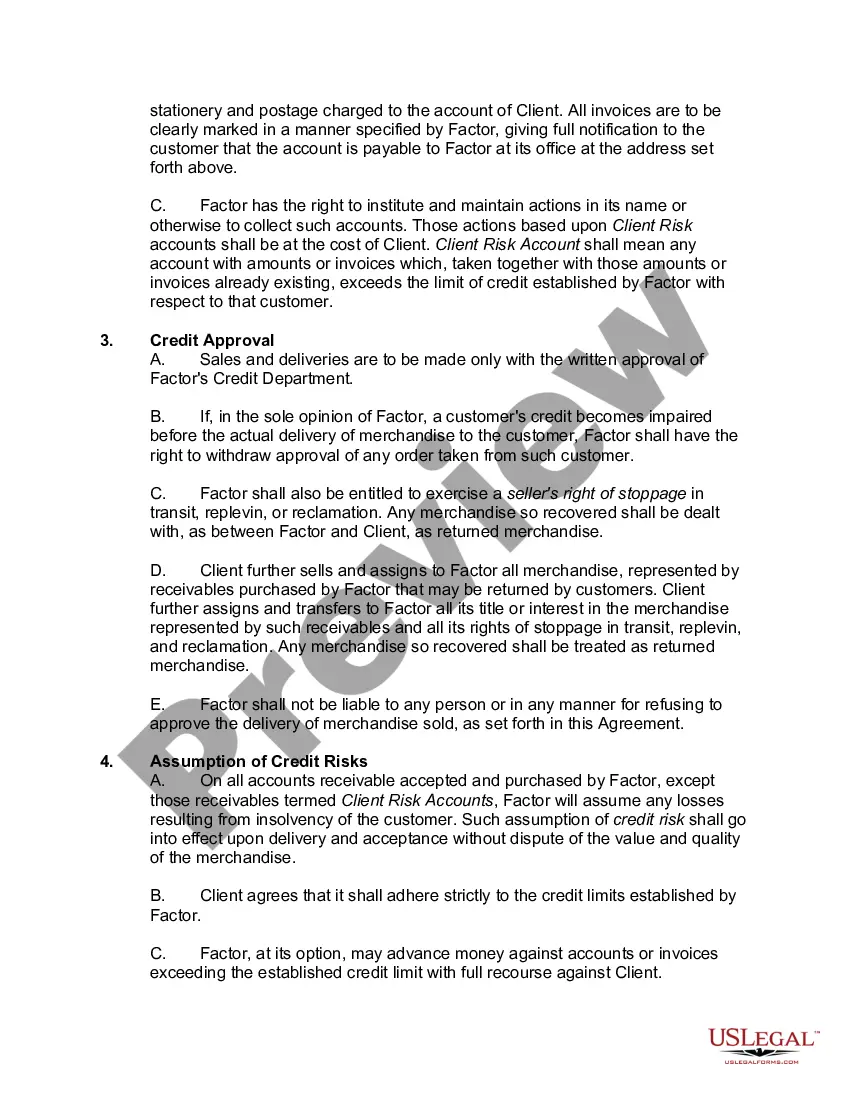
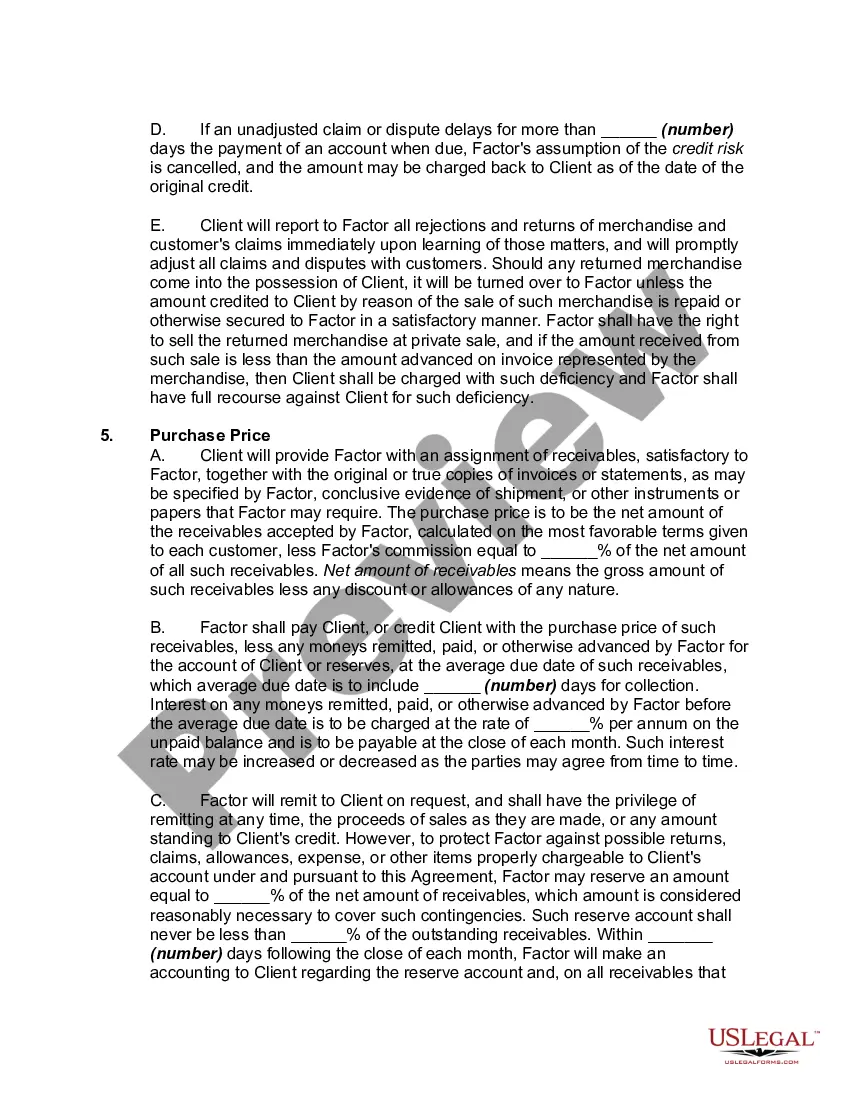
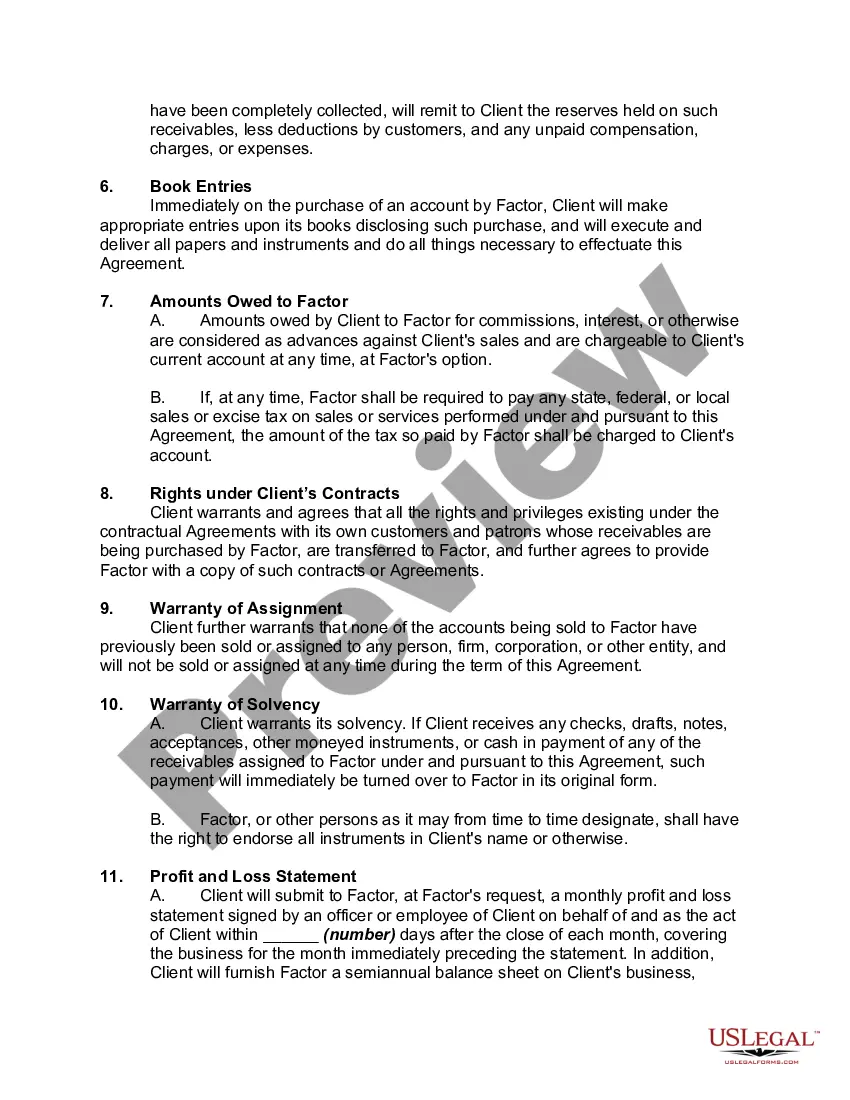
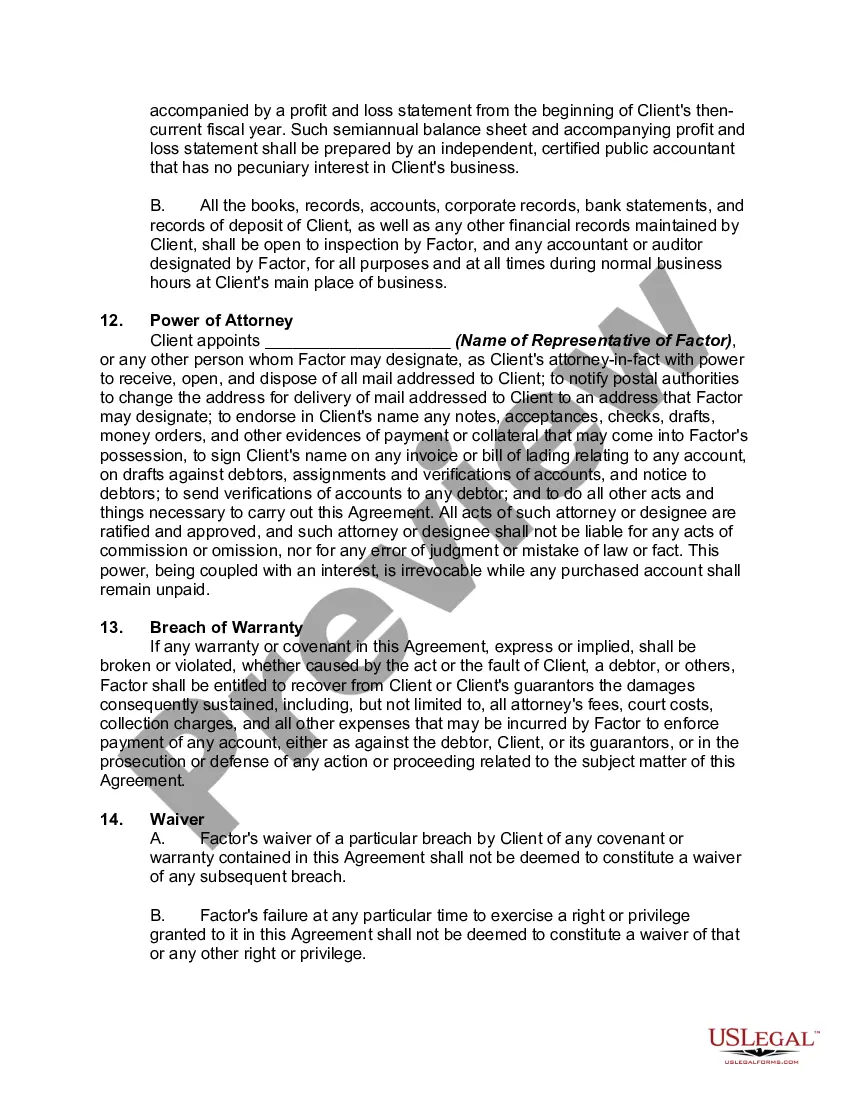
Factoring Agreement Editable With Recourse In Phoenix
Description



Get your form ready online
Our built-in tools help you complete, sign, share, and store your documents in one place.
Make edits, fill in missing information, and update formatting in US Legal Forms—just like you would in MS Word.
Download a copy, print it, send it by email, or mail it via USPS—whatever works best for your next step.
Sign and collect signatures with our SignNow integration. Send to multiple recipients, set reminders, and more. Go Premium to unlock E-Sign.
If this form requires notarization, complete it online through a secure video call—no need to meet a notary in person or wait for an appointment.
We protect your documents and personal data by following strict security and privacy standards.

Make edits, fill in missing information, and update formatting in US Legal Forms—just like you would in MS Word.

Download a copy, print it, send it by email, or mail it via USPS—whatever works best for your next step.

Sign and collect signatures with our SignNow integration. Send to multiple recipients, set reminders, and more. Go Premium to unlock E-Sign.

If this form requires notarization, complete it online through a secure video call—no need to meet a notary in person or wait for an appointment.

We protect your documents and personal data by following strict security and privacy standards.
Looking for another form?








Form popularity
FAQ
The accuracy of any calculations or rates are not guaranteed, for accurate calculations, rates and advice please call Phoenix Capital Group, 623-298-3450.
How to Record Invoice Factoring Transactions With Recourse Record a credit in accounts receivable for the sold invoice in the amount of $375,000. In the recourse liability column, record a credit after estimating the bad debts and any other possible losses ($750).
How to Record Invoice Factoring Transactions With Recourse Record a credit in accounts receivable for the sold invoice in the amount of $375,000. In the recourse liability column, record a credit after estimating the bad debts and any other possible losses ($750).
With recourse factoring, the business is responsible. But with non-recourse factoring, the factoring company is responsible, although there may be some stipulations based on the terms of the agreement. Higher advance rates (i.e. amount of funding you receive upfront). Lower advance rates.
The Most Common Invoice Factoring Requirements A factoring application. An accounts receivable aging report. A copy of your Articles of Incorporation. Invoices to factor. Credit-worthy clients. A business bank account. A tax ID number. A form of personal identification.
How To Get Out Of Factoring Check your factoring contract. Get some guidance. Identify your problems with factoring. Consider product migration. Plan any product migration. Take over the credit control function. Calculate the residual funding gap. Plan your funding migration.
With recourse factoring, the business is responsible. But with non-recourse factoring, the factoring company is responsible, although there may be some stipulations based on the terms of the agreement. Higher advance rates (i.e. amount of funding you receive upfront). Lower advance rates.