General Form Example In Nassau
Description









Get your form ready online
Our built-in tools help you complete, sign, share, and store your documents in one place.
Make edits, fill in missing information, and update formatting in US Legal Forms—just like you would in MS Word.
Download a copy, print it, send it by email, or mail it via USPS—whatever works best for your next step.
Sign and collect signatures with our SignNow integration. Send to multiple recipients, set reminders, and more. Go Premium to unlock E-Sign.
If this form requires notarization, complete it online through a secure video call—no need to meet a notary in person or wait for an appointment.
We protect your documents and personal data by following strict security and privacy standards.

Make edits, fill in missing information, and update formatting in US Legal Forms—just like you would in MS Word.

Download a copy, print it, send it by email, or mail it via USPS—whatever works best for your next step.

Sign and collect signatures with our SignNow integration. Send to multiple recipients, set reminders, and more. Go Premium to unlock E-Sign.

If this form requires notarization, complete it online through a secure video call—no need to meet a notary in person or wait for an appointment.

We protect your documents and personal data by following strict security and privacy standards.
Looking for another form?







Form popularity
FAQ
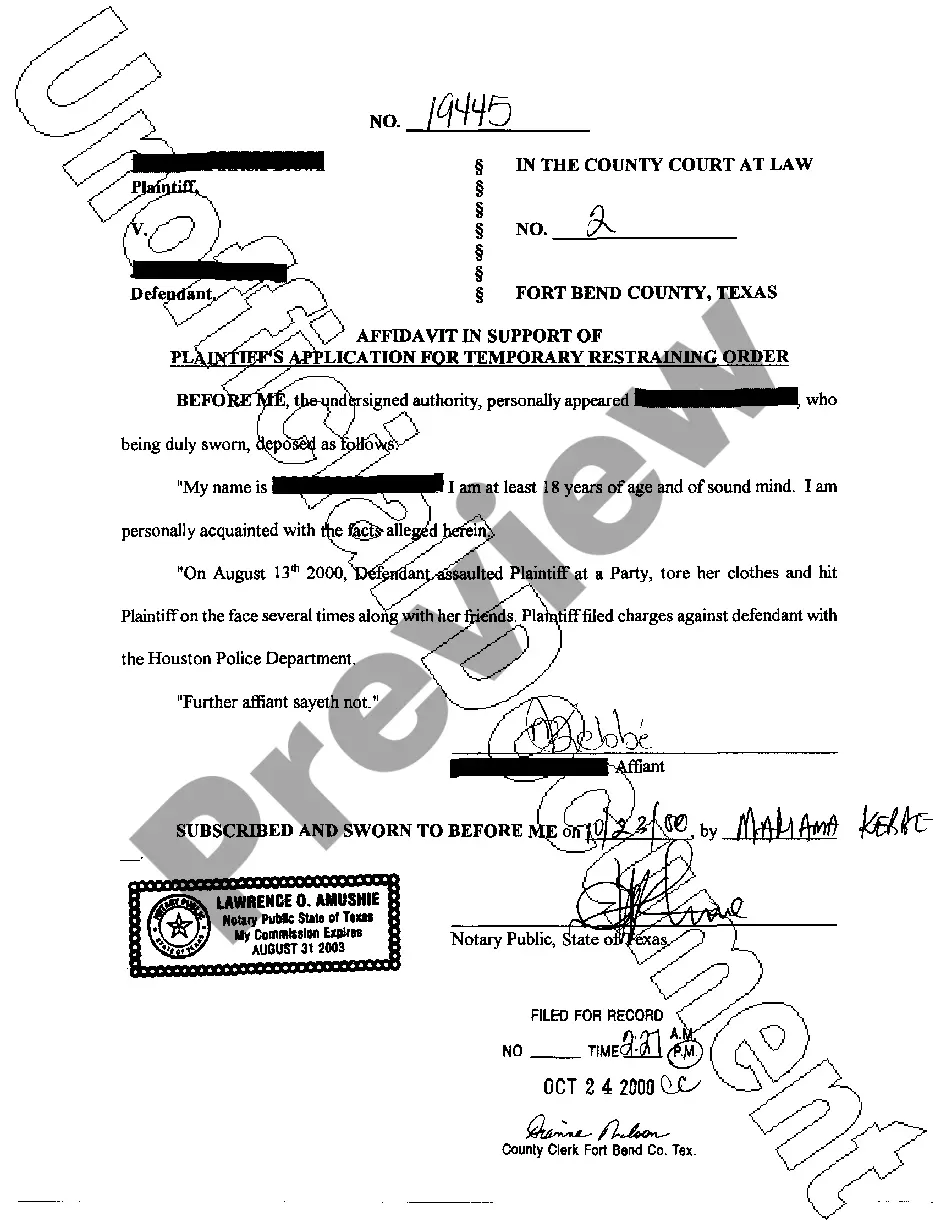
The Order to Show Cause often contains a direction to the parties that they stop some specific activity until the court hears or decides the motion. The Order to Show Cause is supported by an "Affidavit in Support," and copies of any documents that support the request and would help the judge make a decision.
An Order to Show Cause is a procedural device used to ask the court for certain relief. It is used rather than a Notice of Motion when some form of emergency relief is being requested of the court.
Bringing a motion by notice usually gives the other side weeks to respond and sets no real deadline for the court to make a decision. If the movant cannot wait weeks, she may submit an order to show cause, asking the court to set tight deadlines for a response and to make a decision.
An order to show cause (O.S.C.), is a court order or the demand of a judge requiring a party to justify or explain why the court should or should not grant a motion or a relief . For example, if a party requests a restraining order from a judge, the judge may need more information.
When you fill the form: Be honest and critical. Analyze your failures and mention the reasons for it. Keep the words minimal. Identify weaknesses. Mention your achievements. Link achievements to the job description and the organization's goals. Set the goals for the next review period. Resolve conflicts and grievances.
In New York, this type of substitute motion is called an "Order to Show Cause." An order to show cause can be heard anytime the court directs, even fewer than the usual eight days, and even as short as a few hours later, if the court is convinced there's a real emergency.
If you disagree with what is being asked for in the motion or order to show cause, you must prepare an affidavit in opposition (see Exhibit A). If you agree with what is being asked for, you must prepare an affidavit in support (see Exhibit B). You may attach any documents that support your position as “exhibits”.
In New York, this type of substitute motion is called an "Order to Show Cause." An order to show cause can be heard anytime the court directs, even fewer than the usual eight days, and even as short as a few hours later, if the court is convinced there's a real emergency.
In New York, this type of substitute motion is called an "Order to Show Cause." An order to show cause can be heard anytime the court directs, even fewer than the usual eight days, and even as short as a few hours later, if the court is convinced there's a real emergency.
How do I start my small claims case? You or someone else may start your case by filling out a court form. You may file by mail if you have a small claims case in Western Suffolk County or if you live outside New York City and you want to sue a party within New York City. The form describes your claim to the Court.
