Sample Performance Bonus Policy In Massachusetts
Description
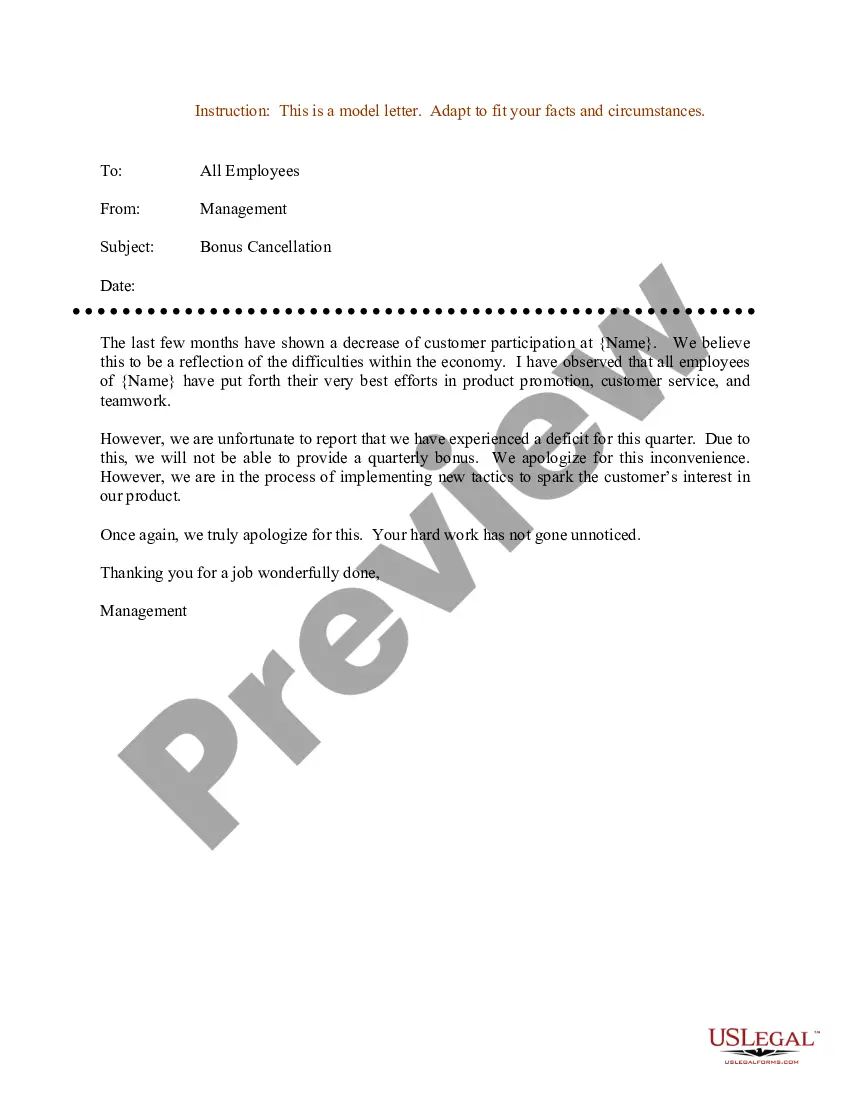
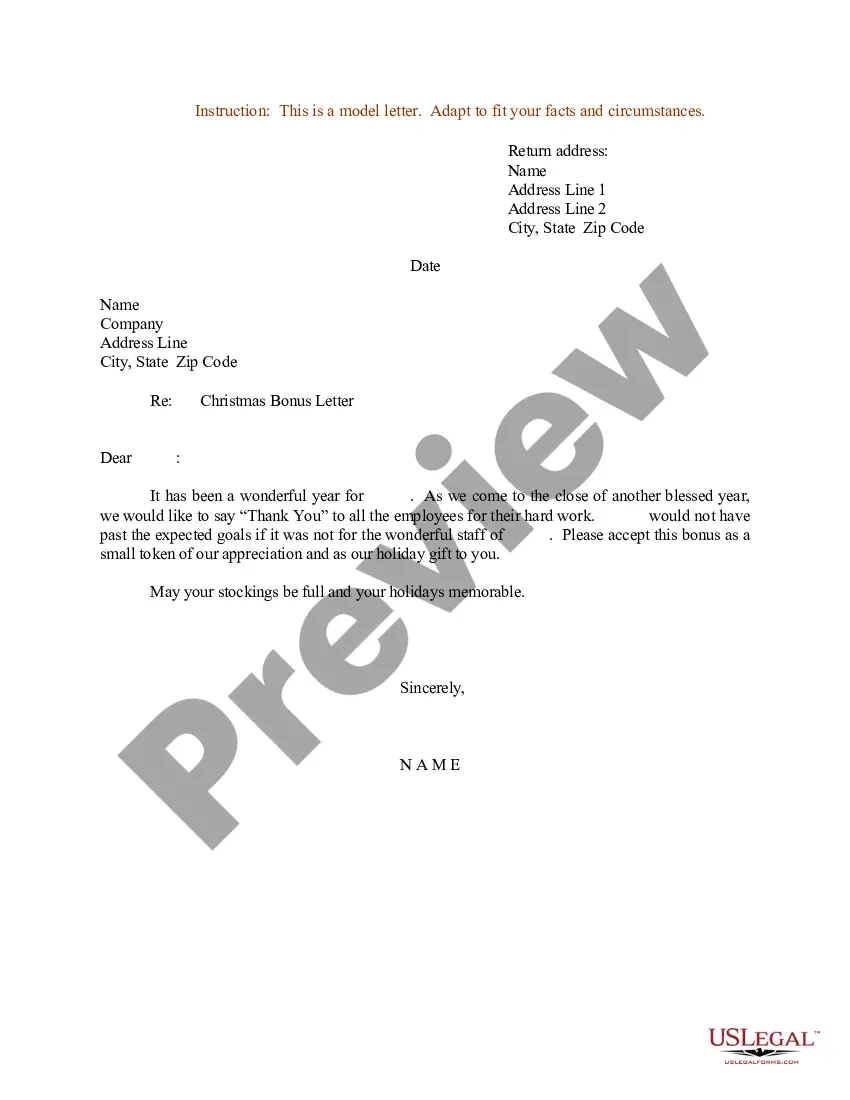
Get your form ready online
Our built-in tools help you complete, sign, share, and store your documents in one place.
Make edits, fill in missing information, and update formatting in US Legal Forms—just like you would in MS Word.
Download a copy, print it, send it by email, or mail it via USPS—whatever works best for your next step.
Sign and collect signatures with our SignNow integration. Send to multiple recipients, set reminders, and more. Go Premium to unlock E-Sign.
If this form requires notarization, complete it online through a secure video call—no need to meet a notary in person or wait for an appointment.
We protect your documents and personal data by following strict security and privacy standards.

Make edits, fill in missing information, and update formatting in US Legal Forms—just like you would in MS Word.

Download a copy, print it, send it by email, or mail it via USPS—whatever works best for your next step.

Sign and collect signatures with our SignNow integration. Send to multiple recipients, set reminders, and more. Go Premium to unlock E-Sign.

If this form requires notarization, complete it online through a secure video call—no need to meet a notary in person or wait for an appointment.

We protect your documents and personal data by following strict security and privacy standards.
Looking for another form?






Form popularity
FAQ
A common structure is tiered bonuses. Here, employees can achieve different "levels" of bonuses based on their performance metrics. For instance, reaching 80% of a target might secure a smaller bonus, while achieving 120% may earn a significantly larger one.
Some common examples of performance bonuses include: Commission-based bonus: Common in sales roles, employees earn a percentage of sales they generate. For instance, a car salesperson might earn a commission for each car sold.
Performance bonuses vary widely depending on the industry, company, and individual performance metrics. Generally, a typical reward might range from 5% to 20% of an employee's base salary, but it can also be a fixed amount.
Various factors, such as performance metrics, individual achievements, team accomplishments, and employee tenure, should be considered while formulating a rewarding bonus structure.
Because this bonus is given for performance above expectations, employees are not automatically entitled to it. Performance bonuses may be given to an entire team or department if, for example, specific sales figures were met or if the actions of that group were deemed to have been exceptional.
A performance bonus is an incentive provided by employers to employees based on individual, team, or company-wide achievements and contributions. Performance bonuses can be monetary or non-monetary. Non-monetary bonuses include extra vacation days, professional development opportunities, recognition, or gifts.
Performance bonuses for employees are typically calculated based on specific criteria set by the company. These criteria may include individual performance metrics, team goals, departmental targets, or company-wide objectives.
A common structure is tiered bonuses. Here, employees can achieve different "levels" of bonuses based on their performance metrics. For instance, reaching 80% of a target might secure a smaller bonus, while achieving 120% may earn a significantly larger one.
Put all the details of the Bonus Scheme in writing so the terms are easily understandable. Make sure the scheme is separate to the contract of employment so it can be easily reviewed and amended or updated as necessary. You should evaluate the scheme regularly to see if it is producing the results you want.
An employee bonus policy provides guidelines on how a company rewards its employees with additional financial incentives. It details eligibility, types of bonuses, and the procedures for granting them, ensuring fairness and transparency.

