Discrimination Definition For Middle School In San Antonio
Description




Get your form ready online
Our built-in tools help you complete, sign, share, and store your documents in one place.
Make edits, fill in missing information, and update formatting in US Legal Forms—just like you would in MS Word.
Download a copy, print it, send it by email, or mail it via USPS—whatever works best for your next step.
Sign and collect signatures with our SignNow integration. Send to multiple recipients, set reminders, and more. Go Premium to unlock E-Sign.
If this form requires notarization, complete it online through a secure video call—no need to meet a notary in person or wait for an appointment.
We protect your documents and personal data by following strict security and privacy standards.

Make edits, fill in missing information, and update formatting in US Legal Forms—just like you would in MS Word.

Download a copy, print it, send it by email, or mail it via USPS—whatever works best for your next step.

Sign and collect signatures with our SignNow integration. Send to multiple recipients, set reminders, and more. Go Premium to unlock E-Sign.

If this form requires notarization, complete it online through a secure video call—no need to meet a notary in person or wait for an appointment.

We protect your documents and personal data by following strict security and privacy standards.
Looking for another form?

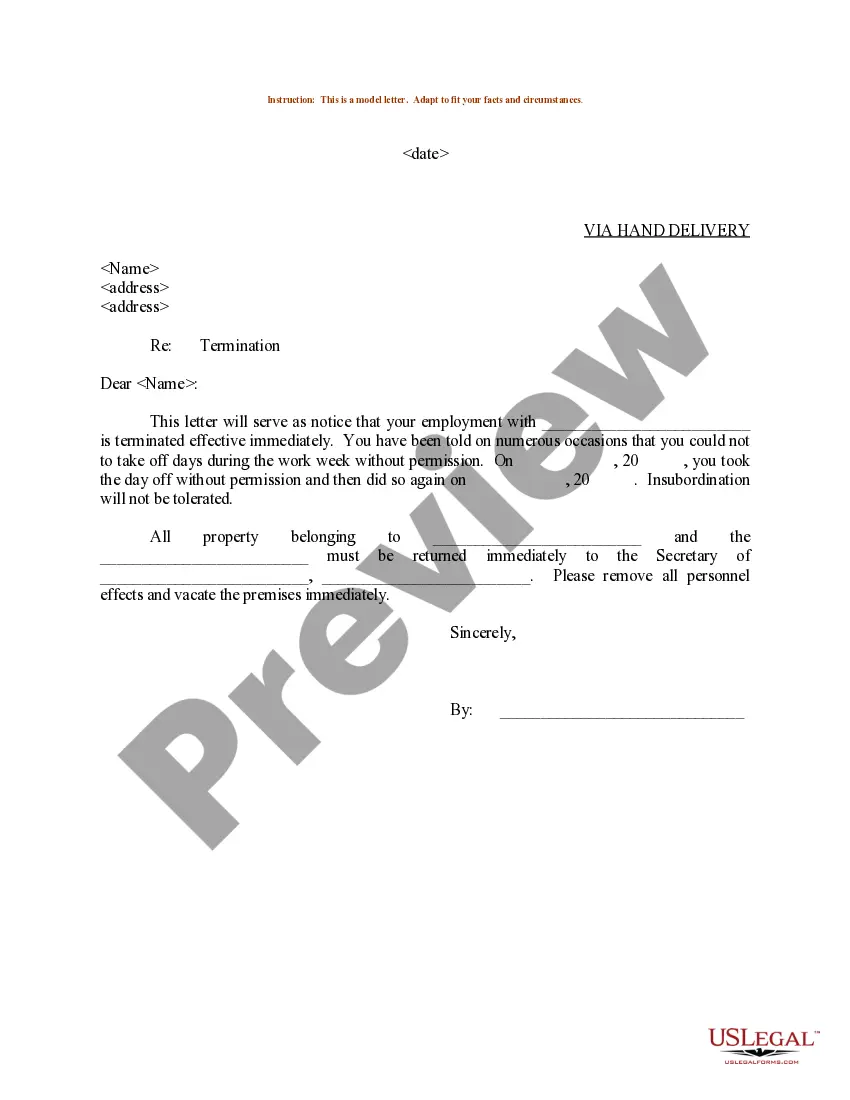

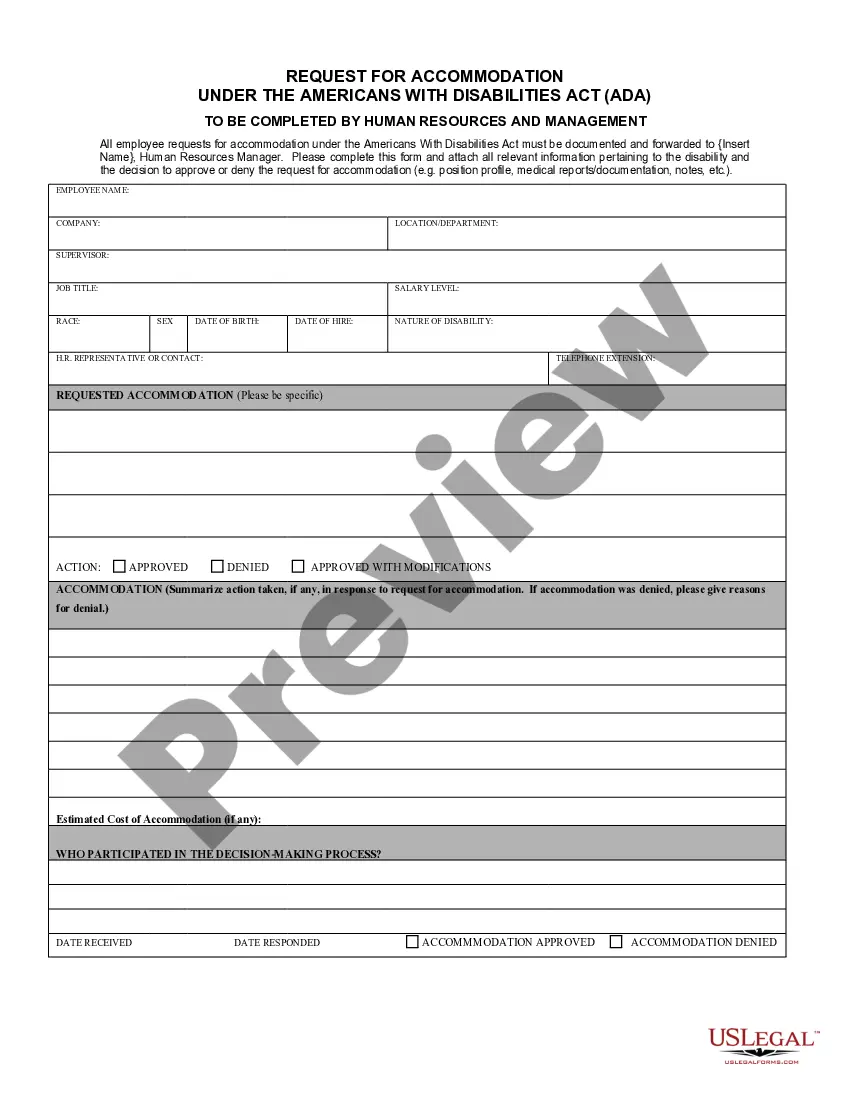
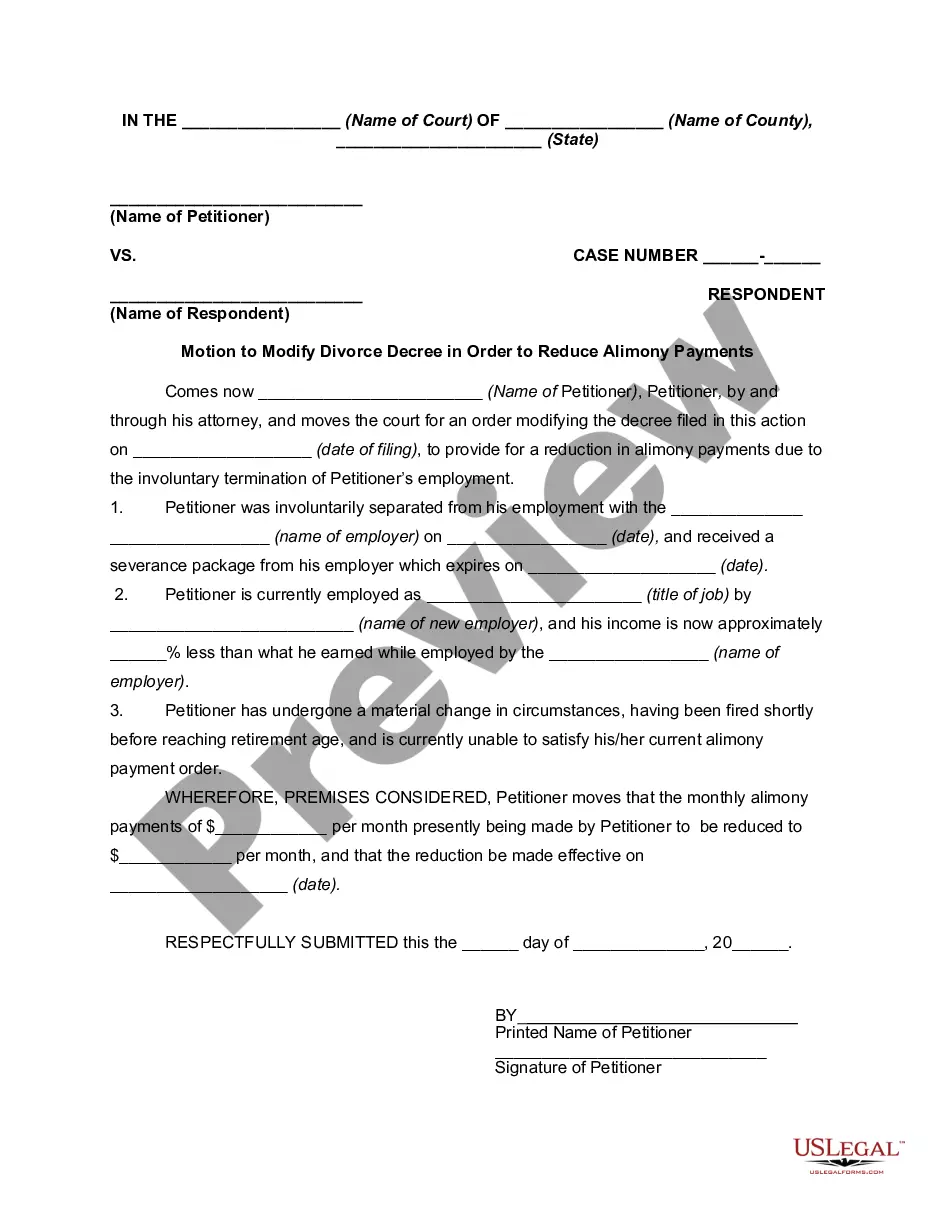
Form popularity
FAQ
Direct evidence of discrimination is usually found where an employer admits to the employee or someone else, verbally or in writing, that their intent or motive is to take an Adverse Employment Action (described above) against an employee because the employee is a member of a Protected Class.
Direct evidence often involves a statement from a decision-maker that expresses a discriminatory motive. Direct evidence can also include express or admitted classifications, in which a recipient explicitly distributes benefits or burdens based on race, color, or national origin.
Discrimination learning is being able to behave differently when given different, or unique, stimuli. This type of learning is used in conditioning when a subject is expected to respond to a specific stimuli and not respond to those which may be similar. This type of learning is common in people's lives.
Direct evidence often involves a statement from a decision-maker that expresses a discriminatory motive. Direct evidence can also include express or admitted classifications, in which a recipient explicitly distributes benefits or burdens based on race, color, or national origin.
Schools can tackle discrimination by promoting democracy, respect for human rights and citizenship. To ensure that all students' needs are met equally, schools need to prioritise language and cultural competences, multiperspectivity in history and gender equality.
Discrimination means treating someone unfairly because of a certain characteristic. Discrimination can be on the basis of one's race, gender, or disability. Most public schools are extensions of the government. This is because they're run by the states. These schools usually receive funding from the federal government.
Discrimination means treating someone unfairly because of a certain characteristic. Discrimination can be on the basis of one's race, gender, or disability. Most public schools are extensions of the government. This is because they're run by the states. These schools usually receive funding from the federal government.
Examples include harsher treatment of minority students compared to their non-minority counterparts on punishments like: Suspension. Unfair grading policies. The allowance of discriminatory behavior perpetrated by other students in the classroom.
Filing a Complaint The Texas Workforce Commission Civil Rights Division (TWCCRD) Employment Discrimination Inquiry Submission System (EDISS) is the method to submit your employment discrimination complaint. It provides an ample amount of space to describe how you have been discriminated against.
The authority to investigate school districts and charter schools is specified under Chapter 39 of the Texas Education Code. The Commissioner of Education or the Commissioner's designee authorizes the Special Investigation Unit (SIU) to conduct a Special Investigation (SI) pursuant to TEC §§ 39.003.