Title Vii Regulations In Maricopa
Description




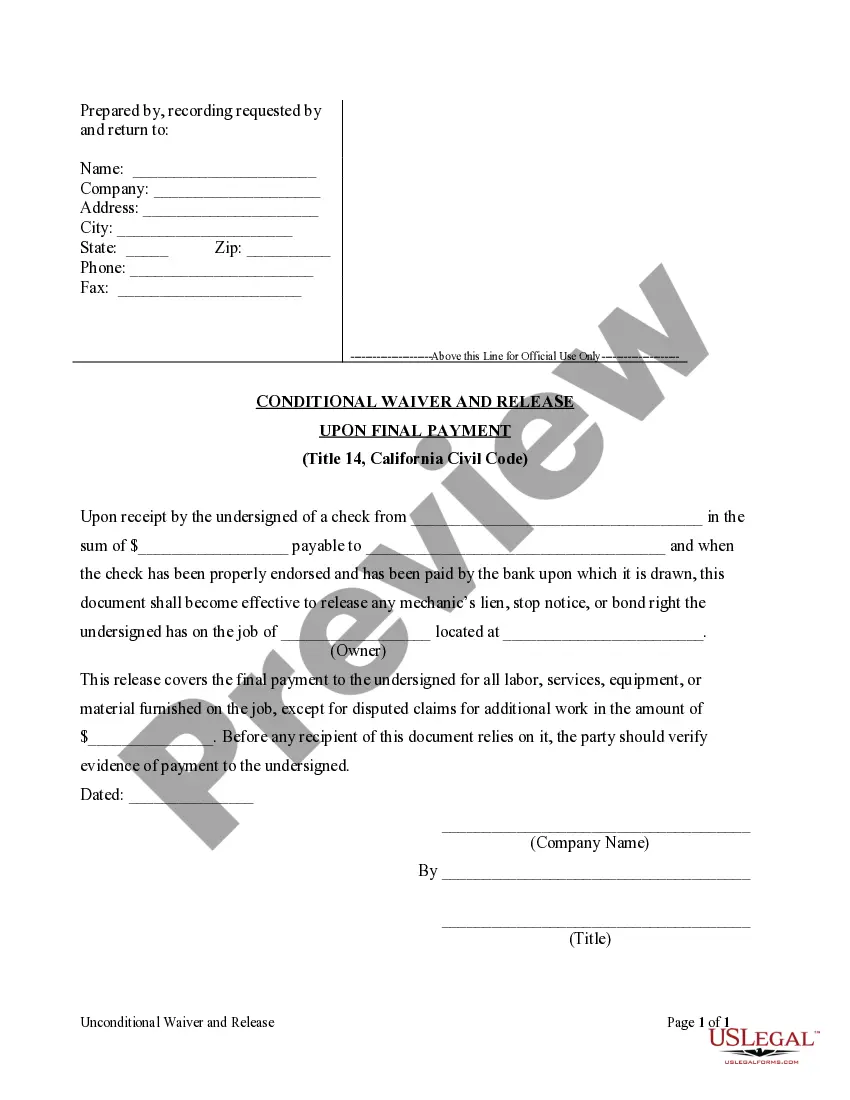
Get your form ready online
Our built-in tools help you complete, sign, share, and store your documents in one place.
Make edits, fill in missing information, and update formatting in US Legal Forms—just like you would in MS Word.
Download a copy, print it, send it by email, or mail it via USPS—whatever works best for your next step.
Sign and collect signatures with our SignNow integration. Send to multiple recipients, set reminders, and more. Go Premium to unlock E-Sign.
If this form requires notarization, complete it online through a secure video call—no need to meet a notary in person or wait for an appointment.
We protect your documents and personal data by following strict security and privacy standards.

Make edits, fill in missing information, and update formatting in US Legal Forms—just like you would in MS Word.

Download a copy, print it, send it by email, or mail it via USPS—whatever works best for your next step.

Sign and collect signatures with our SignNow integration. Send to multiple recipients, set reminders, and more. Go Premium to unlock E-Sign.

If this form requires notarization, complete it online through a secure video call—no need to meet a notary in person or wait for an appointment.

We protect your documents and personal data by following strict security and privacy standards.
Looking for another form?








Form popularity
FAQ
When applying to college, Title VII provides all students with a fair and equal chance at acceptance.
Title IX protects the student from the faculty member's conduct. Title VII addresses the faculty conduct (as an employee of the institution).
Supportive measures must be offered even if a complainant does not wish to initiate or participate in a grievance process. Every situation is unique, and individuals react to sexual harassment differently. Therefore, the Final Rule gives complainants control over the school-level response best meeting their needs.
Title IX protects the student from the faculty member's conduct. Title VII addresses the faculty conduct (as an employee of the institution).
For example, this title typically does not cover: Independent contractors. U.S. citizens who are working abroad for non-U.S.-controlled businesses.
This subchapter shall not apply to an employer with respect to the employment of aliens outside any State, or to a religious corporation, association, educational institution, or society with respect to the employment of individuals of a particular religion to perform work connected with the carrying on by such ...
As a result, state laws may supplement and even cover some shortcomings of Title VII. Nonetheless, concurrent with the preemption clause, Title VII may preempt state laws where those laws frustrate the purpose or execution of the federal law.
Simply put, Title VII does not apply to every employer. In fact, as a general rule, it typically only covers private and public sector employers with 15 or more employees. These employees may include: Part-time employees.
Plaintiff-Appellant Warnether Muhammad filed this Title VII suit against his employer, Caterpillar, Inc., alleging that his co-workers created a hostile work environment based in part on his sexual orientation, and that his supervisor unlawfully retaliated against him by suspending him after he complained about the ...
Title VII applies to all school districts, private schools and charter schools.