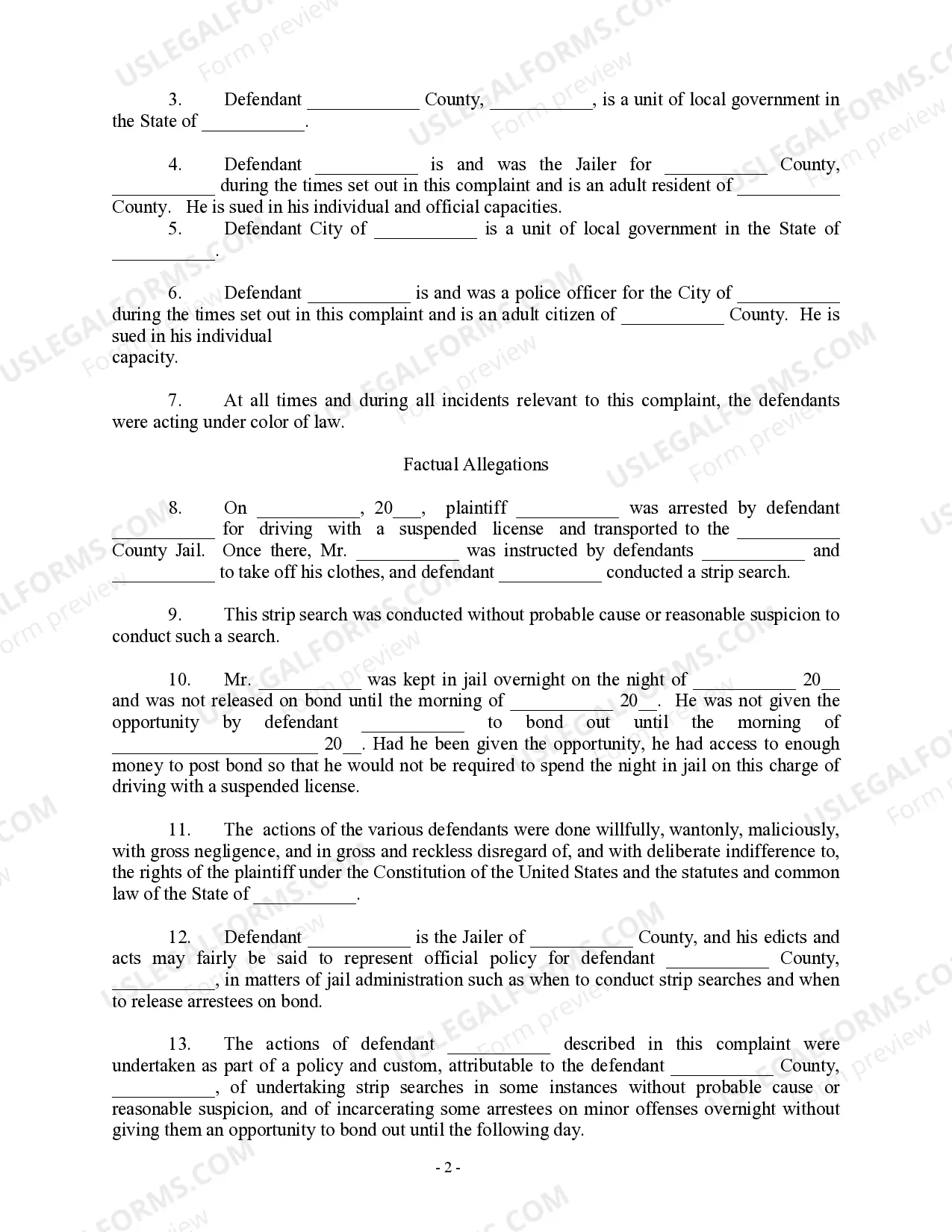
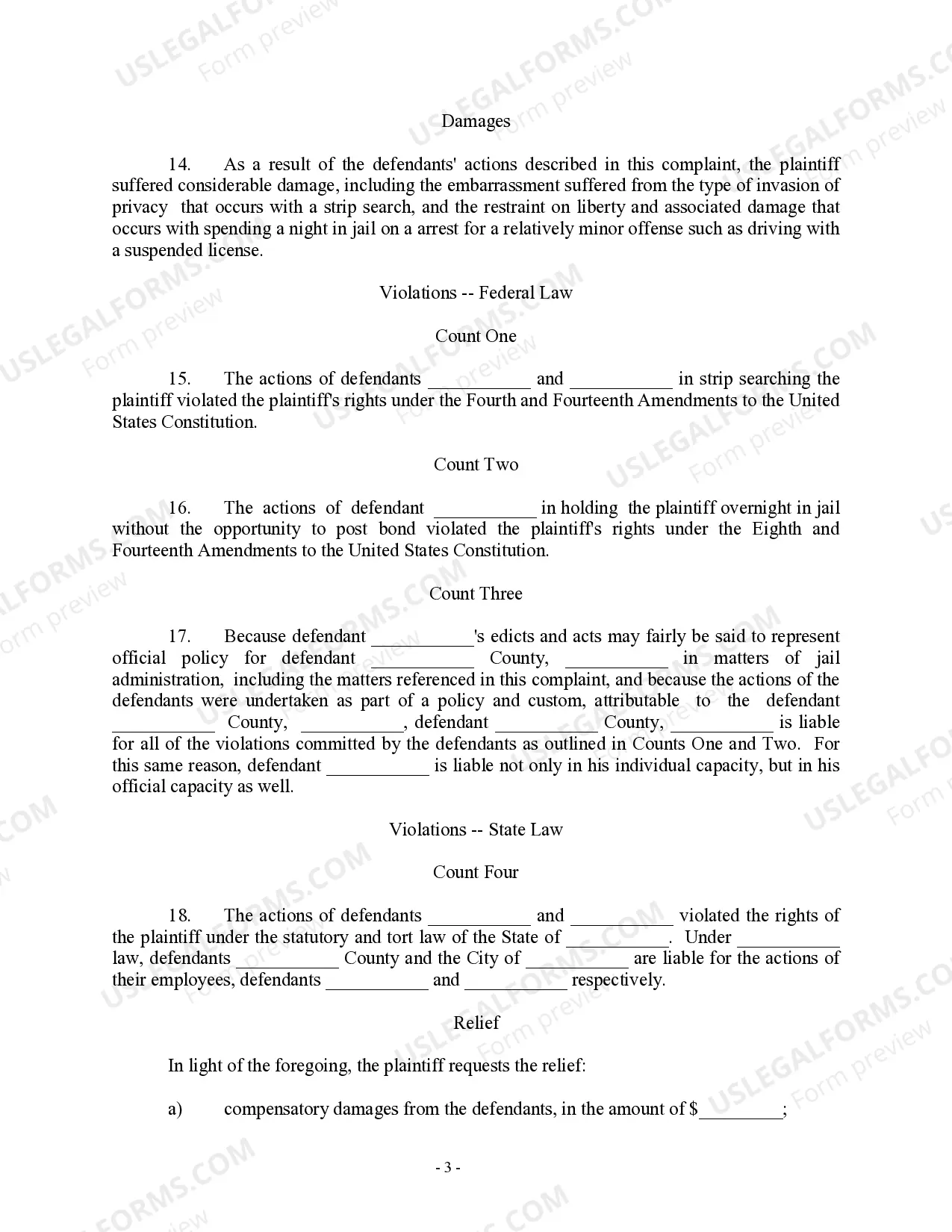
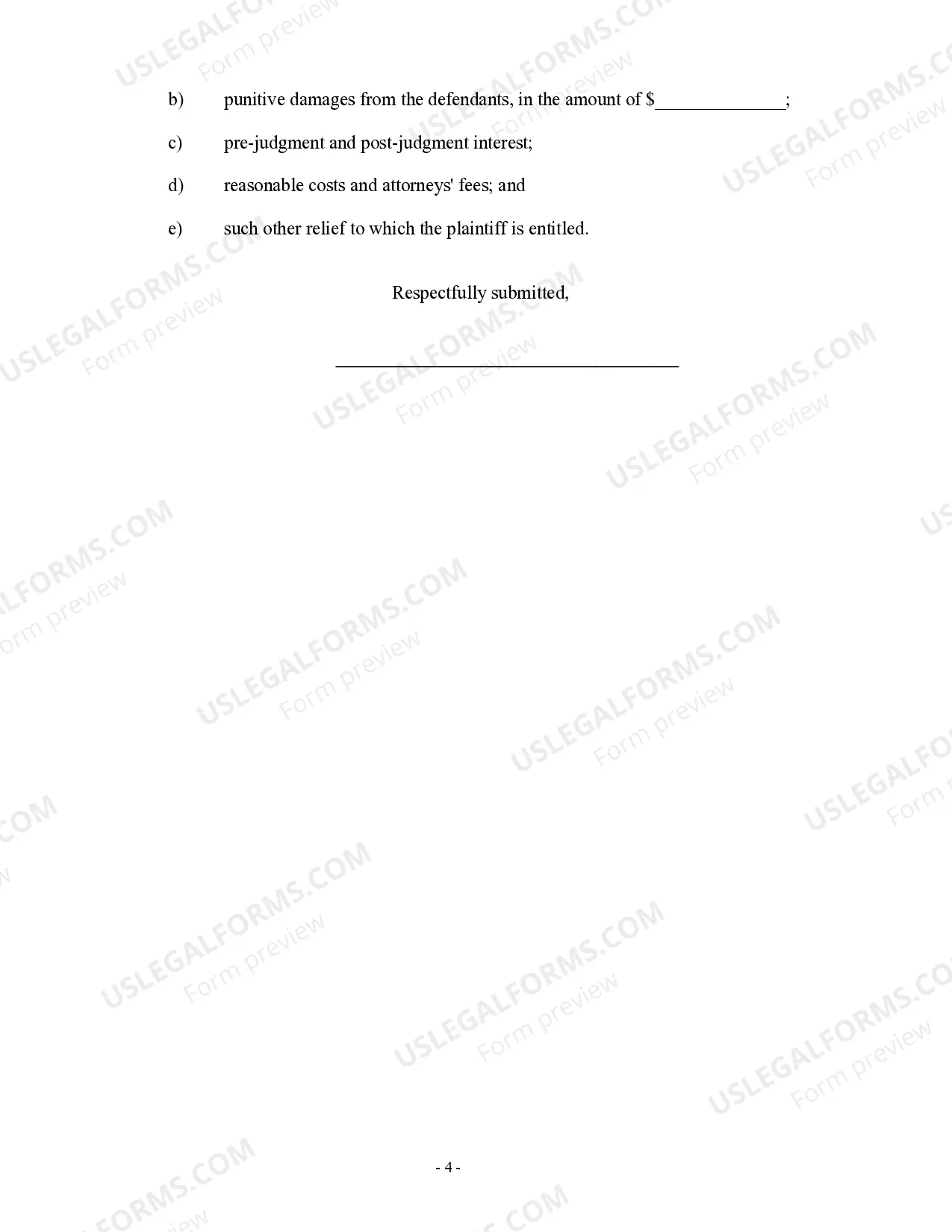
This form is a Complaint. This action was filed by the plaintiff due to a strip search which was conducted upon his/her person after an arrest. The plaintiff requests that he/she be awarded compensatory damages and punitive damages for the alleged violation of his/her constitutional rights.
Amendment Forbidding Search And Seizure In Riverside
State:
Multi-State
Category:
County:
Riverside
Control #:
US-000282
Format:
Word;
Rich Text
81 downloads
Description
Free preview




Get your form ready online
Our built-in tools help you complete, sign, share, and store your documents in one place.
Built-in online Word editor
Make edits, fill in missing information, and update formatting in US Legal Forms—just like you would in MS Word.
Export easily
Download a copy, print it, send it by email, or mail it via USPS—whatever works best for your next step.
E-sign your document
Sign and collect signatures with our SignNow integration. Send to multiple recipients, set reminders, and more. Go Premium to unlock E-Sign.
Notarize online 24/7
If this form requires notarization, complete it online through a secure video call—no need to meet a notary in person or wait for an appointment.
Store your document securely
We protect your documents and personal data by following strict security and privacy standards.

Make edits, fill in missing information, and update formatting in US Legal Forms—just like you would in MS Word.

Download a copy, print it, send it by email, or mail it via USPS—whatever works best for your next step.

Sign and collect signatures with our SignNow integration. Send to multiple recipients, set reminders, and more. Go Premium to unlock E-Sign.

If this form requires notarization, complete it online through a secure video call—no need to meet a notary in person or wait for an appointment.

We protect your documents and personal data by following strict security and privacy standards.
Looking for another form?







Form popularity
FAQ
For example, a sudden search of a driver's motor vehicle after a speeding ticket stop may constitute an illegal search and seizure if the law enforcement officer did not have probable cause to believe that the driver had committed another crime.
The Constitution, through the Fourth Amendment, protects people from unreasonable searches and seizures by the government.
A list of all disputed issues with a short explanation of each;A statement of facts from each party; andA signed stipulation as to undisputed issues of fact and law and exhibits, which neither party is objecting. This rule is essentially forcing parties to try to settle issues in their case before going to trial.
Riverside Superior Court Local Rule 3116 provides: Unless otherwise specified in the Order to Show Cause, any response in opposition to an Order to Show Case (a) shall be in the form of a written declaration and (b) shall be filed no less than four court days before the hearing on the Order to Show Cause.
For example, a sudden search of a driver's motor vehicle after a speeding ticket stop may constitute an illegal search and seizure if the law enforcement officer did not have probable cause to believe that the driver had committed another crime.
(1) Consent was given: The suspect must have expressly or impliedly consented. (2)Consent was voluntary: The consent must have been given voluntarily.
The Constitution, through the Fourth Amendment, protects people from unreasonable searches and seizures by the government. The Fourth Amendment, however, is not a guarantee against all searches and seizures, but only those that are deemed unreasonable under the law.
An unreasonable search and seizure is a search and seizure executed 1) without a legal search warrant signed by a judge or magistrate describing the place, person, or things to be searched or seized or 2) without probable cause to believe that certain person, specified place or automobile has criminal evidence or 3) ...
To obtain a search warrant or arrest warrant, the law enforcement officer must demonstrate probable cause that a search or seizure is justified. A court-authority, usually a magistrate, will consider the totality of circumstances to determine whether to issue the warrant.
The Fourth Amendment requires that warrants issue “upon probable cause, supported by Oath or affirmation.” The significance of the oath requirement is “that someone must take the responsibility for the facts alleged, giving rise to the probable cause for the issuance of a warrant.” United States ex rel.