Arrest Form Sentence In Chicago
Description






Get your form ready online
Our built-in tools help you complete, sign, share, and store your documents in one place.
Make edits, fill in missing information, and update formatting in US Legal Forms—just like you would in MS Word.
Download a copy, print it, send it by email, or mail it via USPS—whatever works best for your next step.
Sign and collect signatures with our SignNow integration. Send to multiple recipients, set reminders, and more. Go Premium to unlock E-Sign.
If this form requires notarization, complete it online through a secure video call—no need to meet a notary in person or wait for an appointment.
We protect your documents and personal data by following strict security and privacy standards.

Make edits, fill in missing information, and update formatting in US Legal Forms—just like you would in MS Word.

Download a copy, print it, send it by email, or mail it via USPS—whatever works best for your next step.

Sign and collect signatures with our SignNow integration. Send to multiple recipients, set reminders, and more. Go Premium to unlock E-Sign.

If this form requires notarization, complete it online through a secure video call—no need to meet a notary in person or wait for an appointment.

We protect your documents and personal data by following strict security and privacy standards.
Looking for another form?





Form popularity
FAQ
The Permanence of Criminal Records In Illinois, crimes stay on your record forever unless you take steps to expunge or seal them.
What law enforcement refers to as a “rap sheet” is a complete list of all of a person's arrests and convictions for felony and misdemeanor offenses. These rap sheets are typically put together by governmental agencies such as the California Department of Justice and the FBI and are not widely made available.
Any individual may approach any Illinois law enforcement or correctional facility or licensed fingerprint vendor agency during regular business hours for the purpose of obtaining the individual's criminal history transcript through Illinois' Access and Review process.
.. On average in the jurisdictions studied, about half of all felony arrests for which charges were filed in court were disposed of in 31/2 months or less. For cases indic ted and bound over for trial the case-processing time was just under 5 months.
What are the Penalties for an Illinois Conviction of Resisting Arrest? Resisting arrest is typically charged as a Class A misdemeanor, but it can be charged as a Class 4 felony if the officer is injured and your actions while resisting an arrest directly caused the injury.
An arrest is the act of apprehending and taking a person into custody (legal protection or control), usually because the person has been suspected of or observed committing a crime. After being taken into custody, the person can be questioned further or charged.
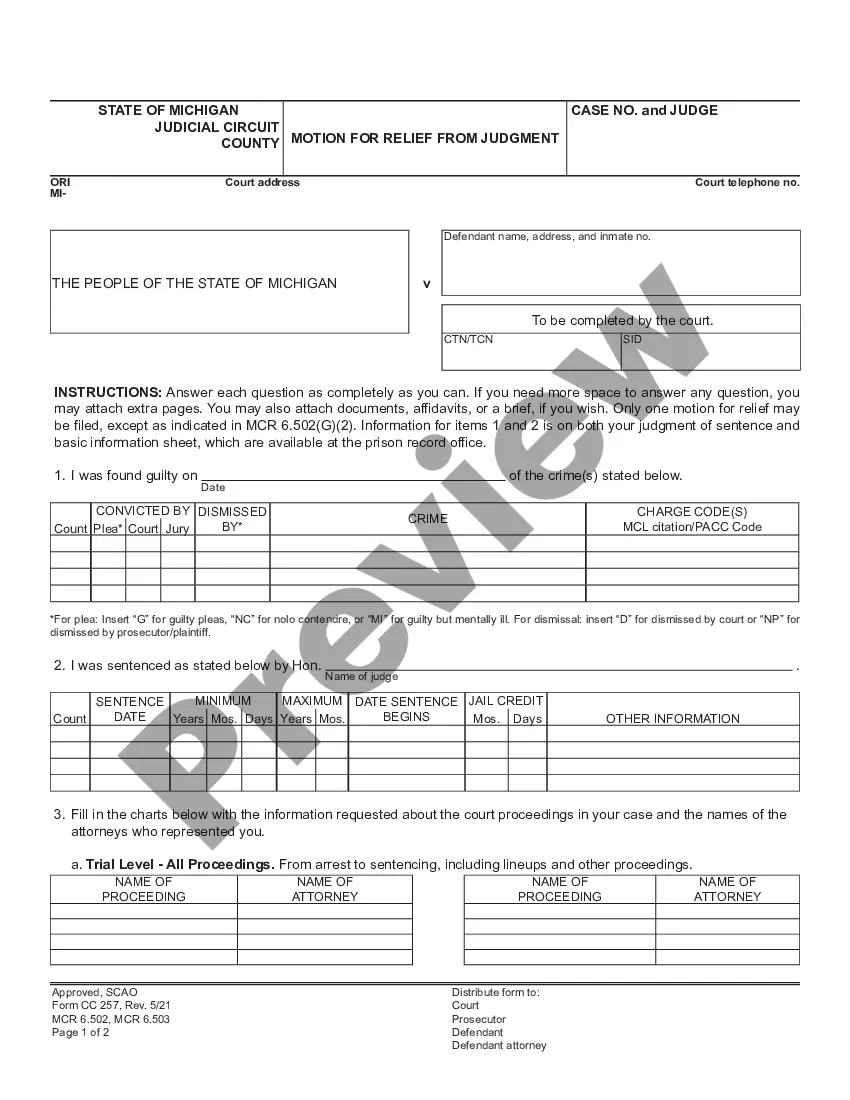
A judge can impose a jail sentence if you are convicted of a misdemeanor, even for a first-time offense.
Any individual may approach any Illinois law enforcement or correctional facility or licensed fingerprint vendor agency during regular business hours for the purpose of obtaining the individual's criminal history transcript through Illinois' Access and Review process.
If you want to file a motion, the process is generally something like this: You write your motion. You file your motion with the court clerk. The court clerk inserts the date and time your motion will be heard by the judge. You “serve” (mail) your motion to the other side.
