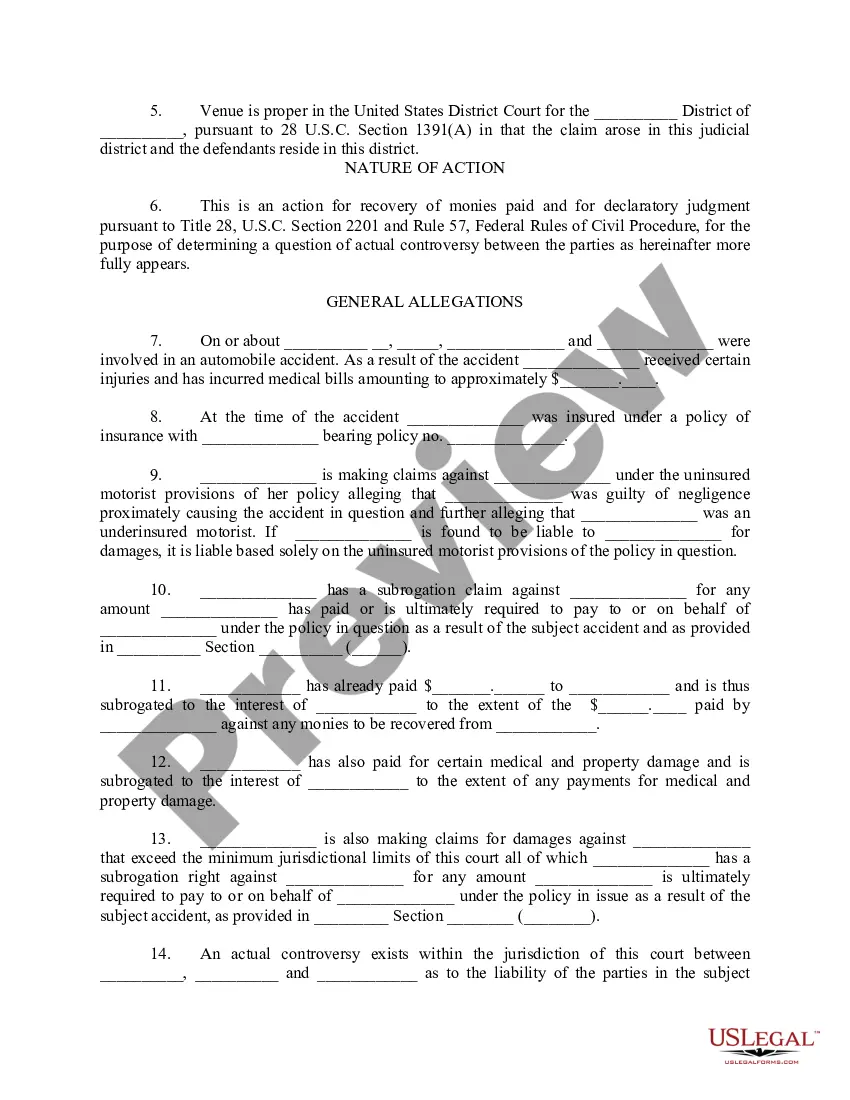
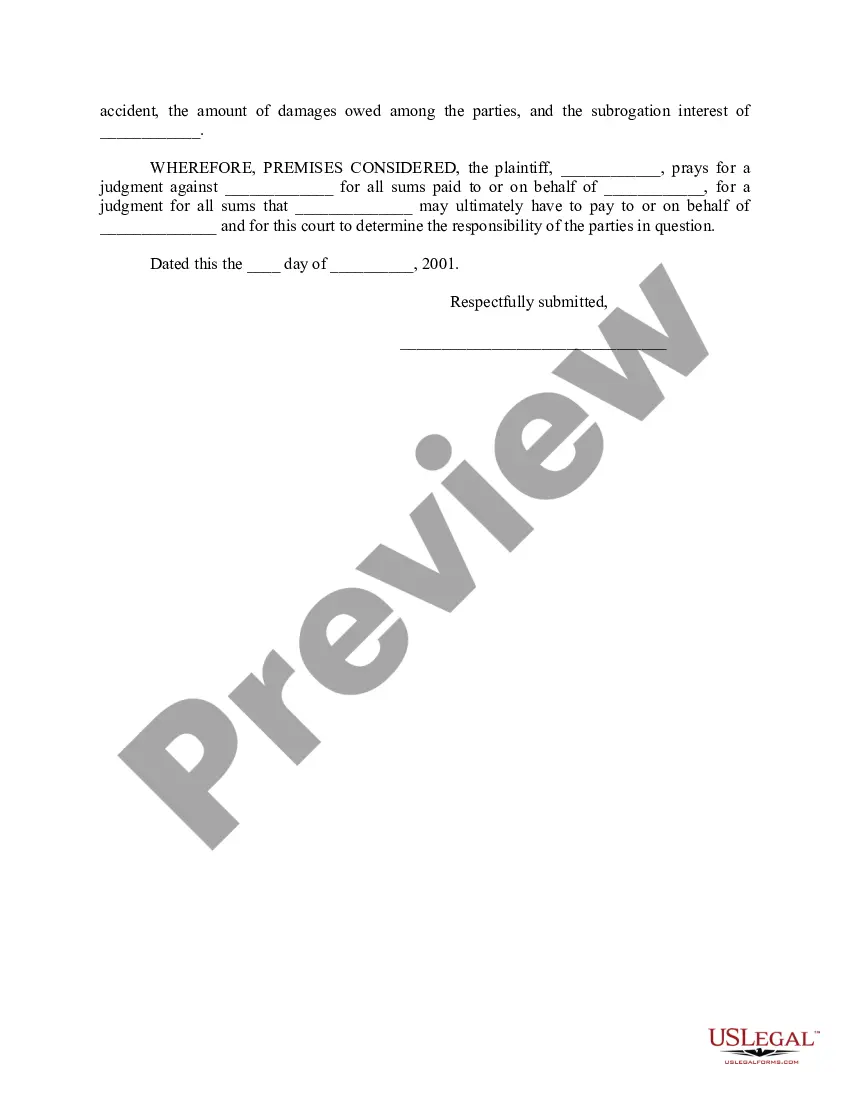
Accident With Uninsured Motorist In Wayne
Description




Get your form ready online
Our built-in tools help you complete, sign, share, and store your documents in one place.
Make edits, fill in missing information, and update formatting in US Legal Forms—just like you would in MS Word.
Download a copy, print it, send it by email, or mail it via USPS—whatever works best for your next step.
Sign and collect signatures with our SignNow integration. Send to multiple recipients, set reminders, and more. Go Premium to unlock E-Sign.
If this form requires notarization, complete it online through a secure video call—no need to meet a notary in person or wait for an appointment.
We protect your documents and personal data by following strict security and privacy standards.

Make edits, fill in missing information, and update formatting in US Legal Forms—just like you would in MS Word.

Download a copy, print it, send it by email, or mail it via USPS—whatever works best for your next step.

Sign and collect signatures with our SignNow integration. Send to multiple recipients, set reminders, and more. Go Premium to unlock E-Sign.

If this form requires notarization, complete it online through a secure video call—no need to meet a notary in person or wait for an appointment.

We protect your documents and personal data by following strict security and privacy standards.
Looking for another form?








Form popularity
FAQ
You regularly allow a family member or friend to drive your car, but they aren't named on your auto policy. If this person gets in an accident while driving your car, your insurance company will likely deny your claim, leaving you liable for the damages.
While insurance companies may pursue uninsured drivers to recover claim costs, the process can be complex and time-consuming. Uninsured drivers involved in accidents should seek legal counsel promptly to protect their rights and explore possible compensation avenues.
Policy limits: Uninsured motorist coverage comes with limits, just like other insurance coverages. Severe accidents might exceed these limits, leaving you with uncovered expenses. Claim disputes: There might be disputes over the extent of your coverage and the amount you can claim, leading to potential legal battles.
It may be better to file a claim with your own insurance company if you have uninsured motorist coverage. Unless the at-fault driver is stable financially or has well-off parents or guardians and can afford to cover your damages in full, you may want to avoid the unnecessary trouble of suing.
Ing to the U.S. Department of Justice, personal injury lawsuit outcome statistics include a majority (90 to 95 percent) settled before trial. Out of the small percentage that end up seeing a courtroom, the data suggests that the success rate of personal injury cases is around half.
If a driver hits your vehicle and flees, you can file a claim against your policy's uninsured motorist coverage. However, in some states, uninsured motorist coverage for property damage (UMPD) will not cover hit-and-run incidents.
If you have been in an accident with an uninsured driver in California, you still have the right to secure any damages you may be owed. California law requires all drivers to carry auto insurance, so the uninsured driver may face legal consequences for not securing coverage.
Making a claim will not affect your insurance premium per-se - but it contributes to higher insurance premiums for all. (Your insurance company may increase your premium because you have been involved in an accident even if it is not your fault - but that is because of the accident, not the uninsured motorist claim.)
Cancelling uninsured motorist insurance is a bad idea. Some people are uninsured for a very good reason, and you should not feel comfortable sharing the road with them. I would not want to risk my health and safety of myself or passengers, or my vehicle.
