Complaint Responsibility File Format In Clark
Description




Get your form ready online
Our built-in tools help you complete, sign, share, and store your documents in one place.
Make edits, fill in missing information, and update formatting in US Legal Forms—just like you would in MS Word.
Download a copy, print it, send it by email, or mail it via USPS—whatever works best for your next step.
Sign and collect signatures with our SignNow integration. Send to multiple recipients, set reminders, and more. Go Premium to unlock E-Sign.
If this form requires notarization, complete it online through a secure video call—no need to meet a notary in person or wait for an appointment.
We protect your documents and personal data by following strict security and privacy standards.

Make edits, fill in missing information, and update formatting in US Legal Forms—just like you would in MS Word.

Download a copy, print it, send it by email, or mail it via USPS—whatever works best for your next step.

Sign and collect signatures with our SignNow integration. Send to multiple recipients, set reminders, and more. Go Premium to unlock E-Sign.

If this form requires notarization, complete it online through a secure video call—no need to meet a notary in person or wait for an appointment.

We protect your documents and personal data by following strict security and privacy standards.
Looking for another form?









Form popularity
FAQ
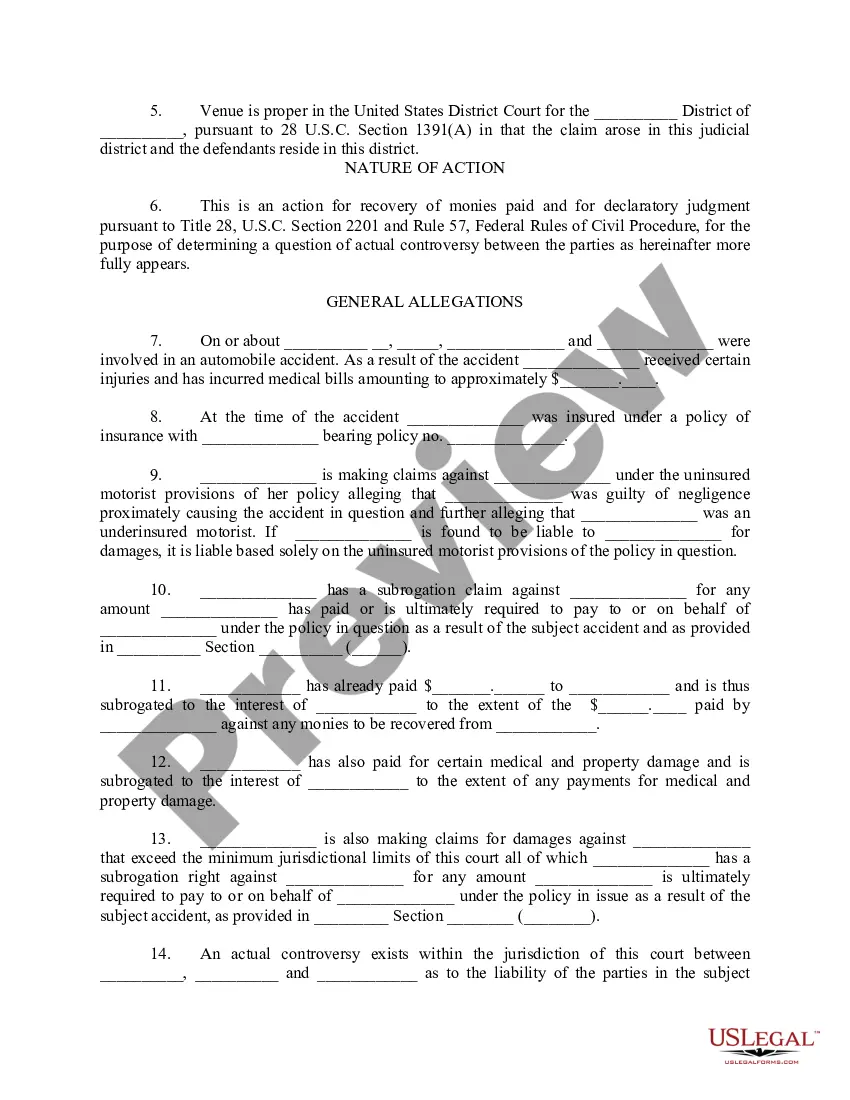
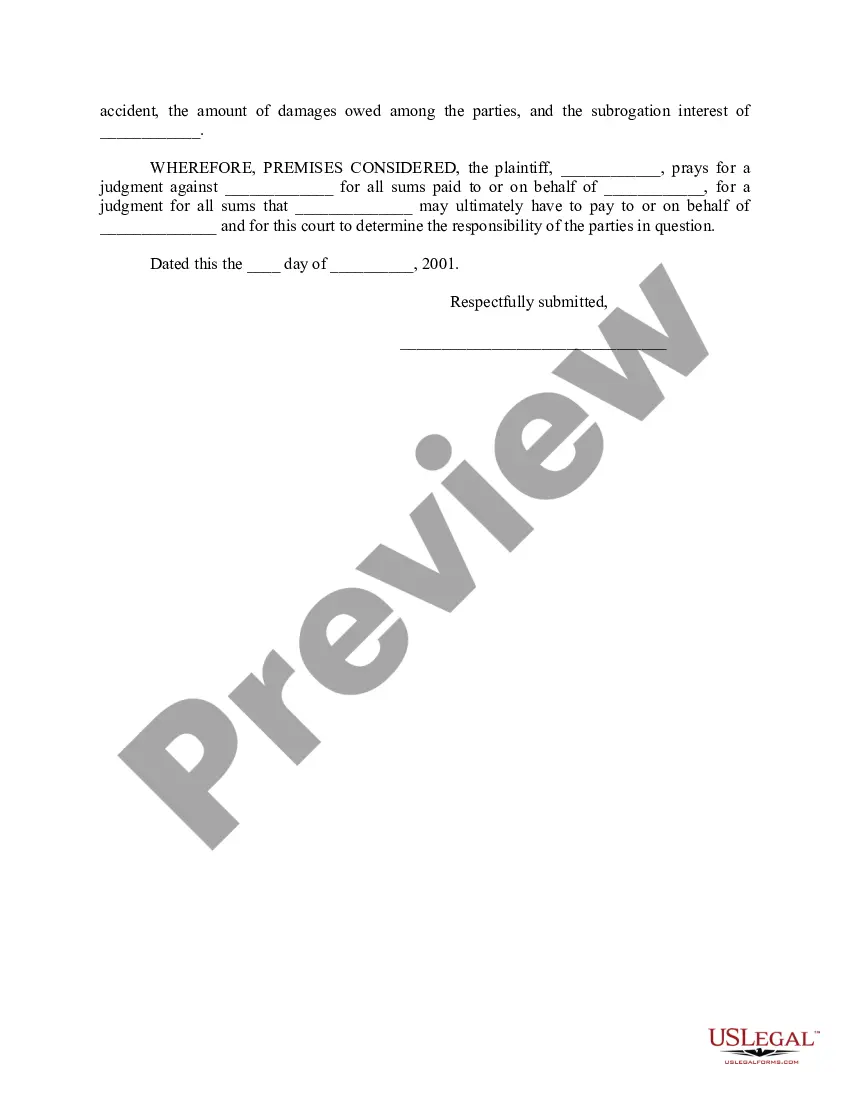
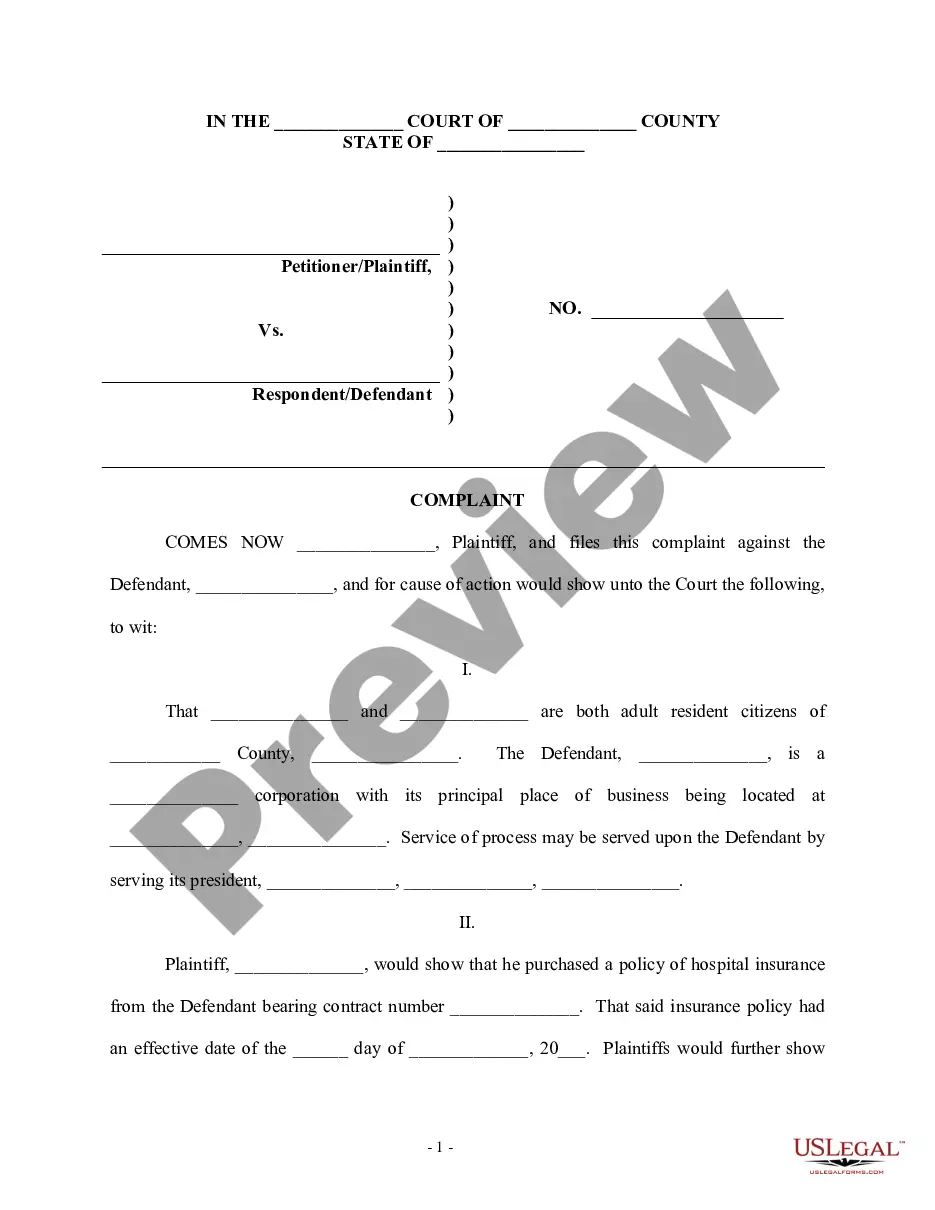
A caption identifying the plaintiff and defendant, and the court in which the complaint is being filed. A brief description of the parties (e.g., their name and address). Allegations demonstrating that the court has subject matter jurisdiction, personal jurisdiction, and venue to adjudicate the claims in the complaint.
It starts by identifying the parties involved (and thereby establishing why the court has jurisdiction) and proceeds to lay out the facts upon which the cause of action is based. Once the story of the facts are told, the complaint must explain why the elements of the cause of action are met by the facts.
A caption identifying the plaintiff and defendant, and the court in which the complaint is being filed. A brief description of the parties (e.g., their name and address). Allegations demonstrating that the court has subject matter jurisdiction, personal jurisdiction, and venue to adjudicate the claims in the complaint.
My complaint is that list what you think went wrong or wasn't done properly. Be as clear as you can. It can help to make it short and to the point. This situation has caused me describe the impact this issue has had on you, your family or others who have been affected by the problem.
Information To Include in Your Letter Give the basics. Tell your story. Explain how you want to resolve the problem. Describe your next steps. Send your complaint letter. Your Mailing Address Your City, State, Zip Code Your email address
It starts by identifying the parties involved (and thereby establishing why the court has jurisdiction) and proceeds to lay out the facts upon which the cause of action is based. Once the story of the facts are told, the complaint must explain why the elements of the cause of action are met by the facts.
Tips for writing a successful complaint letter the subject of your complaint. your original expectation about the subject. what went wrong. details of any attempts by the other party to put right the problem, and why they did not work. why the fault or error or action affects you so greatly. what compensation you seek.
Nevada Rules of Civil Procedure (NRCP) 12, with a few exceptions, requires that the Defendant file an Answer within 20 days of being served with the Summons and Complaint. If Defendant is not able to file an Answer within the 20 days, Defendant may ask the Court for an extension of time to file his/her Answer.
File a complaint with your local consumer protection office or the state agency that regulates the company. Notify the Better Business Bureau (BBB) in your area about your problem. The BBB tries to resolve your complaints against companies.
