Tort Form 95 In Maryland
Description





Get your form ready online
Our built-in tools help you complete, sign, share, and store your documents in one place.
Make edits, fill in missing information, and update formatting in US Legal Forms—just like you would in MS Word.
Download a copy, print it, send it by email, or mail it via USPS—whatever works best for your next step.
Sign and collect signatures with our SignNow integration. Send to multiple recipients, set reminders, and more. Go Premium to unlock E-Sign.
If this form requires notarization, complete it online through a secure video call—no need to meet a notary in person or wait for an appointment.
We protect your documents and personal data by following strict security and privacy standards.

Make edits, fill in missing information, and update formatting in US Legal Forms—just like you would in MS Word.

Download a copy, print it, send it by email, or mail it via USPS—whatever works best for your next step.

Sign and collect signatures with our SignNow integration. Send to multiple recipients, set reminders, and more. Go Premium to unlock E-Sign.

If this form requires notarization, complete it online through a secure video call—no need to meet a notary in person or wait for an appointment.

We protect your documents and personal data by following strict security and privacy standards.
Looking for another form?







Form popularity
FAQ
I. STANDARD FORM 95 (SF 95), "Claim for Damage, Injury, or Death": You must submit three (3) completed forms, WITH AN ORIGINAL SIGNATURE, IN INK, ON EACH COPY. (Note: you may complete one form, omitting the signature, photocopy it three times (one for your file), then sign three forms.)
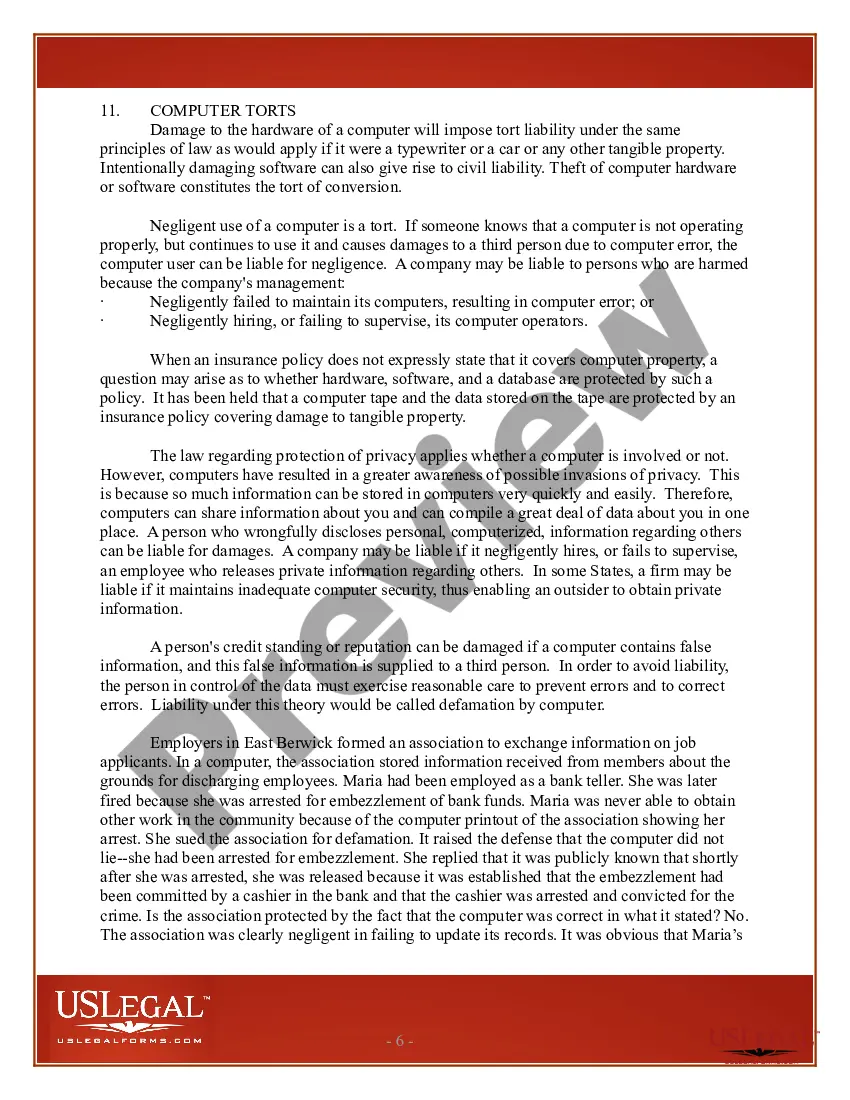
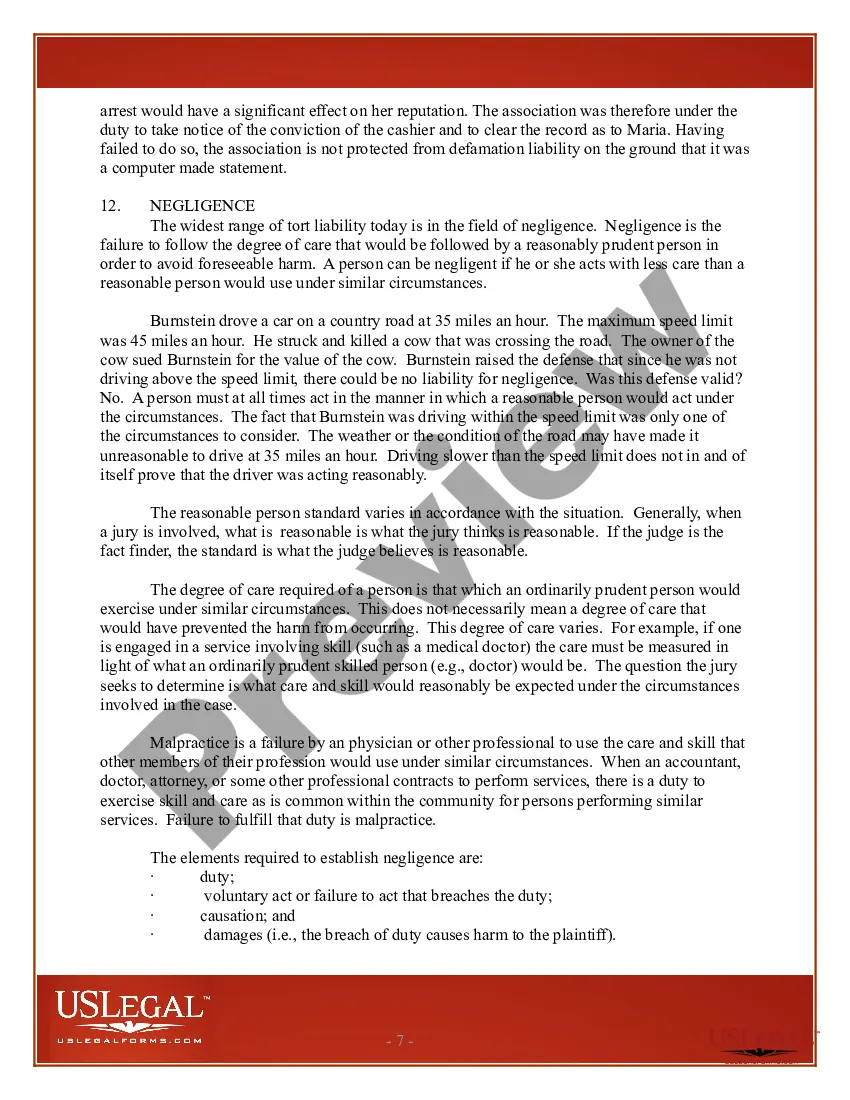
A tort is an act or omission that causes legally cognizable harm to persons or property. Tort law, in turn, is the body of rules concerned with remedying harms caused by a person's wrongful or injurious actions.
Examples of negligence torts Slip and fall accidents. Car accidents. Truck accidents. Motorcycle accidents. Pedestrian accidents. Bicycle accidents. Medical malpractice.
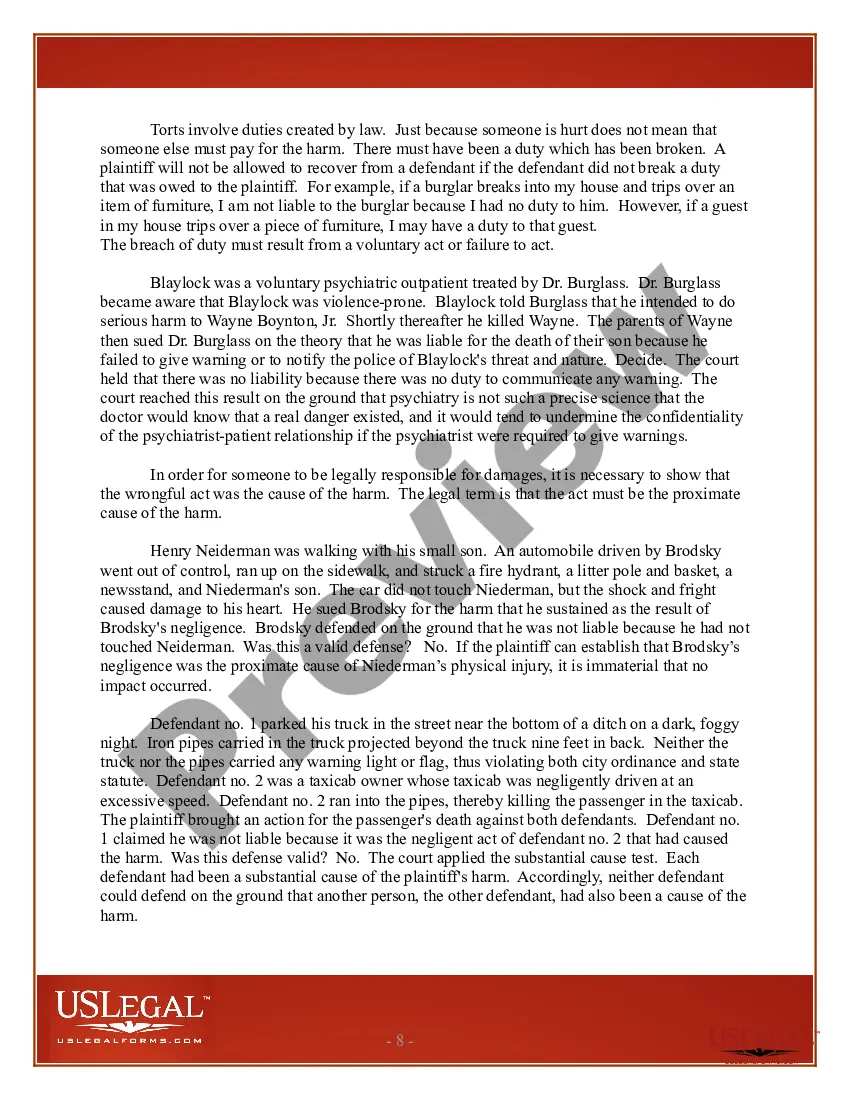
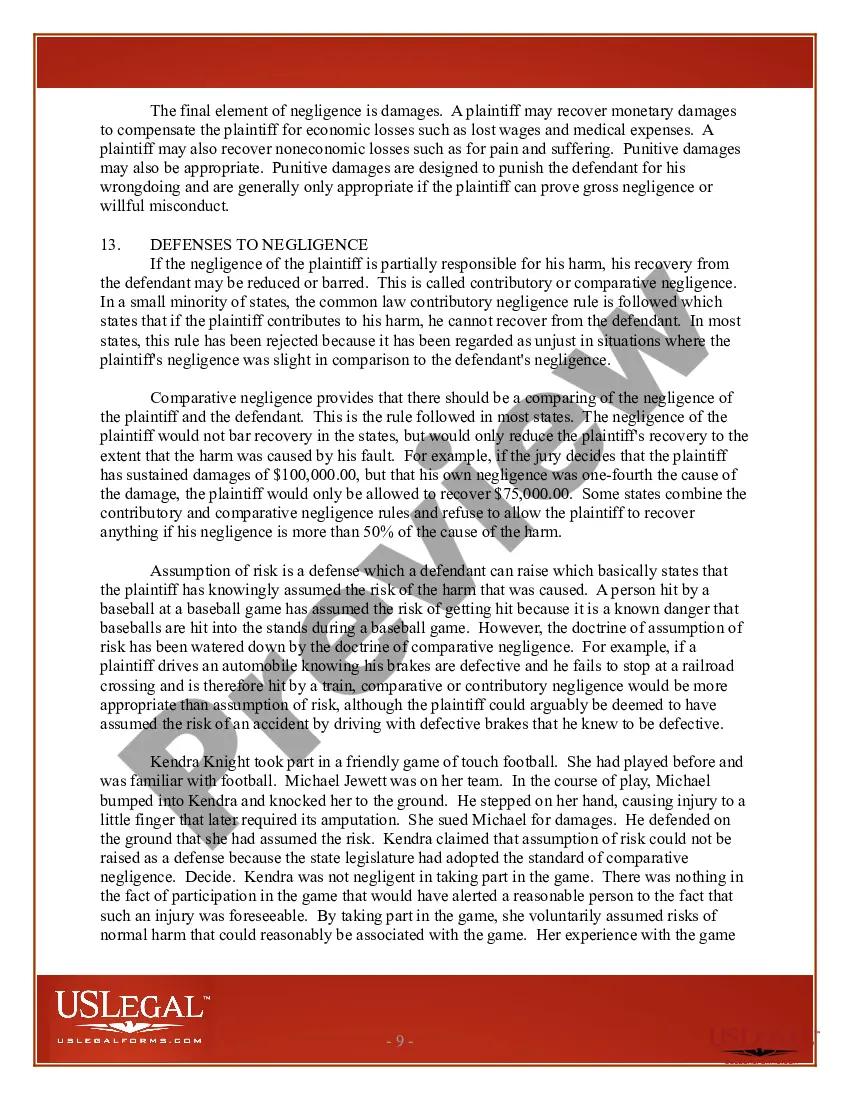
Negligence Torts This usually involves car accidents, slip and fall accidents, or medical malpractice. To succeed in a negligence claim, you must prove duty, breach, causation, and damages.
The legal definition of a tort is “a civil wrong,” which can also be referred to as a breach of duty. By extension, a Maryland motor tort is a civil wrong arising from the negligent operation of a motor vehicle.
The Maryland Tort Claims (“MTCA”) Act requires that personal injury victims suing the State of Maryland submit a written claim to the Treasurer or designee of the treasurer within one year after the injury to person or property that is the basis of the claim.
The law recognizes torts as civil wrongs and allows injured parties to recover for their losses. Injured parties may bring suit to recover damages in the form of monetary compensation or for an injunction, which compels a party to cease an activity.
A tort is an injury to someone else's rights that can be addressed in a civil lawsuit. The word tort is related to the words torsion, torture, and extortion. The legal term for someone who causes this type of injury is called a tortfeasor.
Although tort law is considered part of “civil law,” many other areas of civil law exist as well. These include divorce and family law, contract disputes, wills and property disputes. Any dispute between private individuals, as stated above, typically fall under civil law jurisdiction.