Investor Term Sheet Template With Confidentiality Statement In Virginia
Description

Get your form ready online
Our built-in tools help you complete, sign, share, and store your documents in one place.
Make edits, fill in missing information, and update formatting in US Legal Forms—just like you would in MS Word.
Download a copy, print it, send it by email, or mail it via USPS—whatever works best for your next step.
Sign and collect signatures with our SignNow integration. Send to multiple recipients, set reminders, and more. Go Premium to unlock E-Sign.
If this form requires notarization, complete it online through a secure video call—no need to meet a notary in person or wait for an appointment.
We protect your documents and personal data by following strict security and privacy standards.

Make edits, fill in missing information, and update formatting in US Legal Forms—just like you would in MS Word.

Download a copy, print it, send it by email, or mail it via USPS—whatever works best for your next step.

Sign and collect signatures with our SignNow integration. Send to multiple recipients, set reminders, and more. Go Premium to unlock E-Sign.

If this form requires notarization, complete it online through a secure video call—no need to meet a notary in person or wait for an appointment.

We protect your documents and personal data by following strict security and privacy standards.
Looking for another form?









Form popularity
FAQ
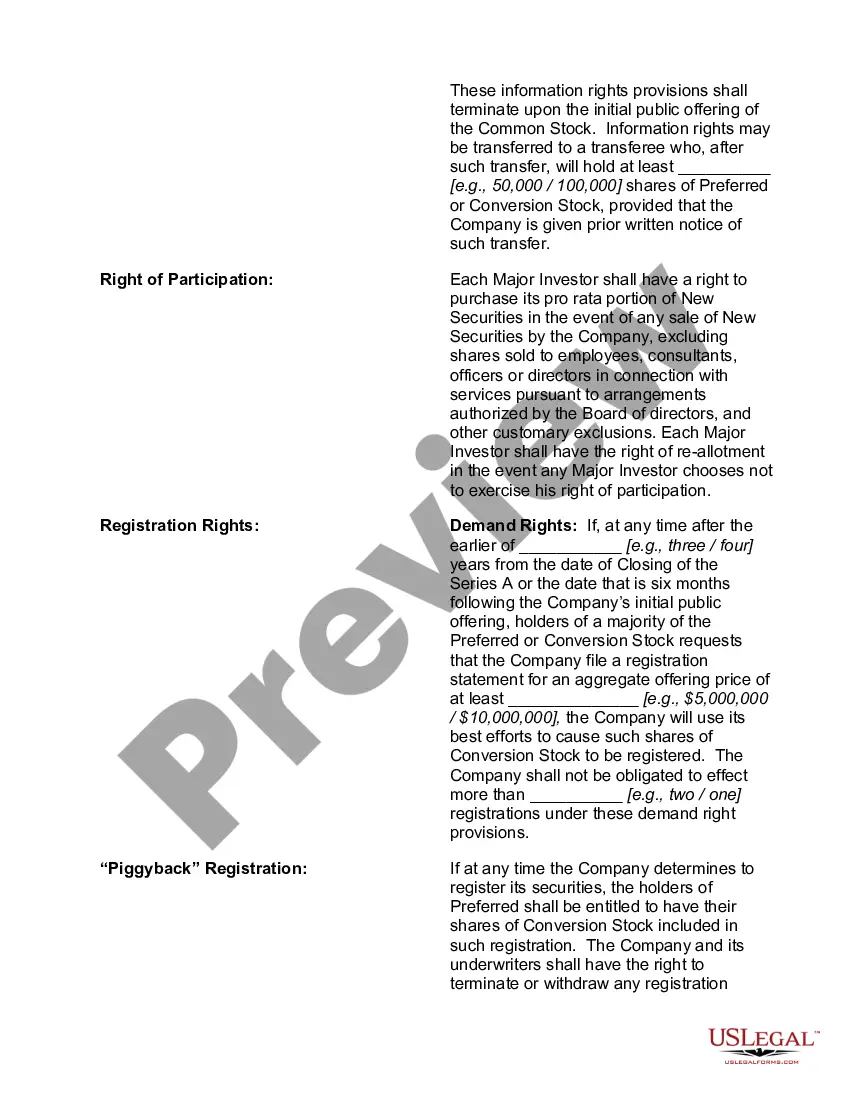
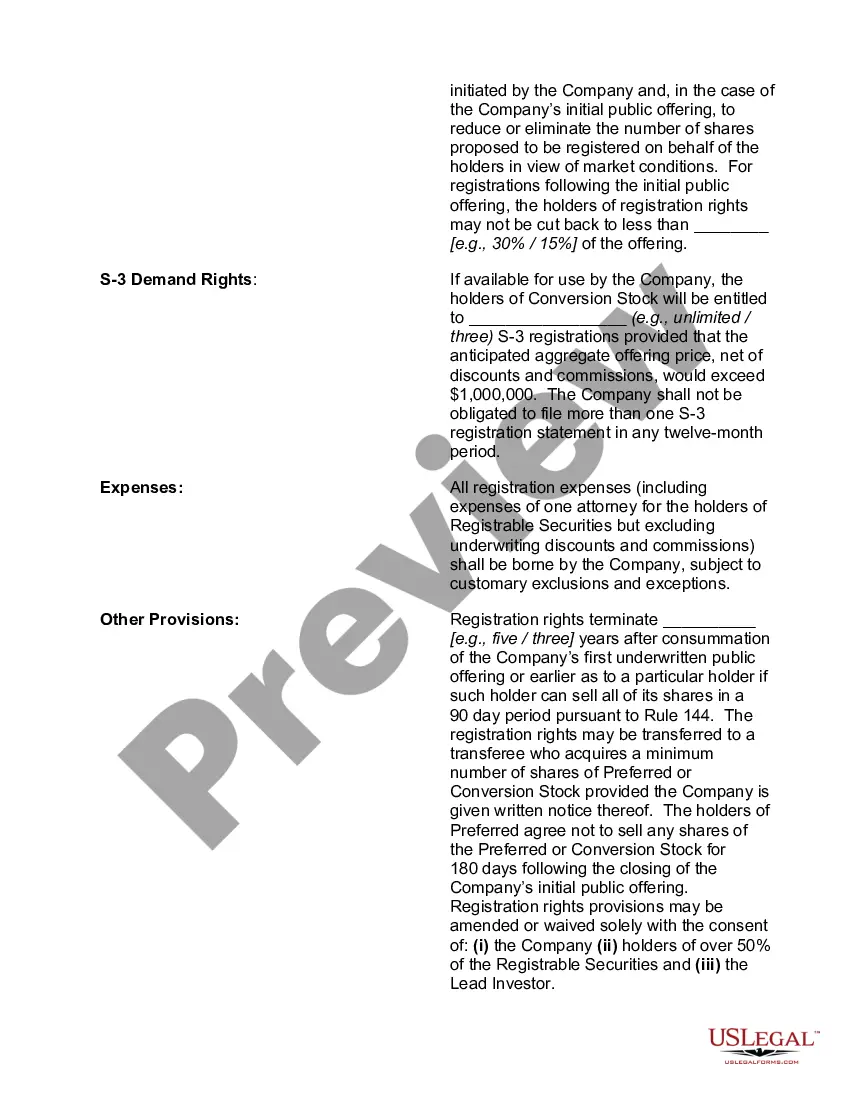
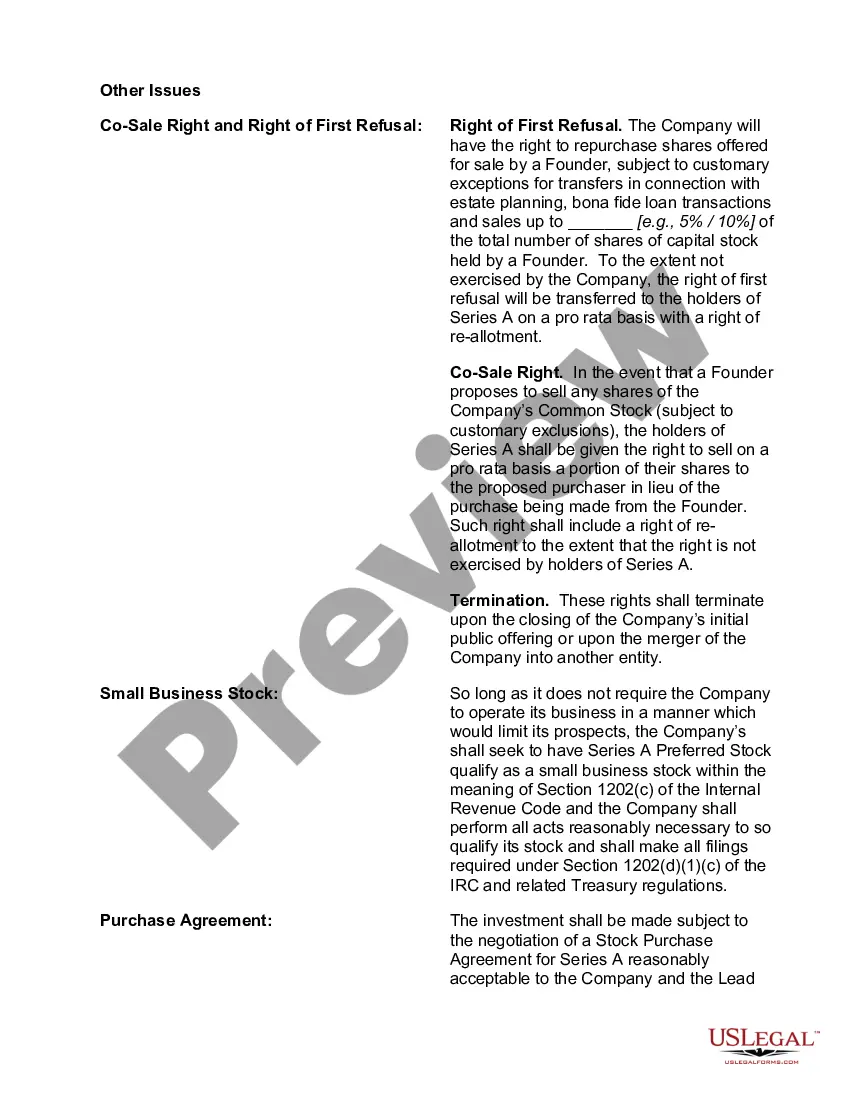
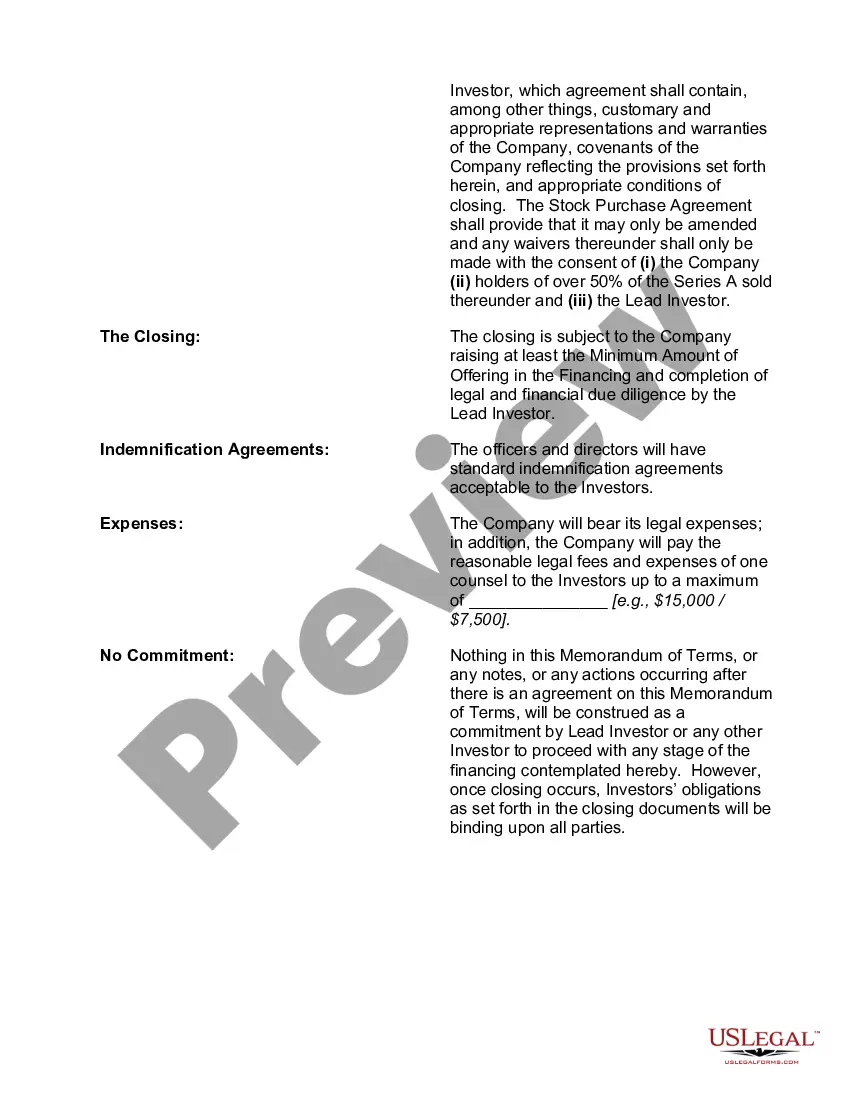
Who Prepares a Term Sheet? Depending on the financial instrument, different parties may be the one to prepare the term sheet. For seed round investments, investors often provide a term sheet when offering their private investment. For loans, lending institution will often provide a term sheet to prospective borrowers.
Although the term sheet itself is not typically legally binding, some term sheets contain certain legally binding provisions (for example, confidentiality or exclusivity).
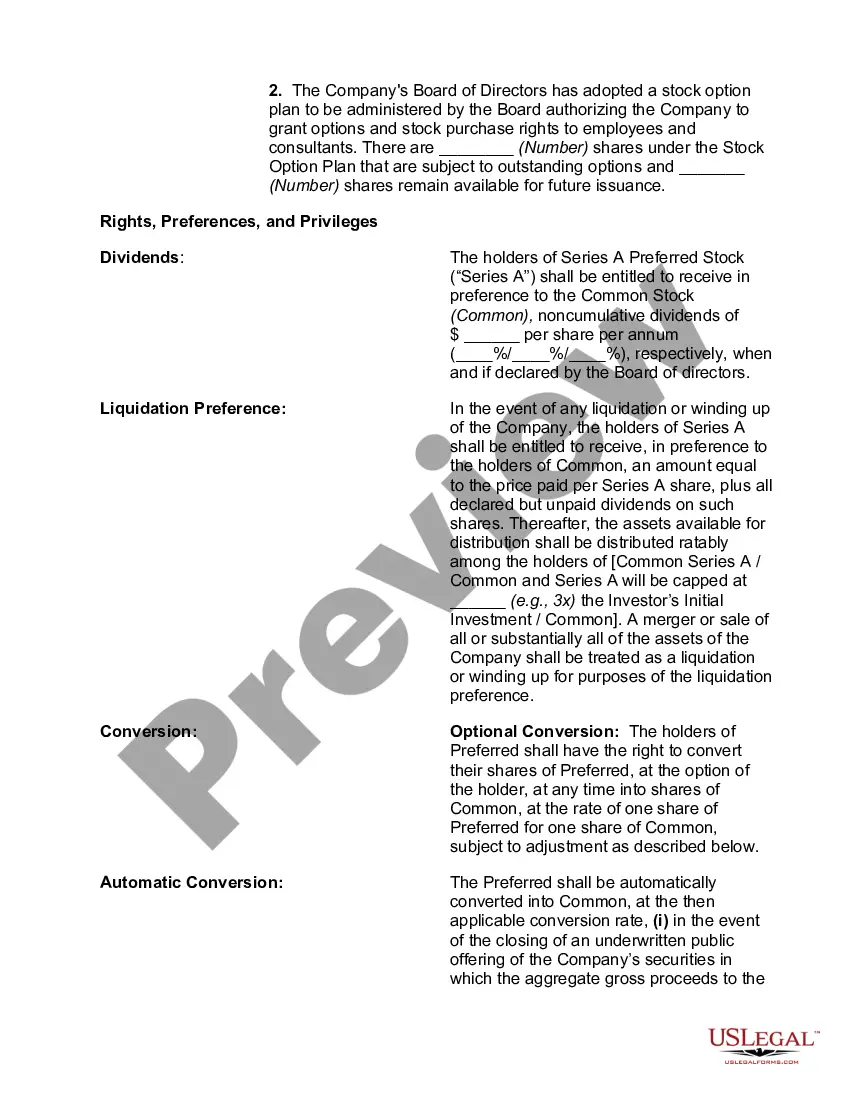
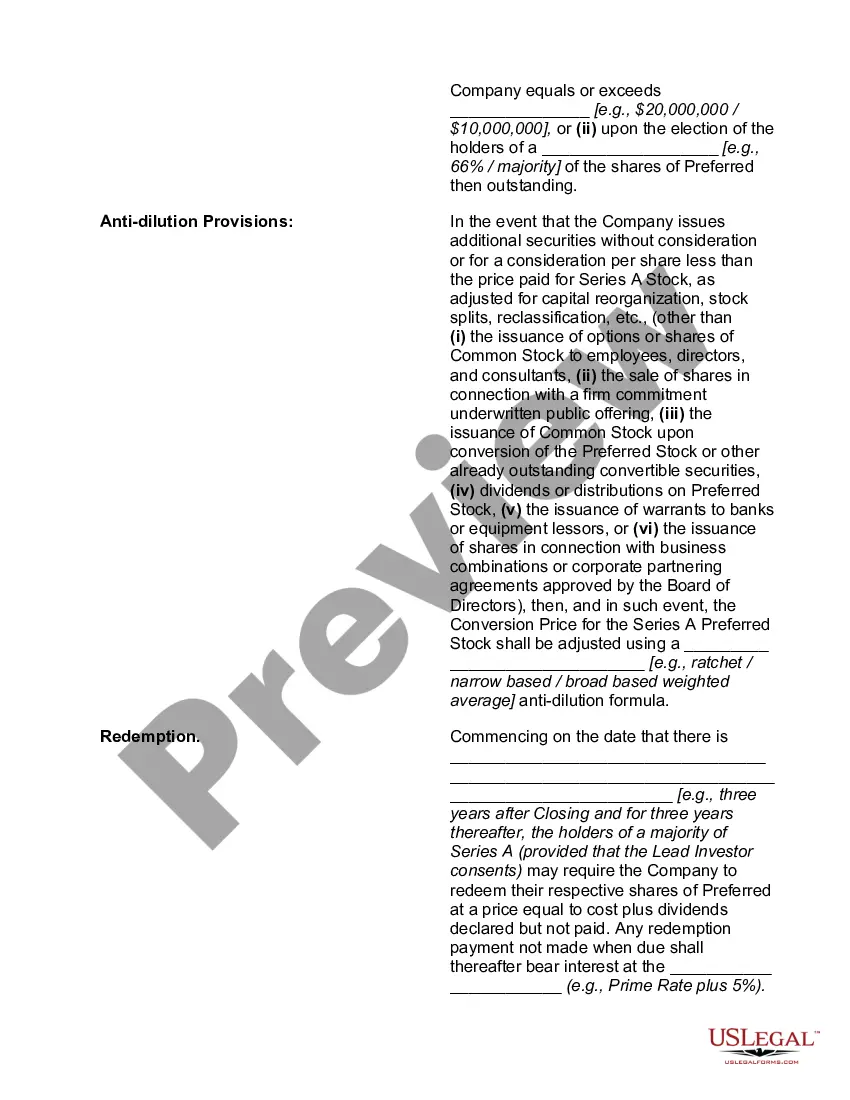
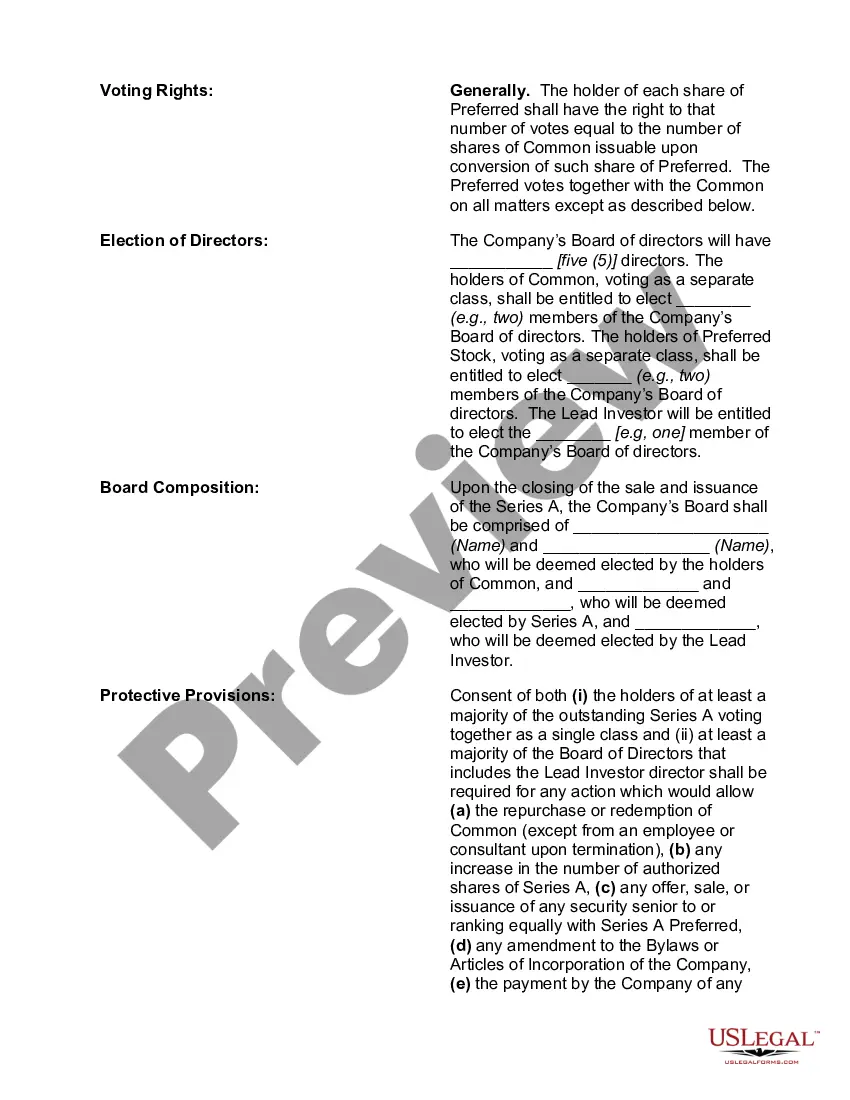
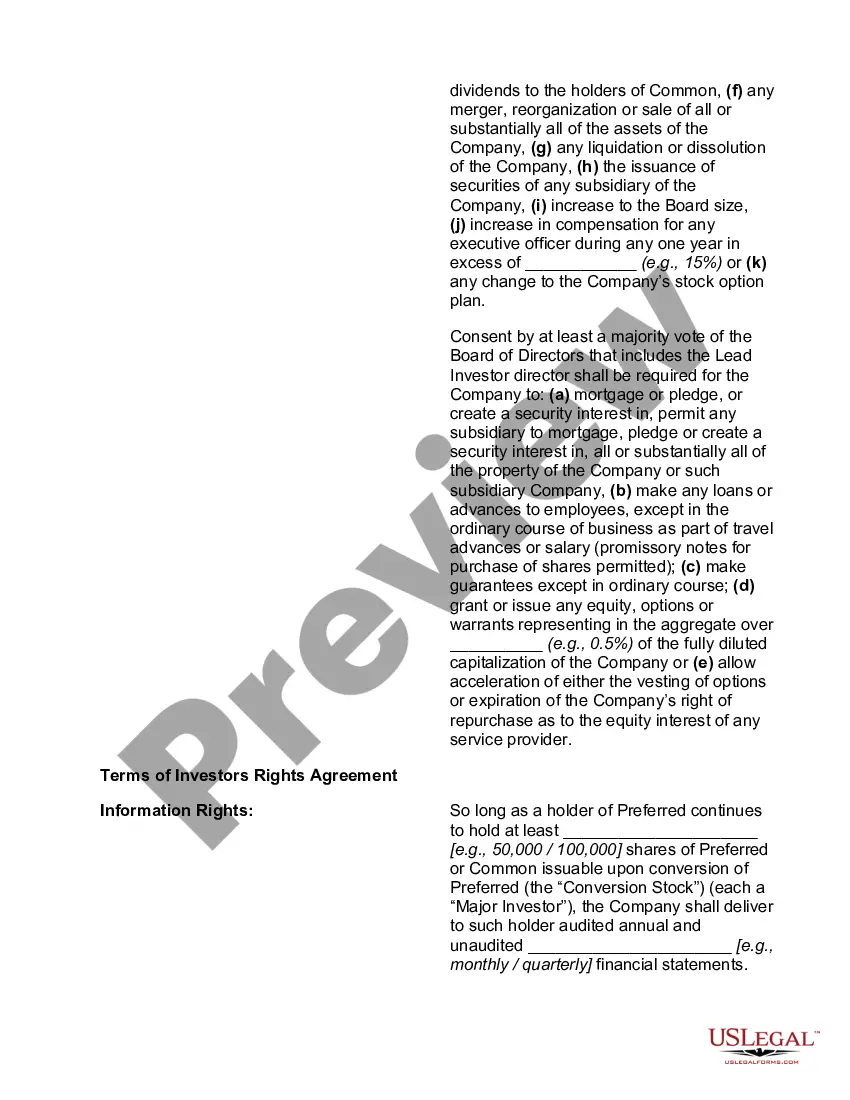
How to Prepare a Term Sheet Identify the Purpose of the Term Sheet Agreements. Briefly Summarize the Terms and Conditions. List the Offering Terms. Include Dividends, Liquidation Preference, and Provisions. Identify the Participation Rights. Create a Board of Directors. End with the Voting Agreement and Other Matters.
Term sheets evidence serious intent but are generally not legally binding.
Exclusivity - This is a standard condition that requires that you don't talk to other investors for a specific period after you sign the term sheet and while the investor is doing their due diligence. But be sure the time period isn't too long - 30-45 days is about right.
A "bad" term sheet could leave an entrepreneur without control of their company at the earliest stages of starting up, forcing them into losing major chunks of their equity, and even blowing up future deals with new investors.
“Term sheets”, “letters of intent”, “memoranda of understanding” and “agreements in principle” may constitute an enforceable agreement if the writing includes all the essential terms of an agreement. This is so even if “the parties intended to negotiate a 'fuller agreement'”.
The term 'confidentiality' means preserving authorized restrictions on access and disclosure, including means for protecting personal privacy and proprietary information.
Term sheets evidence serious intent, but generally are not legally binding.
CohnReznick's Beth Mullen looks at several important points in a deal term sheet. Credit delivery amount and timing. Guarantees. Reserves. Year 15 exit options. Implied costs for third-party reports.
