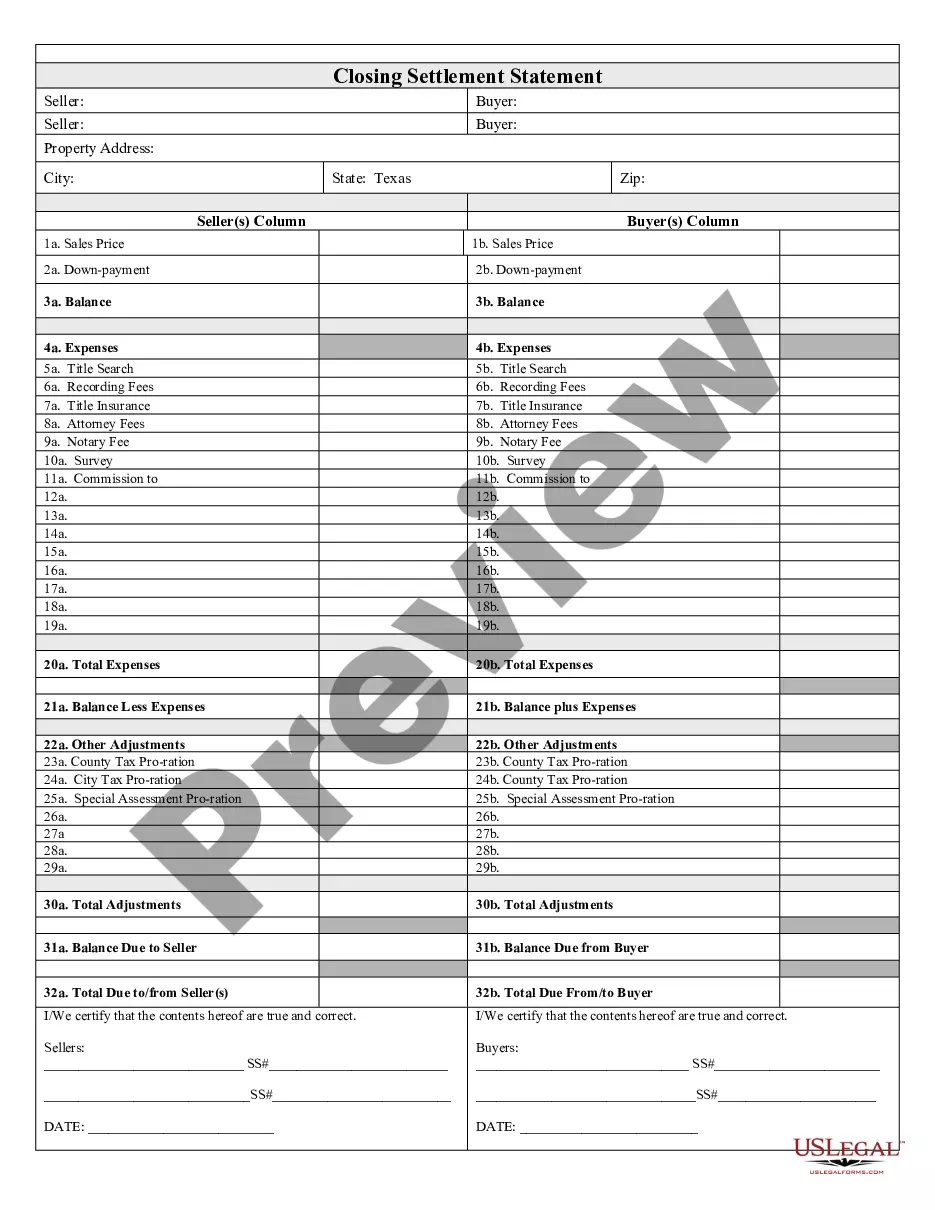
Texas Closing Statement With A
Description

Get your form ready online
Our built-in tools help you complete, sign, share, and store your documents in one place.
Make edits, fill in missing information, and update formatting in US Legal Forms—just like you would in MS Word.
Download a copy, print it, send it by email, or mail it via USPS—whatever works best for your next step.
Sign and collect signatures with our SignNow integration. Send to multiple recipients, set reminders, and more. Go Premium to unlock E-Sign.
If this form requires notarization, complete it online through a secure video call—no need to meet a notary in person or wait for an appointment.
We protect your documents and personal data by following strict security and privacy standards.

Make edits, fill in missing information, and update formatting in US Legal Forms—just like you would in MS Word.

Download a copy, print it, send it by email, or mail it via USPS—whatever works best for your next step.

Sign and collect signatures with our SignNow integration. Send to multiple recipients, set reminders, and more. Go Premium to unlock E-Sign.

If this form requires notarization, complete it online through a secure video call—no need to meet a notary in person or wait for an appointment.

We protect your documents and personal data by following strict security and privacy standards.
Looking for another form?

How to fill out Texas Closing Statement?
- Log in to your US Legal Forms account if you are a returning user, ensuring your subscription is active.
- For first-time users, browse through the extensive online library, checking previews and descriptions to find the correct Texas closing statement form that meets your specific needs and jurisdiction requirements.
- If necessary, utilize the search tab to locate an alternative template suited for you.
- Once you find the appropriate form, click the 'Buy Now' button and select your preferred subscription plan, creating an account if you haven't done so already.
- Complete your purchase by entering your payment details through a credit card or PayPal.
- After the transaction, download the Texas closing statement form directly to your device and find it later under the 'My Forms' section in your profile.
With US Legal Forms, you gain access to a comprehensive library of over 85,000 fillable legal templates, more than competitors offer at a comparable cost. Plus, their premium expert assistance ensures your documents are accurate and compliant.
Start today by visiting US Legal Forms and easily navigate through your legal document needs! Don't miss out on simplifying your legal process.
Form popularity
FAQ
Yes, a closing statement needs to be signed to validate the agreement reached by both parties in a real estate transaction. The Texas closing statement with a ensures that both the buyer and seller acknowledge the financial terms. By signing, they provide consent to the details listed, making it a crucial part of the overall process.
The closing statement is signed by the buyer and seller, along with the closing agent. Each party reviews the Texas closing statement with a to ensure accuracy before signing. Their signatures finalize the transaction and confirm all terms have been mutually agreed upon.
A closing statement is not a contract, but it is a detailed summary of the transaction’s financial aspects. Specifically, the Texas closing statement with a outlines all costs, fees, and payments involved in the transaction. It serves as a crucial record for both buyers and sellers, but it does not create binding obligations like a contract would.
structured Texas closing statement should be clean, organized, and easy to read. It typically contains sections for both debits and credits, clearly listing all fees and total amounts owed. Additionally, it should include contact information for all participants in the transaction. To create a polished closing statement, consider using tools offered by US Legal Forms, which provide detailed templates to follow.
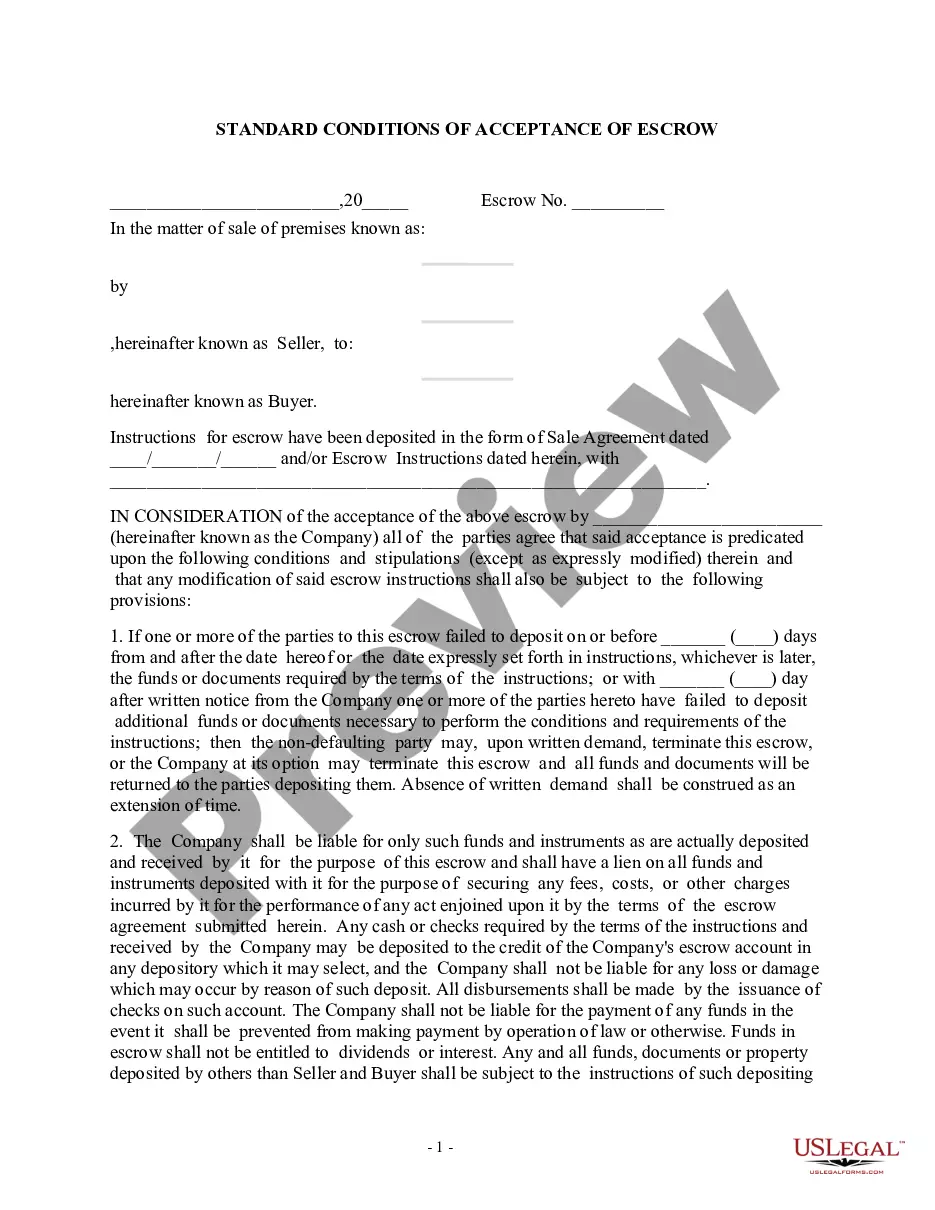
A letter of protection in Texas is a document used primarily in legal cases to protect a plaintiff's interests by ensuring payment of medical expenses. This tool helps to facilitate real estate transactions while containing risks associated with financial obligations. Knowing how letters of protection relate to your Texas closing statement with a closing protection letter can help you navigate complex decisions.
In Texas, a T64 is a specific form used to indicate closing protection in real estate transactions. It details coverage and actions taken by the title company to protect the buyer and lender. Having a complete understanding of the Texas closing statement with T64 can be essential to ensure all parties are protected.
Closing protection letters are not legally required in Texas, but they are highly recommended. They provide an additional layer of security for your transaction, ensuring that you are protected from potential issues during closing. Having a clear Texas closing statement with a closing protection letter can help safeguard your investment.
Another term often used for a closing protection letter is 'lender's title insurance endorsement.' This document serves to protect both buyers and lenders during the closing process. Understanding how this fits into the Texas closing statement with a closing protection letter can enhance your knowledge about real estate transactions in Texas.
Red flags on closing disclosures can include discrepancies in the amounts listed, missing signatures, or changes made without proper documentation. These issues can indicate potential problems with the transaction and may necessitate further review. When reviewing your Texas closing statement, keep an eye out for these red flags to avoid any complications.
To obtain a copy of your closing statement, you typically need to contact your real estate agent or the title company that facilitated your transaction. They usually retain copies of these essential documents for several years. Additionally, the US Legal Forms platform offers resources that can guide you through retrieving your Texas closing statement.