Declination Of Trustee Form
Description
Form popularity
FAQ
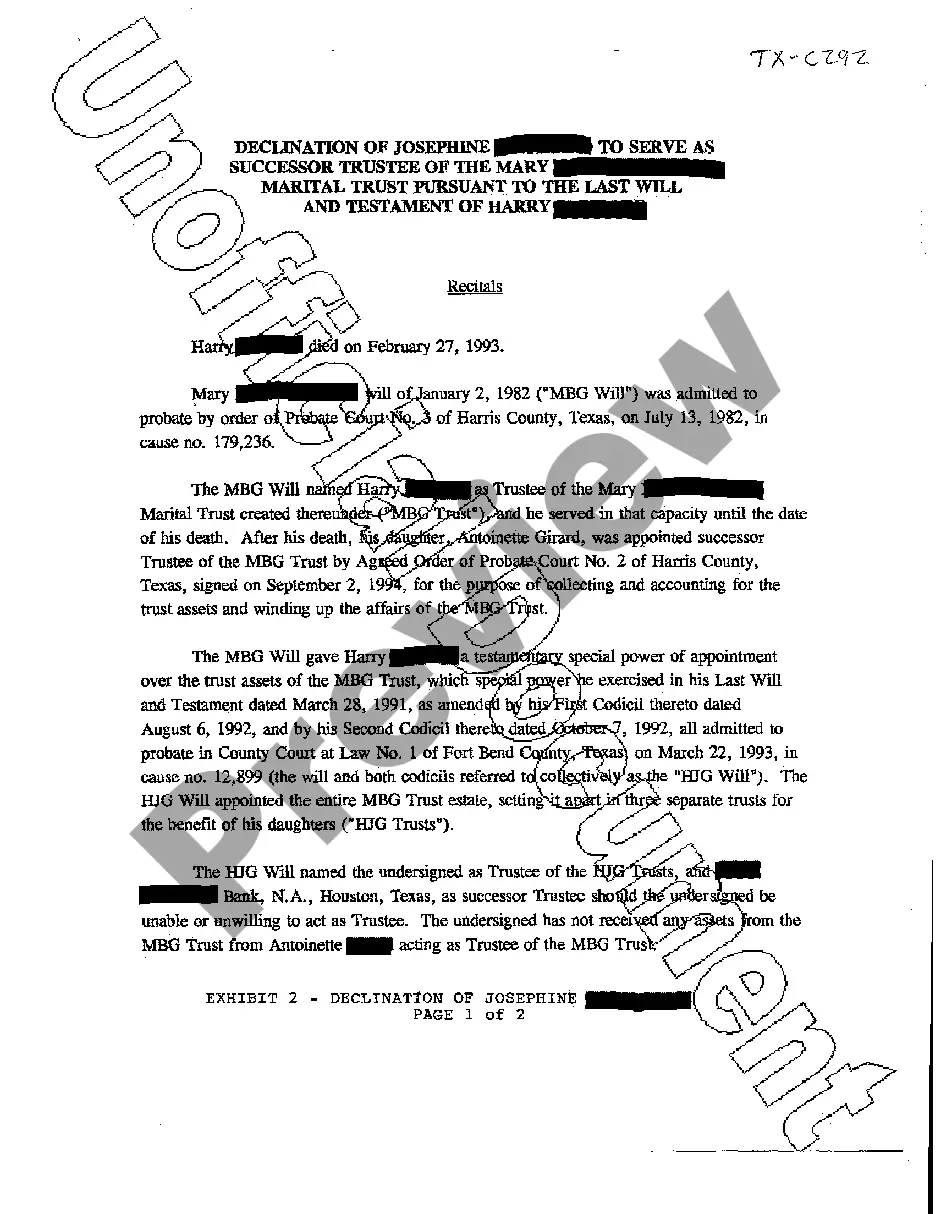
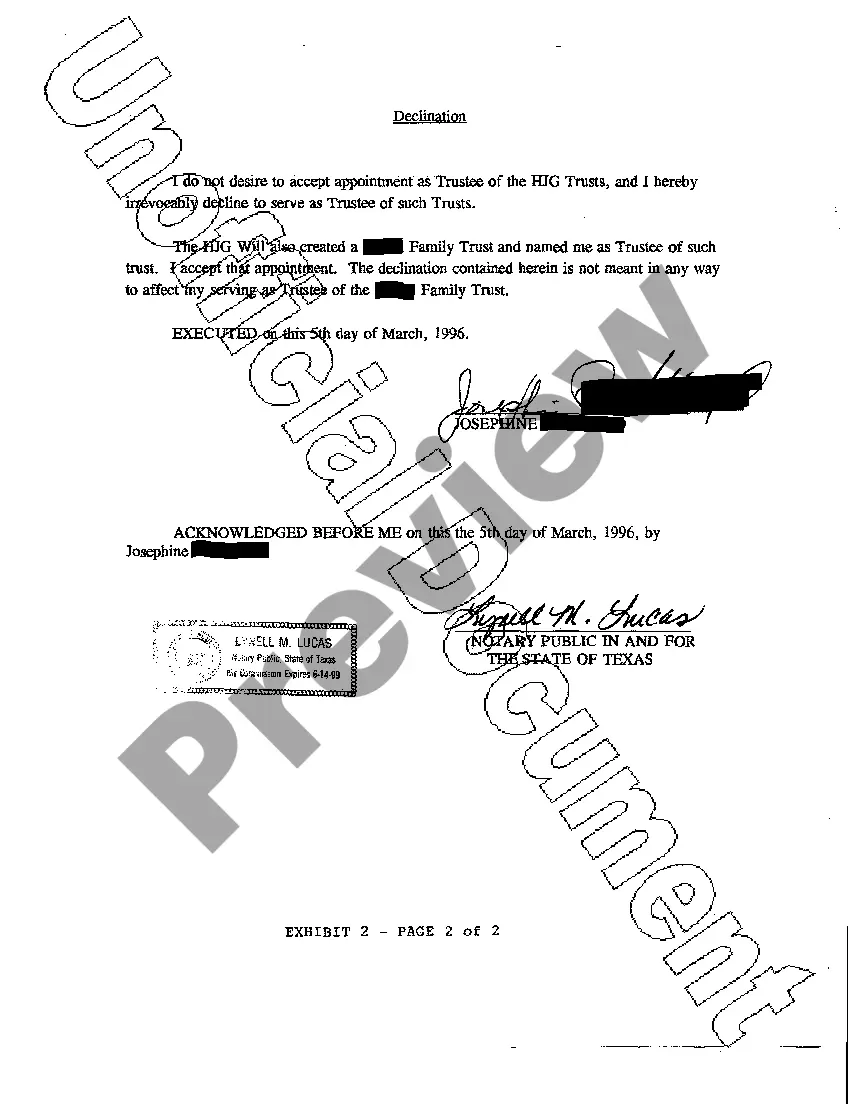
Renouncing your role as a trustee requires submitting a Declination of Trustee form, which officially expresses your intention to resign. This form serves as a legal document that clarifies your decision. After you complete it, send copies to the co-trustees and beneficiaries to keep everyone informed. Always consult the trust document for any specific procedures you need to follow to ensure compliance.
To remove yourself from being a trustee of a trust, you will need to complete a Declination of Trustee form. This form notifies involved parties of your decision to step down. After filling out the form, ensure you provide it to the co-trustees and any beneficiaries. It’s important to follow the trust’s specific instructions and check state laws to ensure a smooth resignation process.
A declination to serve as a trustee is an official statement that a person declines the responsibility of managing a trust. By completing a declination of trustee form, you confirm your decision and protect your interests. This process helps to ensure the trust operates smoothly by allowing someone else to step in as needed.
To remove yourself as a trustee, you should complete a declination of trustee form. This step officially communicates your decision to the other trustees and beneficiaries. Always ensure you have reviewed the trust documents to comply with any necessary procedures for resigning.
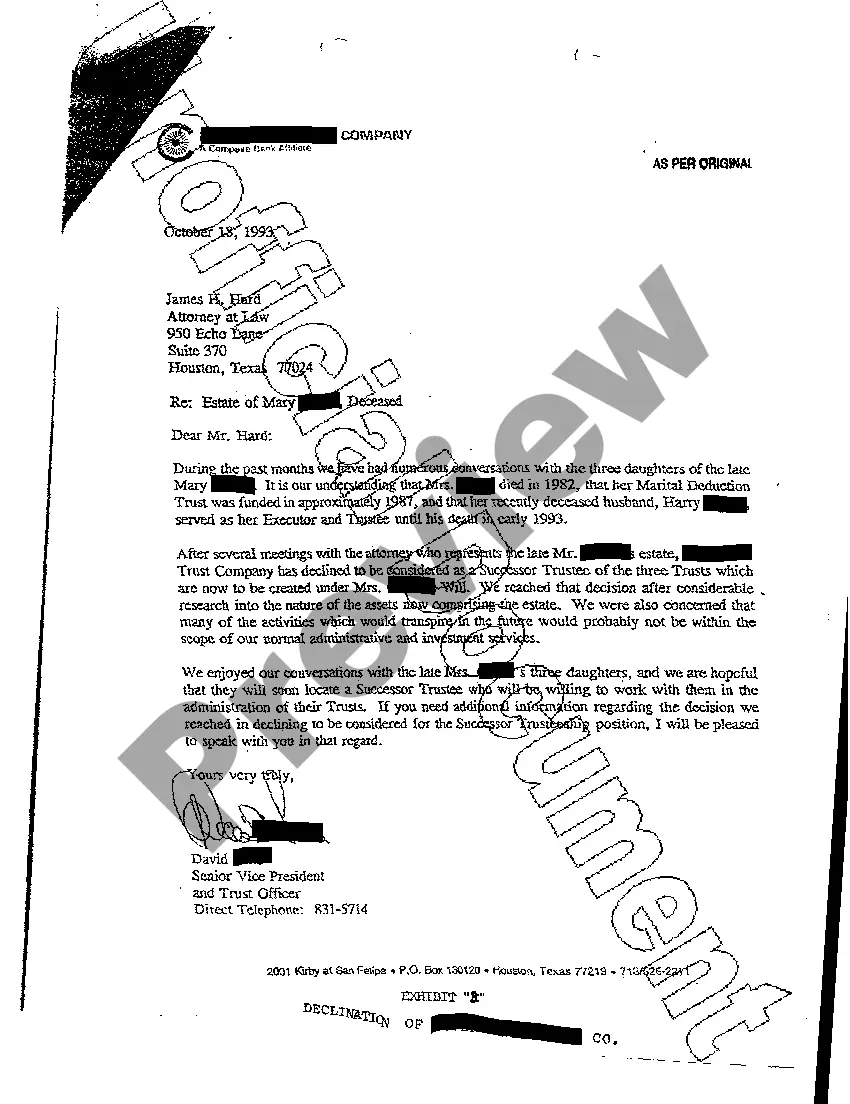
A letter of declination for a trustee is a formal document indicating that an individual does not wish to accept the role of trustee. It serves to protect both the individual and the beneficiaries by clarifying intentions. Using a declination of trustee form makes this process simple and straightforward.
To exit the role of a trustee, you can submit a declination of trustee form. This legal document allows you to officially notify the trust beneficiaries of your decision. Make sure to follow any specific requirements outlined in the trust agreement for a smooth transition.
Absolutely, you can refuse to accept the responsibility of being a trustee. By filling out a declination of trustee form, you can effectively express your unwillingness to serve. This document helps manage expectations and maintains transparency among beneficiaries.
Yes, you can decline the role of a trustee if you feel it is not suitable for you. To do so, you should complete a declination of trustee form. This form formally communicates your decision to renounce the position, ensuring clarity for all parties involved.
Removing yourself from being a trustee typically involves formally declining the appointment through a declination of trustee form. After completing this form, ensure you provide it to all parties involved, including other trustees and beneficiaries. By following proper procedure, you facilitate a smooth transition and maintain clear communication about the changes in trusteeship.
A declination of trusteeship form is a legal document that an appointed trustee fills out to decline the role. This form outlines the individual's reasons for stepping back from the trustee duties and ensures that all parties are informed. Using a declination of trustee form helps streamline the process of finding a replacement and maintains effective communication among all involved.