Texas Deed Without Warranty
Description
Get your form ready online
Our built-in tools help you complete, sign, share, and store your documents in one place.
Make edits, fill in missing information, and update formatting in US Legal Forms—just like you would in MS Word.
Download a copy, print it, send it by email, or mail it via USPS—whatever works best for your next step.
Sign and collect signatures with our SignNow integration. Send to multiple recipients, set reminders, and more. Go Premium to unlock E-Sign.
If this form requires notarization, complete it online through a secure video call—no need to meet a notary in person or wait for an appointment.
We protect your documents and personal data by following strict security and privacy standards.

Make edits, fill in missing information, and update formatting in US Legal Forms—just like you would in MS Word.

Download a copy, print it, send it by email, or mail it via USPS—whatever works best for your next step.

Sign and collect signatures with our SignNow integration. Send to multiple recipients, set reminders, and more. Go Premium to unlock E-Sign.

If this form requires notarization, complete it online through a secure video call—no need to meet a notary in person or wait for an appointment.

We protect your documents and personal data by following strict security and privacy standards.
Looking for another form?
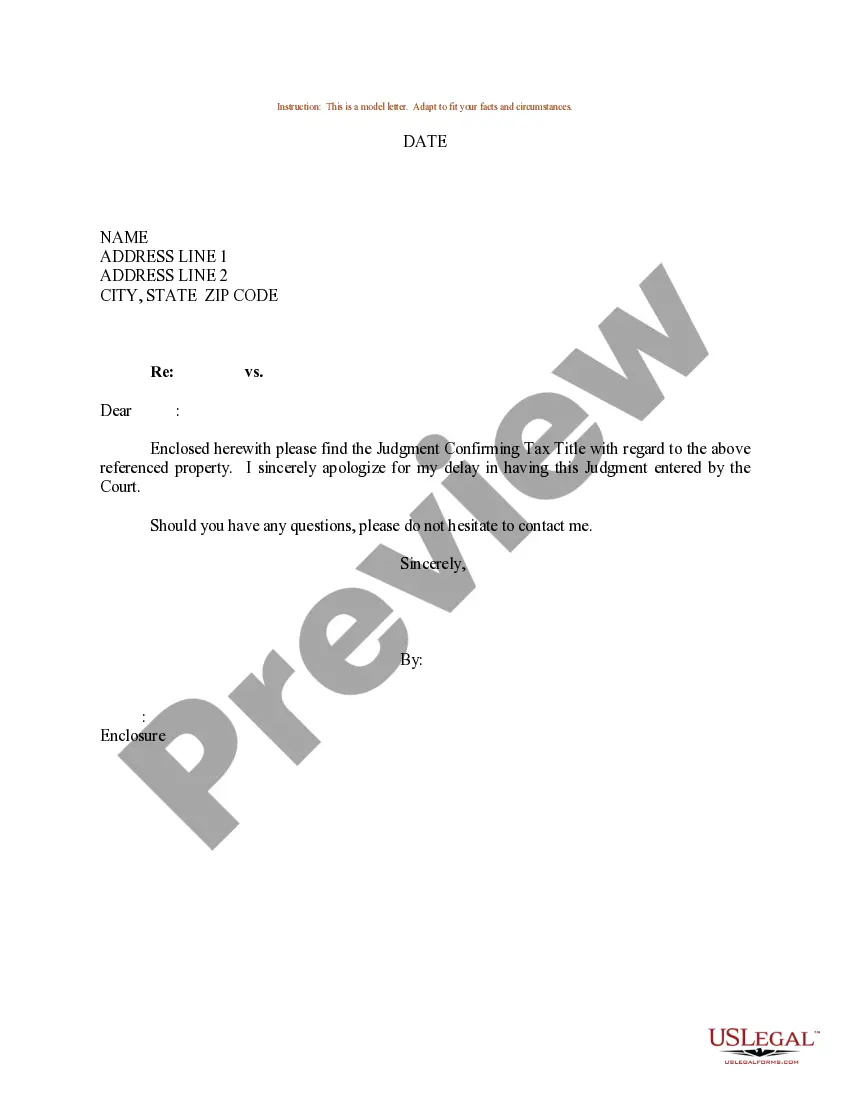




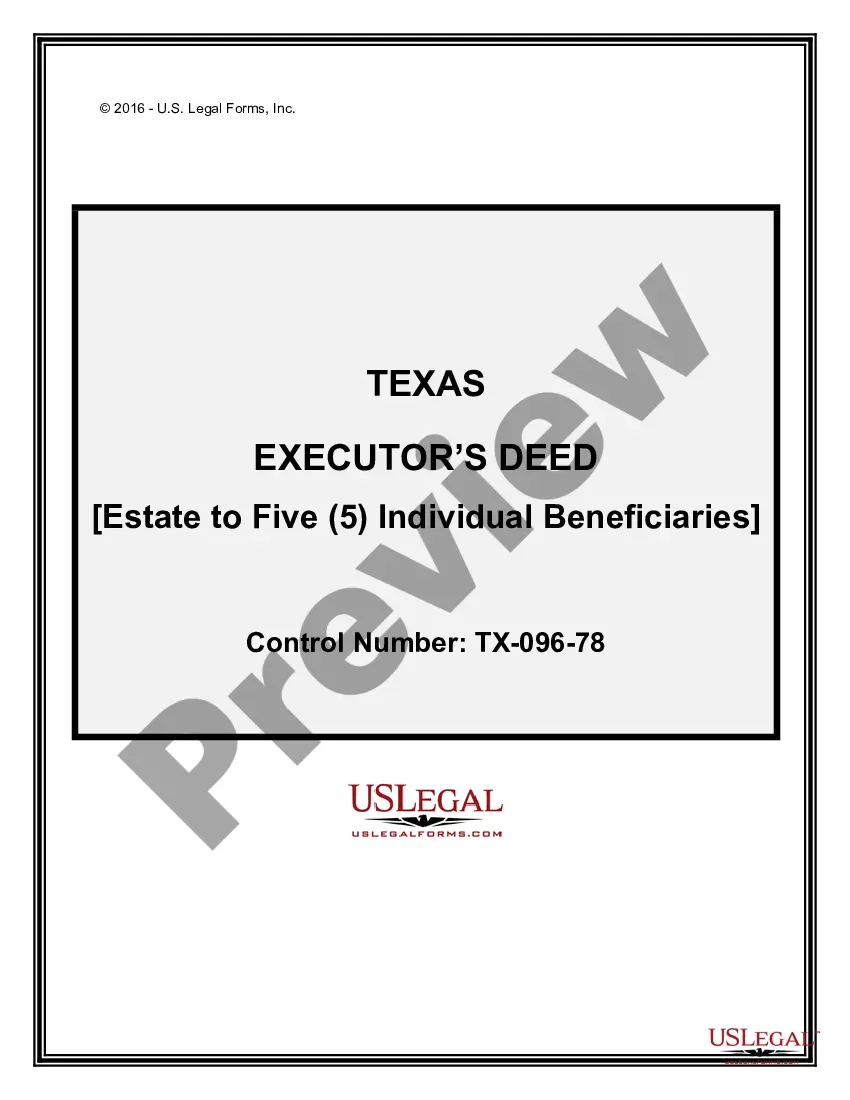
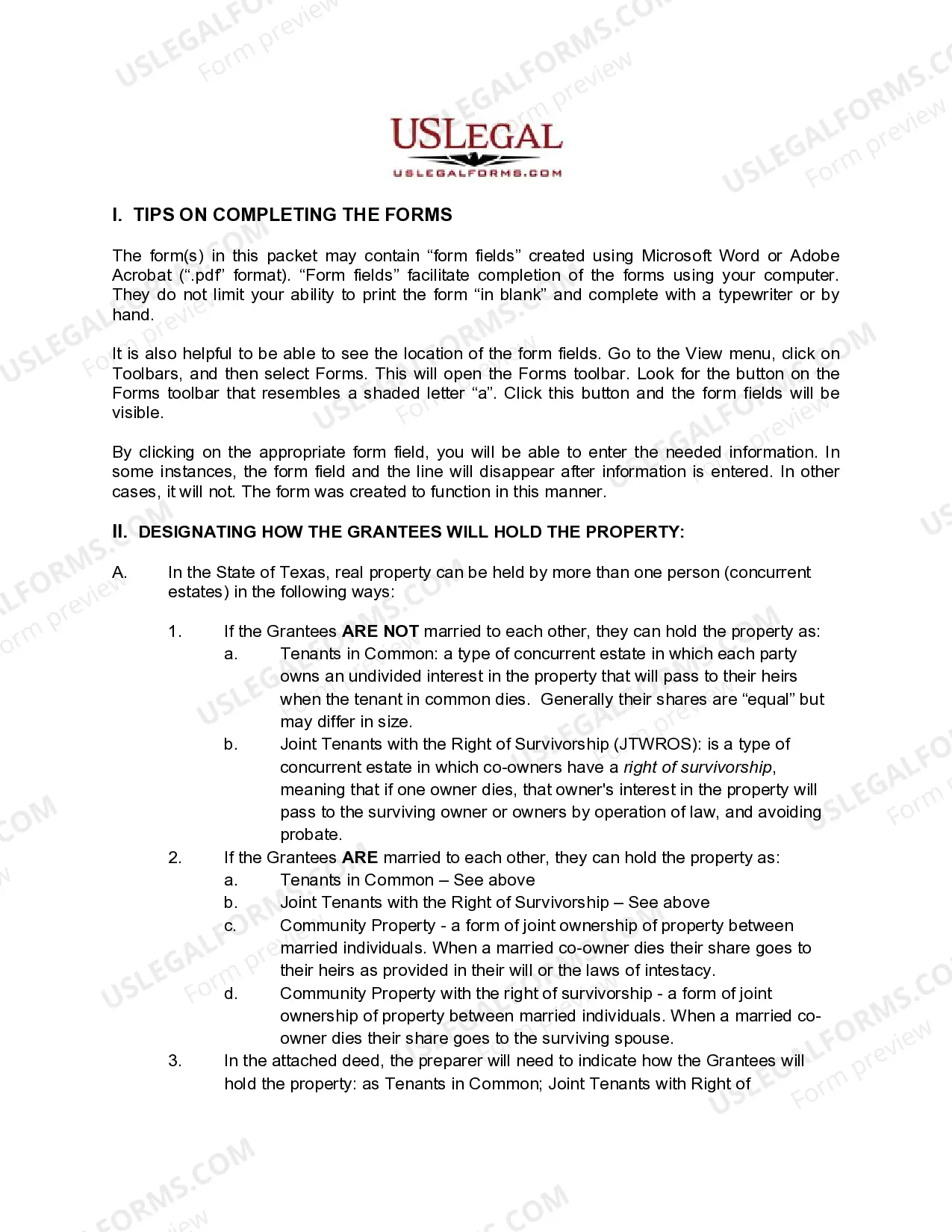
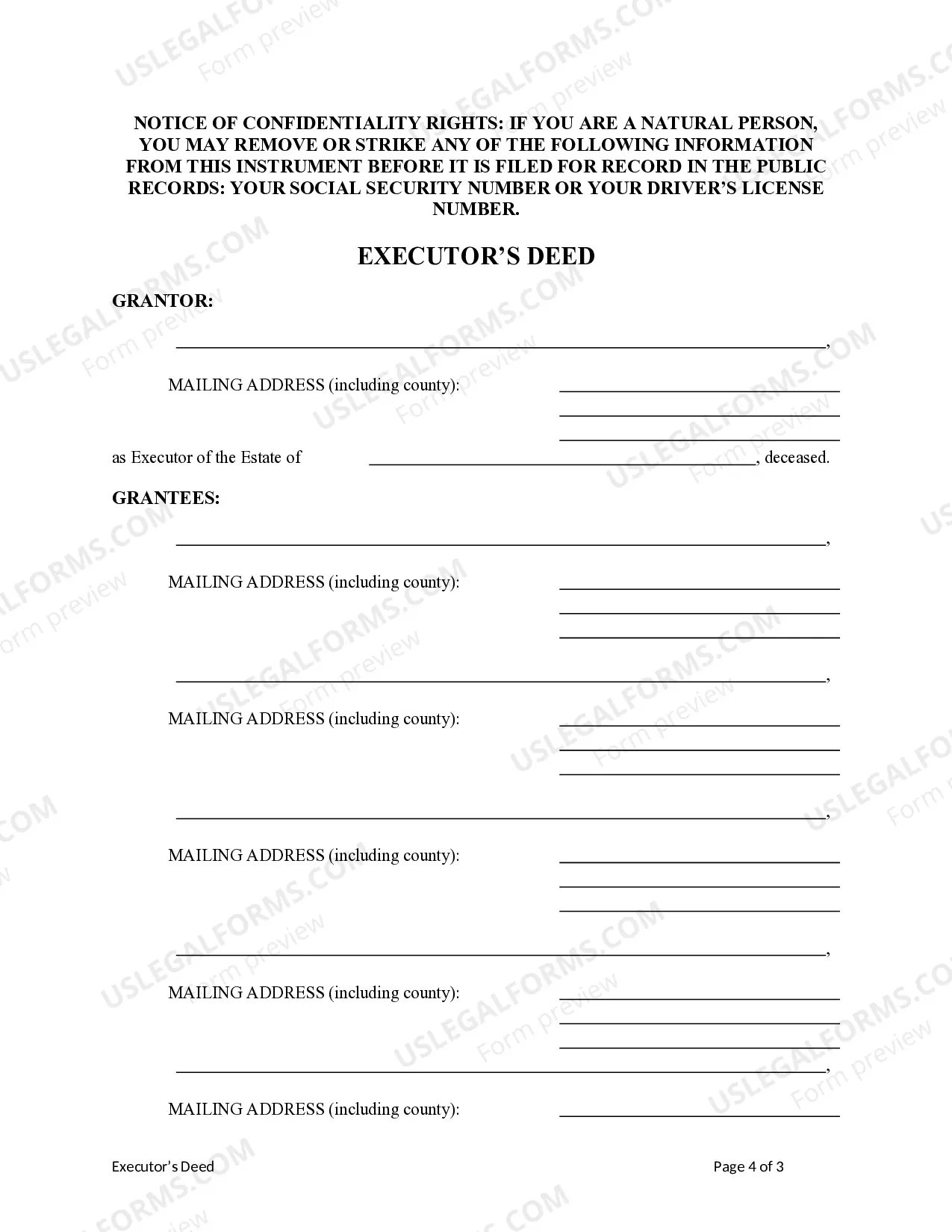
How to fill out Texas Executor's Deed - Estate To Five Beneficiaries?
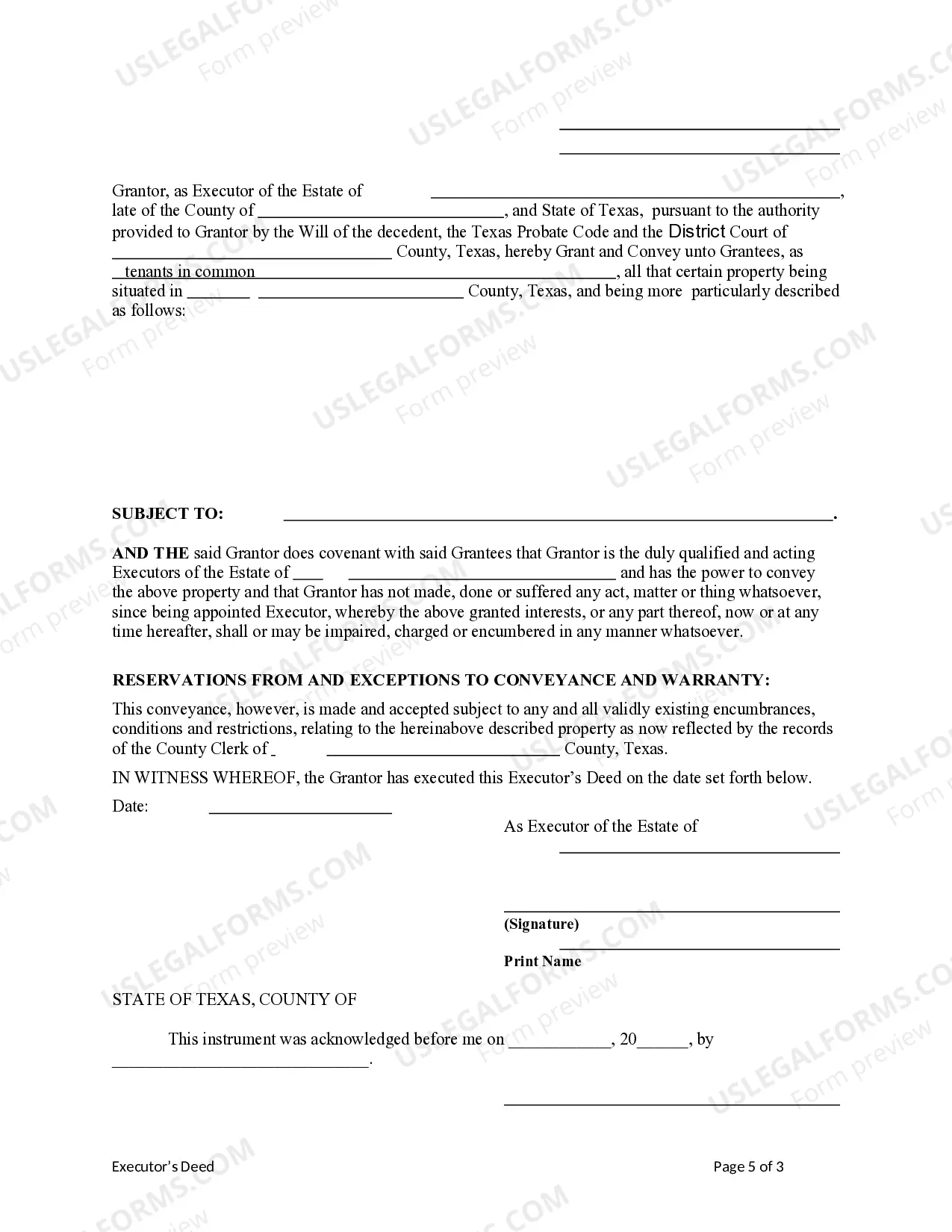
The Texas Deed Without Warranty displayed on this page is a versatile official template created by experienced attorneys in accordance with federal and state regulations.
For over 25 years, US Legal Forms has supplied individuals, businesses, and legal experts with over 85,000 authenticated, state-specific documents for various business and personal needs. It is the quickest, simplest, and most reliable method to acquire the documentation you require, as the service ensures the utmost level of data protection and anti-malware safeguards.
Choose the format you prefer for your Texas Deed Without Warranty (PDF, Word, RTF) and save the document on your device. Complete and sign the documentation. Print the template to fill it out manually, or employ an online multifunctional PDF editor to quickly and accurately complete and sign your form with a valid signature. Download your documents again. Use the same document whenever necessary. Access the My documents section in your profile to redownload any previously purchased forms. Register for US Legal Forms to have authenticated legal templates for all of life's situations readily available.
- Search for the document you require and review it.
- Browse through the sample you searched for and preview it or examine the form description to confirm it meets your requirements. If it doesn't, use the search feature to locate the appropriate one. Click Buy Now once you have found the template you need.
- Subscribe and Log In.
- Select the pricing option that works for you and create an account. Use PayPal or a credit card to make a swift payment. If you already possess an account, Log In and verify your subscription to proceed.
- Obtain the editable template.
Form popularity
FAQ
Your deed will be prepared by a Texas licensed attorney in about an hour. This fee does not include the county recording fee. The county recording fee is approximately $15 to $40, depending on the county the property is located in.
As a property owner and grantor, you can obtain a warranty deed for the transfer of real estate through a local realtor's office, or with an online search for a template. To make the form legally binding, you must sign it in front of a notary public.
Texas deeds without warranty It conveys title to the buyer, but there's no warranty against any defects in the title. Thus, a buyer can't sue a seller who used a deed without warranty for any defect in title that appears later on.
Quitclaim deeds do not contain any implied warranties or covenants. Under a quitclaim deed, the grantor simply transfers its whole interest in the described real estate, but makes no covenant or representation that the grantor in fact has any interest in the subject property.
In order for a deed to be effective it must be signed and acknowledged before a notary by the seller. The buyer is not required to sign, but if the deed includes language about specific agreements between the buyer and seller, then it is advisable to include the buyer's signature.