Texas Estate Individual For The Future
Description
Get your form ready online
Our built-in tools help you complete, sign, share, and store your documents in one place.
Make edits, fill in missing information, and update formatting in US Legal Forms—just like you would in MS Word.
Download a copy, print it, send it by email, or mail it via USPS—whatever works best for your next step.
Sign and collect signatures with our SignNow integration. Send to multiple recipients, set reminders, and more. Go Premium to unlock E-Sign.
If this form requires notarization, complete it online through a secure video call—no need to meet a notary in person or wait for an appointment.
We protect your documents and personal data by following strict security and privacy standards.

Make edits, fill in missing information, and update formatting in US Legal Forms—just like you would in MS Word.

Download a copy, print it, send it by email, or mail it via USPS—whatever works best for your next step.

Sign and collect signatures with our SignNow integration. Send to multiple recipients, set reminders, and more. Go Premium to unlock E-Sign.

If this form requires notarization, complete it online through a secure video call—no need to meet a notary in person or wait for an appointment.

We protect your documents and personal data by following strict security and privacy standards.
Looking for another form?

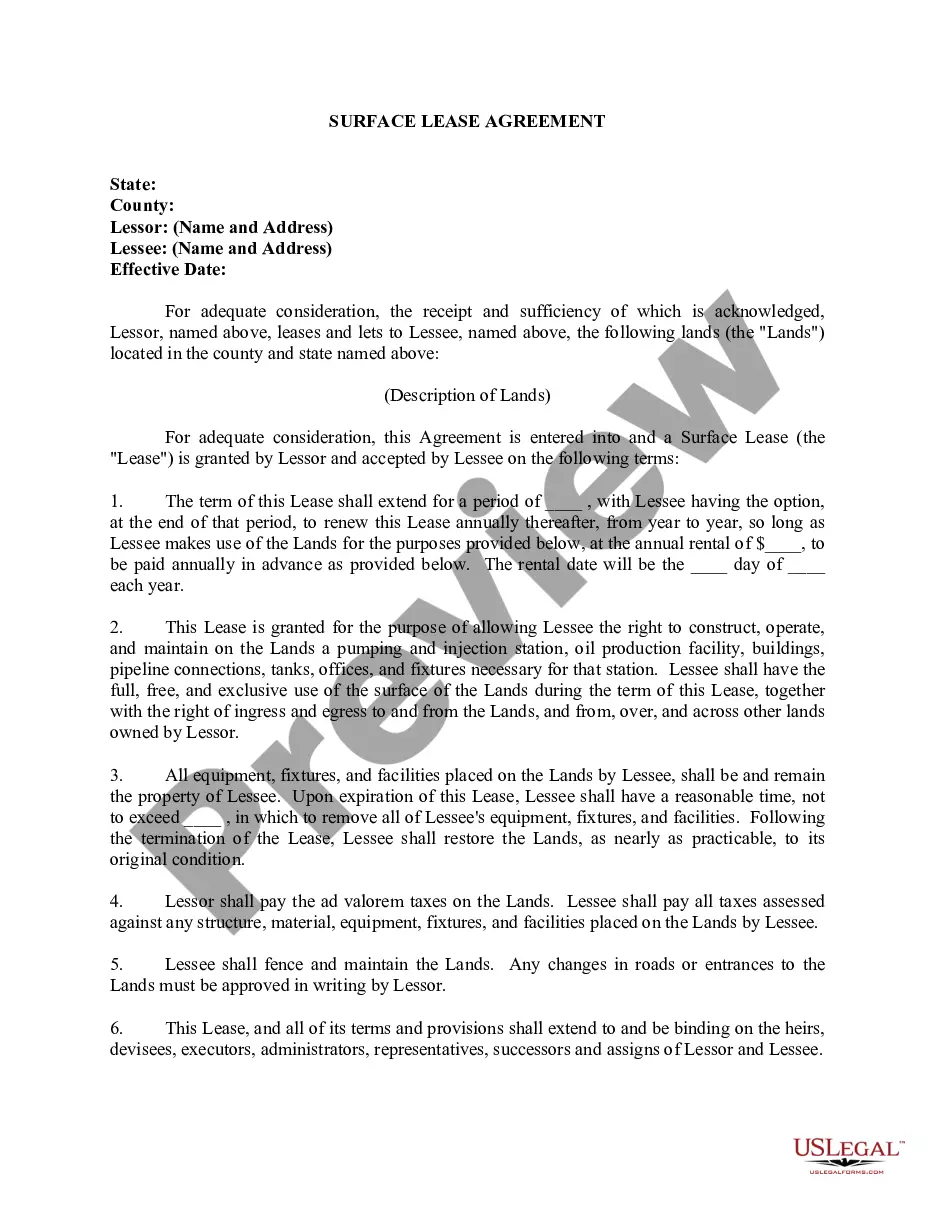


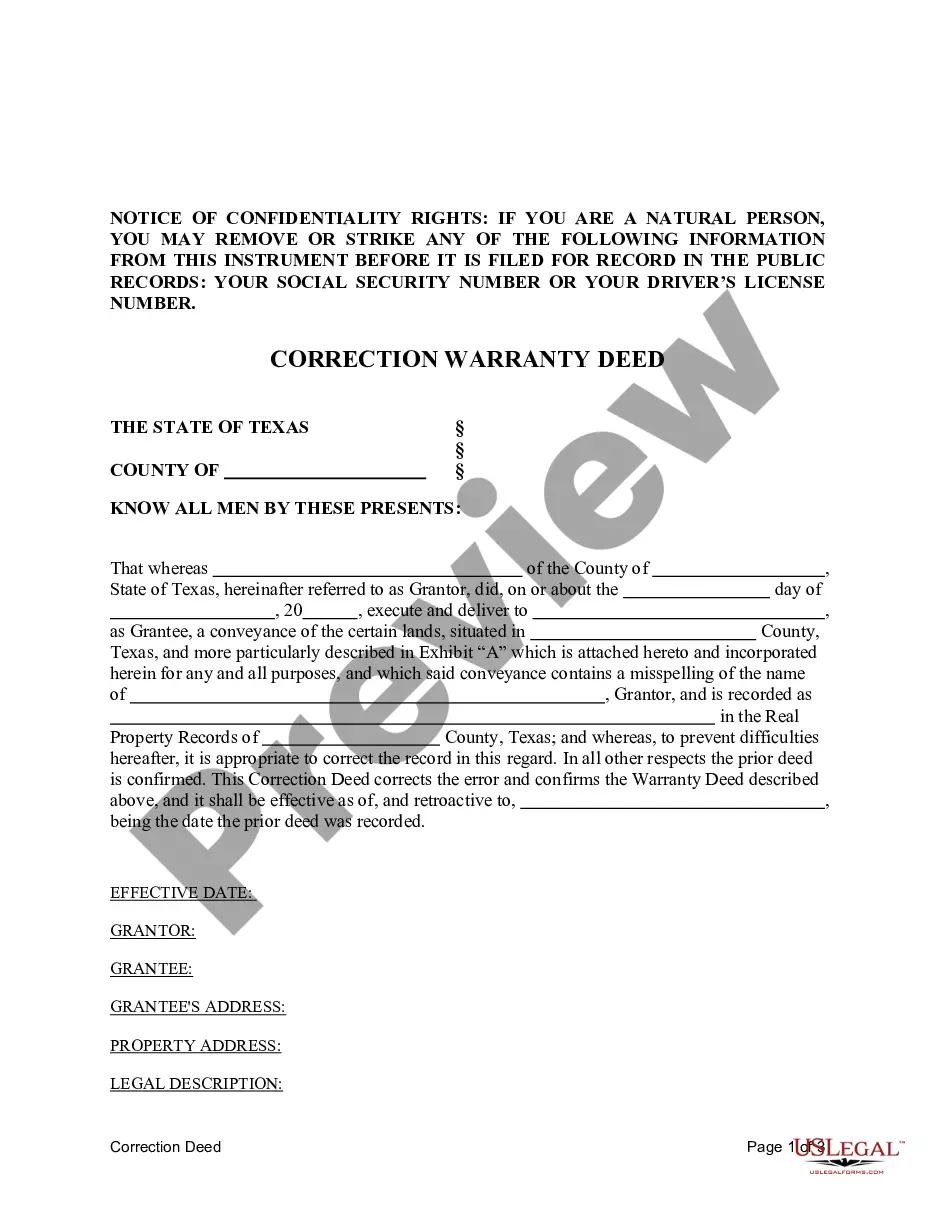



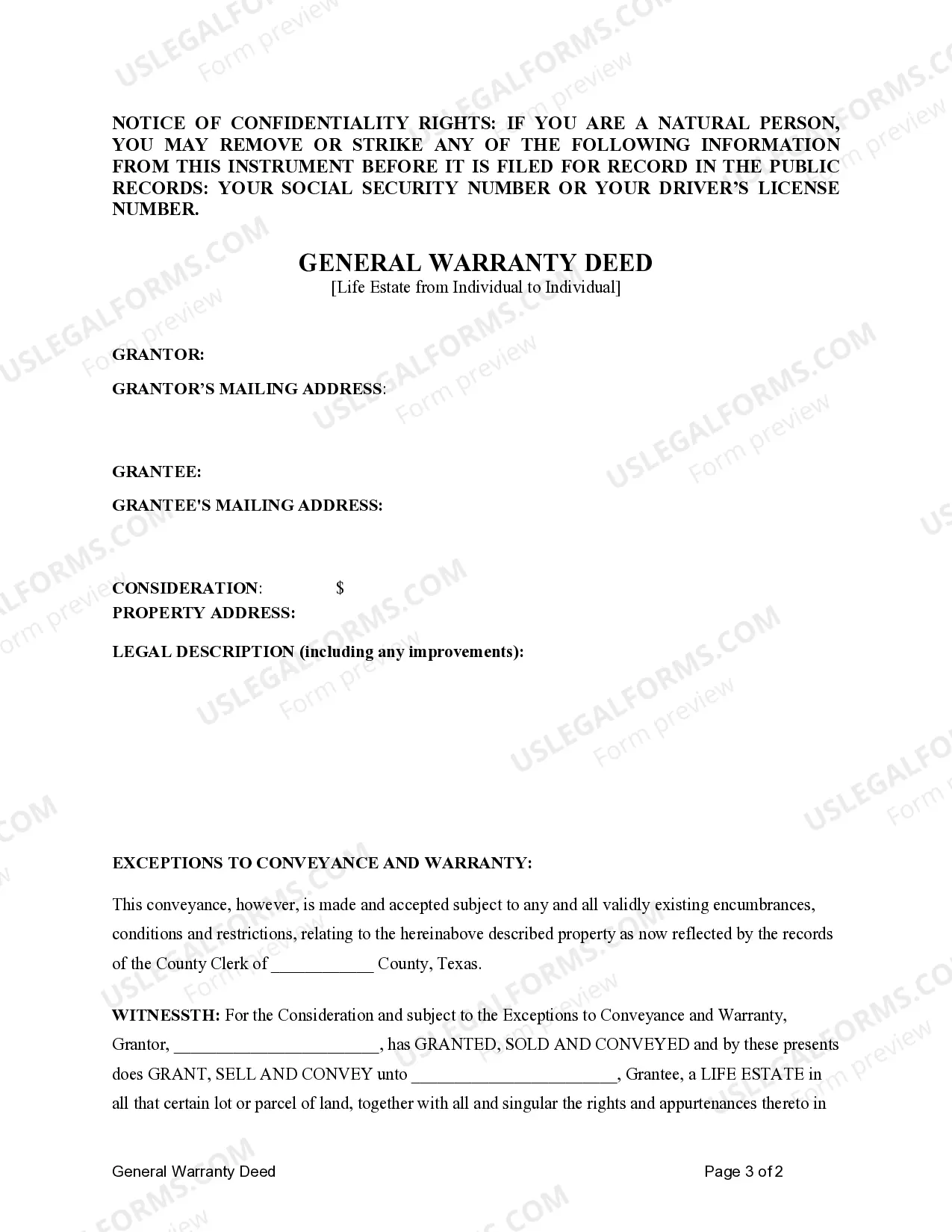
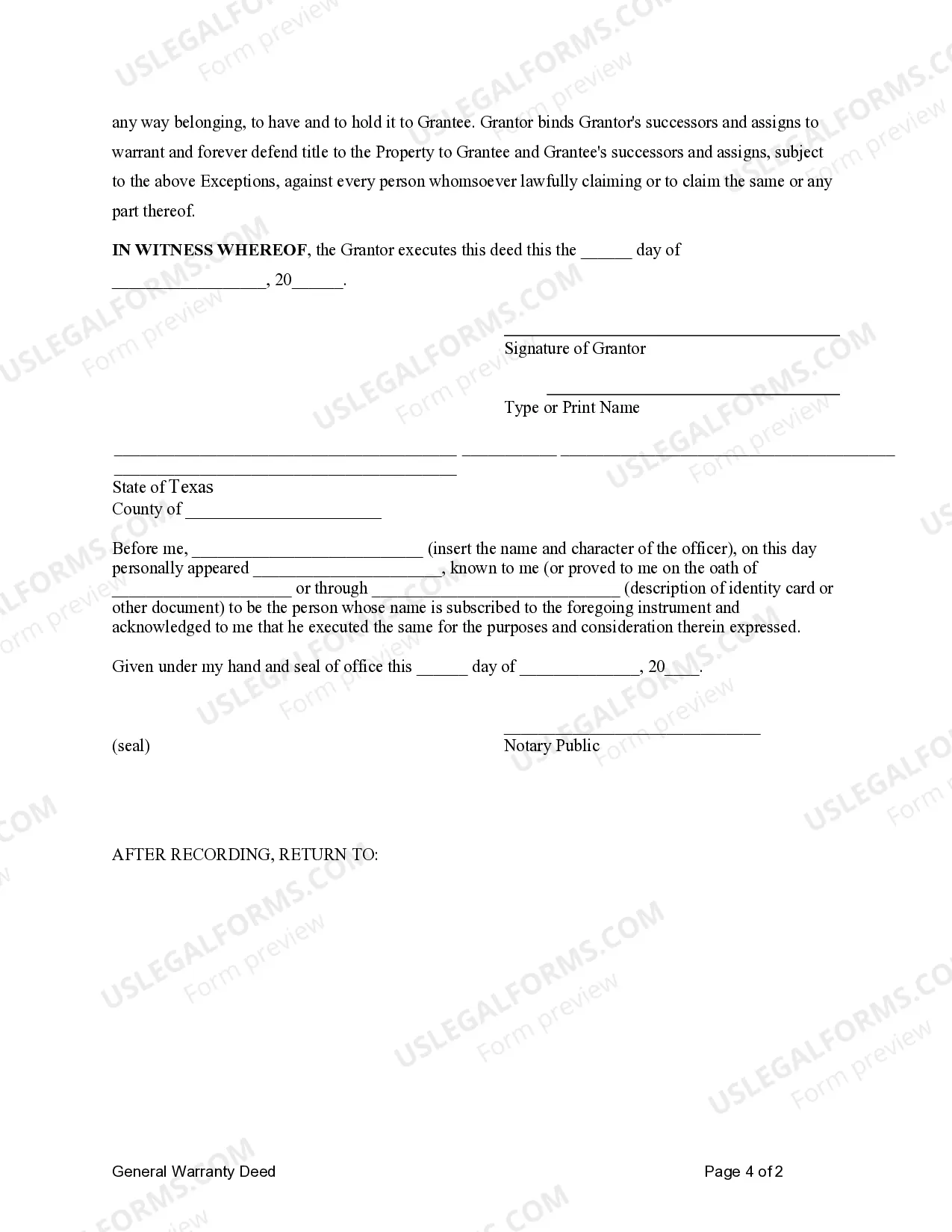
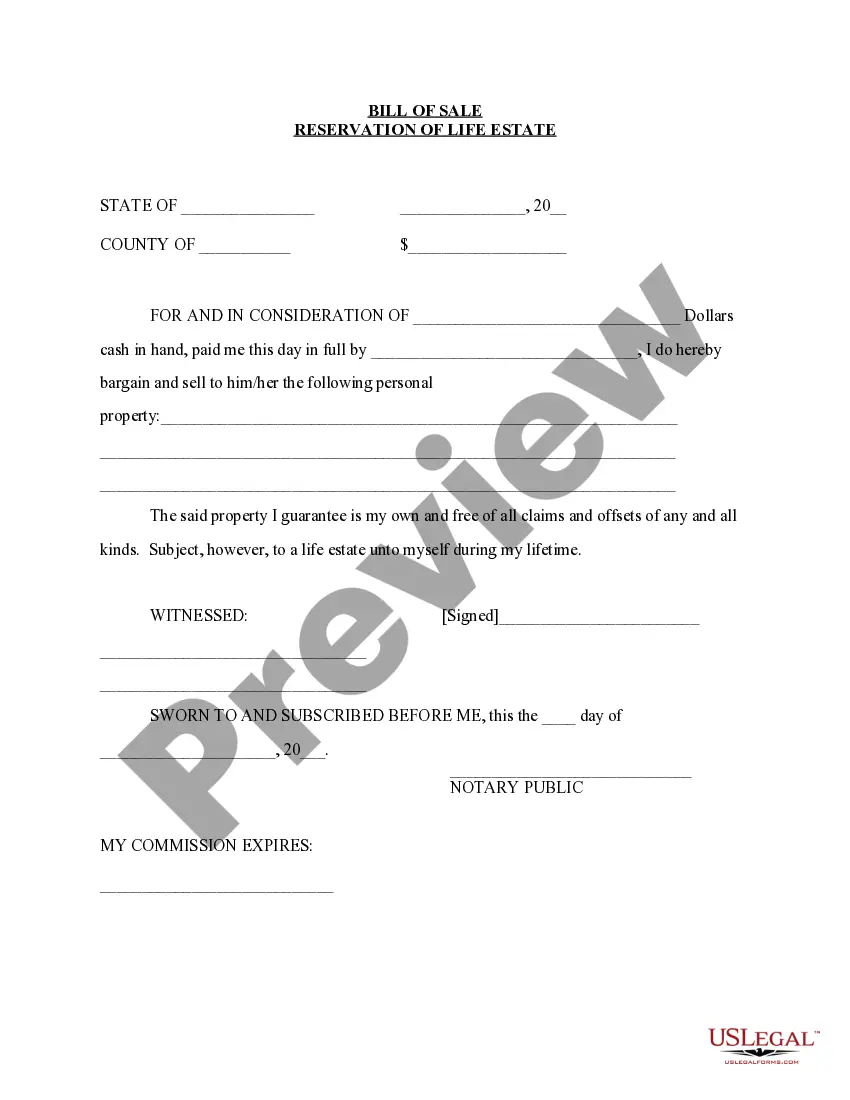
How to fill out Texas General Warrant Deed - Life Estate From Individual To Individual?
- Log in to your US Legal Forms account to access your document library.
- Review the preview and description of the form to ensure it meets Texas jurisdiction requirements.
- Utilize the search feature to find additional templates if necessary.
- Select the desired subscription plan by clicking the Buy Now button.
- Complete your purchase by entering your payment details via credit card or PayPal.
- Download the completed form and save it on your device for future access.
In conclusion, utilizing US Legal Forms not only simplifies the process of obtaining legal documents but also provides peace of mind, knowing that your estate planning needs are met. Take control of your future today and streamline your legal documentation.
Start exploring the resources at US Legal Forms and secure your Texas estate individual for the future.
Form popularity
FAQ
If there is no will in Texas, the state's intestacy laws dictate who inherits property. Generally, spouses, children, and other relatives follow a specific order when it comes to inheritance rights. Without a will, your property may not be distributed according to your wishes, which could result in unintended heirs. Understanding the implications of Texas estate individual for the future helps ensure your property is handled according to your preferences.
To avoid going through probate in Texas, consider establishing a living trust, which allows your assets to be managed outside of probate court. You can also execute transfer-on-death deeds for real estate, or designate beneficiaries for financial accounts. Additionally, ensure all your assets are titled correctly, minimizing what goes into probate. By planning your Texas estate individual for the future effectively, you can make the process easier for your beneficiaries.
Yes, an estate can be settled without probate in Texas under specific conditions. If the deceased had no significant assets or held property jointly, you can often manage the estate without going through probate. Moreover, certain legal tools such as transfer-on-death deeds allow for direct transfer of property. Therefore, creating a thorough Texas estate individual for the future can help ensure your wishes are fulfilled without the complexities of probate.
Not all wills in Texas must go through probate. If you hold property that is jointly owned or if certain types of assets are transferred to beneficiaries directly, you can avoid the probate process. Additionally, small estates may qualify for simplified probate procedures, which expedite the administration process. Thus, a well-planned Texas estate individual for the future can significantly ease your loved ones' burden.
An estate typically consists of all assets owned by an individual, which, for a Texas estate individual for the future, encompasses both tangible and intangible property. Tangible assets include real estate and personal items, while intangible assets may involve stocks, bonds, and any digital assets. Additionally, any debts or liabilities also form part of the estate, affecting the net worth calculation. Understanding what your estate consists of helps in better financial planning.
Certain items are excluded from your Texas estate individual for the future. For example, assets held in joint tenancy, life insurance proceeds with designated beneficiaries, and retirement accounts may not be part of the probate estate. Additionally, any property owned by a living trust also typically bypasses estate inclusion. Familiarizing yourself with these exclusions can provide better clarity when planning.
Your Texas estate individual for the future includes a variety of assets. Real estate, vehicles, bank accounts, stocks, bonds, and personal items all fall under this category. Additionally, any business ownership or investments are also considered. Understanding these elements ensures that you cover all aspects in your estate plan.
Filling out a small estate affidavit in Texas involves a few specific steps to claim your Texas estate individual for the future. Generally, you will need to gather basic information such as a list of assets, debts, and the names of beneficiaries. You can find templates and resources on platforms like US Legal Forms, which can guide you through the entire process. Proper completion can expedite asset distribution without lengthy probate.
When a single person passes away, their Texas estate individual for the future must go through the probate process. This legal procedure identifies the individual's assets and liabilities, ensuring debts are settled before assets are distributed. If no will exists, the state's intestacy laws dictate how the assets will be allocated among relatives. Proper estate planning can simplify this process considerably.
The Texas estate individual for the future typically includes all properties and assets owned by an individual at the time of death. This may encompass real estate, bank accounts, investments, personal belongings, and business interests. It's essential to understand that these components form the entire estate, impacting how assets are distributed. Knowing what comprises your estate can help in planning effectively.