Massachusetts No Trespass Notice to be Served on Individual
About this form
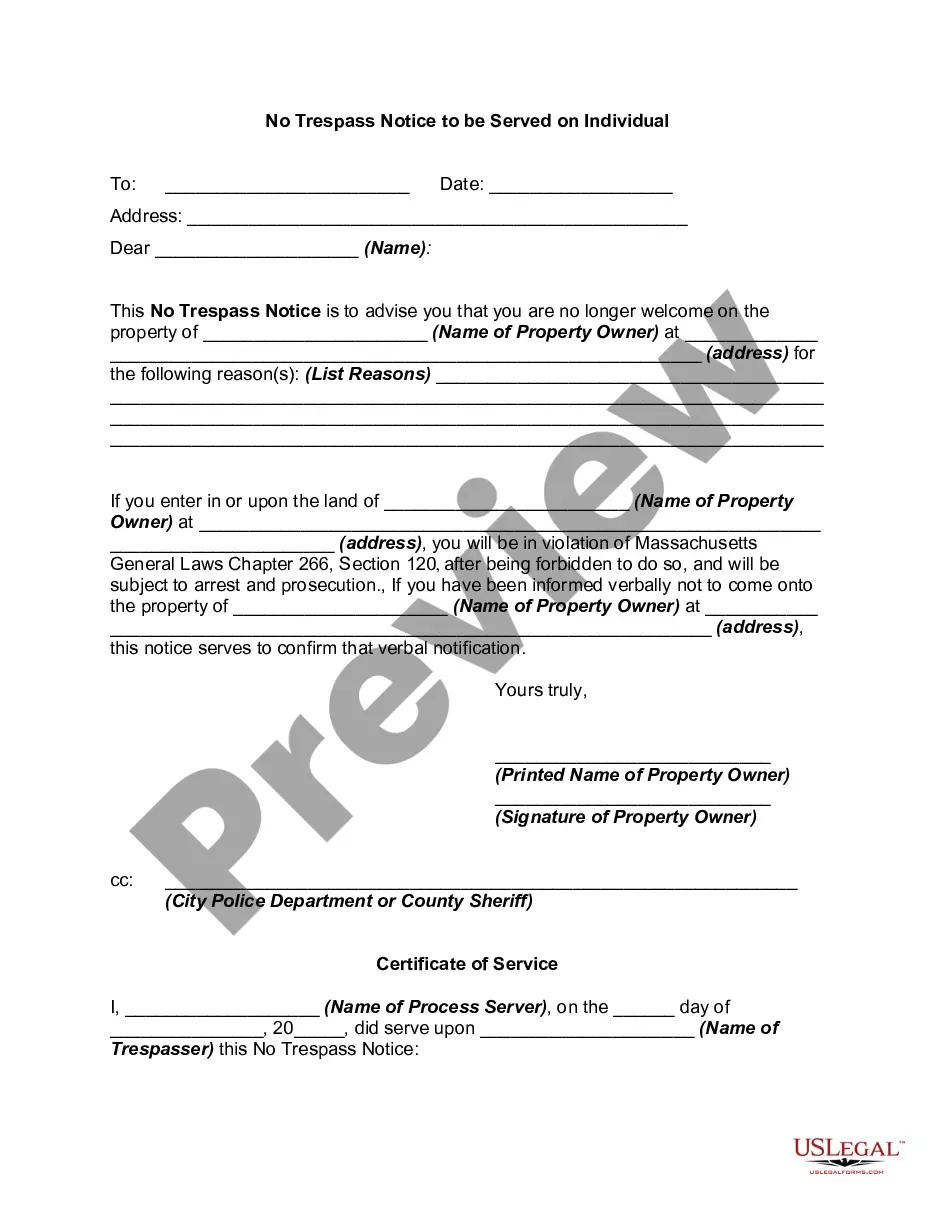
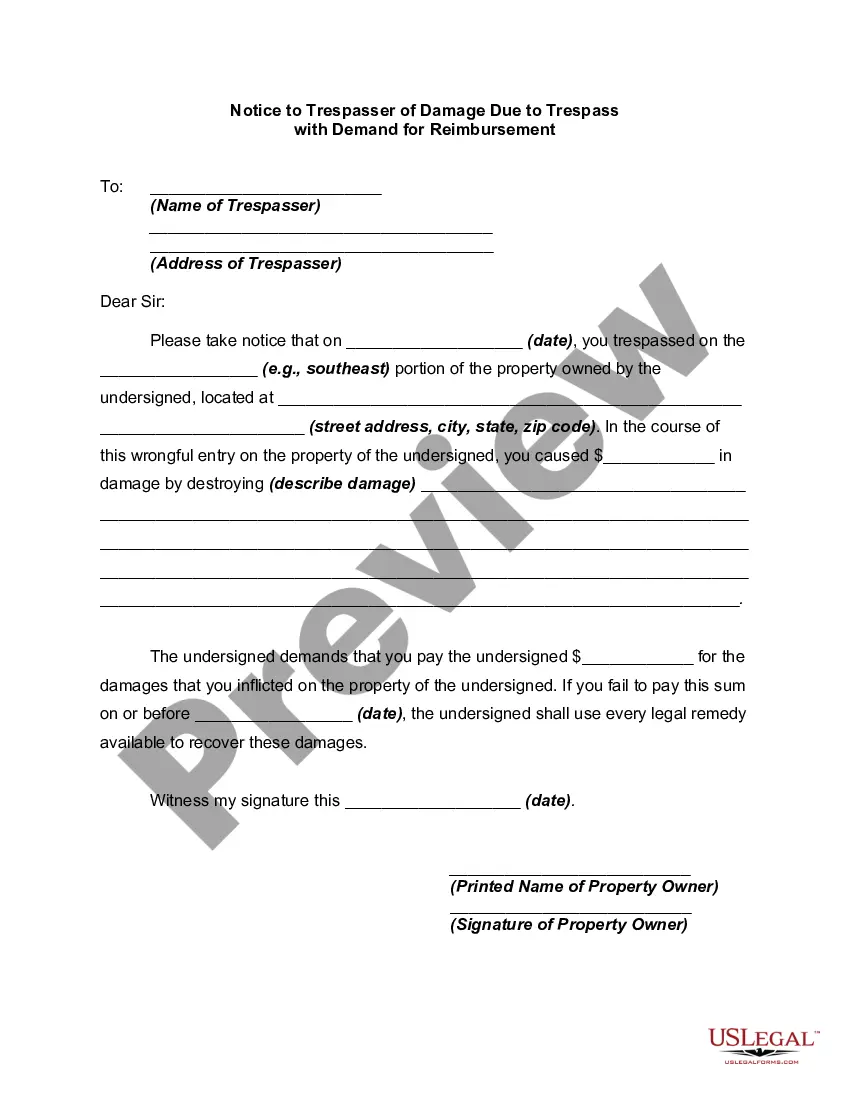
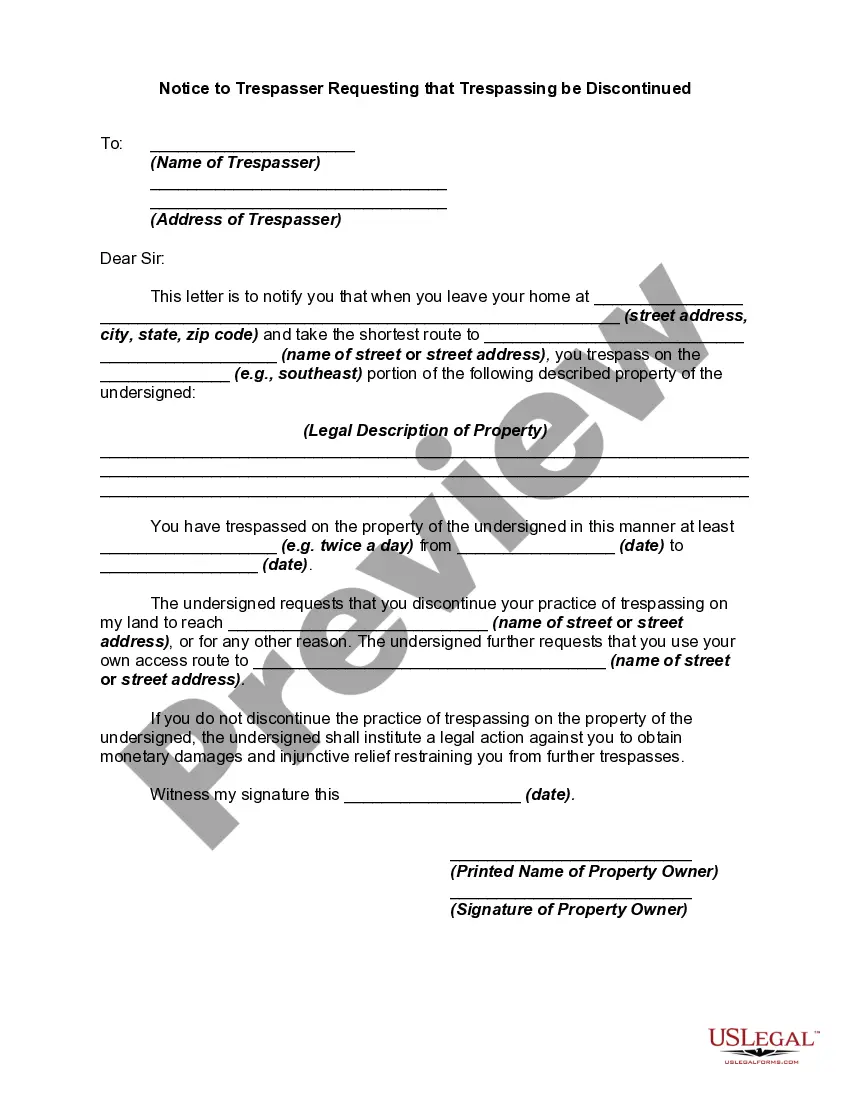
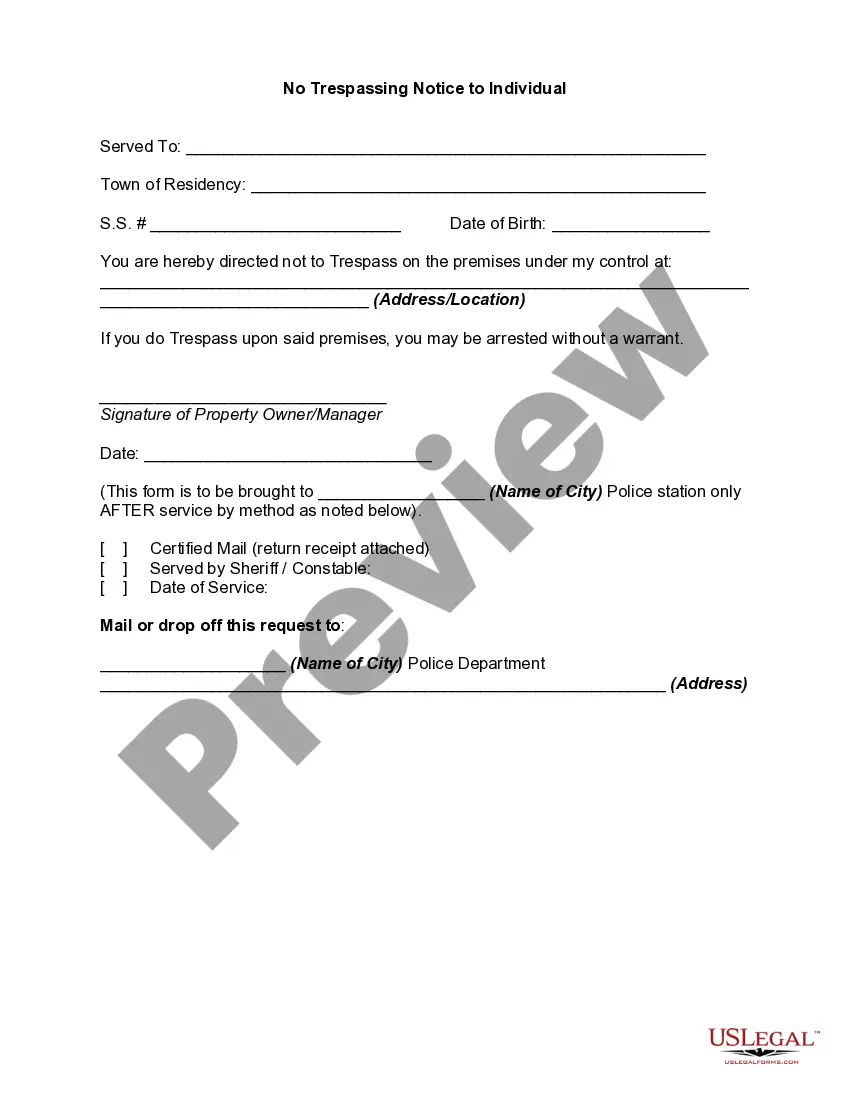
The No Trespass Notice to be Served on Individual is a legal document used to formally notify someone that they are prohibited from entering or remaining on a specified property. This notice is particularly important as it serves as a legal warning under Massachusetts law, ensuring that individuals are informed of their trespassing status. It differs from similar forms by specifically addressing the requirement for notice before a trespass action can be enforced, aligning with the statutes outlined in Massachusetts General Laws Chapter 266, Section 120.
What’s included in this form
- Name and address of the property owner.
- Name and address of the individual receiving the notice.
- Specific reasons for the no trespass notice.
- Consequences of non-compliance, including potential legal action.
- Signature and printed name of the property owner.
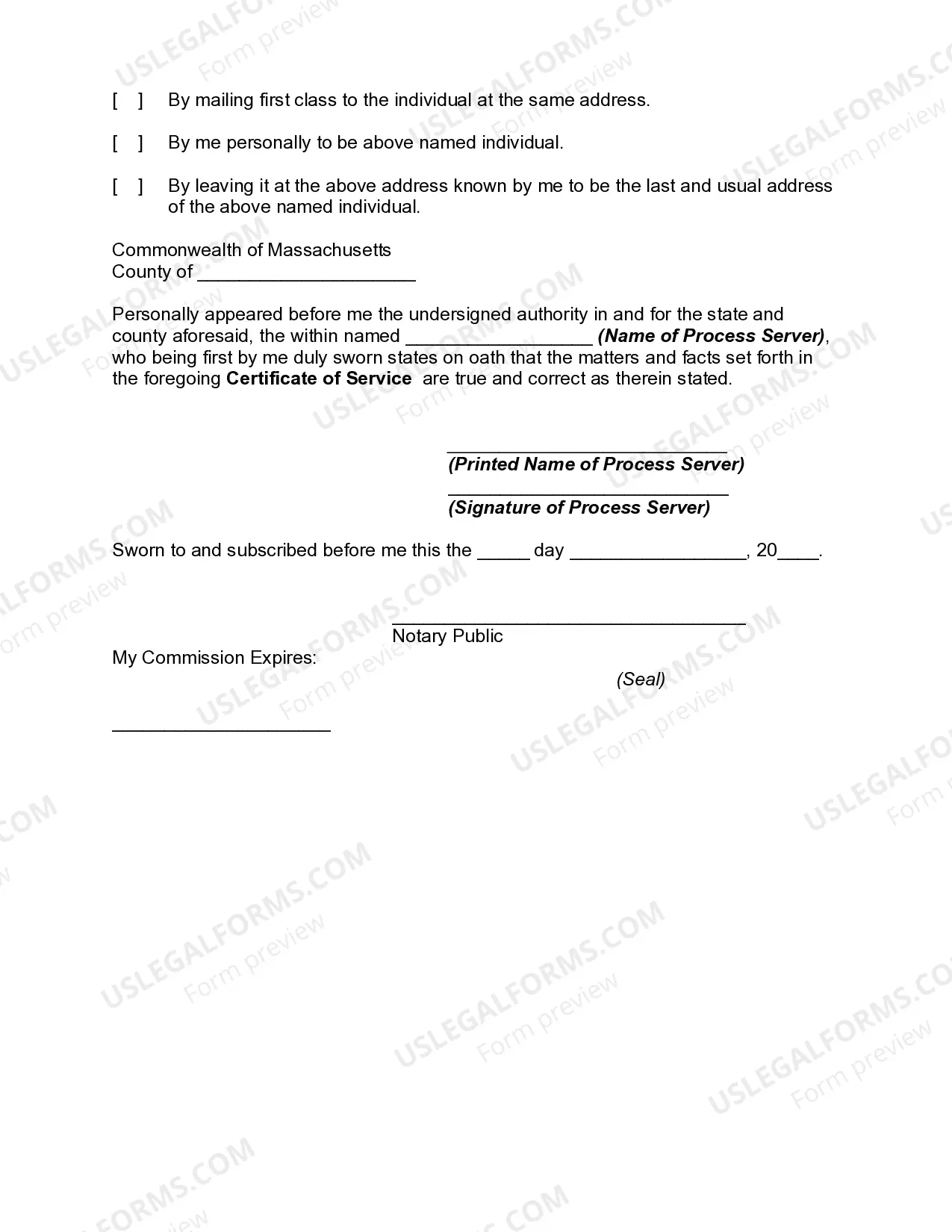
- Certificate of service confirming that the notice has been delivered to the individual.
Situations where this form applies
This form should be used when a property owner wishes to formally prohibit an individual from entering their property. Common scenarios include: persistent unwanted visits, disputes with neighbors, or situations where safety and security are concerns. By issuing this notice, the property owner establishes a legal framework to take further action, including potential involvement of law enforcement, should the individual ignore the warning.
Who should use this form
This form is intended for:
- Property owners looking to protect their property from unwanted individuals.
- Landlords dealing with problematic tenants or trespassers.
- Individuals managing properties such as businesses, schools, or recreational facilities.
How to prepare this document
- Identify the parties by entering the name and address of both the property owner and the individual receiving the notice.
- Provide the specific address of the property from which the individual is banned.
- List the reasons for the no trespass notice clearly and concisely.
- Have the property owner sign and print their name at the bottom of the notice.
- Complete the Certificate of Service to document how the notice was delivered to the individual.
Notarization guidance
This document requires notarization to meet legal standards. US Legal Forms provides secure online notarization powered by Notarize, allowing you to complete the process through a verified video call, available 24/7.
Get your form ready online
Our built-in tools help you complete, sign, share, and store your documents in one place.
Make edits, fill in missing information, and update formatting in US Legal Forms—just like you would in MS Word.
Download a copy, print it, send it by email, or mail it via USPS—whatever works best for your next step.
Sign and collect signatures with our SignNow integration. Send to multiple recipients, set reminders, and more. Go Premium to unlock E-Sign.
If this form requires notarization, complete it online through a secure video call—no need to meet a notary in person or wait for an appointment.
We protect your documents and personal data by following strict security and privacy standards.

Make edits, fill in missing information, and update formatting in US Legal Forms—just like you would in MS Word.

Download a copy, print it, send it by email, or mail it via USPS—whatever works best for your next step.

Sign and collect signatures with our SignNow integration. Send to multiple recipients, set reminders, and more. Go Premium to unlock E-Sign.

If this form requires notarization, complete it online through a secure video call—no need to meet a notary in person or wait for an appointment.

We protect your documents and personal data by following strict security and privacy standards.
Typical mistakes to avoid
- Failing to provide clear reasons for the no trespass notice.
- Not properly serving the notice to the individual.
- Missing the signature of the property owner or process server.
- Not keeping a copy for personal records after serving the notice.
Benefits of completing this form online
- Convenience of downloading and completing the form at your own pace.
- Editable form templates to suit specific situations and needs.
- Access to forms drafted by licensed attorneys, ensuring legal accuracy and compliance.
Looking for another form?
Form popularity
FAQ
In Massachusetts, trespass involves the act of entering or remaining in or upon someone's dwelling house, building, boat or even improved or enclosed land, a wharf, or pier without owner's permission or other right.
Someone is entering on your property without your permission. 266, § 120, allows a property owner to issue a notice to the trespasser forbidding him from entering or remaining on the property.
266, § 120, allows a property owner to issue a notice to the trespasser forbidding him from entering or remaining on the property. The owner who drafts such a No Trespass Notice should have a constable serve it on the trespasser. The owner should also mail a copy of the notice to the local police department.
Trespass is an area of criminal law or tort law broadly divided into three groups: trespass to the person, trespass to chattels, and trespass to land.
A Trespass Letter of Consent is a document that allows a police officer to immediately act on your behalf, and take enforcement action against a person trespassing on your private property without first contacting you.
Yes, you can be charged with trespassing even if no signs are posted and no fences are placed to bar entry. Trespass is an unauthorized entry upon another person's land without permission to do so. Apparently you had no permission to cross the land you crossed belonging to someone other than you.
The date the letter is effective, the offender's name and the address of the premises that are off limits. A description of what is meant by trespassing and the actions the letter recipient must take to avoid penalties. ( The consequences of further infractions.
The four elements of the tort trespass to land are intent, enter, land, and possession.
If a person will not leave your property after you ask them to, or they have entered your property even after you have served them with a trespass notice, you can warn them that they are trespassing and that you will call the Police if they don't leave.