Texas Deed Form Printable With Holidays
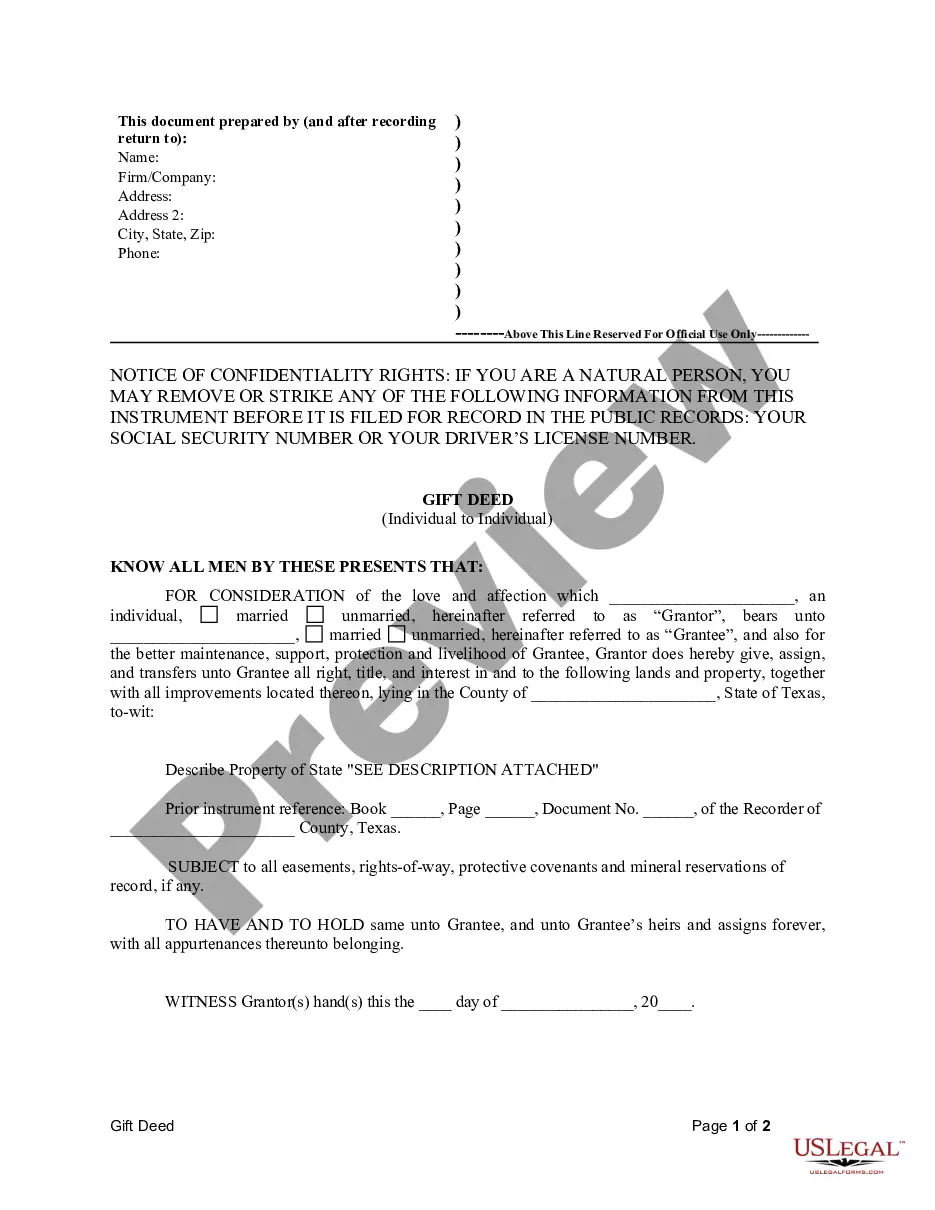
Description
Get your form ready online
Our built-in tools help you complete, sign, share, and store your documents in one place.
Make edits, fill in missing information, and update formatting in US Legal Forms—just like you would in MS Word.
Download a copy, print it, send it by email, or mail it via USPS—whatever works best for your next step.
Sign and collect signatures with our SignNow integration. Send to multiple recipients, set reminders, and more. Go Premium to unlock E-Sign.
If this form requires notarization, complete it online through a secure video call—no need to meet a notary in person or wait for an appointment.
We protect your documents and personal data by following strict security and privacy standards.

Make edits, fill in missing information, and update formatting in US Legal Forms—just like you would in MS Word.

Download a copy, print it, send it by email, or mail it via USPS—whatever works best for your next step.

Sign and collect signatures with our SignNow integration. Send to multiple recipients, set reminders, and more. Go Premium to unlock E-Sign.

If this form requires notarization, complete it online through a secure video call—no need to meet a notary in person or wait for an appointment.

We protect your documents and personal data by following strict security and privacy standards.
Looking for another form?








How to fill out Texas Gift Deed For Individual To Individual?
It’s clear that you cannot instantly become a legal expert, nor can you swiftly learn how to prepare Texas Deed Form Printable With Holidays without possessing a specific skill set.
Drafting legal documents is a labor-intensive task that necessitates particular education and expertise. Therefore, why not entrust the creation of the Texas Deed Form Printable With Holidays to the professionals.
With US Legal Forms, one of the largest legal template repositories, you can access everything from court documents to templates for internal communication.
If you require any other form, simply restart your search.
Create a free account and choose a subscription plan to purchase the form. Click Buy now. Once the payment is processed, you can download the Texas Deed Form Printable With Holidays, complete it, print it, and send it to the appropriate individuals or organizations.
- We understand how crucial compliance and adherence to federal and state laws and regulations are.
- That’s why, on our website, all templates are location-specific and current.
- Start by visiting our website and obtain the document you need in just minutes.
- Find the form you’re looking for using the search bar at the top of the page.
- Preview it (if this option is available) and review the accompanying description to see if Texas Deed Form Printable With Holidays is what you need.
Form popularity
FAQ
In Texas, you record your deed with the County Clerk in the county where the property exists. If the property is in more than one county, record it in each. It is important to record your deed. In Texas, the property is legally transferred when the grantee accepts the signed deed.
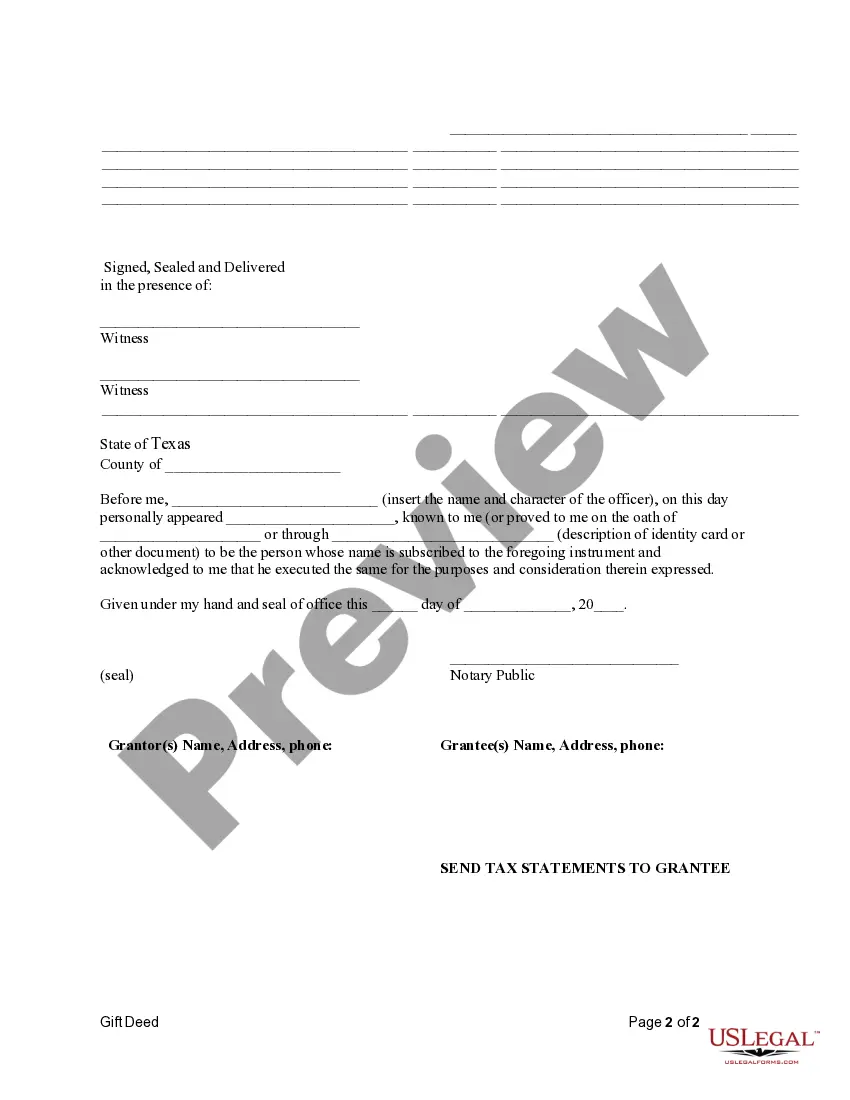
In order for a deed to be effective it must be signed and acknowledged before a notary by the seller. The buyer is not required to sign, but if the deed includes language about specific agreements between the buyer and seller, then it is advisable to include the buyer's signature.
A general warranty deed must include the following to be valid: The name and address of the seller (called the grantor) The name and address of the buyer (called the grantee) A legal description of the property (found on the previous deed) A statement that the grantor is transferring the property to the grantee.
If the deceased property owner had a Will stating who the property should be transferred to, the Will should be filed for Probate within 4 years of the date of death. The property may subsequently be transferred or sold by the Executor named in the Will ing to the wishes of the deceased owner.
The Transfer on Death Deed must: Be in writing, signed by the owner, and notarized, Have a legal description of the property (The description is found on the deed to the property or in the deed records. ... Have the name and address of one or more beneficiaries, State that the transfer will happen at the owner's death,