Texas Estate Deed Without Warranty
Description
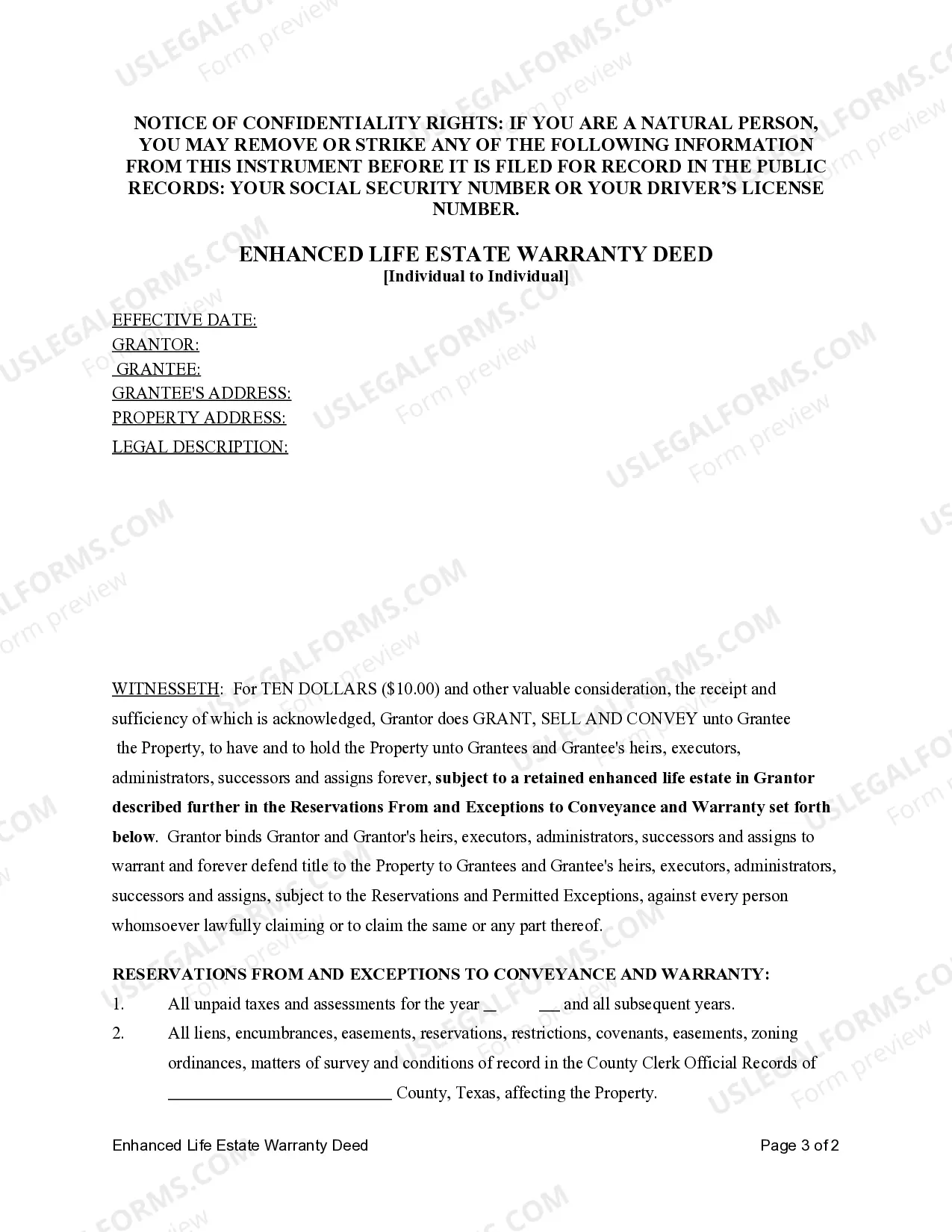
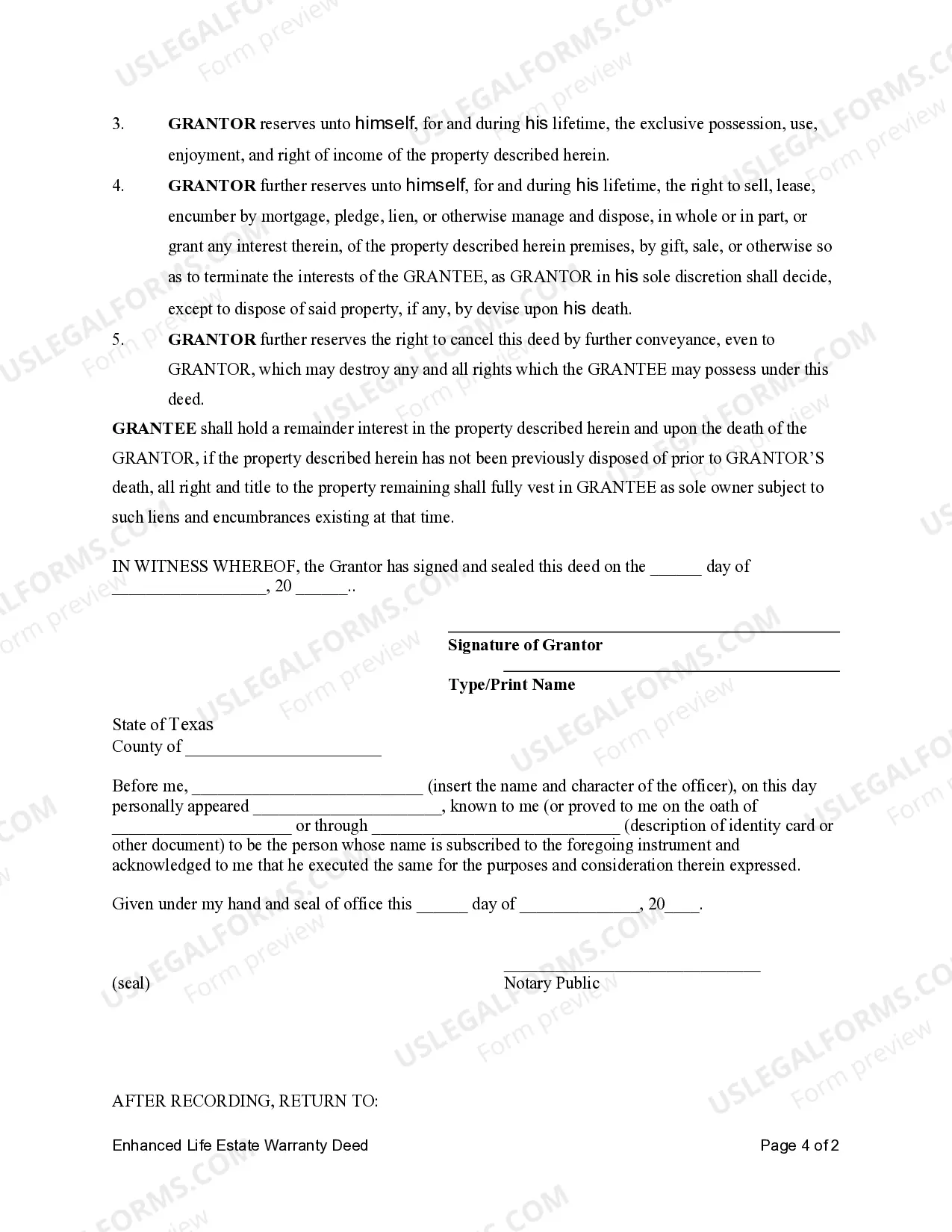


Get your form ready online
Our built-in tools help you complete, sign, share, and store your documents in one place.
Make edits, fill in missing information, and update formatting in US Legal Forms—just like you would in MS Word.
Download a copy, print it, send it by email, or mail it via USPS—whatever works best for your next step.
Sign and collect signatures with our SignNow integration. Send to multiple recipients, set reminders, and more. Go Premium to unlock E-Sign.
If this form requires notarization, complete it online through a secure video call—no need to meet a notary in person or wait for an appointment.
We protect your documents and personal data by following strict security and privacy standards.

Make edits, fill in missing information, and update formatting in US Legal Forms—just like you would in MS Word.

Download a copy, print it, send it by email, or mail it via USPS—whatever works best for your next step.

Sign and collect signatures with our SignNow integration. Send to multiple recipients, set reminders, and more. Go Premium to unlock E-Sign.

If this form requires notarization, complete it online through a secure video call—no need to meet a notary in person or wait for an appointment.

We protect your documents and personal data by following strict security and privacy standards.
Looking for another form?








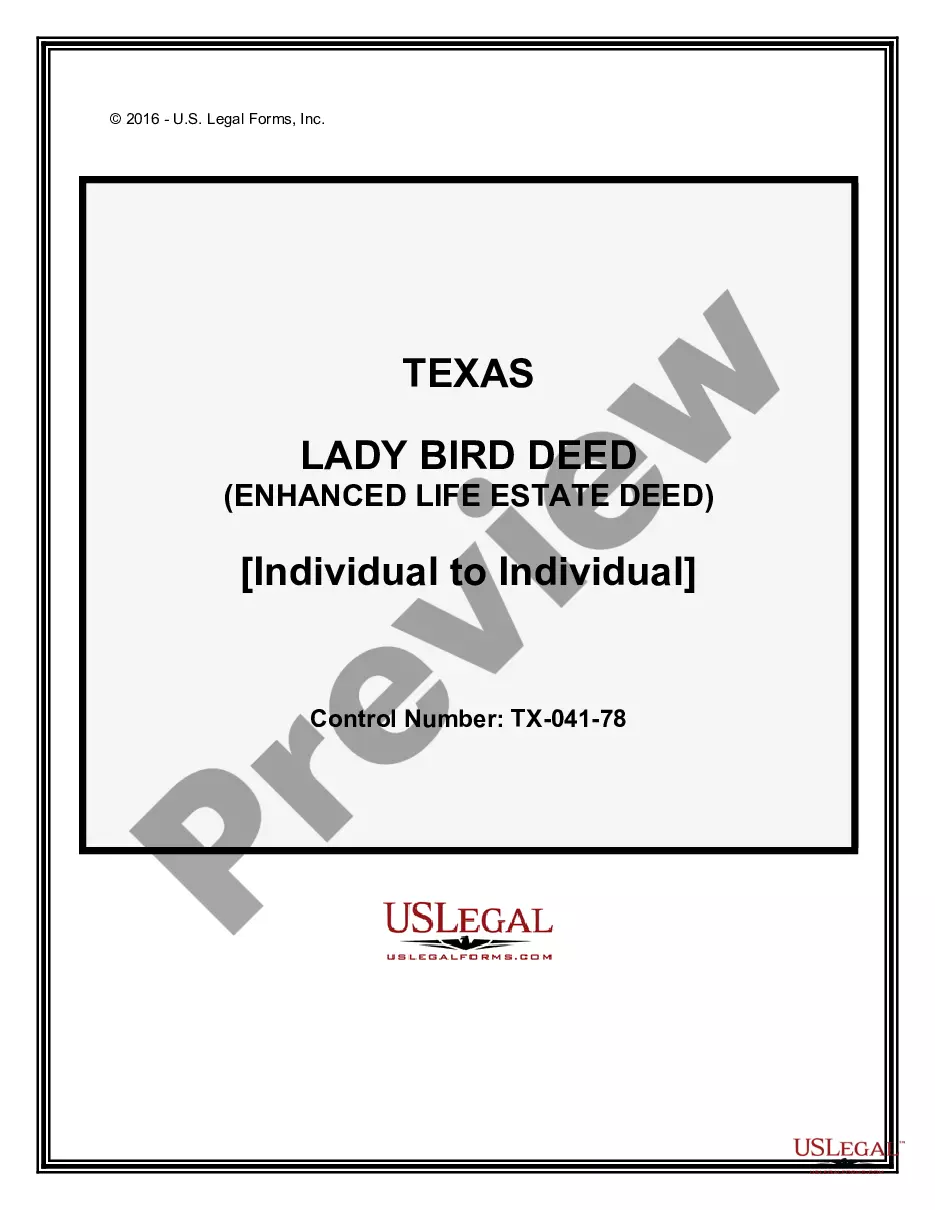
How to fill out Texas Lady Bird Or Enhanced Life Estate Warranty Deed - Individual To Individual?
The Texas Estate Deed Without Warranty presented on this page is a versatile official template crafted by experienced attorneys in accordance with national and local laws and regulations.
For over 25 years, US Legal Forms has supplied individuals, organizations, and legal professionals with upwards of 85,000 validated, state-specific documents for any corporate and personal need. It’s the fastest, easiest, and most reliable way to acquire the forms you require, as the service ensures the utmost level of data safety and malware protection.
- Search for the document you require and review it.
- Browse the template you searched for and preview it or examine the form description to ensure it meets your needs. If it doesn’t, utilize the search option to find the correct one. Click Buy Now once you have identified the template you need.
- Register and sign in.
- Choose the pricing option that fits you and create an account. Use PayPal or a credit card for a quick transaction. If you already possess an account, Log In and verify your subscription to proceed.
- Obtain the editable template.
Form popularity
FAQ
The report found that West Virginia's largest landowner is North Carolina-based Heartwood Forest Land Fund, owning more than a half a million acres across 31 counties. There are several of these Timberland Investment Management Organizations (TIMOs) in the top 10 land owners in the state.
Quick Overview: Complete 90-hours of state approved Pre-Licensing education. Pass the course final exam(s) Partner with a sponsoring broker. Finish your application with background check and fingerprinting complete. Pass the state-issued real estate exam. Submit all final documentation to the State of West Virginia.
The area of West Virginia was originally part of the colony and later the state of Virginia. West Virginia was separated from Virginia and admitted to the Union as a state on June 20, 1863, as the 35th state.
West Virginia state is the largest landowner in the region with 1.5 million acres of land. The federal government has approximately 919,000 acres of land under its jurisdiction in West Virginia. The Boy Scouts of America own approximately 132,000 acres of land in West Virginia.
Locate your own West Virginia recorded deeds, plats, and more filed with your county clerk or your property filed by your sheriff's tax office. Counties listed are those counties relative to West Virginia. WVOHOA Members have provided these important online database search links.
On a navigable stream, the landowner holds title only to the low water mark, and the rest of the streambed is owned by the West Virginia Public Land Corporation.
Public Records Search In some counties, online tax records can be searched by physical address to determine the name of the person paying property taxes. In other counties, a visit to the County Assessor's Office is needed to obtain the same tax information.