Claiming An Estate Without A Will
Description

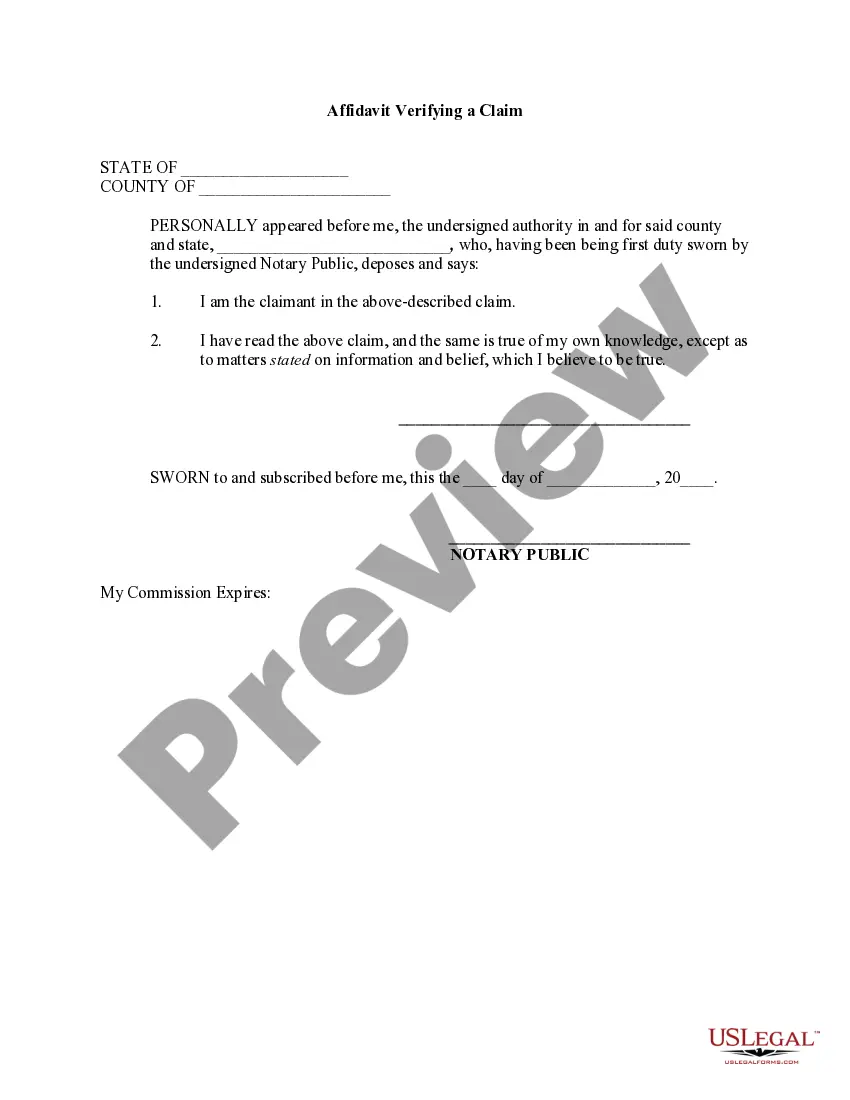
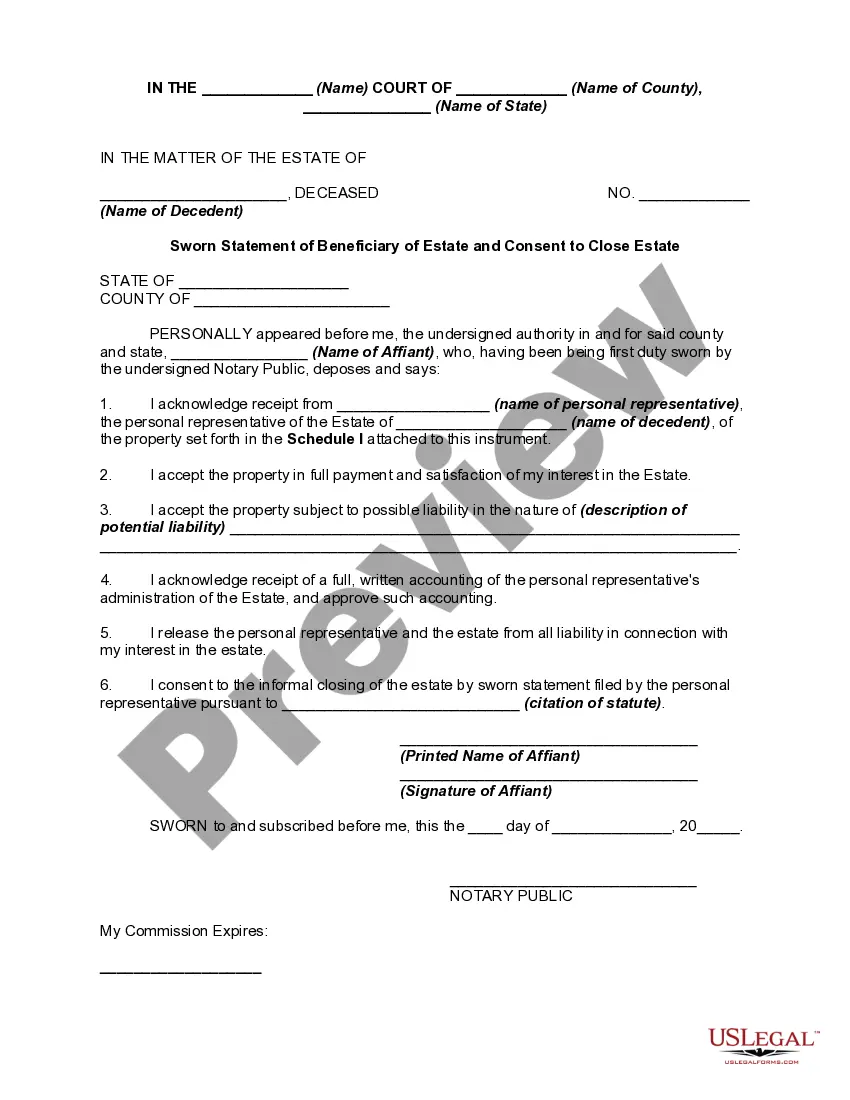
Get your form ready online
Our built-in tools help you complete, sign, share, and store your documents in one place.
Make edits, fill in missing information, and update formatting in US Legal Forms—just like you would in MS Word.
Download a copy, print it, send it by email, or mail it via USPS—whatever works best for your next step.
Sign and collect signatures with our SignNow integration. Send to multiple recipients, set reminders, and more. Go Premium to unlock E-Sign.
If this form requires notarization, complete it online through a secure video call—no need to meet a notary in person or wait for an appointment.
We protect your documents and personal data by following strict security and privacy standards.

Make edits, fill in missing information, and update formatting in US Legal Forms—just like you would in MS Word.

Download a copy, print it, send it by email, or mail it via USPS—whatever works best for your next step.

Sign and collect signatures with our SignNow integration. Send to multiple recipients, set reminders, and more. Go Premium to unlock E-Sign.

If this form requires notarization, complete it online through a secure video call—no need to meet a notary in person or wait for an appointment.

We protect your documents and personal data by following strict security and privacy standards.
Looking for another form?


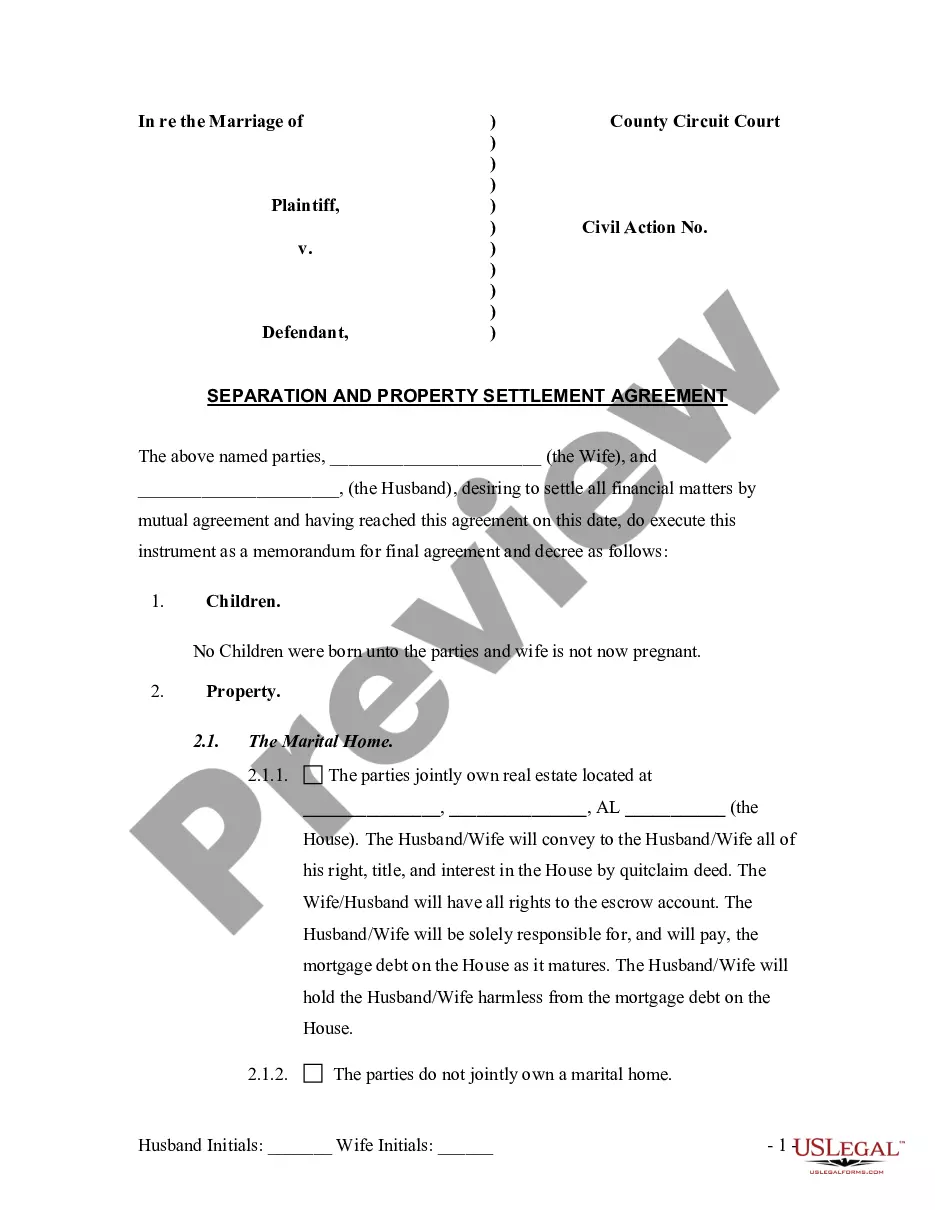





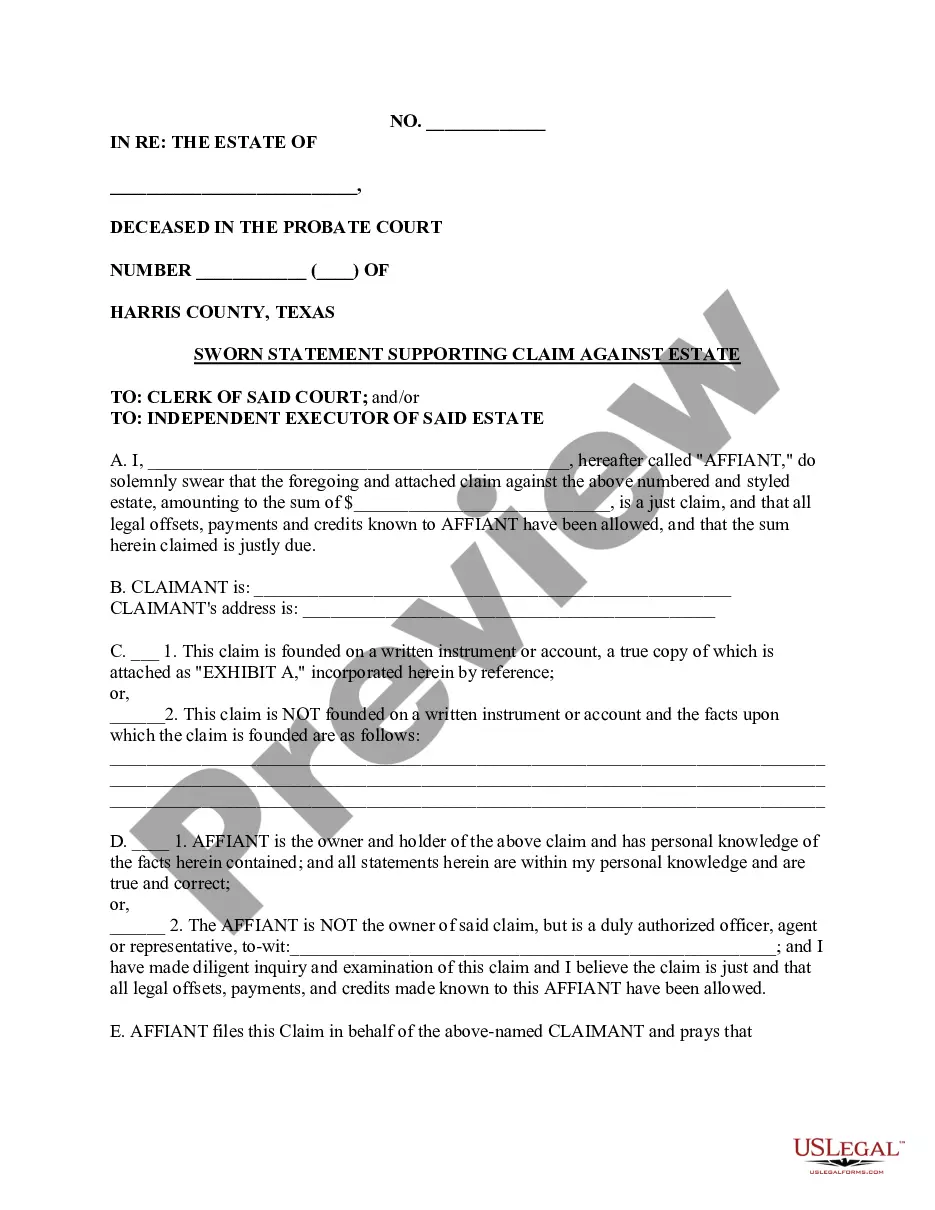
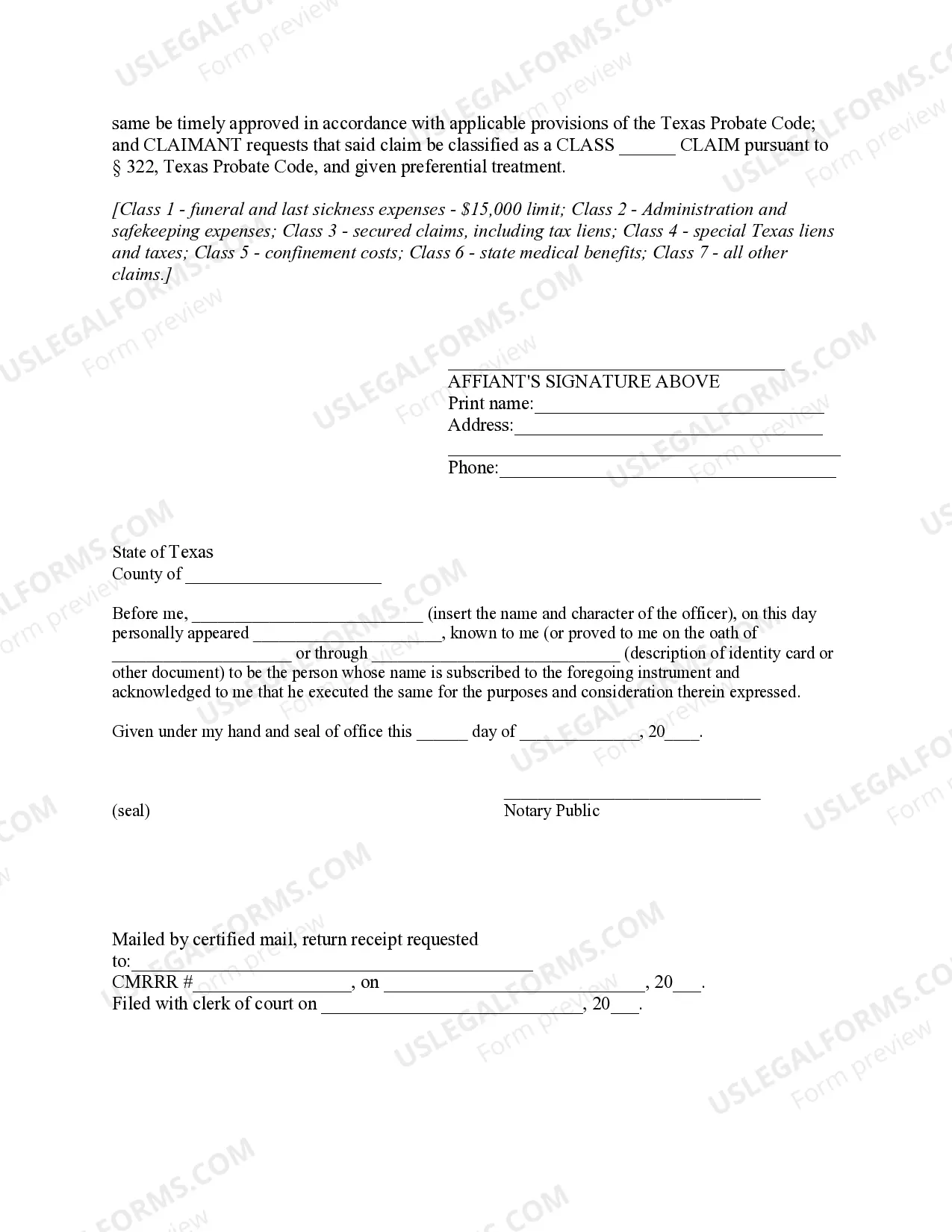
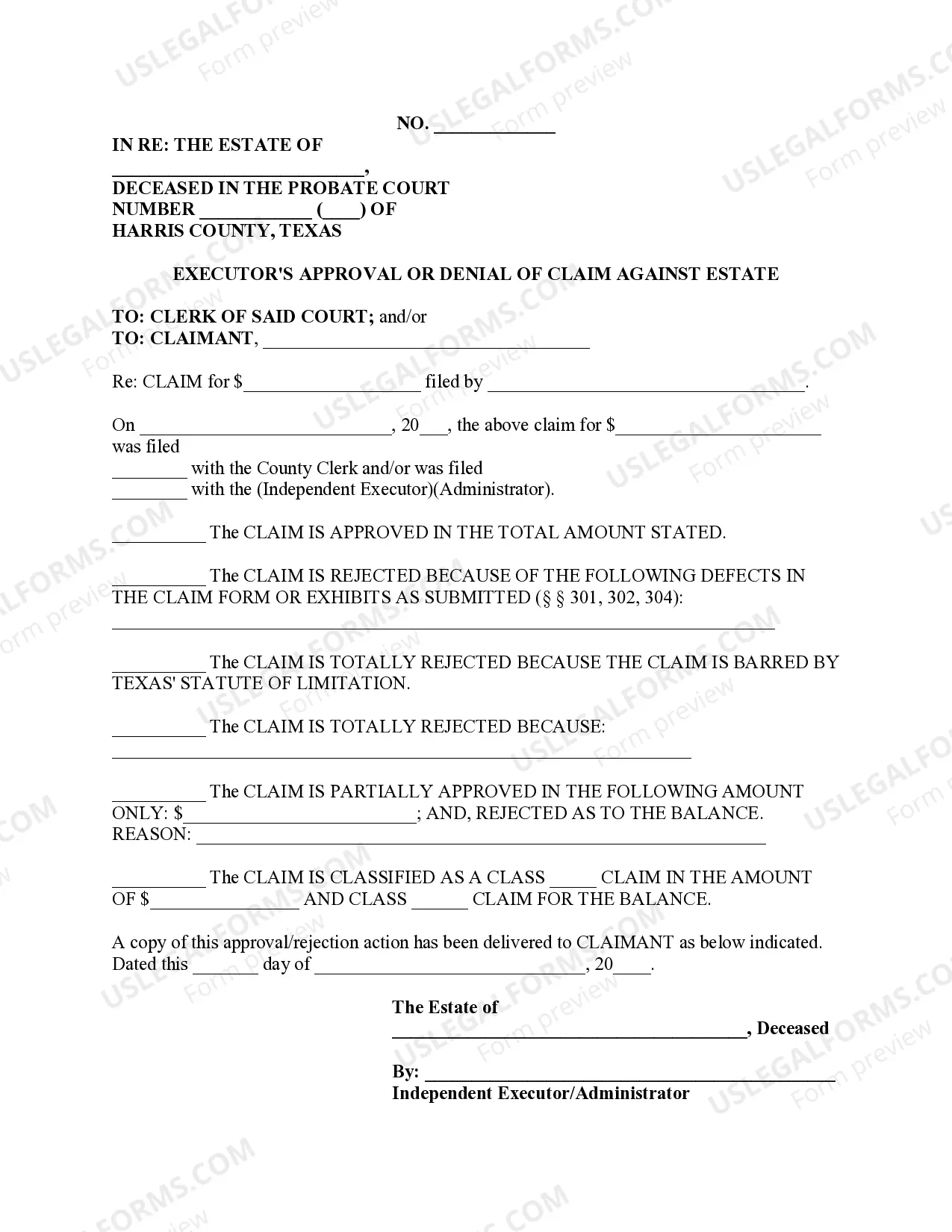
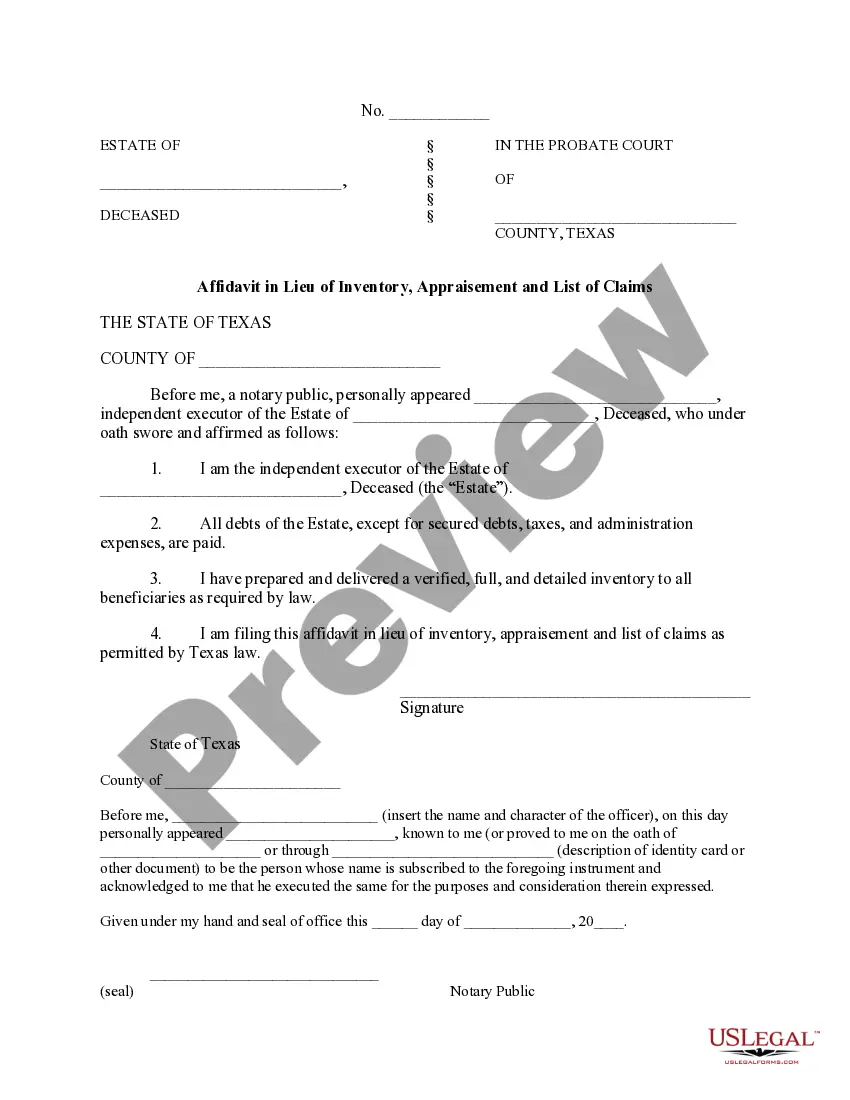
How to fill out Texas Sworn Statement Supporting Claim Against Estate?
Locating a reliable source for the latest and pertinent legal templates is a significant part of managing bureaucracy.
Identifying the appropriate legal documents requires accuracy and meticulousness, which is why it’s essential to obtain samples of Claiming An Estate Without A Will solely from credible sources, such as US Legal Forms. An incorrect template could squander your time and delay your current situation. With US Legal Forms, you have minimal cause for concern. You can access and review all the information related to the document’s application and significance for your situation and in your state or county.
Eliminate the inconvenience associated with your legal paperwork. Explore the extensive US Legal Forms collection to find legal templates, verify their relevance to your circumstances, and download them immediately.
- Utilize the library navigation or search function to find your template.
- Examine the form’s description to determine if it meets the criteria of your state and locality.
- Check the form preview, if available, to confirm the template is the one you need.
- Continue the search and find the suitable document if the Claiming An Estate Without A Will does not fulfill your requirements.
- If you are confident about the form’s pertinence, download it.
- If you are a registered user, click Log in to verify and access your selected forms in My documents.
- If you don’t have an account yet, click Buy now to acquire the template.
- Choose the pricing plan that suits your needs.
- Proceed with registration to complete your purchase.
- Conclude your purchase by selecting a payment method (credit card or PayPal).
- Choose the document format to download Claiming An Estate Without A Will.
- Once the form is on your device, you can modify it using the editor or print it and complete it manually.
Form popularity
FAQ
Intestacy: Dying without a will In New Hampshire in the absence of a will, a surviving spouse inherits the entire estate unless the decedent and the spouse share descendants, in which case the spouse inherits the first $250,000 of the estate plus half the balance.
Though it can be a complex process, probate in New Hampshire is a state requirement to claim your inheritance when a loved one dies.
If a person dies without a will they are considered intestate "without a will". Therefore that person's property and estate is distributed ing to the state that is their home state. Real property is handled ing to state law. The distribution of all property is by relationship to the deceased.
It is best to think of the decedent's belongings, paperwork, and assets as ?frozen in time? on the date of death. No assets or belongings should be removed from their residence. Their vehicle(s) should not be driven. Nothing should be moved great distances, modified, or taken away.
When a person dies without a will, their estate is called an intestate estate. It is the Administrator's responsibility, under the court's supervision, to ensure that the debts and assets of the estate are managed and distributed in ance with New Hampshire law.