Pennsylvania Revocation Trust With The President
Description
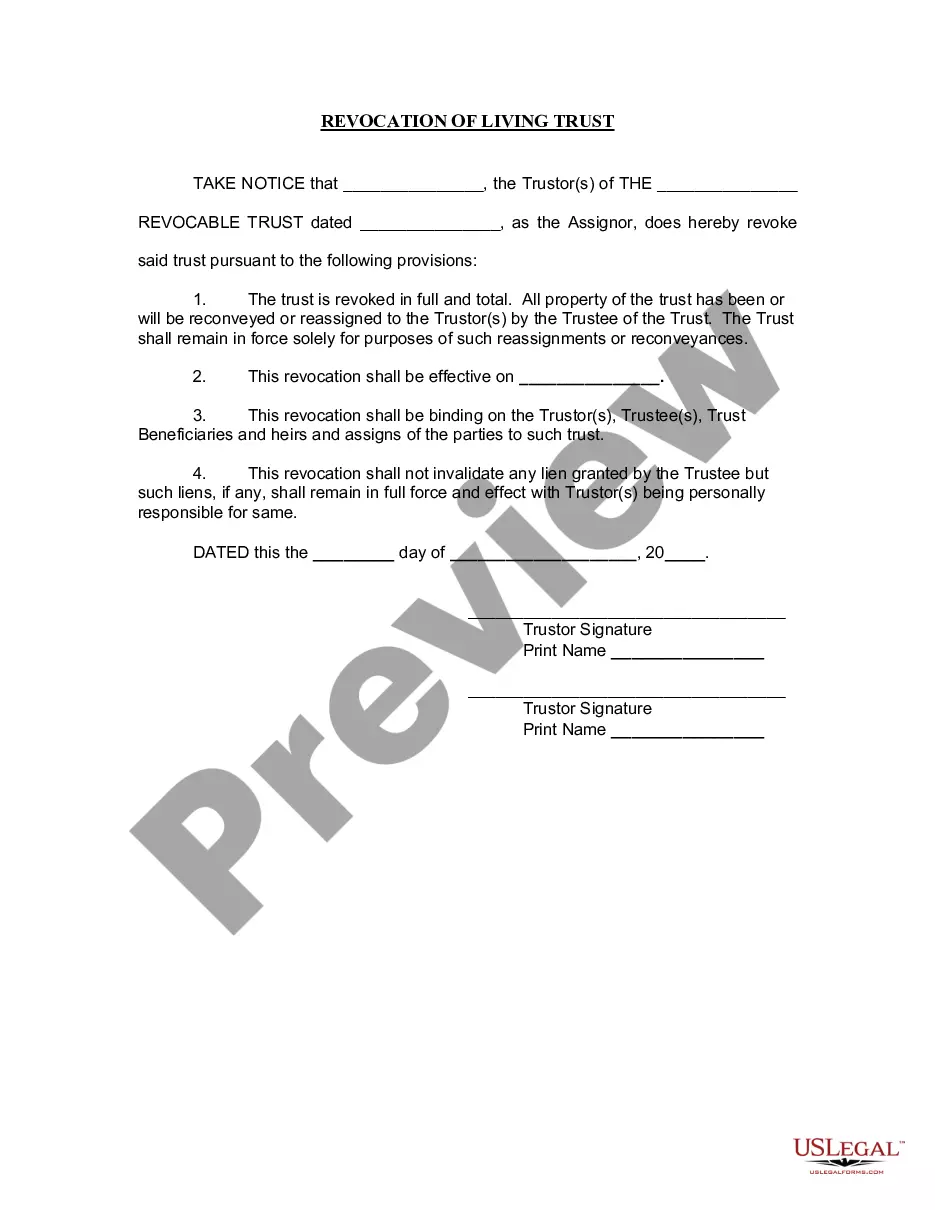
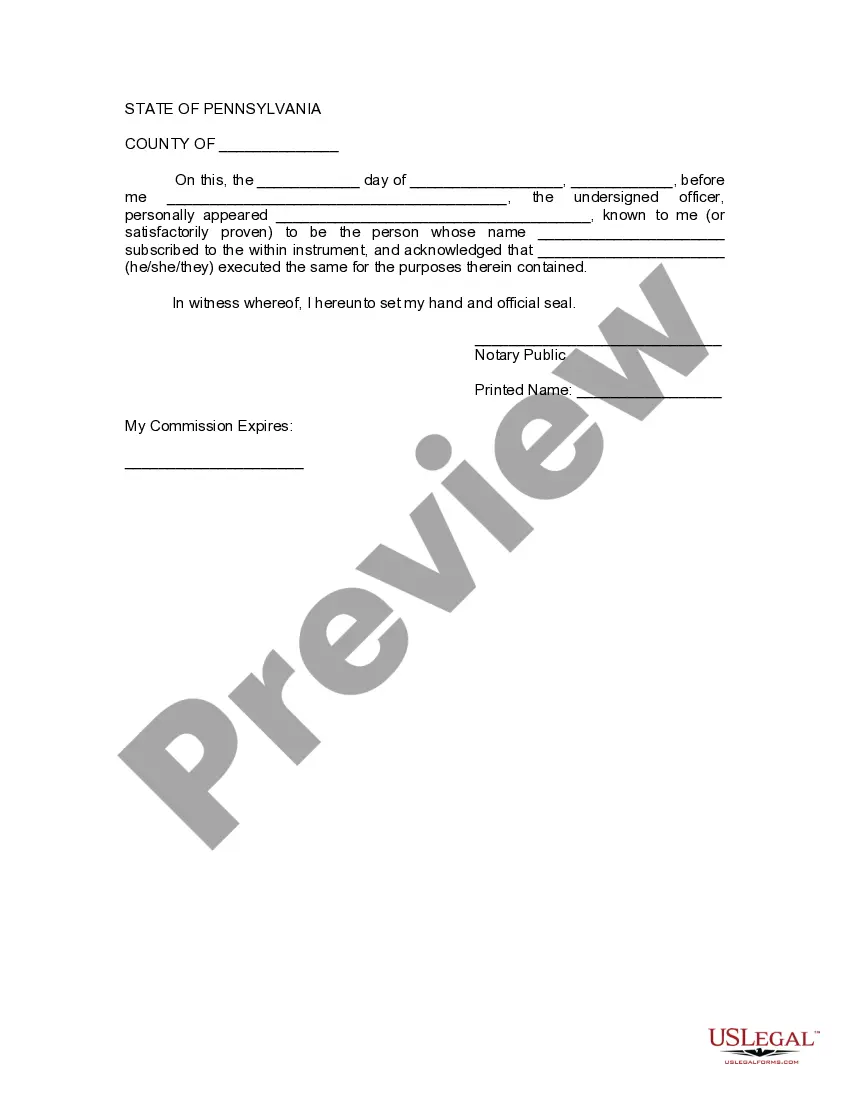
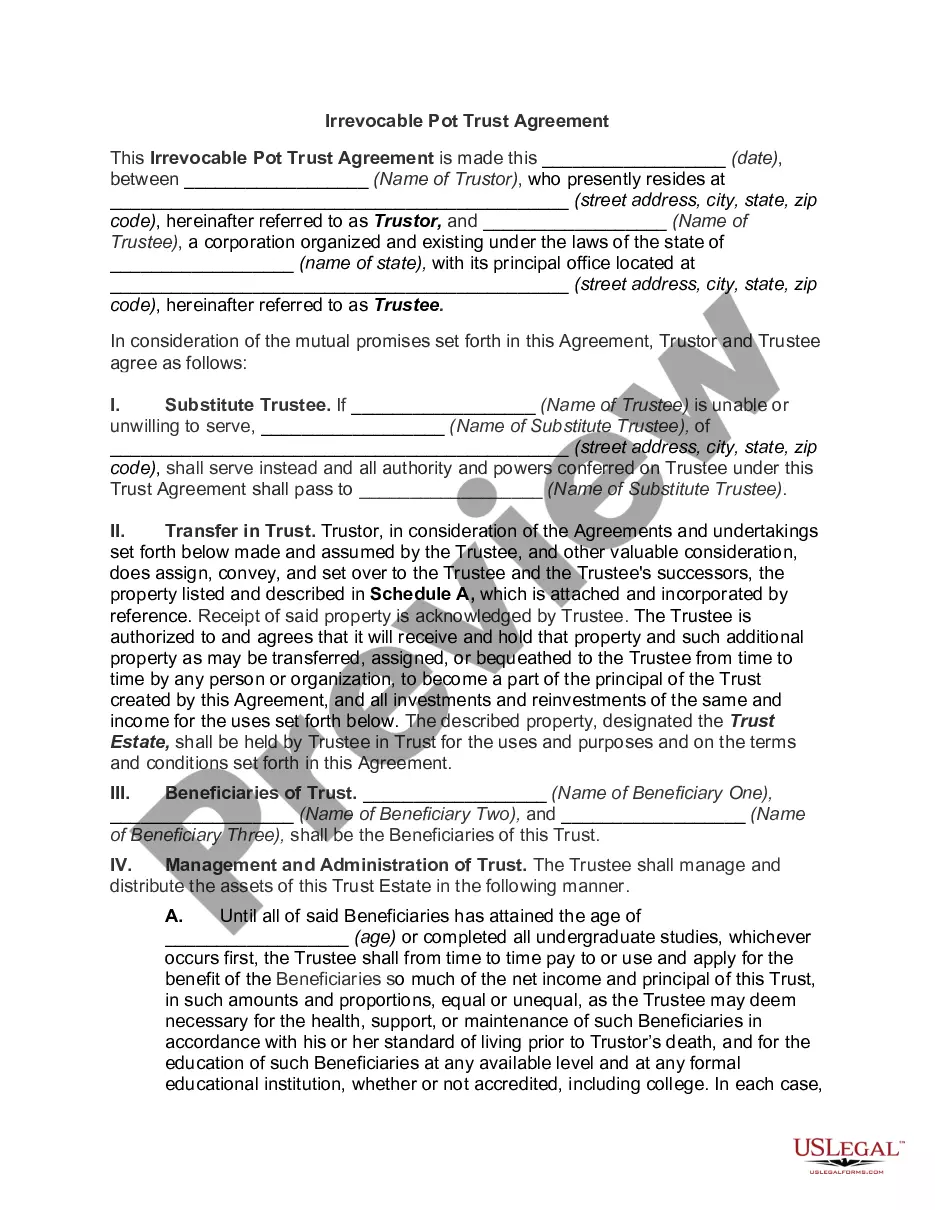
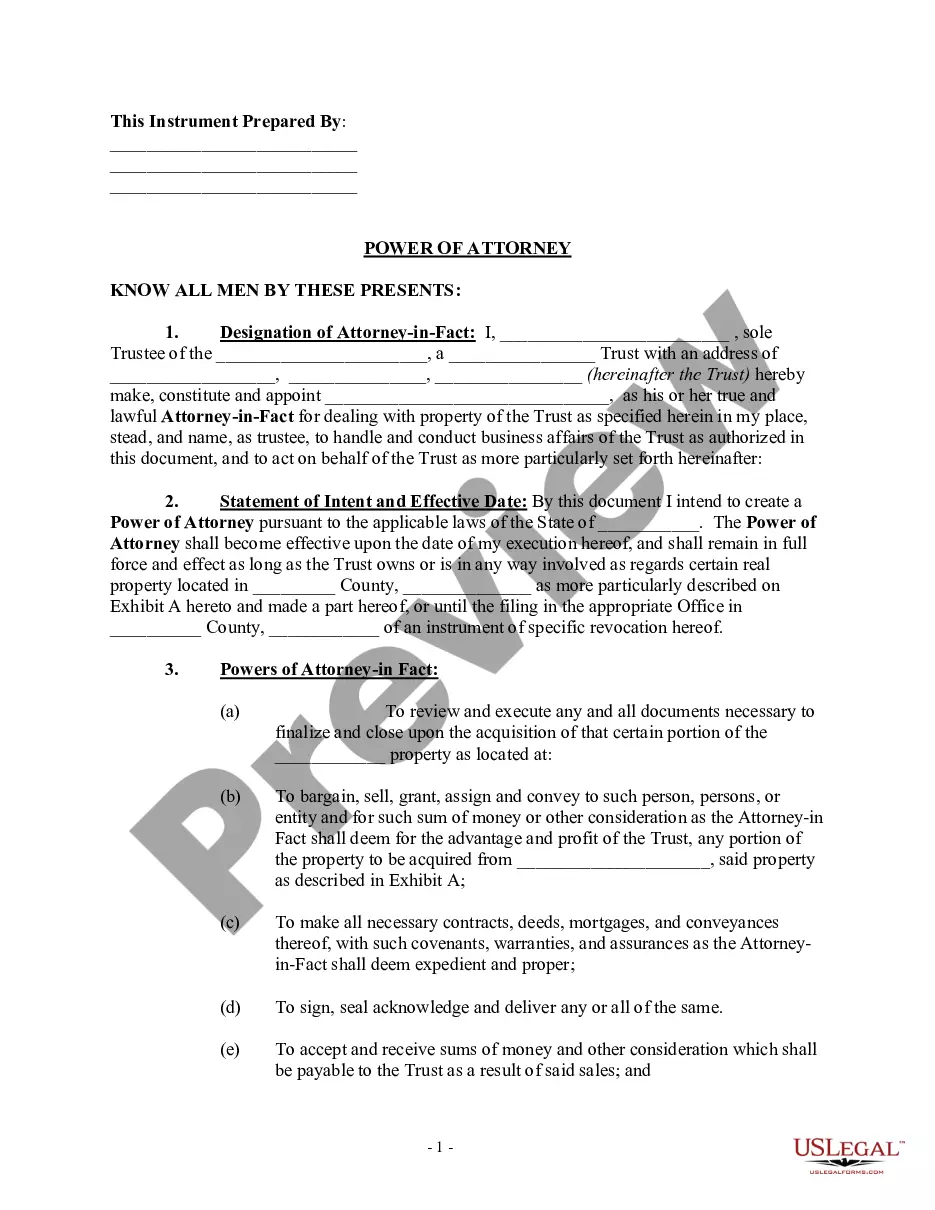
Get your form ready online
Our built-in tools help you complete, sign, share, and store your documents in one place.
Make edits, fill in missing information, and update formatting in US Legal Forms—just like you would in MS Word.
Download a copy, print it, send it by email, or mail it via USPS—whatever works best for your next step.
Sign and collect signatures with our SignNow integration. Send to multiple recipients, set reminders, and more. Go Premium to unlock E-Sign.
If this form requires notarization, complete it online through a secure video call—no need to meet a notary in person or wait for an appointment.
We protect your documents and personal data by following strict security and privacy standards.

Make edits, fill in missing information, and update formatting in US Legal Forms—just like you would in MS Word.

Download a copy, print it, send it by email, or mail it via USPS—whatever works best for your next step.

Sign and collect signatures with our SignNow integration. Send to multiple recipients, set reminders, and more. Go Premium to unlock E-Sign.

If this form requires notarization, complete it online through a secure video call—no need to meet a notary in person or wait for an appointment.

We protect your documents and personal data by following strict security and privacy standards.
Looking for another form?







How to fill out Pennsylvania Revocation Of Living Trust?
- Log into your US Legal Forms account if you're a returning user, or create a new account if you're a first-time user.
- Review the form description and preview mode to ensure it meets your needs and complies with Pennsylvania jurisdiction requirements.
- If you need a different template, utilize the search tab to explore other options.
- Select the appropriate form and click 'Buy Now' to choose a subscription plan that suits you.
- Complete your purchase with your preferred payment method, either via credit card or PayPal.
- Download your completed form and save it on your device, accessible anytime through the 'My Forms' menu.
US Legal Forms makes the process of securing legal documents efficient and straightforward. With a library of over 85,000 forms, users benefit from a variety of options tailored to their specific needs.
Empower yourself with the knowledge and resources available at US Legal Forms. Start your estate planning journey today and ensure your documents are precise and legally sound.
Form popularity
FAQ
The primary disadvantages of a revocable trust, including a Pennsylvania revocation trust with the president, include the lack of tax benefits and creditor protection. Since you retain control over the assets, they remain vulnerable to legal claims. Additionally, costs may arise due to ongoing management or potential court challenges, which could impact your estate plan.
Revoking a revocable trust in Pennsylvania involves creating a written document that states your intention to revoke the trust. You should ensure that the revocation is properly signed and dated, and notify all parties involved, including the trustee and beneficiaries. If you have a Pennsylvania revocation trust with the president, following these steps helps maintain clarity and legal integrity.
To set up a revocable trust in Pennsylvania, you will first need to draft a trust agreement that outlines your intentions. You then appoint a trustee, which can be yourself, and transfer your assets into the trust. Tools like US Legal Forms can streamline this process, providing you with templates and guidance to ensure your Pennsylvania revocation trust with the president is established correctly.
One key disadvantage of a Pennsylvania revocation trust with the president is that it does not provide asset protection from creditors. Additionally, since the trust is revocable, you retain control over the assets, but this means that those assets are still considered part of your estate for tax purposes. Furthermore, if you do not properly fund the trust, it may not serve its intended purpose.
One common mistake parents make when setting up a trust fund is failing to fund the trust properly. If assets are not transferred into the trust, the intended purpose may not be realized. Therefore, utilizing a Pennsylvania revocation trust with the president can be an effective solution, ensuring that your assets are appropriately allocated and managed for your children's benefit.
Yes, a revocable trust generally avoids probate in Pennsylvania. This means that assets placed in a Pennsylvania revocation trust with the president can bypass the probate process, leading to quicker distribution to your heirs. This benefit not only saves time but also helps maintain privacy regarding your estate.
To dissolve a trust in Pennsylvania, start by consulting the trust agreement for termination instructions. You will need to notify the beneficiaries and gather any required legal documents. Utilizing a reliable platform like uslegalforms can assist you in managing this process efficiently, ensuring all necessary steps were followed, thus yielding a smooth dissolution.
Dissolving a trust can vary in complexity depending on the specific terms outlined in the trust document and the assets involved. Generally, revoking a Pennsylvania revocation trust with the president can simplify the process, as it allows for more straightforward termination procedures. However, engaging a legal expert can prevent potential complications and make the transition smoother.
Trusts can be terminated in several ways, including by reaching their expiration date, fulfilling the trust's purpose, or by the mutual consent of the trustee and beneficiaries. Additionally, a trust can be dissolved when the grantor revokes it, particularly in the case of a revocable trust. Understanding these options can help you effectively manage your Pennsylvania revocation trust with the president.
A revocable trust in Pennsylvania offers several advantages, including flexibility, privacy, and asset management. With this type of trust, you can alter the terms or revoke it altogether as your circumstances change. Additionally, a Pennsylvania revocation trust with the president helps avoid the lengthy probate process, allowing your assets to be distributed promptly to your beneficiaries.