Revocation Living Trust For Property
Description

Get your form ready online
Our built-in tools help you complete, sign, share, and store your documents in one place.
Make edits, fill in missing information, and update formatting in US Legal Forms—just like you would in MS Word.
Download a copy, print it, send it by email, or mail it via USPS—whatever works best for your next step.
Sign and collect signatures with our SignNow integration. Send to multiple recipients, set reminders, and more. Go Premium to unlock E-Sign.
If this form requires notarization, complete it online through a secure video call—no need to meet a notary in person or wait for an appointment.
We protect your documents and personal data by following strict security and privacy standards.

Make edits, fill in missing information, and update formatting in US Legal Forms—just like you would in MS Word.

Download a copy, print it, send it by email, or mail it via USPS—whatever works best for your next step.

Sign and collect signatures with our SignNow integration. Send to multiple recipients, set reminders, and more. Go Premium to unlock E-Sign.

If this form requires notarization, complete it online through a secure video call—no need to meet a notary in person or wait for an appointment.

We protect your documents and personal data by following strict security and privacy standards.
Looking for another form?




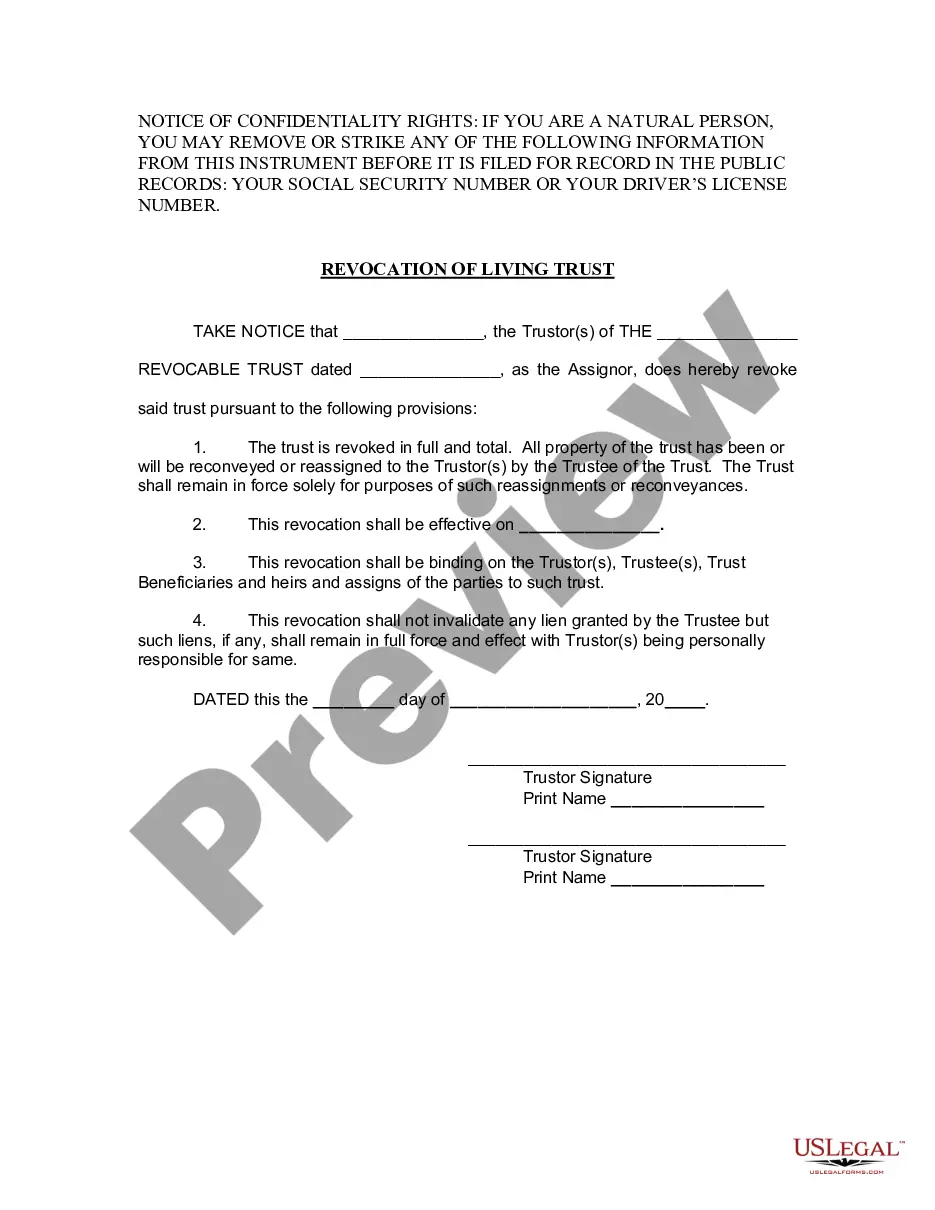


How to fill out North Carolina Revocation Of Living Trust?
- Log in to your US Legal Forms account if you're a returning user. Ensure your subscription is active, or renew it if necessary.
- Browse the online library featuring over 85,000 legal forms. Verify that you select the accurate form that aligns with your requirements and jurisdiction.
- If you notice a discrepancy or need a different template, use the search function to find a better-suited document.
- Click on the 'Buy Now' button for your selected form and choose your preferred subscription plan. Account registration may be necessary for full library access.
- Complete your purchase by entering your payment information, either via credit card or PayPal.
- Download your completed form easily. You can access it anytime from the 'My Forms' section in your profile.
In conclusion, using US Legal Forms ensures that you have the right tools and support for revoking your living trust efficiently. With a vast collection of legal documents and access to premium experts, you're equipped to handle your legal needs effectively.
Start your journey with US Legal Forms today and empower yourself with reliable legal resources!
Form popularity
FAQ
A trust can be considered void if it lacks capacity, is established for an illegal purpose, or does not have the required elements defined by state law. Additionally, if the trust documents are not executed properly, it may not hold up in court. Understanding these elements is essential when establishing a revocation living trust for property, as any oversight could compromise your estate planning efforts. Engaging services like uslegalforms can help create a valid and enforceable trust tailored to your needs.
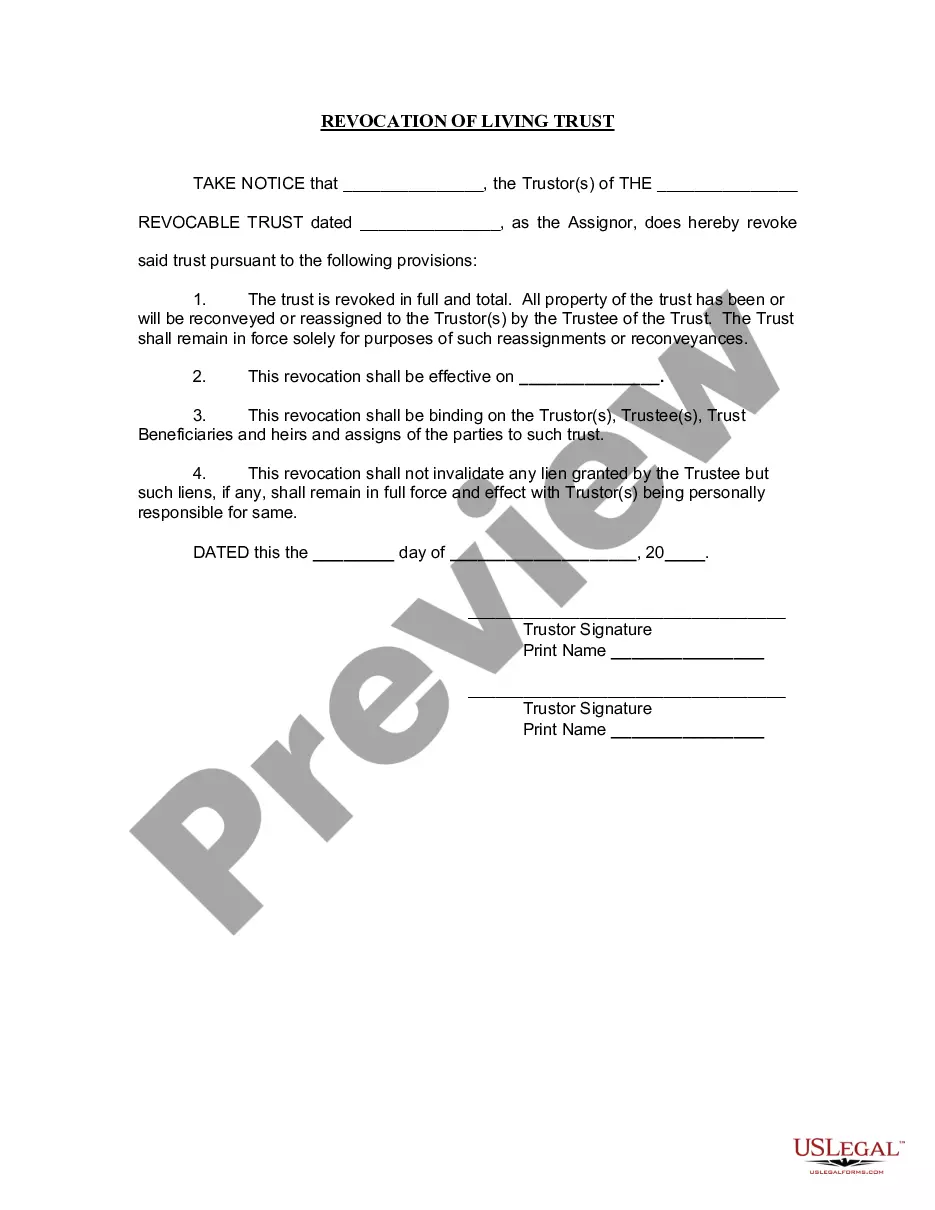
Revoking a revocable trust is generally a straightforward process. To revoke a revocation living trust for property, you usually need to create a written document that outlines your intention to revoke the trust and then destroy all copies of the original trust document. It's advisable to consult with a legal professional to ensure all steps are completed properly. This ensures a smooth revocation process, allowing for adjustments to your estate plan when necessary.
A trust can be invalid if it does not meet specific legal requirements, such as lacking proper witnessing or not being signed by the grantor. Additionally, if the trust's purpose is illegal or if the grantor did not have the mental capacity to establish the trust, it may be rendered void. Understanding these factors is crucial when creating a revocation living trust for property, as you want to avoid any potential issues with validity. Utilizing platforms like uslegalforms can guide you through legal specifications to ensure your trust is valid.
The 5 year rule for trusts generally refers to how assets placed in a trust are treated for tax purposes. Specifically, if you revoke a revocation living trust for property within five years of its creation, the assets may still be considered part of your estate. This rule helps the IRS identify gifts that may not have properly followed tax protocols. Using a well-structured revocation living trust for property allows you to ensure compliance while protecting your assets.
To revoke a revocation living trust for property, you will need to follow a specific process that exists within the trust document itself. Generally, this involves creating a formal written notice of revocation and distributing it to the relevant parties. If you're unsure how to navigate this process, consider using resources like USLegalForms to guide you through the steps to revoke your trust smoothly.
You should review and potentially update your revocation living trust for property whenever there are significant life changes. Examples include marriage, divorce, the birth of a child, or significant changes in your financial circumstances. Regular reviews, ideally every few years, will help ensure that your trust remains aligned with your current wishes.
Yes, you can amend a revocation living trust for property at any time, as long as you are competent. This flexibility allows you to adapt your trust to new circumstances, such as changes in your family situation or financial status. Simply follow the specified legal process to make changes, ensuring that your trust reflects your current wishes and intents.
While a revocation living trust for property offers flexibility and control, it does have some disadvantages. One primary concern is that assets in a revocable trust may not receive the same level of protection from creditors compared to other estate planning tools. Additionally, establishing a revocable living trust may incur setup costs and require ongoing management, which could be seen as a downside for some individuals.
One notable disadvantage of a family trust is the potential for confusion over control and management of trust assets. Family dynamics can be complex, and misunderstandings may lead to tension among family members. Additionally, a family trust requires ongoing administration, which can be time-consuming. By utilizing a revocation living trust for property, families can adapt their arrangements to better suit everyone's needs and avoid potential pitfalls.
A sample revocation of a living trust typically includes a clear statement indicating the creator's intent to revoke the trust, along with the trust's name and date. It should be signed and dated in the presence of witnesses or a notary, depending on state laws. By doing this, the original trust document becomes null and void, allowing individuals to reallocate assets or set up a new trust as needed. This flexibility is a key benefit of a revocation living trust for property.