Beneficiary Deed For Real Estate
Description

Get your form ready online
Our built-in tools help you complete, sign, share, and store your documents in one place.
Make edits, fill in missing information, and update formatting in US Legal Forms—just like you would in MS Word.
Download a copy, print it, send it by email, or mail it via USPS—whatever works best for your next step.
Sign and collect signatures with our SignNow integration. Send to multiple recipients, set reminders, and more. Go Premium to unlock E-Sign.
If this form requires notarization, complete it online through a secure video call—no need to meet a notary in person or wait for an appointment.
We protect your documents and personal data by following strict security and privacy standards.

Make edits, fill in missing information, and update formatting in US Legal Forms—just like you would in MS Word.

Download a copy, print it, send it by email, or mail it via USPS—whatever works best for your next step.

Sign and collect signatures with our SignNow integration. Send to multiple recipients, set reminders, and more. Go Premium to unlock E-Sign.

If this form requires notarization, complete it online through a secure video call—no need to meet a notary in person or wait for an appointment.

We protect your documents and personal data by following strict security and privacy standards.
Looking for another form?

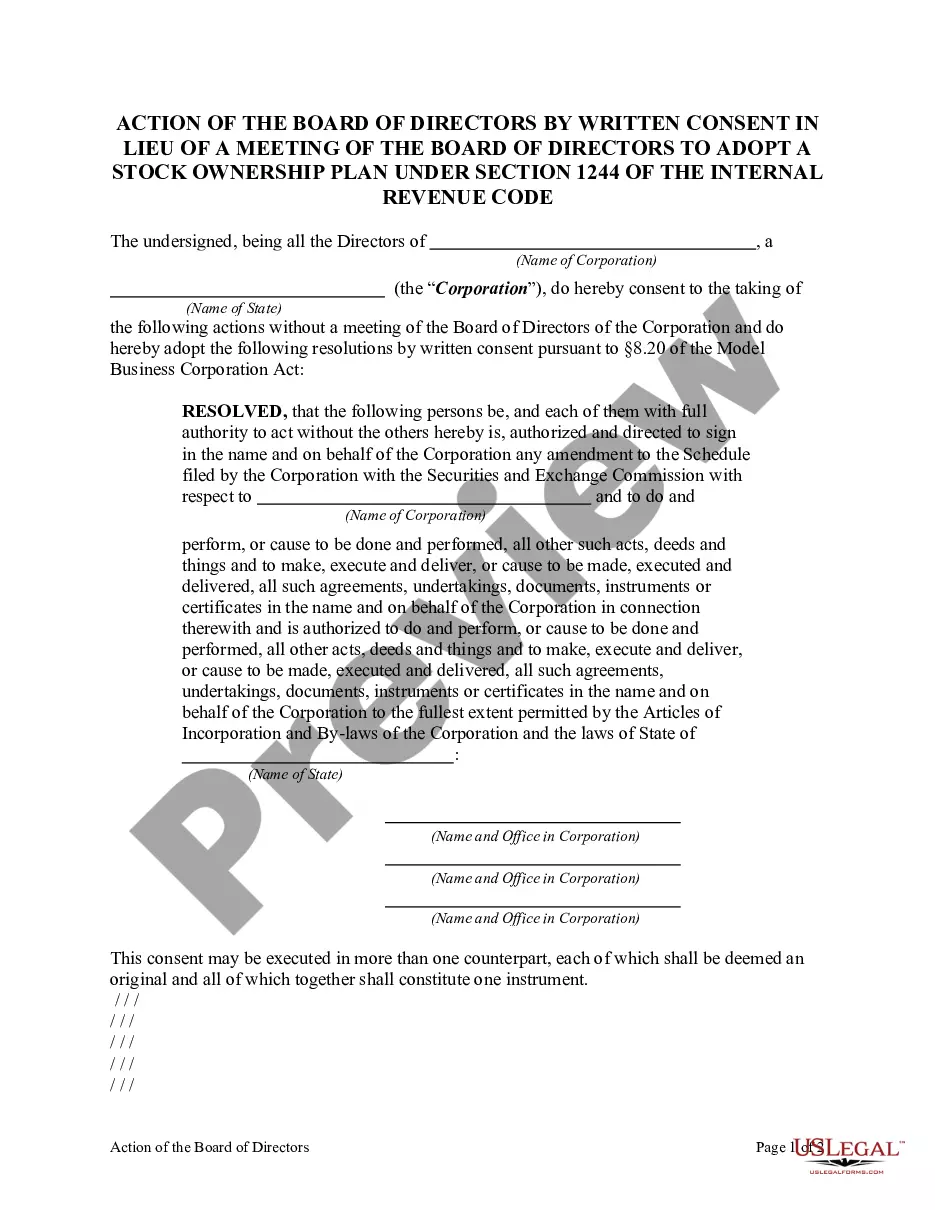







How to fill out Missouri Beneficiary Deed Or TOD - Transfer On Death Deed From Two Individuals To Three Individuals?
- Log into your account if you're a returning user, and ensure your subscription is active. If necessary, renew your plan to maintain access to your documents.
- For first-time users, start by previewing the document options in our extensive library to find the beneficiary deed that fits your unique situation.
- Use the Search option to locate any alternative templates if your initial choice doesn’t meet specific local requirements.
- Purchase your selected document by clicking the Buy Now button and choosing a suitable subscription plan. New users must register to access all resources.
- Complete your transaction by entering your payment details through credit card or PayPal for your subscription.
- Download the completed beneficiary deed for real estate to your device. You can access it anytime from the My Forms section in your profile.
By leveraging US Legal Forms, you benefit from an extensive library of over 85,000 fillable legal documents, ensuring you can find exactly what you need quickly.
Don't hesitate! Start your journey towards securing your real estate today by accessing US Legal Forms and ensuring a seamless transfer for your beneficiaries.
Form popularity
FAQ
A beneficiary can typically request a copy of the will once the executor has filed it with the probate court. This process may take time, so it is wise to be patient while ensuring that the requirements for accessing it are met. Understanding your rights as a beneficiary is crucial, especially regarding the estate’s assets, including any beneficiary deed for real estate. For further clarity, check with a legal professional or utilize platforms such as US Legal Forms.
To obtain the deed for your deceased parents' house, start by checking the public records at your local county clerk's office. You can also look for the house's title, which often includes the names of the owners and details about any beneficiary deed for real estate they may have filed. If a beneficiary deed exists, it should clarify how the property transfers to you. Consider using services like US Legal Forms to simplify this process and ensure you have the correct documents.
A beneficiary deed for real estate may help minimize capital gains tax, but it does not completely avoid it. The property's value at the time of transfer can determine tax liability. When the beneficiary sells the property, they may be responsible for capital gains if there is an increase in value since the original owner's death. Consulting a tax professional can provide clarity on potential tax obligations.
Yes, there can be downsides to being a beneficiary on a beneficiary deed for real estate. One significant concern is that you may be liable for any outstanding debts related to the property, such as taxes or liens. Furthermore, the property may not automatically transfer if there are legal disputes among heirs or challenges to the deed's validity. It's wise to consult with an attorney to understand the implications fully.
A beneficiary deed for real estate does not serve as proof of ownership during the property owner's lifetime. It allows the property to pass directly to the named beneficiary upon the owner's death. However, until that time, the original owner retains full control over the property and its title. To establish ownership, you will need to reference the property's deed or official records.
You do not necessarily need a lawyer to create a beneficiary deed for real estate, as many people successfully draft these documents themselves using templates and online resources. However, consulting with a legal professional can provide peace of mind, especially if your real estate situation is complex. Platforms like US Legal Forms offer guidance and templates to help you navigate this process more easily.
The primary reason for creating a beneficiary deed for real estate is to facilitate a smooth transfer of property after your death without going through probate. This type of deed allows you to designate a beneficiary who will automatically inherit the property, thus saving time and expenses. Many individuals use this method to ensure their loved ones receive their real estate assets quickly and efficiently.
While a beneficiary deed for real estate has its benefits, there are some potential downsides to consider. For example, the property may still be subject to creditor claims after your death, if beneficiaries are not properly managed, it might lead to disputes among heirs. Additionally, some states have specific laws that may affect the execution and validity of the deed, so it's wise to understand these before proceeding.
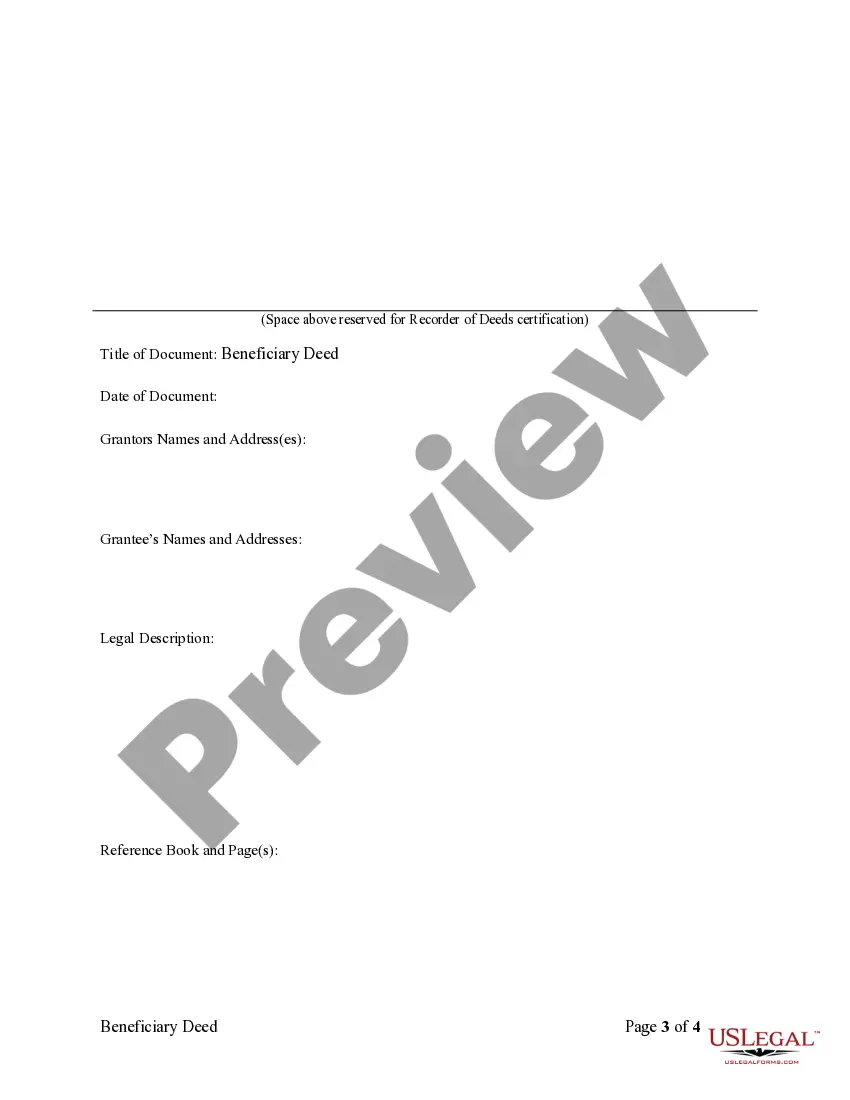
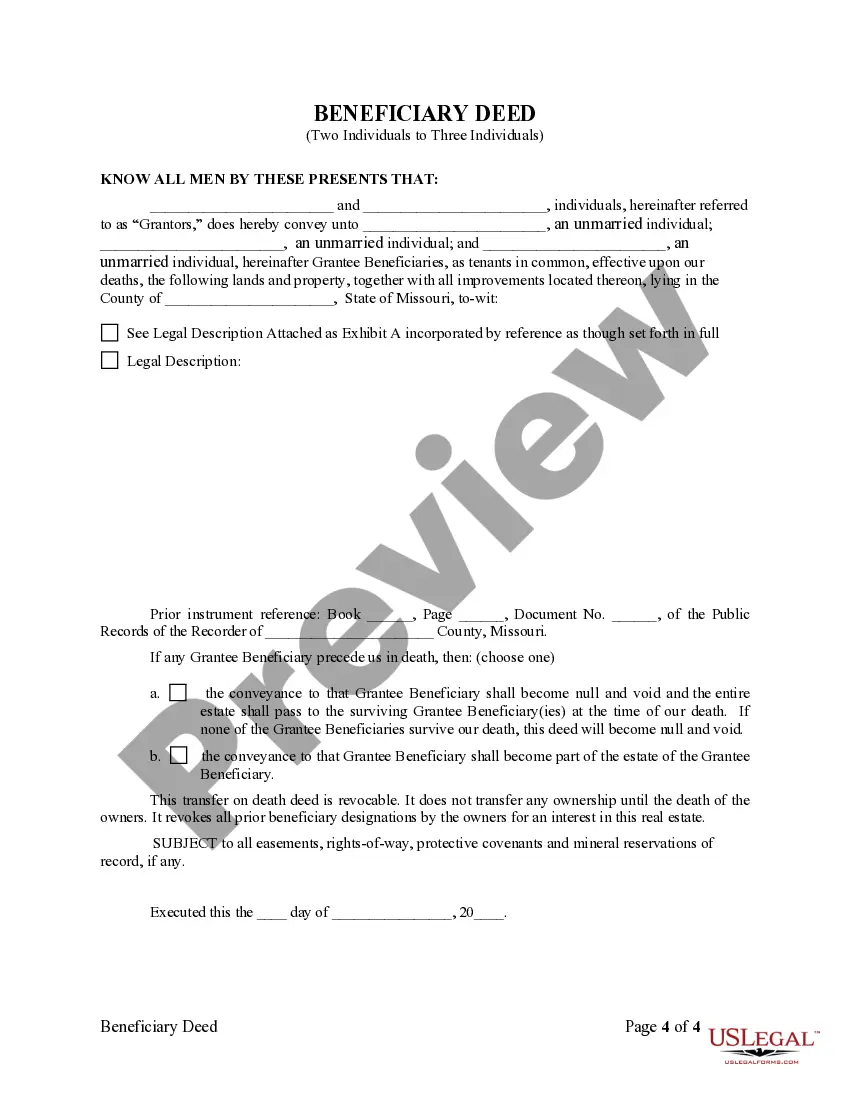
To write a beneficiary deed for real estate, start by obtaining a template specific to your state, as requirements may differ. You will need to include the property description, the names and details of the beneficiary, and your signature. After completed, it's essential to notarize the deed and record it with your local property office to make it legally binding.
The most common deed that proves ownership of real estate is a warranty deed. This deed guarantees that the seller has clear title to the property and the right to sell it. A beneficiary deed for real estate, on the other hand, serves a different purpose by facilitating seamless transfer upon death, but it does not establish ownership. It is vital to ensure that you have the appropriate documentation to prove your ownership effectively.