Beneficiário Final Trust
Description
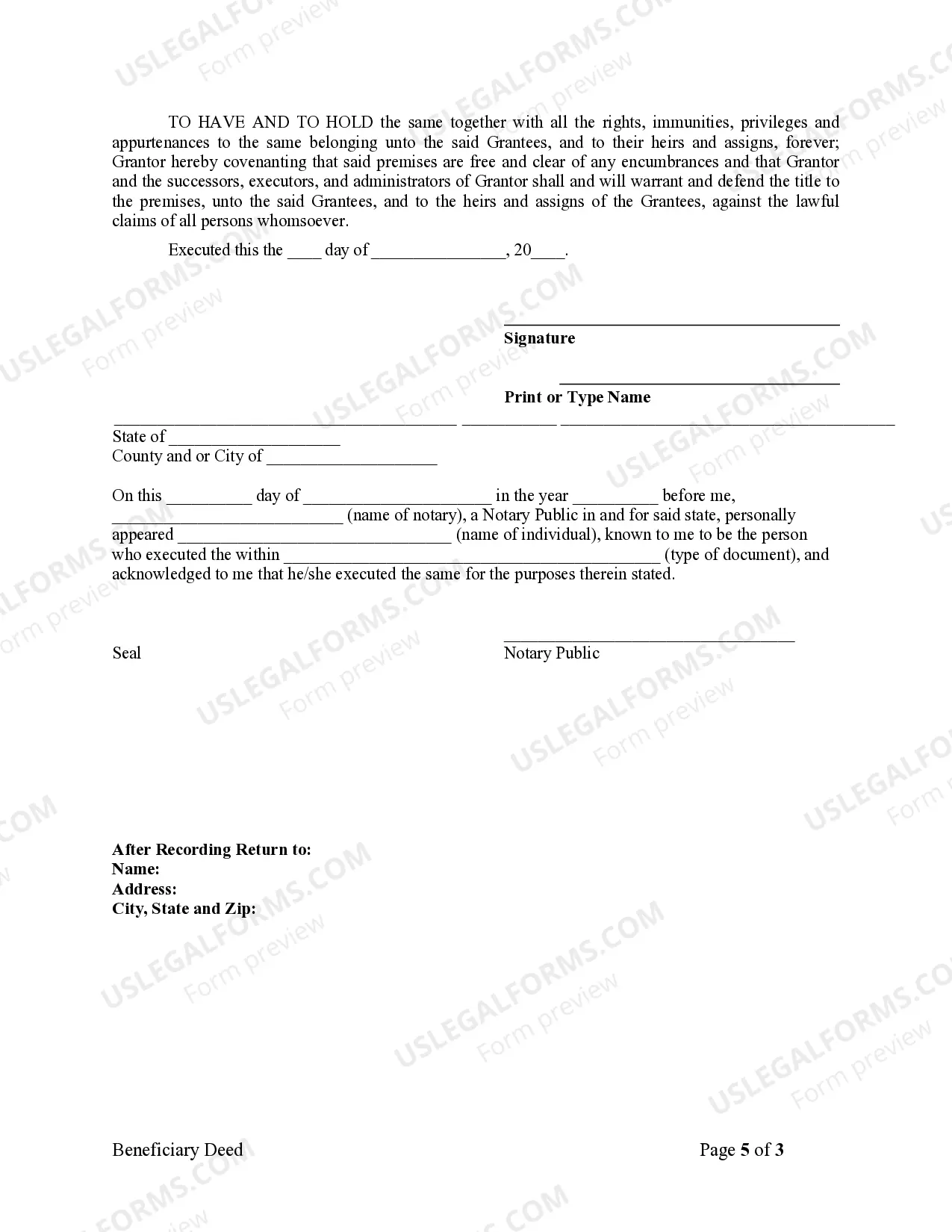

Get your form ready online
Our built-in tools help you complete, sign, share, and store your documents in one place.
Make edits, fill in missing information, and update formatting in US Legal Forms—just like you would in MS Word.
Download a copy, print it, send it by email, or mail it via USPS—whatever works best for your next step.
Sign and collect signatures with our SignNow integration. Send to multiple recipients, set reminders, and more. Go Premium to unlock E-Sign.
If this form requires notarization, complete it online through a secure video call—no need to meet a notary in person or wait for an appointment.
We protect your documents and personal data by following strict security and privacy standards.

Make edits, fill in missing information, and update formatting in US Legal Forms—just like you would in MS Word.

Download a copy, print it, send it by email, or mail it via USPS—whatever works best for your next step.

Sign and collect signatures with our SignNow integration. Send to multiple recipients, set reminders, and more. Go Premium to unlock E-Sign.

If this form requires notarization, complete it online through a secure video call—no need to meet a notary in person or wait for an appointment.

We protect your documents and personal data by following strict security and privacy standards.
Looking for another form?

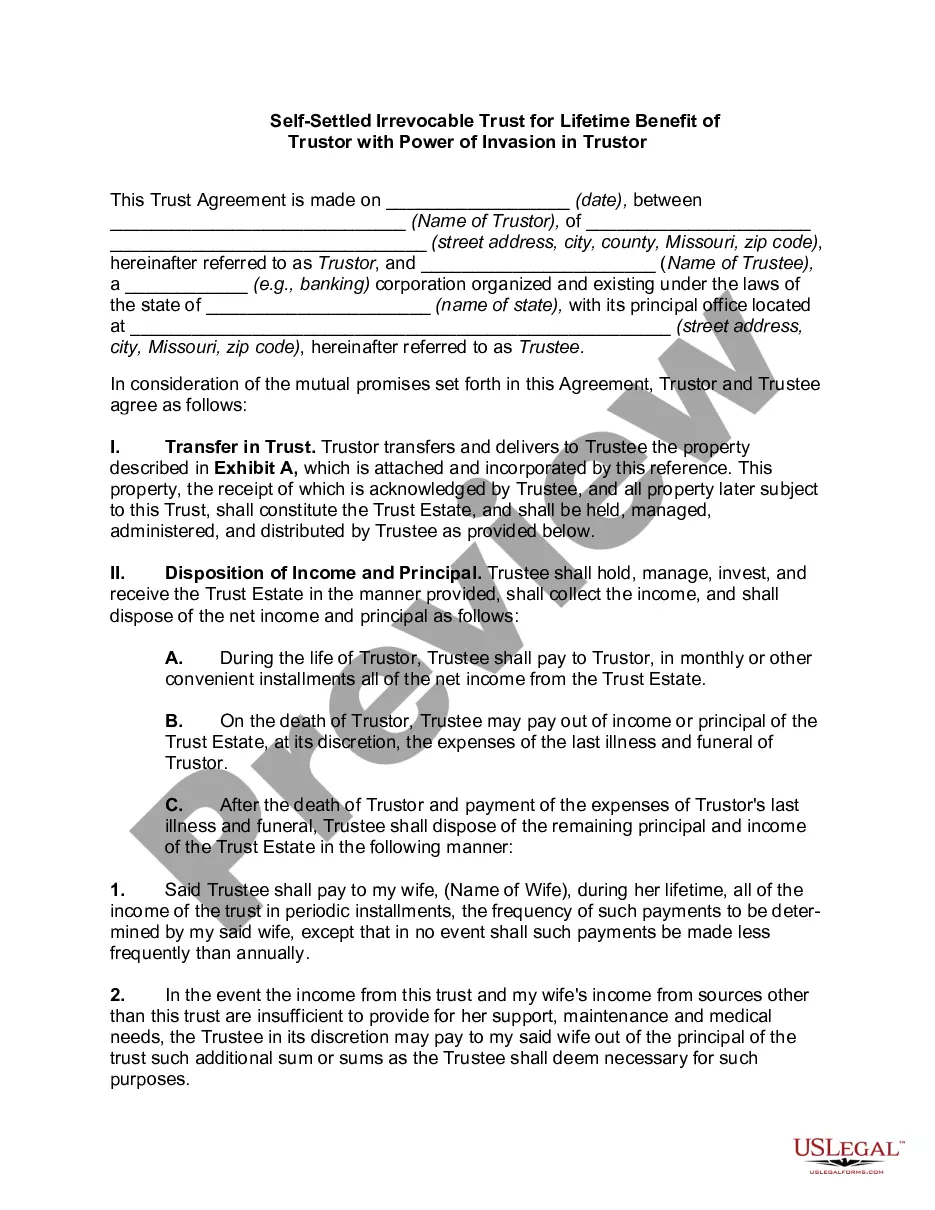








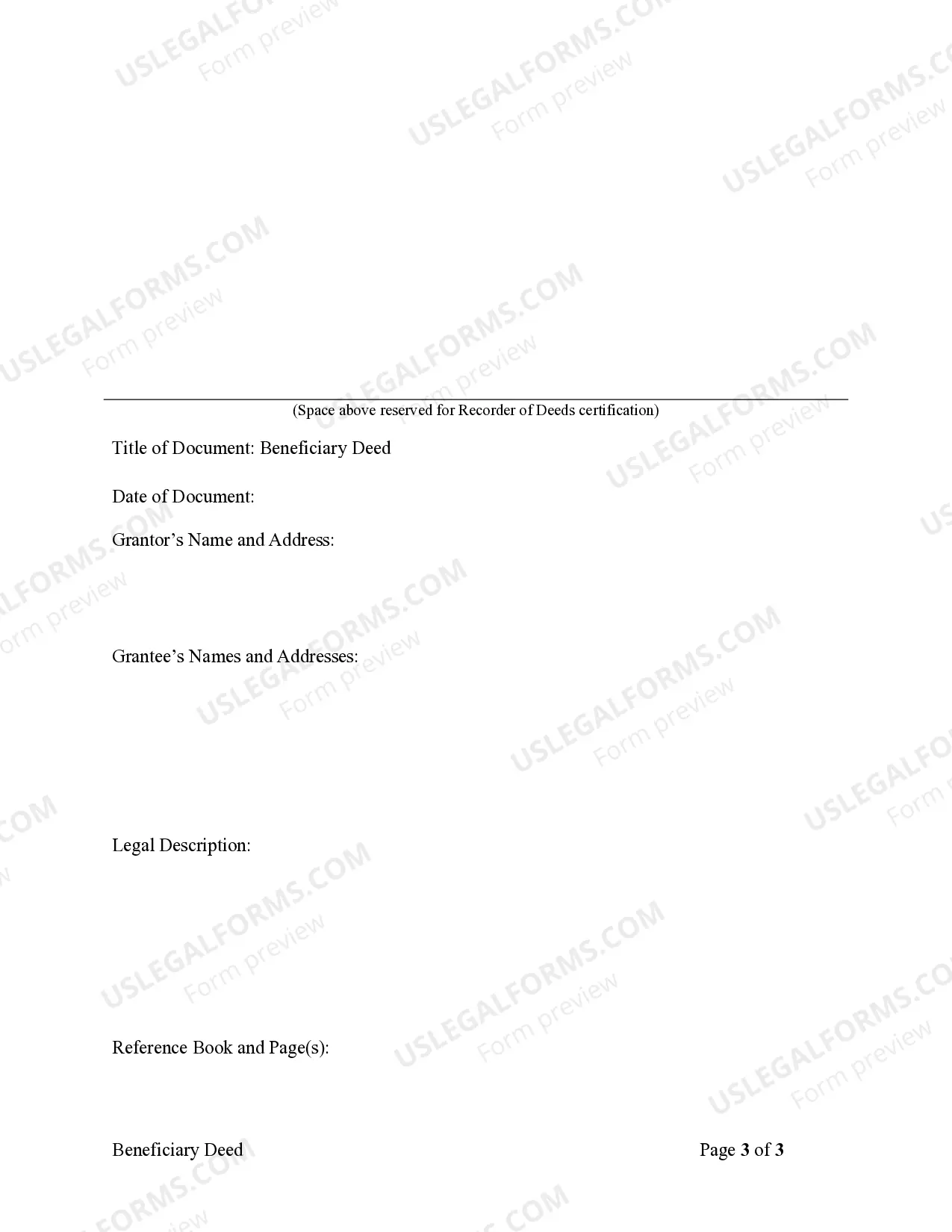
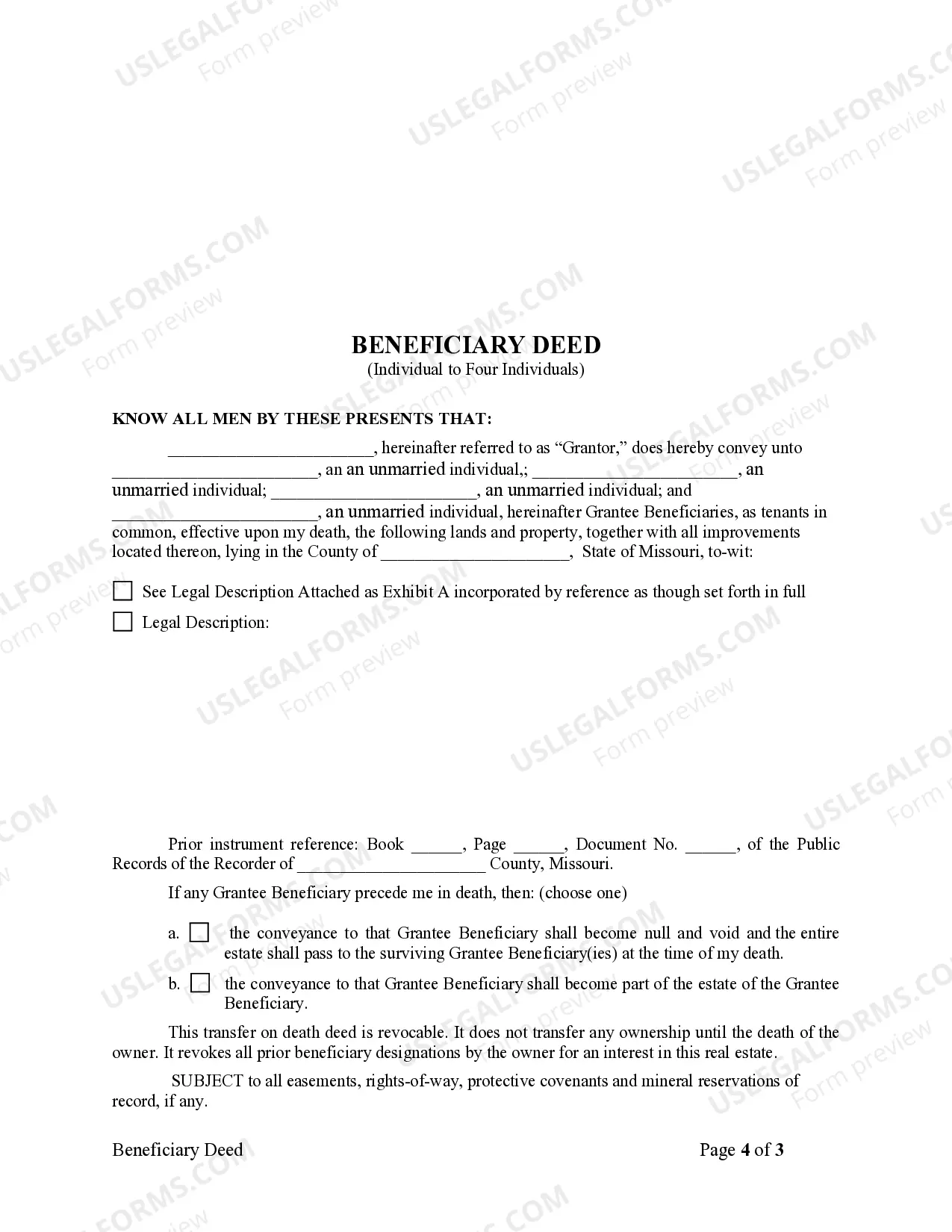
How to fill out Missouri Beneficiary Deed Or TOD - Transfer On Death Deed From An Individual To Four Individuals?
- If you're a returning user, log in to your account and select the desired form template. Verify that your subscription is active. If it is expired, take the necessary steps to renew it based on your payment plan.
- For first-time users, start by utilizing the Preview mode to examine the form descriptions. Confirm that you have selected the correct form that aligns with your specific legal needs and jurisdiction.
- If adjustments are necessary, utilize the Search function to find alternative templates. Once you confirm the correct form, proceed to the next step.
- Purchase the document by clicking on the Buy Now button. Choose a suitable subscription plan, and create an account to gain access to the extensive library of forms.
- Complete your transaction by entering your credit card details or selecting your PayPal option for payment.
- Finally, download your chosen form template to your device. You can also access your downloaded forms anytime through the My Forms section in your profile.
In conclusion, US Legal Forms simplifies your journey to secure quality legal documents efficiently. With a comprehensive library and expert support, achieving your legal objectives has never been easier.
Get started today and streamline your document preparation process!
Form popularity
FAQ
As a beneficiary of a trust, you may wonder if you need to file a Form 1041, which is the IRS tax form for trusts and estates. Generally, if the trust has generated income, the trustee must file this form, but as a beneficiary, your responsibility may differ. However, if the trust distributes income to you, you might need to report that income on your personal tax return. Using a beneficial tool like US Legal Forms can simplify the process of understanding and managing taxes related to a beneficiário final trust.
Yes, a trust must file a final tax return if it has taxable income or if it distributes assets to its beneficiaries. This requirement holds even for a beneficiário final trust. Filing correctly is important to satisfy IRS regulations and ensure that all financial obligations are met.
Filing a final tax return for a trust involves completing Form 1041 and indicating that it is a final return. You must also ensure that all income, deductions, and distributions to beneficiaries are accurately reported. Using resources like USLegalForms can simplify this process, ensuring compliance when managing a beneficiário final trust.
To fill out a beneficiary designation form for a trust, start by accurately entering the trust's name and the trustee's details. Next, specify each beneficiary's name, their relationship to the trust, and their share of the assets. Properly completing this form is vital to ensure that your wishes are fulfilled, especially in a beneficiário final trust situation.
Beneficiaries are typically listed in the trust document itself, detailing their names and the specific assets they will receive. This clarity ensures that everyone involved understands their rights and expectations regarding the trust. As a part of managing a beneficiário final trust, accurately listing beneficiaries clarifies the distribution of assets.
The final 1040 is the individual tax return form used by individuals, while the 1041 is specifically for trusts and estates. A final 1041 is filed when a trust is terminated or a beneficiary final trust is settled, ensuring all income is reported correctly. This distinction is crucial for accurate tax reporting and compliance.
The trustee usually prepares the K1 for a trust. This form reports the income, deductions, and credits for the beneficiaries of the trust. It's essential because it informs the beneficiaries about their respective shares of the trust's earnings. Therefore, understanding this process can greatly benefit anyone involved in managing a beneficiário final trust.
Distributing trust income to beneficiaries involves several important steps. First, you need to determine the amount of income generated by the trust, which may include interest, dividends, and other earnings. Next, you should review the trust document, as it outlines how income should be allocated among the beneficiaries. By understanding the rules and using a reliable platform like USLegalForms, you can simplify the distribution process, ensuring that each beneficiary receives their rightful share efficiently and in compliance with the terms of the Beneficiário final trust.
In a trust, the trustee holds the authority to manage and control the trust assets according to the terms of the trust document. The final beneficiary typically has a right to receive the benefits but does not have control over the assets. It is important to understand these roles to manage expectations among all parties involved. For a clearer understanding of these relationships in a trust, uslegalforms can equip you with insightful tools and resources.
Final beneficiaries of a trust are individuals or entities designated to receive the assets after all obligations are fulfilled. They typically come into their benefits once the trust reaches its termination date or the terms of the trust are met. Identifying these beneficiaries is crucial for trust administration. If you need more clarity on defining final beneficiaries of a trust, uslegalforms offers resources to help you.