Types Of Leases Commercial
Description
Get your form ready online
Our built-in tools help you complete, sign, share, and store your documents in one place.
Make edits, fill in missing information, and update formatting in US Legal Forms—just like you would in MS Word.
Download a copy, print it, send it by email, or mail it via USPS—whatever works best for your next step.
Sign and collect signatures with our SignNow integration. Send to multiple recipients, set reminders, and more. Go Premium to unlock E-Sign.
If this form requires notarization, complete it online through a secure video call—no need to meet a notary in person or wait for an appointment.
We protect your documents and personal data by following strict security and privacy standards.

Make edits, fill in missing information, and update formatting in US Legal Forms—just like you would in MS Word.

Download a copy, print it, send it by email, or mail it via USPS—whatever works best for your next step.

Sign and collect signatures with our SignNow integration. Send to multiple recipients, set reminders, and more. Go Premium to unlock E-Sign.

If this form requires notarization, complete it online through a secure video call—no need to meet a notary in person or wait for an appointment.

We protect your documents and personal data by following strict security and privacy standards.
Looking for another form?
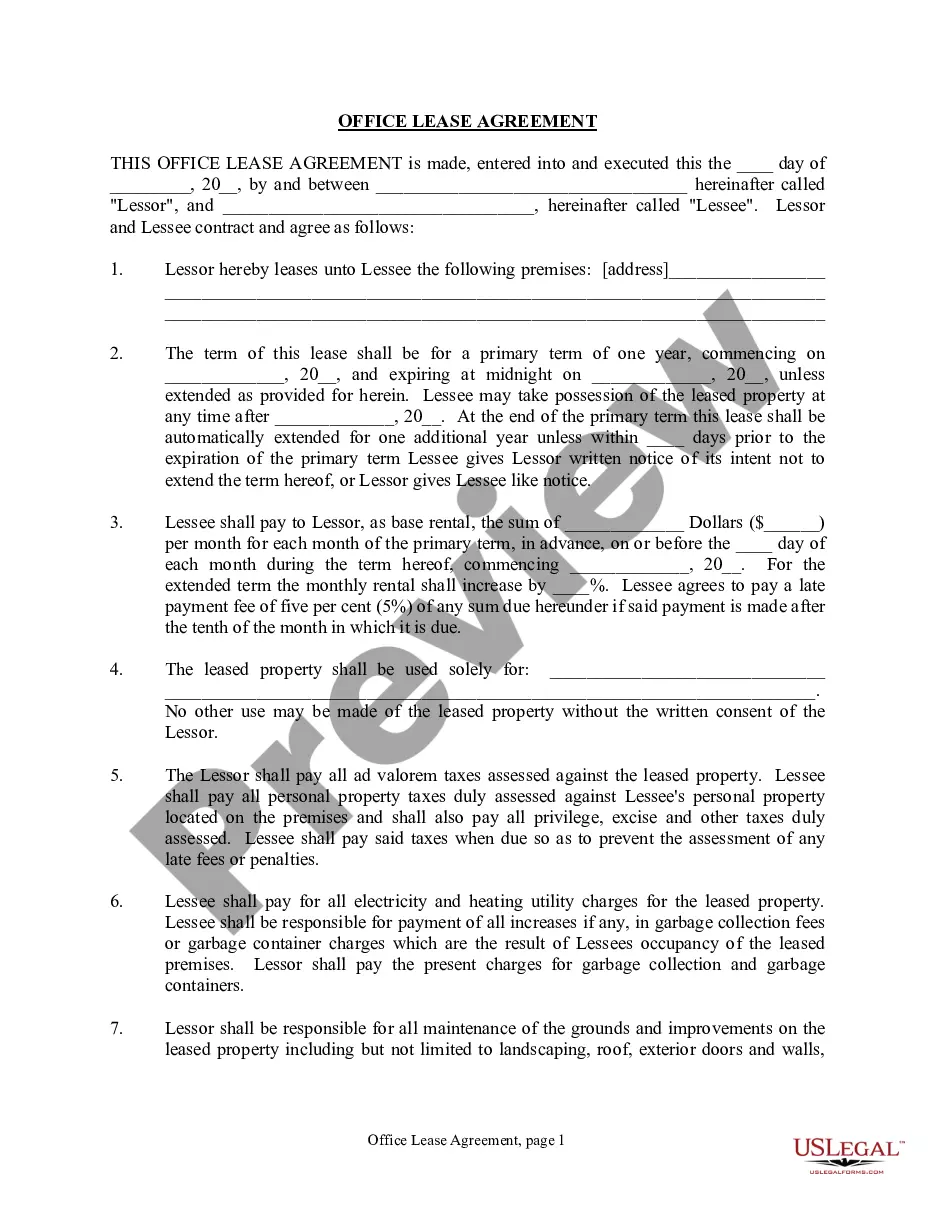
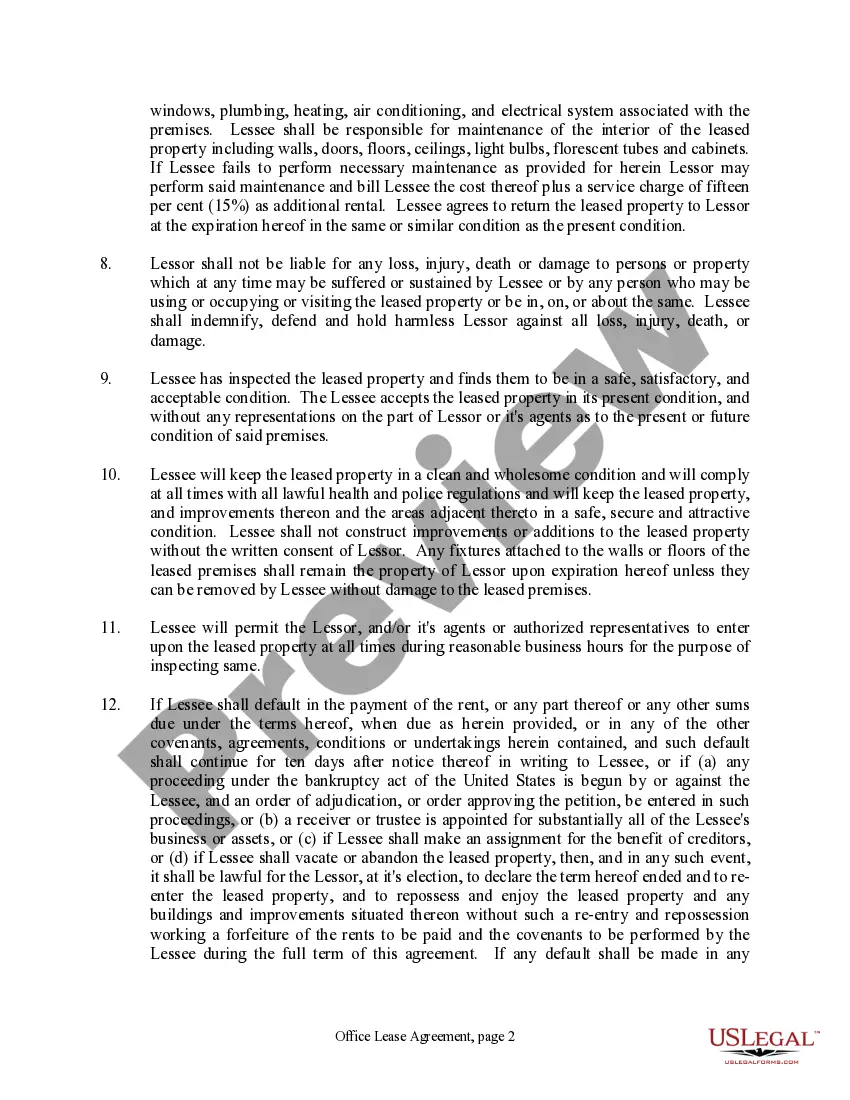
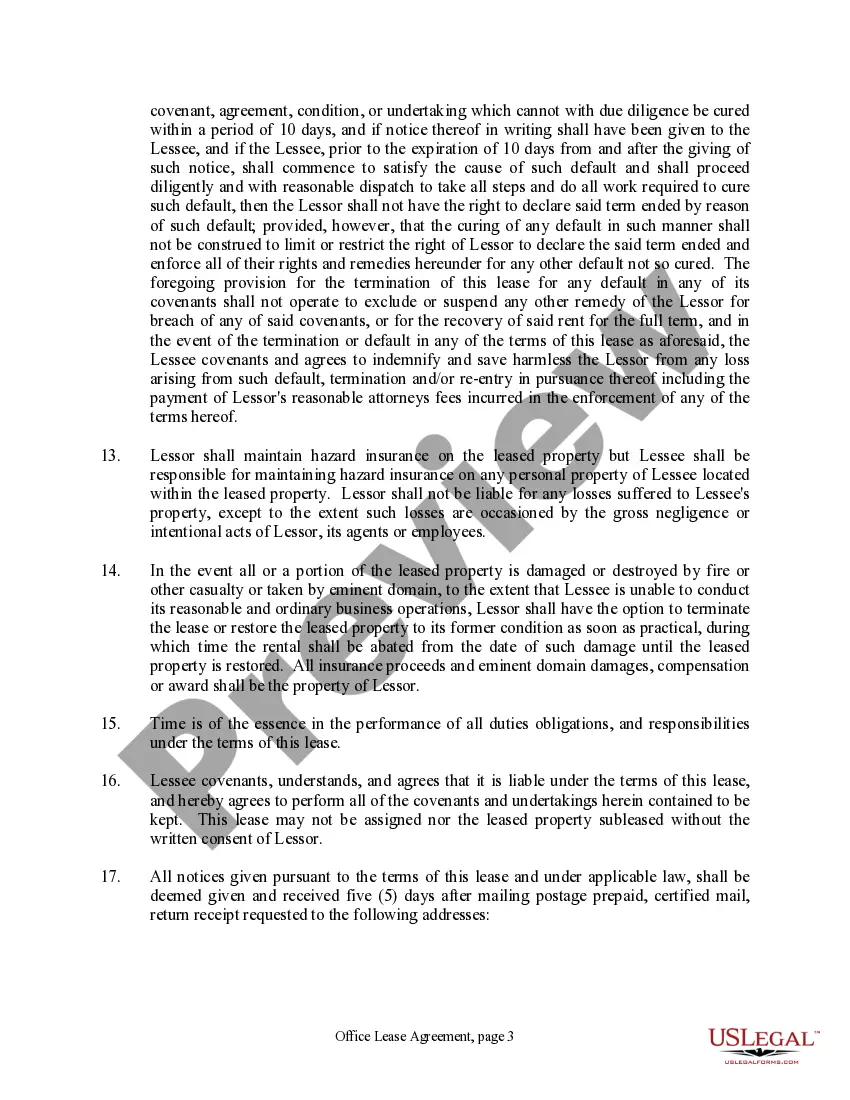
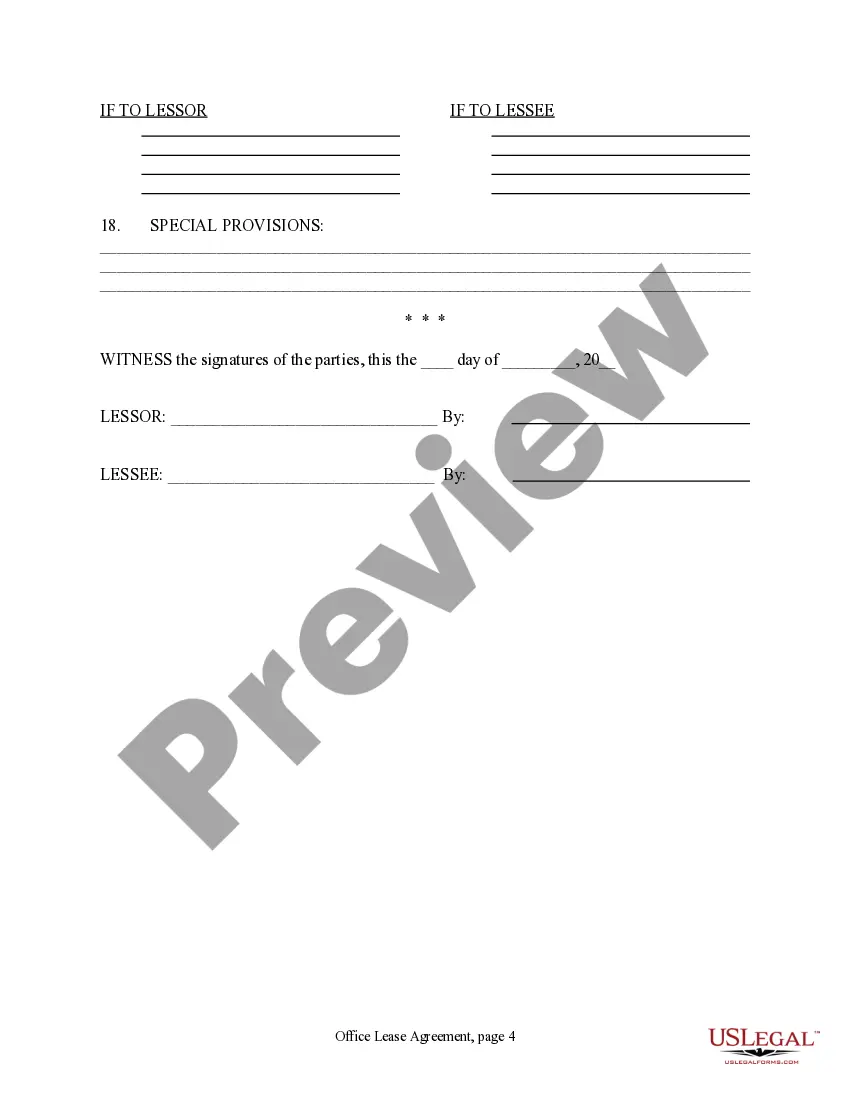
How to fill out Minnesota Office Lease Agreement?
It’s clear that you cannot become a legal expert instantly, nor can you understand how to swiftly draft Types Of Leases Commercial without a specialized background.
Producing legal documents is a labor-intensive process that demands specific education and expertise.
So why not entrust the drafting of the Types Of Leases Commercial to the professionals.
Preview it (if this feature is available) and read the accompanying description to ascertain whether Types Of Leases Commercial is what you’re looking for.
Set up a free account and select a subscription plan to purchase the form. Click Buy now. Once the payment is processed, you can download the Types Of Leases Commercial, complete it, print it, and send or mail it to the designated individuals or entities.
- With US Legal Forms, one of the most comprehensive legal template collections, you can find everything from court papers to templates for in-office correspondence.
- We recognize the significance of compliance and adherence to federal and state laws and regulations.
- That’s why, on our platform, all forms are location-specific and current.
- Here’s how to begin with our platform and obtain the form you need in just minutes.
- Discover the document you need by utilizing the search bar at the top of the webpage.
Form popularity
FAQ
The main difference between a triple net (NNN), double net (NN) and gross lease in commercial real estate is the amount of financial responsibility the tenant has.
Gross Lease Gross leases are most common for commercial properties such as offices and retail space. The tenant pays a single, flat amount that includes rent, taxes, utilities, and insurance. The landlord is responsible for paying taxes, utilities, and insurance from the rent fees.
Compare Commercial Lease Agreements Gross leases tend to benefit the tenant, whereas net leases are more landlord friendly. In a gross lease, the tenant has more control over how much is spent on such expenses as janitorial services and utilities.
A net lease is perhaps the most common form of commercial lease agreement. With a net lease, the tenant is responsible for a base rent payment, plus additional expenses associated with the property.
A Triple Net Lease (NNN Lease) is the most common type of lease in commercial buildings. In a NNN lease, the rent does not include operating expenses. Operating expenses include utilities, maintenance, property taxes, insurance and property management.