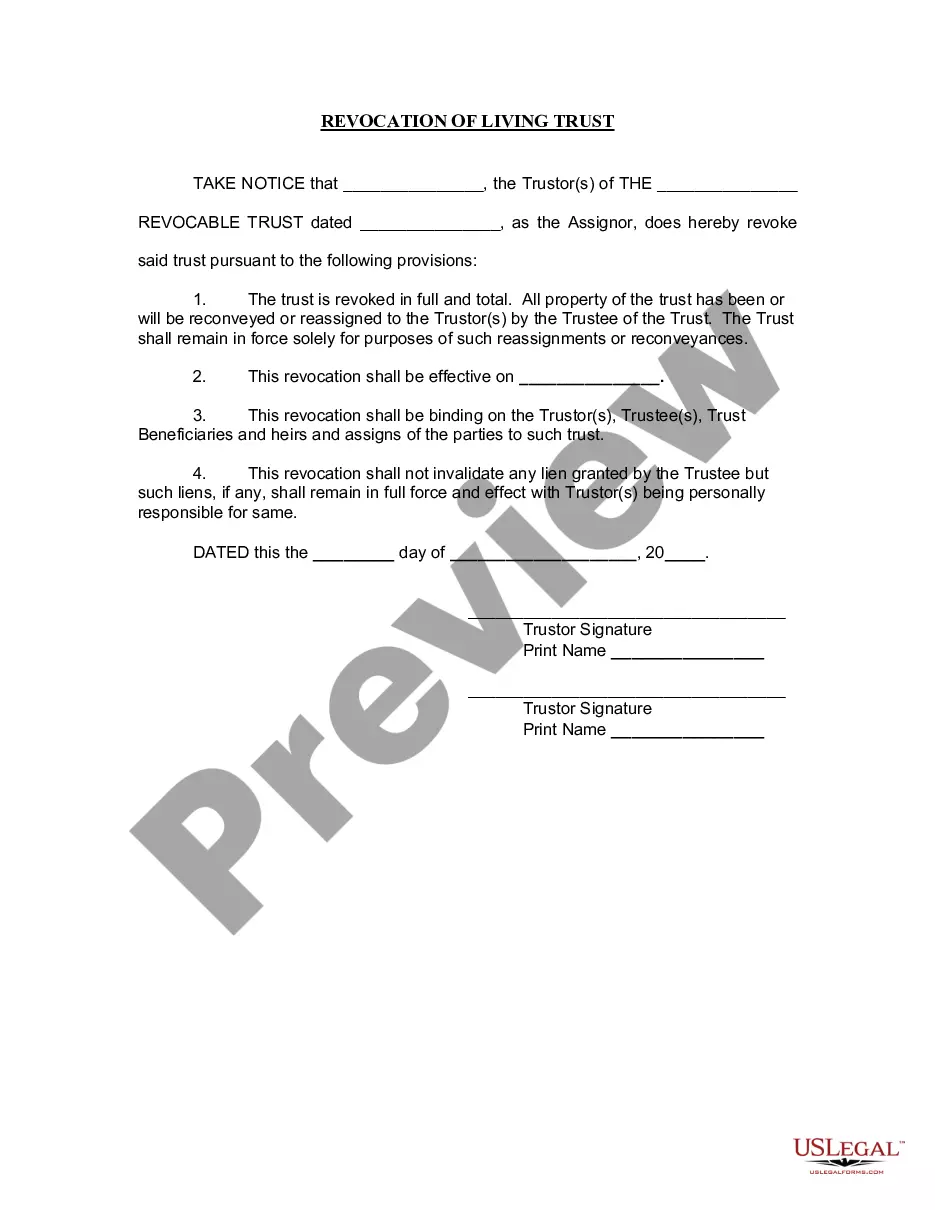
Revocation Living Trust With A Trustee

Description
Get your form ready online
Our built-in tools help you complete, sign, share, and store your documents in one place.
Make edits, fill in missing information, and update formatting in US Legal Forms—just like you would in MS Word.
Download a copy, print it, send it by email, or mail it via USPS—whatever works best for your next step.
Sign and collect signatures with our SignNow integration. Send to multiple recipients, set reminders, and more. Go Premium to unlock E-Sign.
If this form requires notarization, complete it online through a secure video call—no need to meet a notary in person or wait for an appointment.
We protect your documents and personal data by following strict security and privacy standards.

Make edits, fill in missing information, and update formatting in US Legal Forms—just like you would in MS Word.

Download a copy, print it, send it by email, or mail it via USPS—whatever works best for your next step.

Sign and collect signatures with our SignNow integration. Send to multiple recipients, set reminders, and more. Go Premium to unlock E-Sign.

If this form requires notarization, complete it online through a secure video call—no need to meet a notary in person or wait for an appointment.

We protect your documents and personal data by following strict security and privacy standards.
Looking for another form?
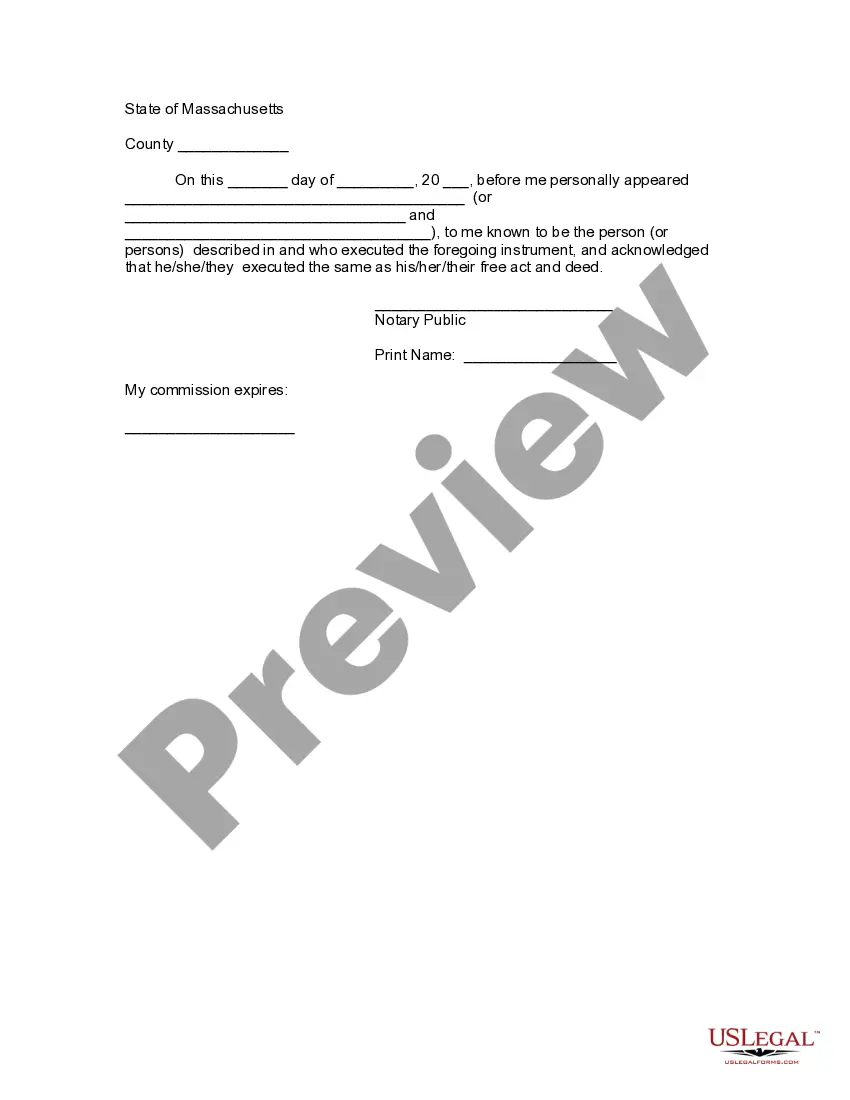
How to fill out Massachusetts Revocation Of Living Trust?
- Log into your US Legal Forms account if you're a returning user, then locate the relevant revocation living trust template. If you're new to the service, proceed to the next step.
- Review the form details and check the preview mode to confirm it meets your needs and complies with your local laws.
- If necessary, utilize the search function to find alternative templates that may better suit your requirements.
- Select the appropriate subscription plan by clicking the Buy Now button, ensuring you create an account to access their vast library.
- Complete your purchase by entering your payment information or using PayPal for convenience.
- Download the form directly to your device, and you can also access it anytime from the My Forms section in your profile.
By following these steps, you can easily revoke your living trust with a trustee, ensuring that all legal documents are prepared correctly and efficiently. US Legal Forms not only simplifies the process but also provides access to premium experts for any assistance needed.
Whether you are a seasoned user or a first-time visitor, explore how US Legal Forms can empower your legal document needs today!
Form popularity
FAQ
To revoke a revocable living trust, start by reviewing your trust agreement for specific procedures. Generally, you will sign a revocation document and inform your trustee and beneficiaries of the decision. Using resources from platforms like uSlegalforms can simplify finding the necessary documents to carry out the revocation living trust with a trustee effectively.
Revoking a revocable trust is usually a straightforward process. You simply need to follow the guidelines in your trust document, which often includes signing a declaration of revocation. Because of the nature of the revocation living trust with a trustee, you can manage this process without complex legal hurdles.
To dissolve a revocable trust, you typically need to complete a trust dissolution form, which varies by state. This form legally terminates the trust and should state your intention clearly. If you use services like uSlegalforms, you can easily find state-specific forms designed for revocation living trust with a trustee situations.
Yes, a revocable living trust does allow you to revoke or dissolve the trust at any time while you are alive. This flexibility is a primary benefit of such trusts, allowing you to adjust your estate plan as your circumstances change. Whether you want to remove a trustee or transfer assets, the revocation living trust with a trustee enables you to make those decisions.
To remove a trustee from a living trust, you must follow the instructions outlined in the trust document. Typically, this process involves drafting a formal amendment to the trust that specifies the removal. If you are unsure, consider consulting a legal professional to ensure the revocation living trust with a trustee is handled correctly.
Typically, a trust can be terminated by fulfilling the terms set forth in the trust document, reaching a consensus among beneficiaries and the trustee, or through legal proceedings if necessary. In particular, with a revocation living trust with a trustee, the ability to revoke offers a unique avenue for terminating the trust. Understanding these methods can empower you to make informed decisions during the trust administration process.
A trust can be terminated through various means, including the completion of its purpose, mutual agreement by all parties involved, or by operation of law. Additionally, a trust can be revoked through specific procedures outlined in the trust agreement, especially for a revocation living trust with a trustee. Engaging experienced legal assistance can help navigate these options effectively.
Yes, trustees can revoke a trust, depending on the type of trust and the authority granted to them. In a revocation living trust with a trustee, the trustee typically has the power to undo the trust, allowing for flexibility in managing the assets. It's essential to review the trust documents to understand the specific rights and limitations associated with the revocation process.
To shut down a trust, the trustee must follow the terms outlined in the trust document, which often includes distributing the remaining assets to the beneficiaries. If specific conditions for termination are not met, a court may need to be involved to approve the shutdown. It is advisable to consult with professionals to ensure a smooth process, especially regarding actions related to a revocation living trust with a trustee.
A trust can be considered null and void if it lacks the required legal elements, such as a clear intention to create a trust, a definite beneficiary, or a lawful purpose. Additionally, if the trust is created under duress or fraud, it may also be deemed invalid. Understanding these factors is important, especially when considering revocation of a living trust with a trustee.