Life Estate Deed Massachusetts Sample Format

Description

Get your form ready online
Our built-in tools help you complete, sign, share, and store your documents in one place.
Make edits, fill in missing information, and update formatting in US Legal Forms—just like you would in MS Word.
Download a copy, print it, send it by email, or mail it via USPS—whatever works best for your next step.
Sign and collect signatures with our SignNow integration. Send to multiple recipients, set reminders, and more. Go Premium to unlock E-Sign.
If this form requires notarization, complete it online through a secure video call—no need to meet a notary in person or wait for an appointment.
We protect your documents and personal data by following strict security and privacy standards.

Make edits, fill in missing information, and update formatting in US Legal Forms—just like you would in MS Word.

Download a copy, print it, send it by email, or mail it via USPS—whatever works best for your next step.

Sign and collect signatures with our SignNow integration. Send to multiple recipients, set reminders, and more. Go Premium to unlock E-Sign.

If this form requires notarization, complete it online through a secure video call—no need to meet a notary in person or wait for an appointment.

We protect your documents and personal data by following strict security and privacy standards.
Looking for another form?
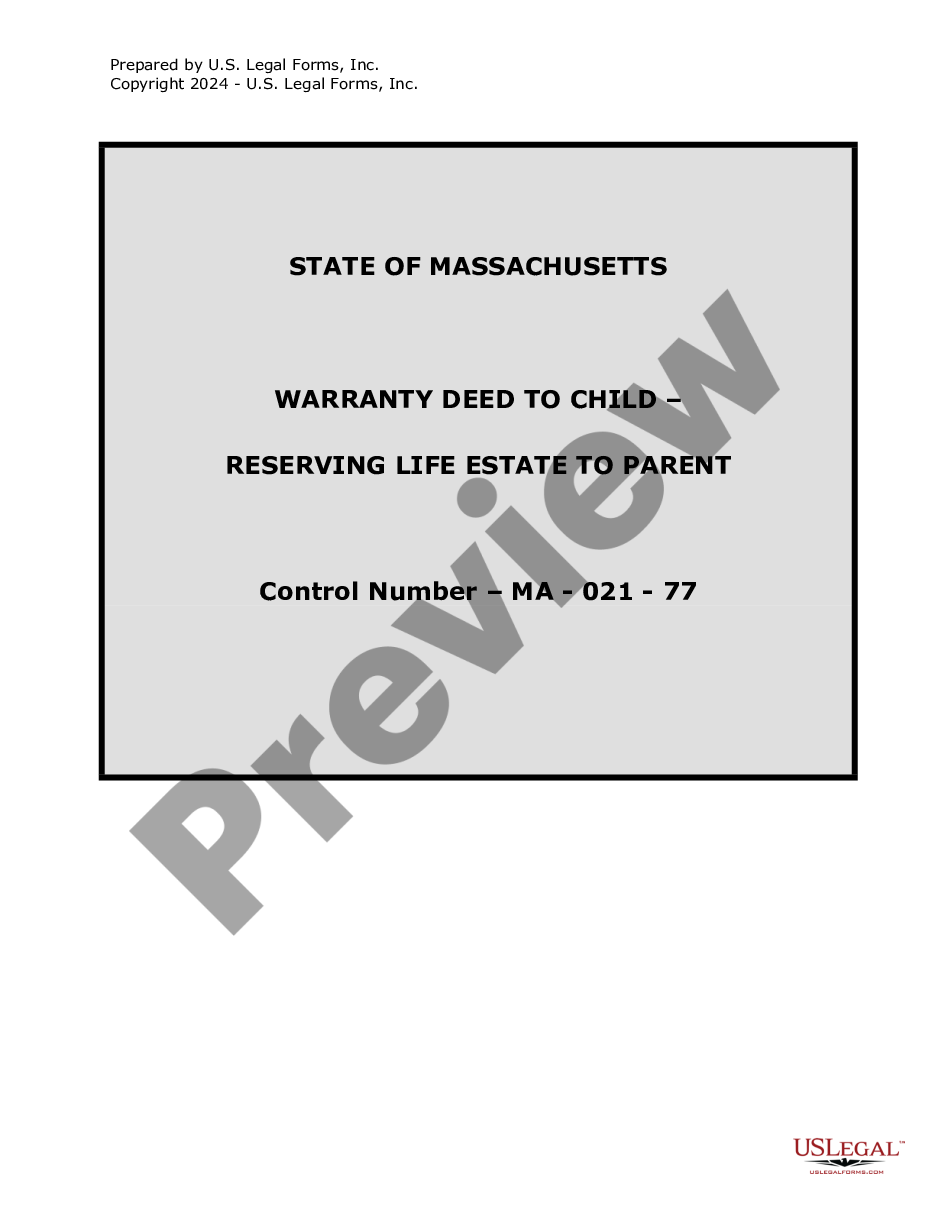
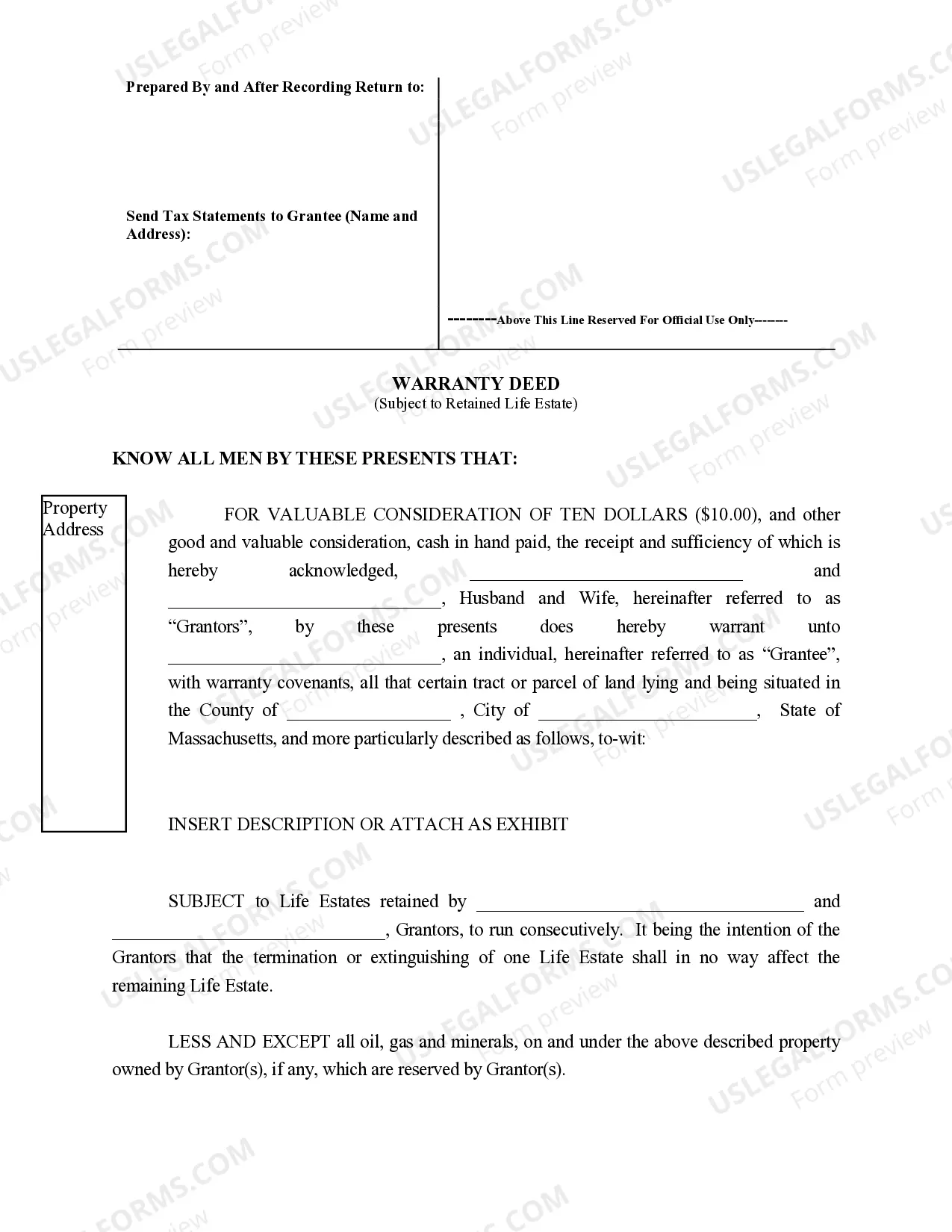
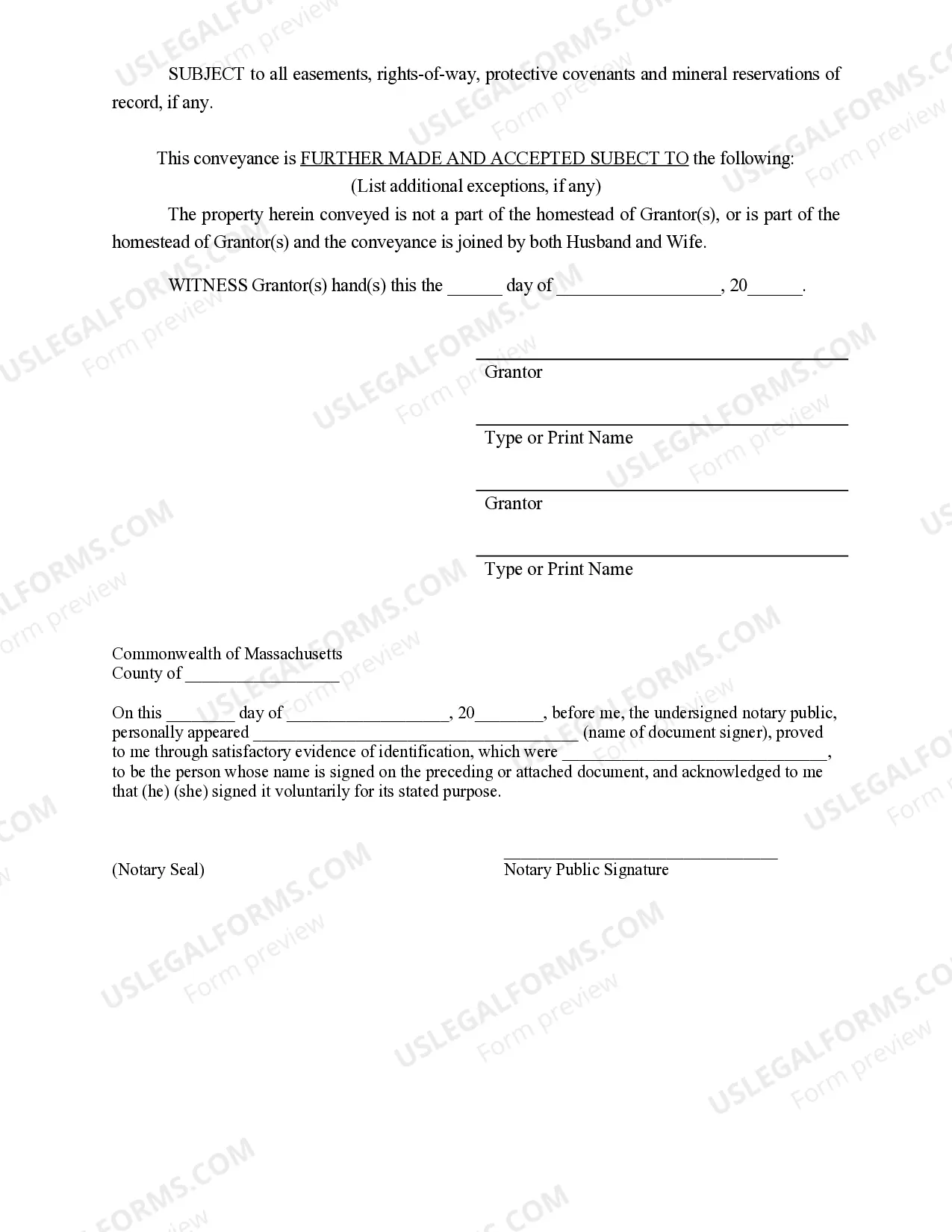
How to fill out Massachusetts Warranty Deed To Child Reserving A Life Estate In The Parents?
The Life Estate Deed Massachusetts Sample Format presented on this page is a versatile official template created by expert attorneys in accordance with federal and state laws.
For over 25 years, US Legal Forms has offered individuals, organizations, and legal practitioners more than 85,000 validated, state-specific documents for any business and personal need. It’s the quickest, easiest, and most trustworthy method to acquire the documents you require, as the service ensures bank-level data security and anti-malware safeguards.
Register for US Legal Forms to have authenticated legal templates for all aspects of life readily available.
- Search for the document you require and examine it.
- Choose the subscription plan that fits you and create an account. Make a swift payment using PayPal or a credit card. If you already possess an account, Log In and verify your subscription to proceed.
- Select the format you desire for your Life Estate Deed Massachusetts Sample Format (PDF, DOCX, RTF) and download the document to your device.
- Complete and sign the document. Print the template to fill it out by hand or use an online multi-functional PDF editor to swiftly and accurately complete and sign your form with a legally binding electronic signature.
- Access your documents again. Reuse the same document anytime you need. Open the My documents tab in your profile to redownload any previously purchased documents.
Form popularity
FAQ
There is no simple way to reverse a life estate because a life estate deed is a legal transfer of the title of a property. This is legally binding and the transaction is complete when the life estate is executed. Essentially, in order to reverse a life estate both parties would need to agree to make it happen.
The life estate ends at the death of the life tenant (or at the death of the last survivor of the life tenants if there is more than one). At that point, the so-called ?remaindermen? take over both full ownership and the right to occupy and control the property.
The life tenant or tenants have the full right of possession, or right to occupy, the premises during their lives. In addition, they have the right to rent out the property and receive the income. They also have the obligation to maintain the property and to pay its expenses, including real estate taxes.
There are three types of real estate deeds in Massachusetts: release deeds, quitclaim deeds, and warranty deeds. Each of these deeds gives a buyer different degrees of protection and guarantees against defects.
Within a life estate, the life estate deed is a document that grants the owner the ability to pass on ownership of a property without including it in a will as part of a person's assets.