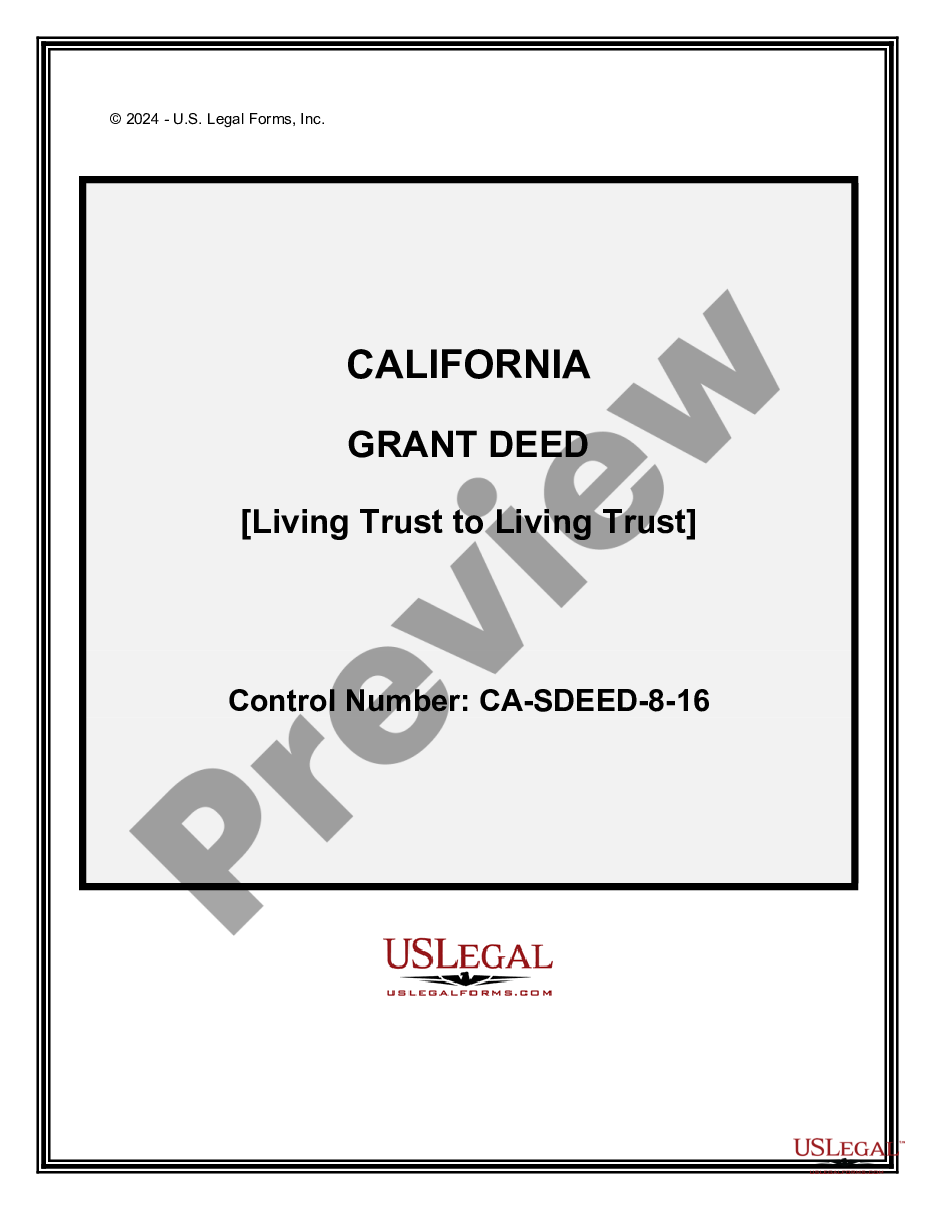
California Grant Deed - Living Trust to Living Trust
What is this form?
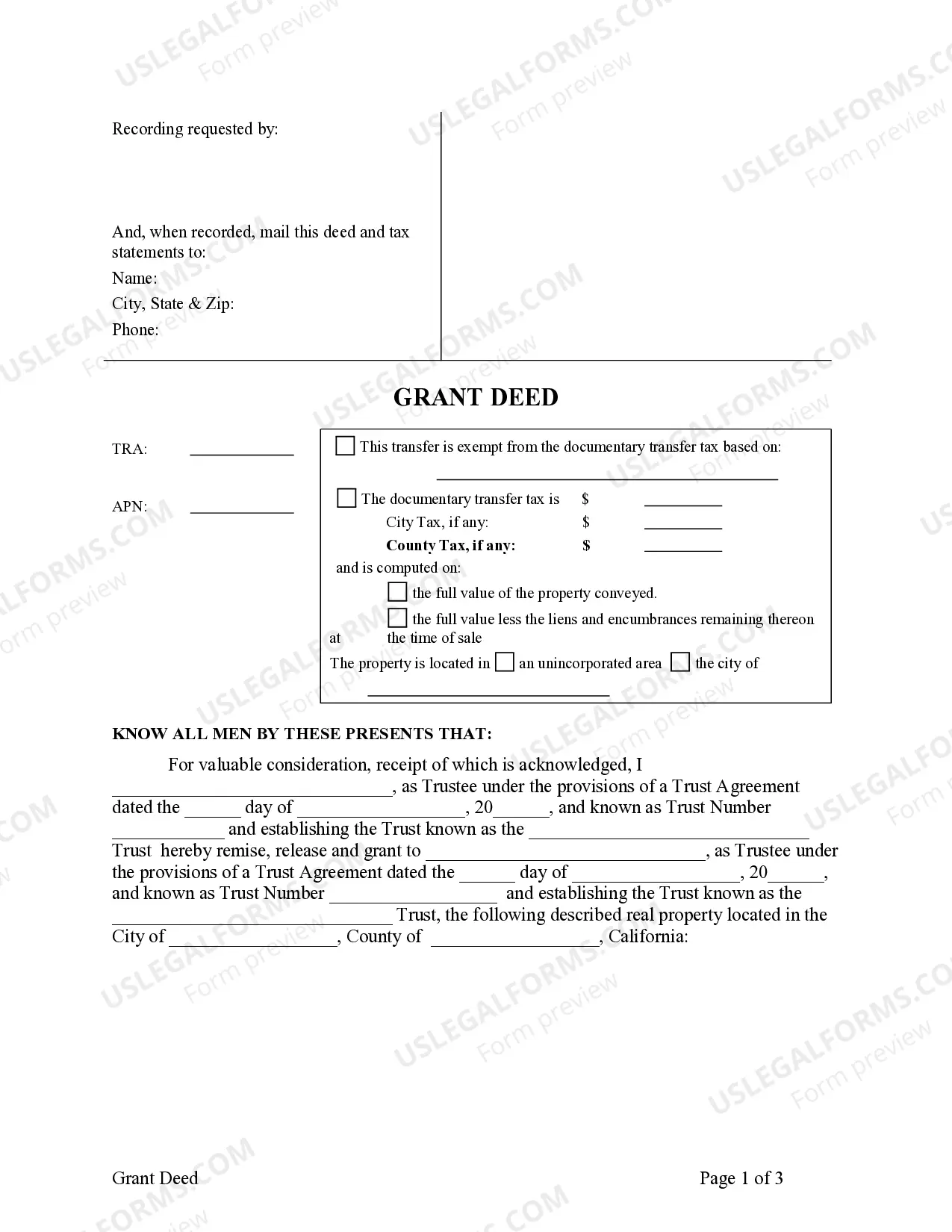
The Grant Deed - Living Trust to Living Trust is a legal document that transfers property ownership between two living trusts. This form serves to confirm the title in the grantee living trust and is essential for ensuring property rights and interests are clearly defined. Unlike other deed types, this form is specifically designed for transactions involving trusts, making it crucial for asset management within estate planning.
Form components explained
- Identification of the grantor and grantee living trusts.
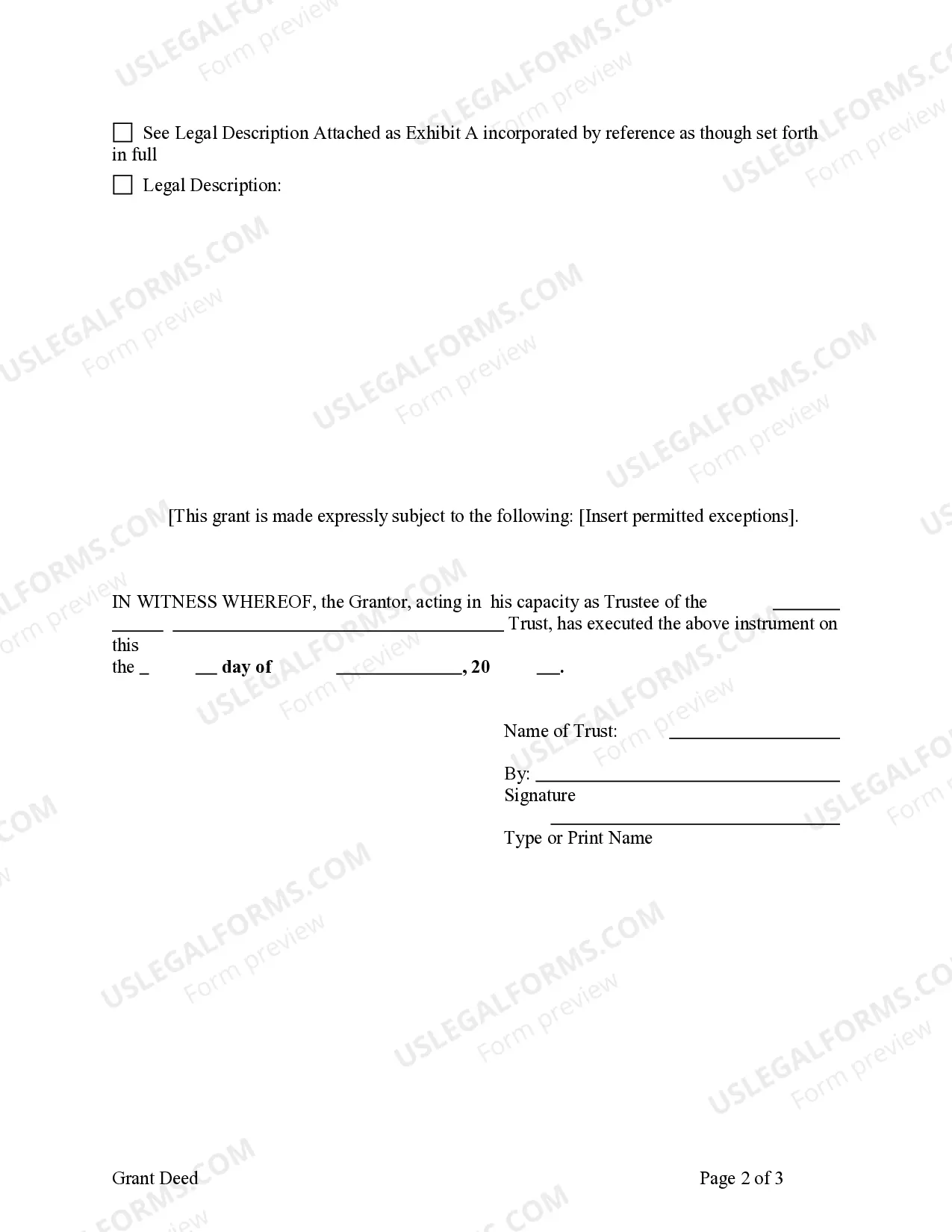
- Legal description of the property being transferred.
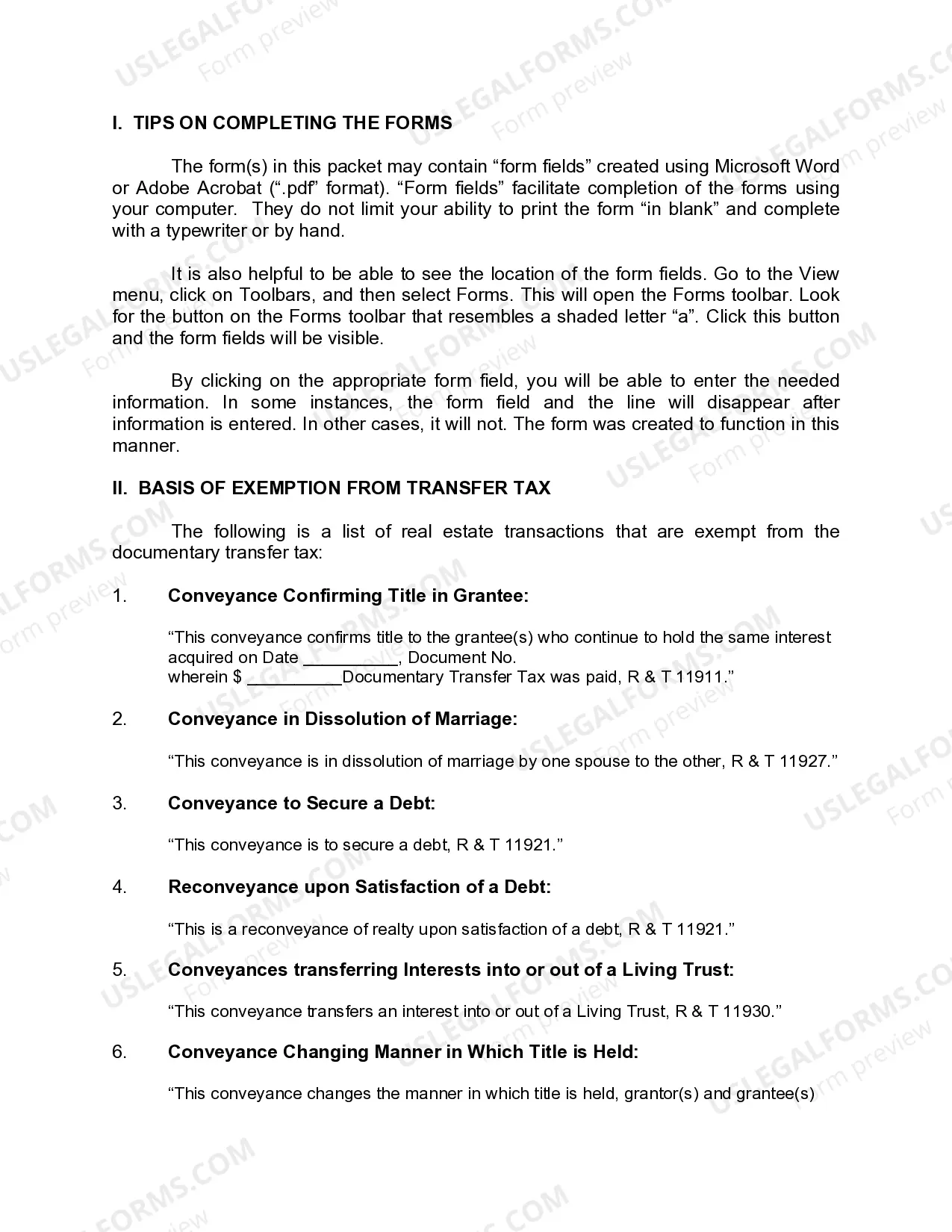
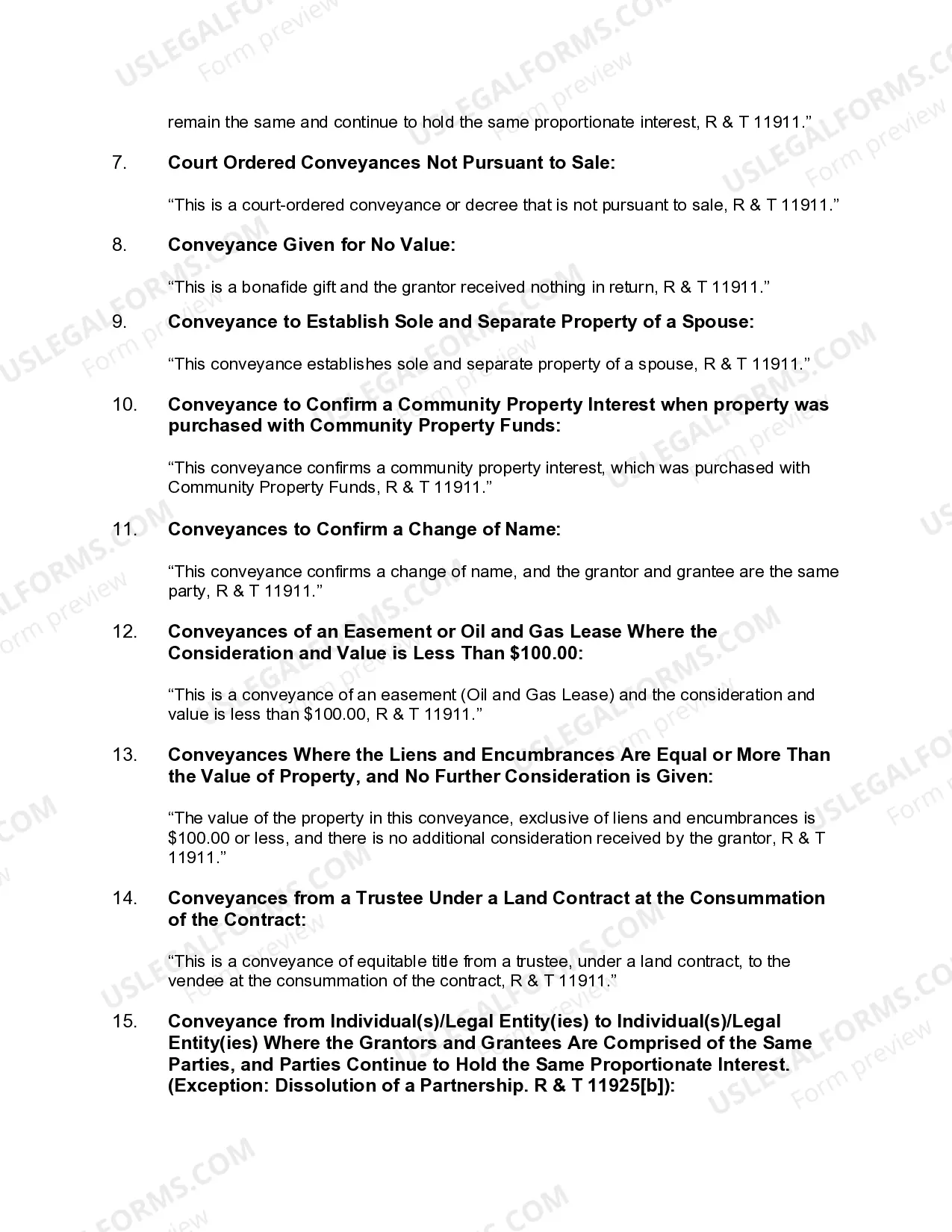
- Basis for exemption from transfer tax, if applicable.
- Signature lines for the trustee of the grantor trust.
- Instructions for recording the deed with the county.


When to use this document
This form is necessary when you wish to transfer ownership of property from one living trust to another. Common scenarios include updating the beneficiaries of the trusts, consolidating trust assets, or reorganizing property holdings as part of estate planning. It's particularly useful in ensuring the smooth transition of property without triggering unnecessary taxes.
Who this form is for
This form is intended for:
- Trustees managing living trusts who wish to transfer property ownership.
- Individuals involved in estate planning who need to update the titles of trust-held property.
- Attorneys assisting clients with asset management within living trusts.
Completing this form step by step
- Identify the grantor and grantee living trusts by providing their full legal names.
- Specify the legal description of the property to be transferred.
- Determine and note any basis for exemption from transfer tax if applicable.
- Obtain the necessary signatures from the trustee of the grantor trust.
- Record the completed deed with the appropriate county office.
Does this document require notarization?
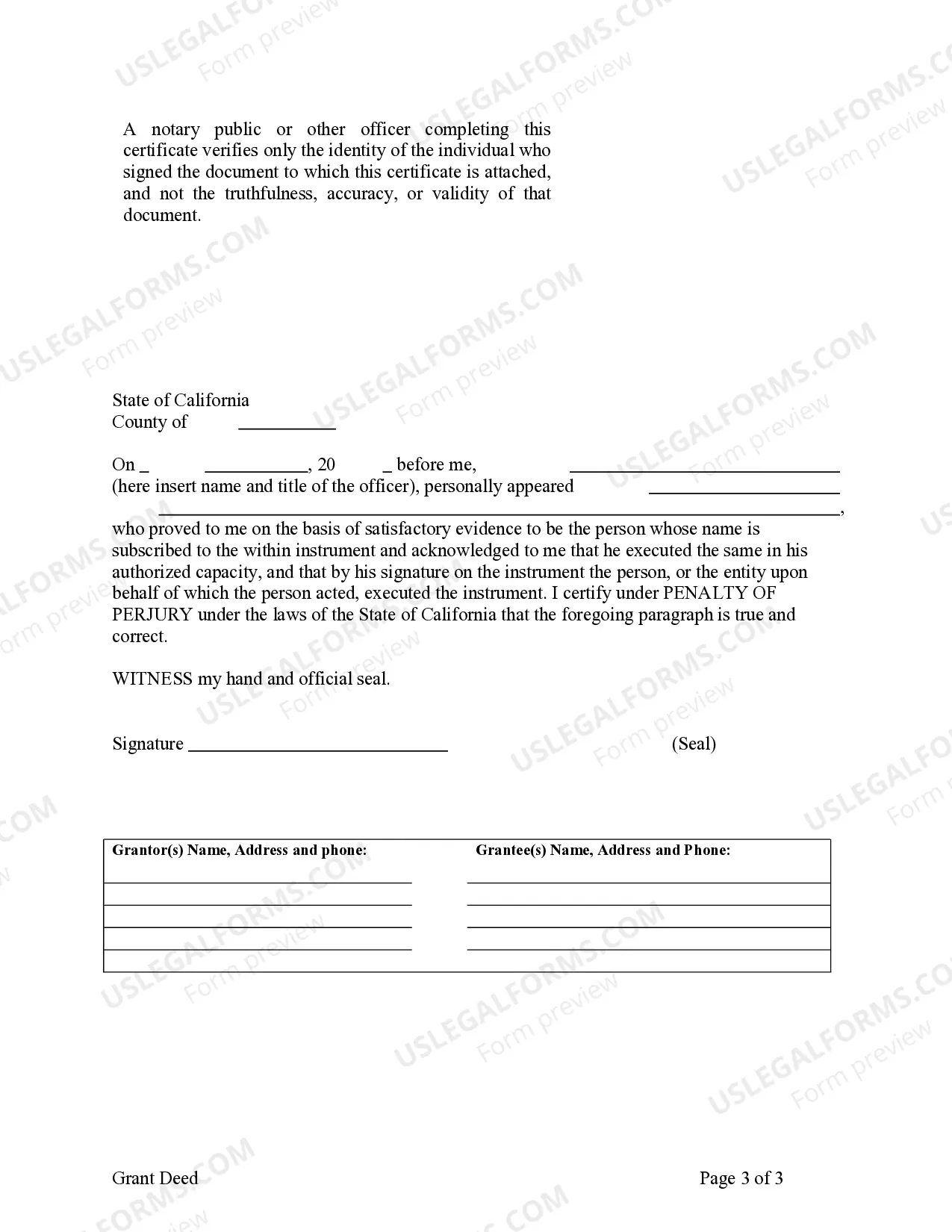
This form does not typically require notarization unless specified by local law. However, verifying local regulations is recommended to ensure compliance with state requirements.
Get your form ready online
Our built-in tools help you complete, sign, share, and store your documents in one place.
Make edits, fill in missing information, and update formatting in US Legal Forms—just like you would in MS Word.
Download a copy, print it, send it by email, or mail it via USPS—whatever works best for your next step.
Sign and collect signatures with our SignNow integration. Send to multiple recipients, set reminders, and more. Go Premium to unlock E-Sign.
If this form requires notarization, complete it online through a secure video call—no need to meet a notary in person or wait for an appointment.
We protect your documents and personal data by following strict security and privacy standards.

Make edits, fill in missing information, and update formatting in US Legal Forms—just like you would in MS Word.

Download a copy, print it, send it by email, or mail it via USPS—whatever works best for your next step.

Sign and collect signatures with our SignNow integration. Send to multiple recipients, set reminders, and more. Go Premium to unlock E-Sign.

If this form requires notarization, complete it online through a secure video call—no need to meet a notary in person or wait for an appointment.

We protect your documents and personal data by following strict security and privacy standards.
Typical mistakes to avoid
- Failing to provide the full legal names of the living trusts.
- Omitting the legal description of the property, which may cause issues with the transfer.
- Not accurately noting the basis for exemption from transfer tax.
- Neglecting to obtain required signatures before submitting the deed for recording.
Why complete this form online
- Convenience of completing the form from anywhere, at any time.
- Editable fields allow precise entry of information before finalizing.
- Reliability as the form is drafted by licensed attorneys to ensure legal compliance.
Key takeaways
- The Grant Deed - Living Trust to Living Trust facilitates property transfer between trusts.
- Ensure all fields are accurately completed to avoid legal complications.
- Check local laws for any additional requirements or exemptions.
Looking for another form?
Form popularity
FAQ
In California, the grant deed must be signed by the grantor, who is the current owner of the property. If the property is part of a living trust, the trustee typically signs on behalf of the trust. This ensures that the California Grant Deed - Living Trust to Living Trust reflects the correct legal ownership, protecting all parties involved.
To fill out a grant deed in California, you should start by accurately entering the names of the grantor and the grantee. Include a detailed property description to prevent confusion in the future. If you are completing a California Grant Deed - Living Trust to Living Trust, make sure to state the trust's name clearly to ensure that the transfer of ownership is valid and recognized.
Yes, in California, recording a grant deed is essential to provide public notice of the property transfer. This recording protects the rights of the grantee and helps prevent future disputes over property ownership. For a California Grant Deed - Living Trust to Living Trust, this step is particularly crucial as it highlights the legal transfer of assets within the trust framework.
Filling out a California grant deed requires accurate information about the property and the parties involved. Begin with the grantor's full name, followed by the grantee's details. Be sure to include a clear property description, as this is essential for a California Grant Deed - Living Trust to Living Trust to avoid any disputes in the future.
Transferring property to a living trust in California involves executing a grant deed that clearly identifies the trust as the new owner. You'll need to fill out the grant deed correctly and ensure it's recorded with the local county recorder's office. Utilizing a California Grant Deed - Living Trust to Living Trust can streamline this process, making your intentions clear and legally binding.
A grant deed is valid in California when it meets specific legal requirements. It must include the grantor's signature, a description of the property, and the names of both the grantor and grantee. Importantly, a California Grant Deed - Living Trust to Living Trust also requires that the deed be notarized to ensure the grantor's intent is legitimate.
Making a living trust without a lawyer in California is possible, and you can utilize online services to help you. By creating a California Grant Deed - Living Trust to Living Trust, you can designate how your assets will be managed and distributed. Select trustworthy online platforms that offer templates and tools for DIY estate planning. With proper guidance, you can successfully establish your living trust and ensure your wishes are honored.
Yes, you can create a living trust by yourself in California. To establish a California Grant Deed - Living Trust to Living Trust, you need to gather relevant information about your assets and beneficiaries. You can find templates and resources online, which guide you through the process. However, consider consulting an expert if your situation is complex.
To petition for a modification of a trust in California, you will typically need to file a petition with the court, detailing your reasons for the modification. While a judge may grant your petition based on valid reasons such as changes in circumstances, involving legal expertise is often beneficial. If you are considering modifications related to a California Grant Deed - Living Trust to Living Trust, using USLegalForms can provide essential guidance throughout this legal process.
Transferring property from one trust to another in California involves executing a new grant deed that reflects the change in ownership. You'll want to ensure that the trust being transferred to is properly established and recognized under state law. When it comes to a California Grant Deed - Living Trust to Living Trust, it's crucial to maintain accurate documentation throughout this process. USLegalForms can provide templates to facilitate these transfers.