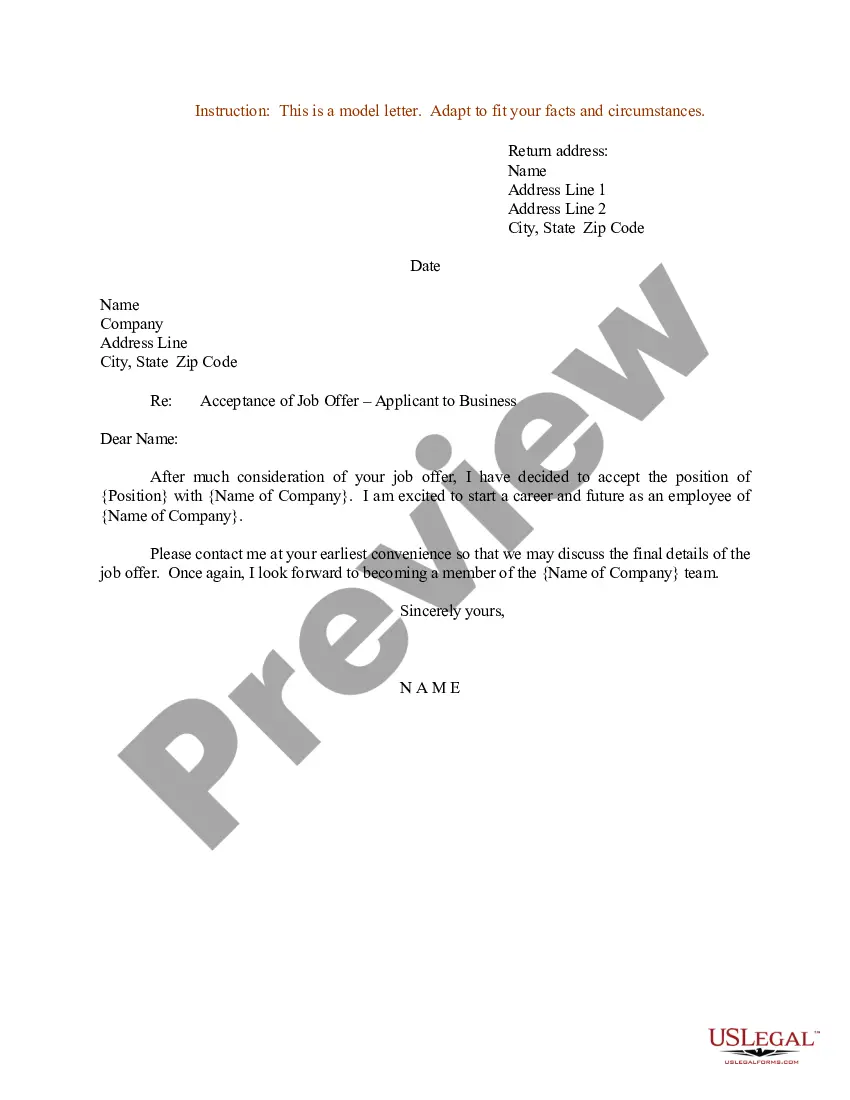
Motion Suppress Uslegal Force
Description
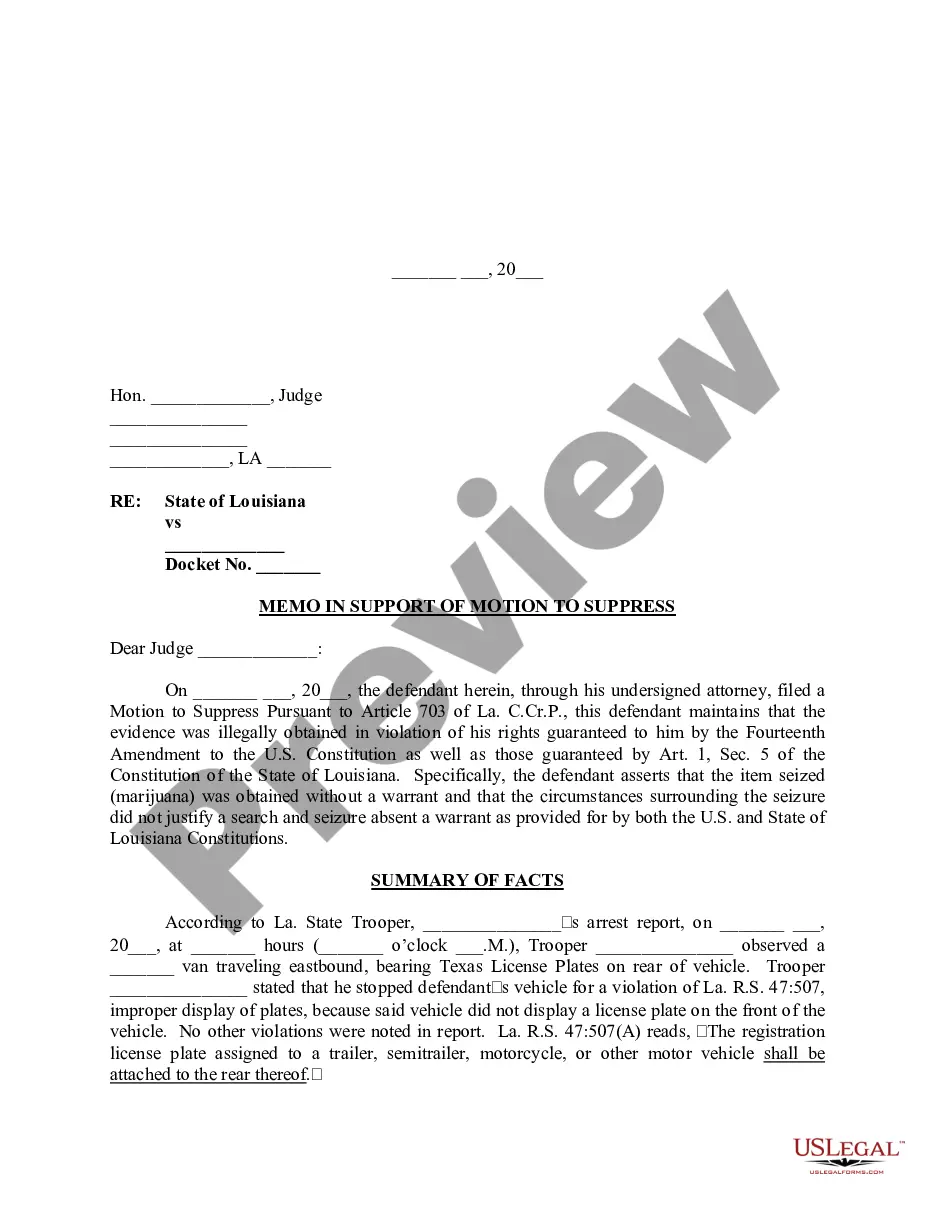
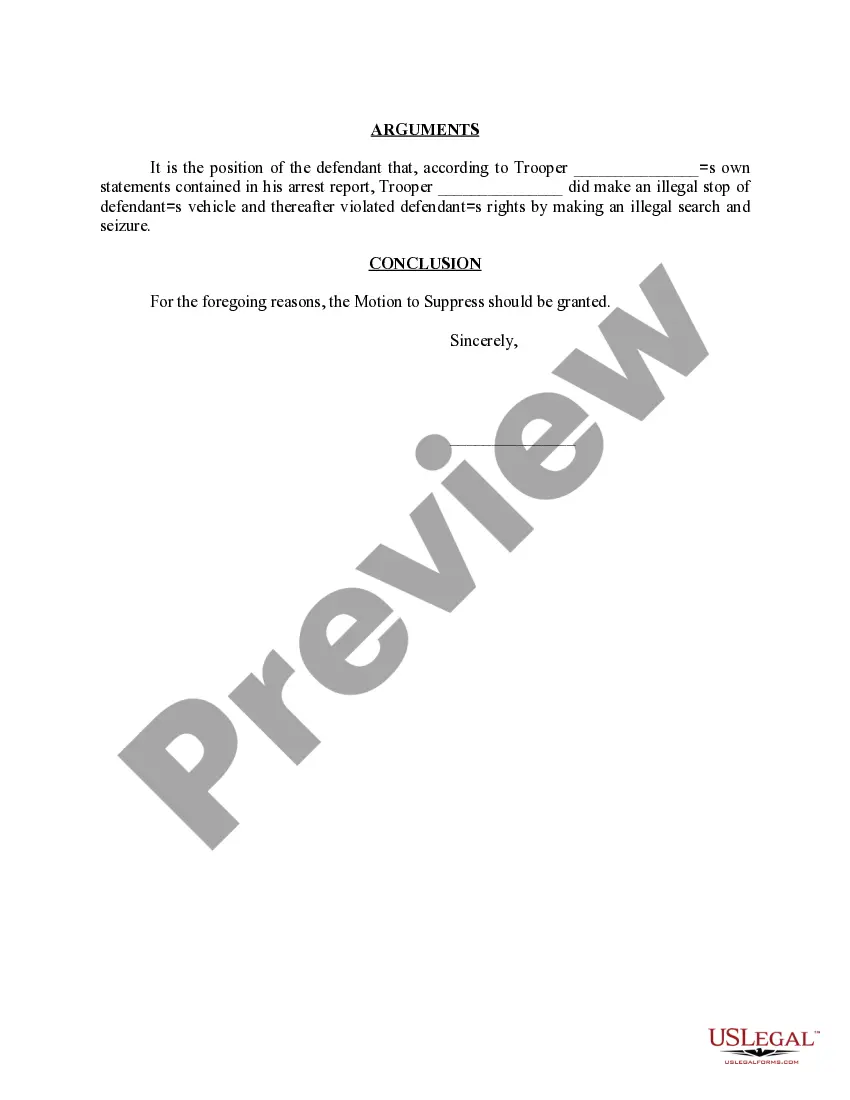
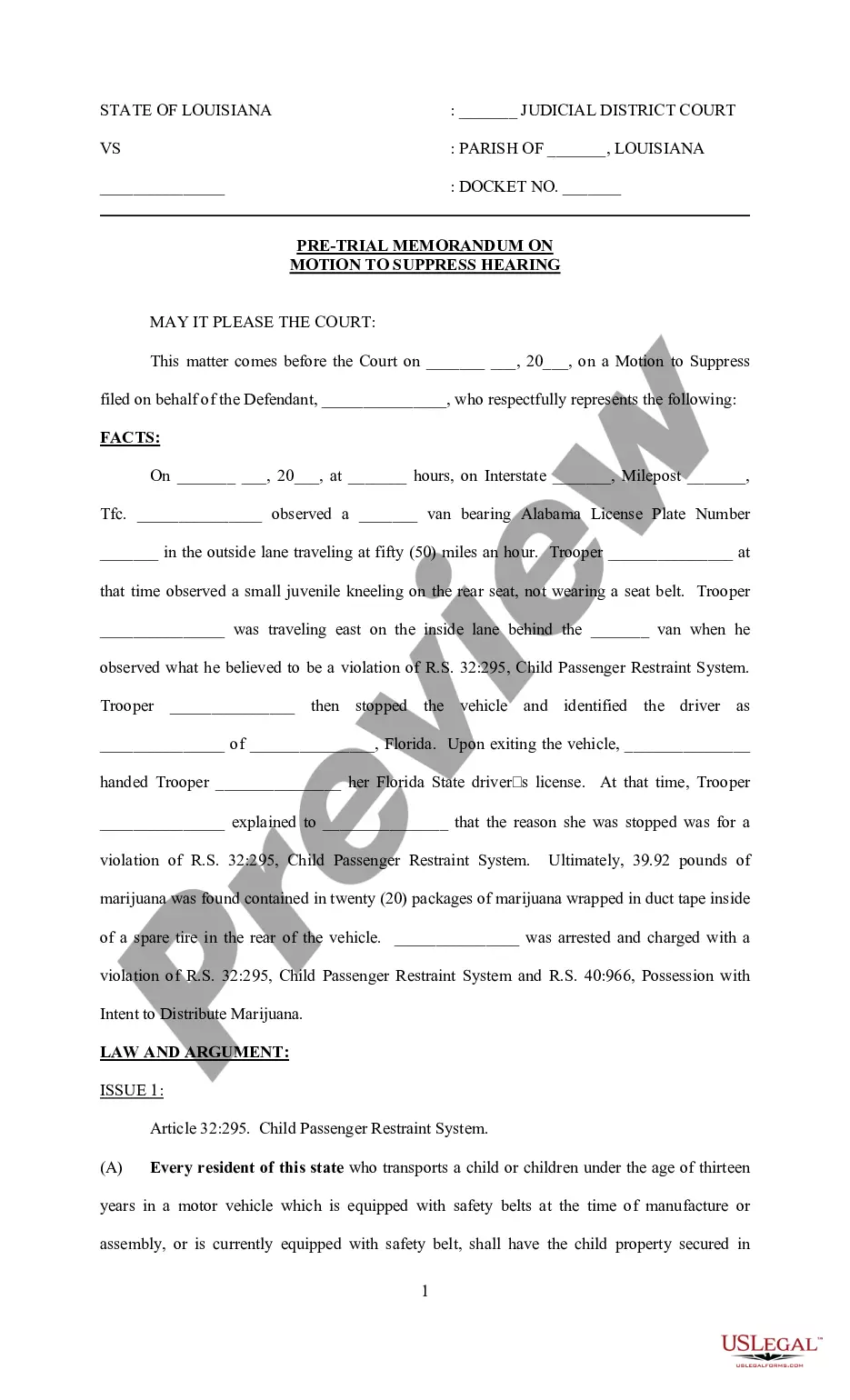
Get your form ready online
Our built-in tools help you complete, sign, share, and store your documents in one place.
Make edits, fill in missing information, and update formatting in US Legal Forms—just like you would in MS Word.
Download a copy, print it, send it by email, or mail it via USPS—whatever works best for your next step.
Sign and collect signatures with our SignNow integration. Send to multiple recipients, set reminders, and more. Go Premium to unlock E-Sign.
If this form requires notarization, complete it online through a secure video call—no need to meet a notary in person or wait for an appointment.
We protect your documents and personal data by following strict security and privacy standards.

Make edits, fill in missing information, and update formatting in US Legal Forms—just like you would in MS Word.

Download a copy, print it, send it by email, or mail it via USPS—whatever works best for your next step.

Sign and collect signatures with our SignNow integration. Send to multiple recipients, set reminders, and more. Go Premium to unlock E-Sign.

If this form requires notarization, complete it online through a secure video call—no need to meet a notary in person or wait for an appointment.

We protect your documents and personal data by following strict security and privacy standards.
Looking for another form?
Form popularity
FAQ
A motion to suppress evidence in Virginia specifically targets evidence that the defense believes was illegally obtained. This can include items found during a search without a warrant or statements given during an unlawful detention. A successful motion can lead to the exclusion of this evidence from the trial, undermining the prosecution's case. Utilizing tools like uslegalforms can help streamline the process of filing a motion suppress uslegal force effectively.
A motion to suppress in Virginia serves as a legal tool for defendants to challenge the admissibility of certain pieces of evidence. This motion typically arises when evidence is allegedly obtained in violation of the defendant's rights, such as through an illegal stop or search. The court will decide whether to allow or deny the evidence based on established legal standards. Familiarity with the motion suppress uslegal force in Virginia is essential for anyone facing charges.
In New Jersey, a motion to suppress is a formal request to exclude evidence obtained without a proper warrant or probable cause. Defendants argue that the evidence violates their constitutional rights, specifically the Fourth Amendment. If successful, this motion can lead to the dismissal of crucial evidence, severely affecting the prosecution's ability to prove its case. Understanding the nuances of the motion suppress uslegal force in New Jersey is vital for effective legal navigation.
A suppression hearing can be both good and bad, depending on the context of the case. For defendants, it offers a chance to challenge unlawfully obtained evidence, which may lead to a stronger defense. Conversely, if the court denies the motion, it may strengthen the prosecution's case against the defendant. Therefore, the outcome of a suppression hearing varies based on individual circumstances surrounding the motion suppress uslegal force.
In a motion to suppress, a defendant seeks to exclude certain evidence from being presented in court. The defense argues that the evidence was obtained through illegal means, such as an unlawful search or seizure. If the court grants the motion, the evidence in question cannot be used against the defendant, impacting the prosecution's case significantly. This underscores the importance of understanding the motion suppress uslegal force.
In Texas, a motion to dismiss generally requires that the filing party demonstrates a lack of legal foundation for the claims made against them. Common grounds for dismissal include jurisdiction issues or failure to state a claim. A well-crafted motion suppress uslegal force highlights the necessity of ensuring that individuals are treated fairly and justly within the legal system.
A motion for spoliation of evidence in Texas requests the court to recognize the destruction or alteration of evidence, which can disadvantage a party in a case. This motion aims to impose penalties on the party responsible for the spoliation. By utilizing a motion suppress uslegal force, a party can argue stronger positions in court when evidence has been mishandled.
In Texas, the burden of proof in a motion to suppress typically rests with the party seeking to suppress the evidence, often the defense. The defense must demonstrate that the evidence was obtained in violation of constitutional rights. This is where a motion suppress uslegal force becomes crucial; it provides a structured approach to show that the evidence cannot be legally used.
A motion to exclude evidence in Texas is a formal request to prevent certain pieces of evidence from being presented at trial. This motion is typically based on arguments related to relevance, reliability, or legality of the evidence. Utilizing a motion suppress uslegal force can be an essential part of a defense strategy to ensure that only fair and lawful evidence is considered.
In Illinois, a motion to suppress evidence serves a similar purpose as in other states. It seeks to exclude evidence from a trial on the grounds that it was obtained illegally. When defendants file a motion suppress uslegal force, they attempt to safeguard their legal protections against wrongful searches or other misconduct by law enforcement.