Custody
Description
Get your form ready online
Our built-in tools help you complete, sign, share, and store your documents in one place.
Make edits, fill in missing information, and update formatting in US Legal Forms—just like you would in MS Word.
Download a copy, print it, send it by email, or mail it via USPS—whatever works best for your next step.
Sign and collect signatures with our SignNow integration. Send to multiple recipients, set reminders, and more. Go Premium to unlock E-Sign.
If this form requires notarization, complete it online through a secure video call—no need to meet a notary in person or wait for an appointment.
We protect your documents and personal data by following strict security and privacy standards.

Make edits, fill in missing information, and update formatting in US Legal Forms—just like you would in MS Word.

Download a copy, print it, send it by email, or mail it via USPS—whatever works best for your next step.

Sign and collect signatures with our SignNow integration. Send to multiple recipients, set reminders, and more. Go Premium to unlock E-Sign.

If this form requires notarization, complete it online through a secure video call—no need to meet a notary in person or wait for an appointment.

We protect your documents and personal data by following strict security and privacy standards.
Looking for another form?


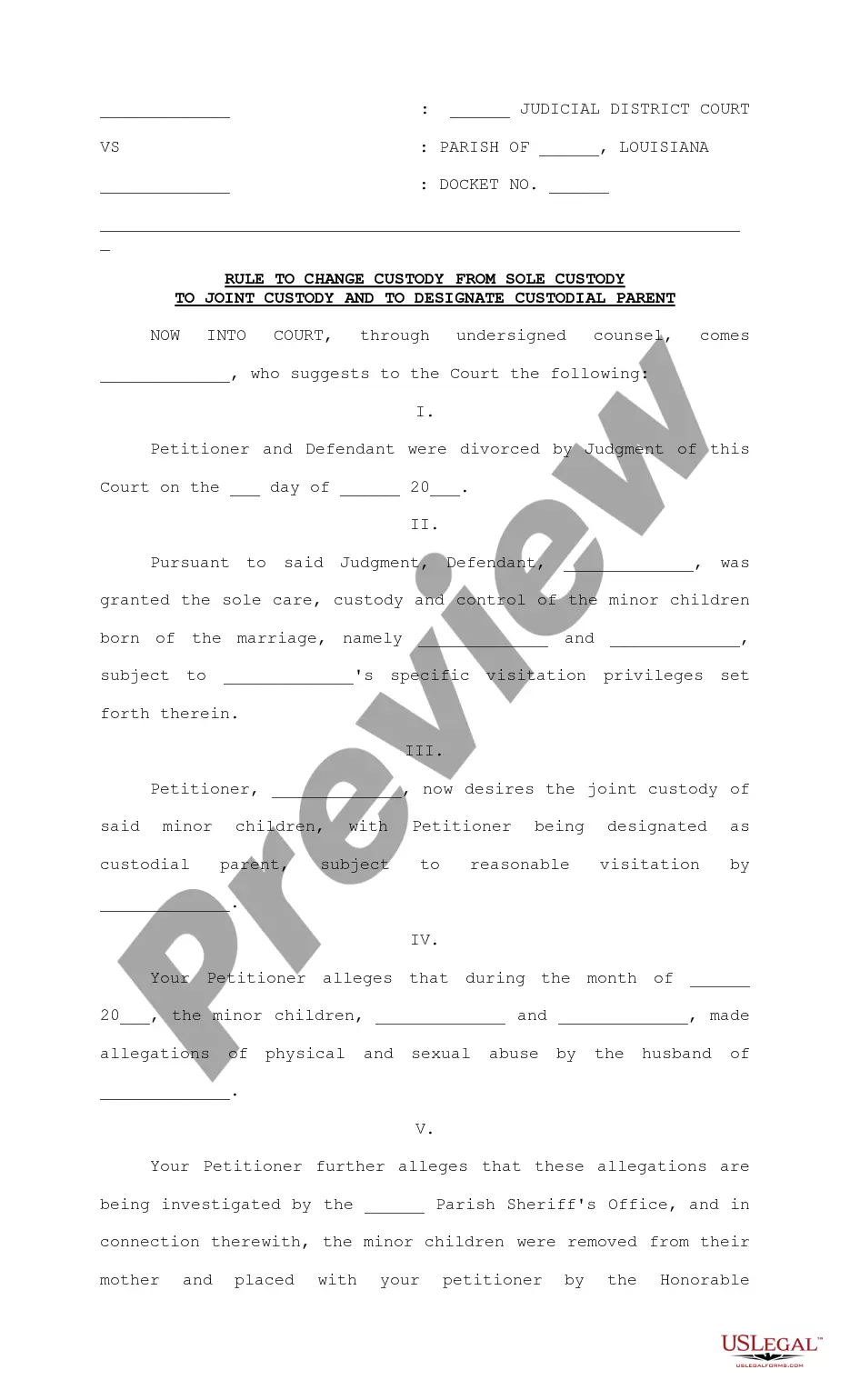
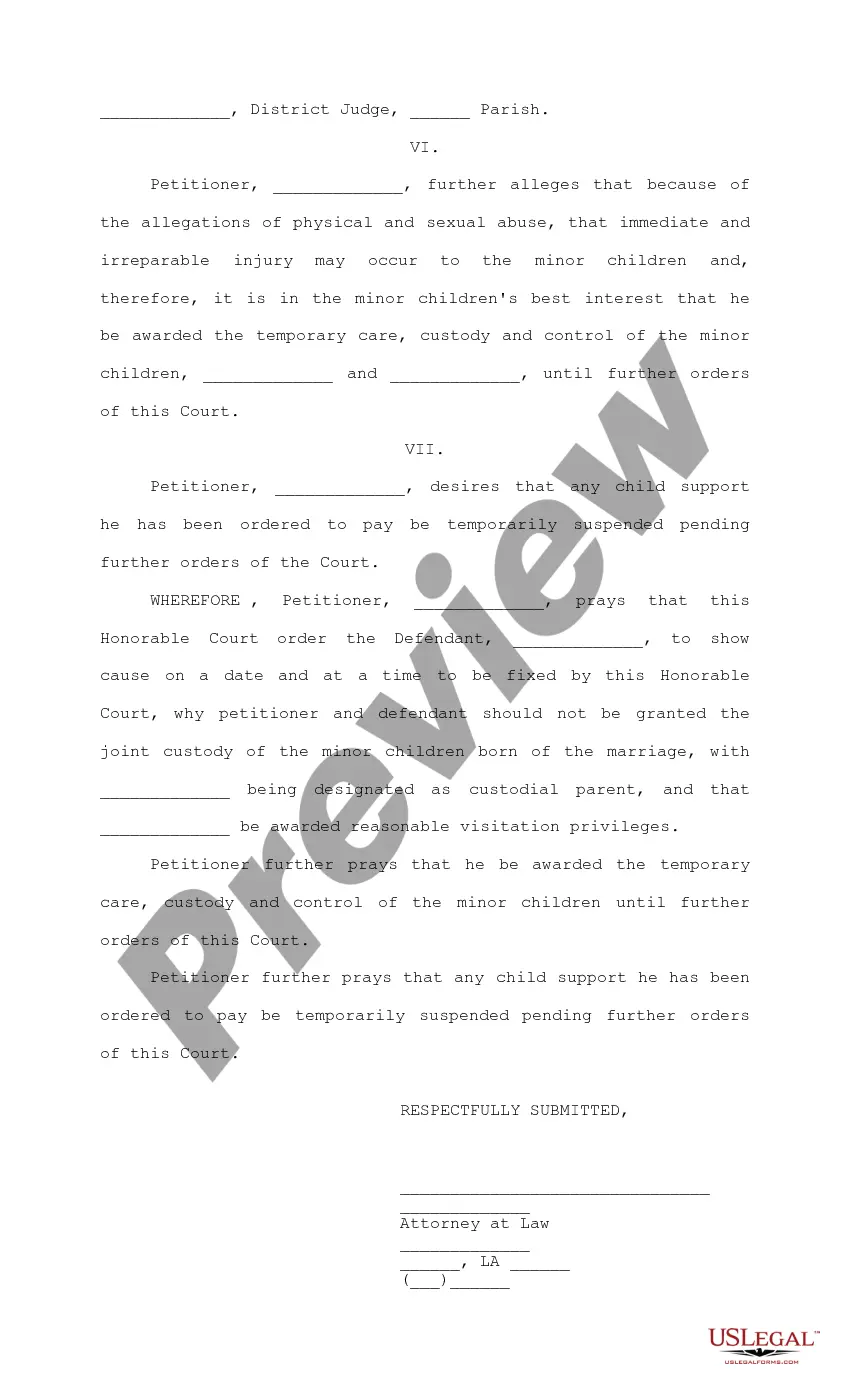
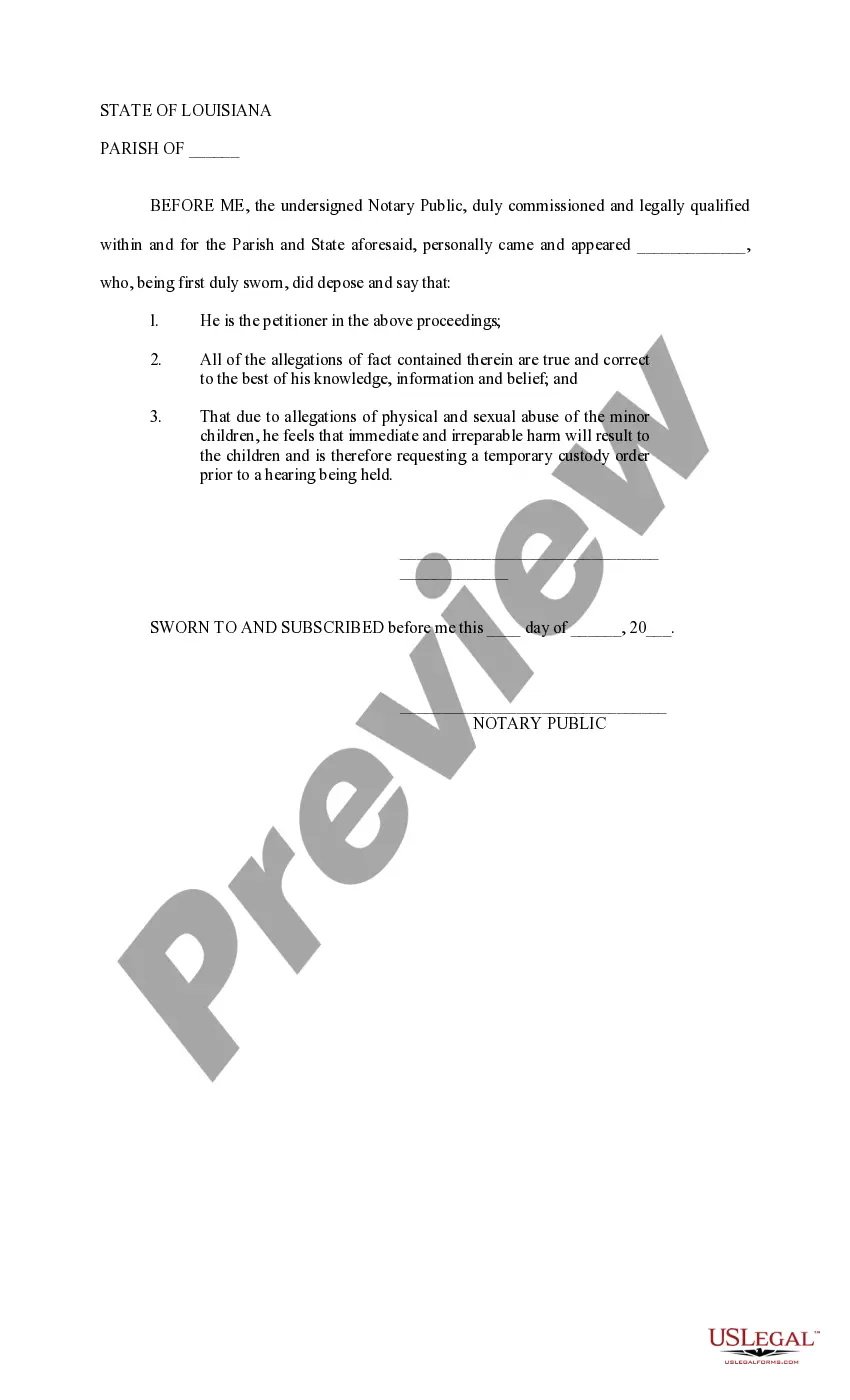
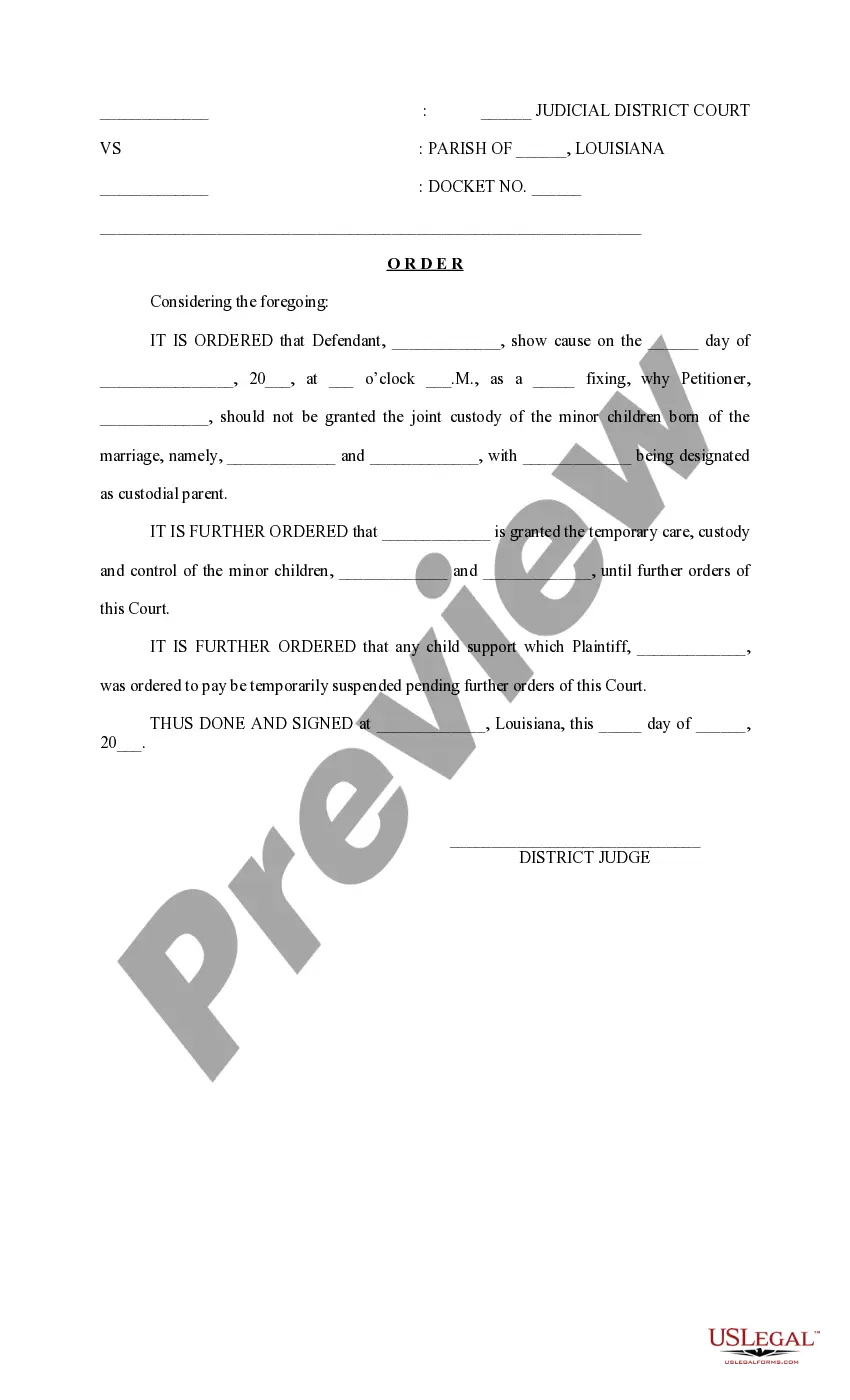
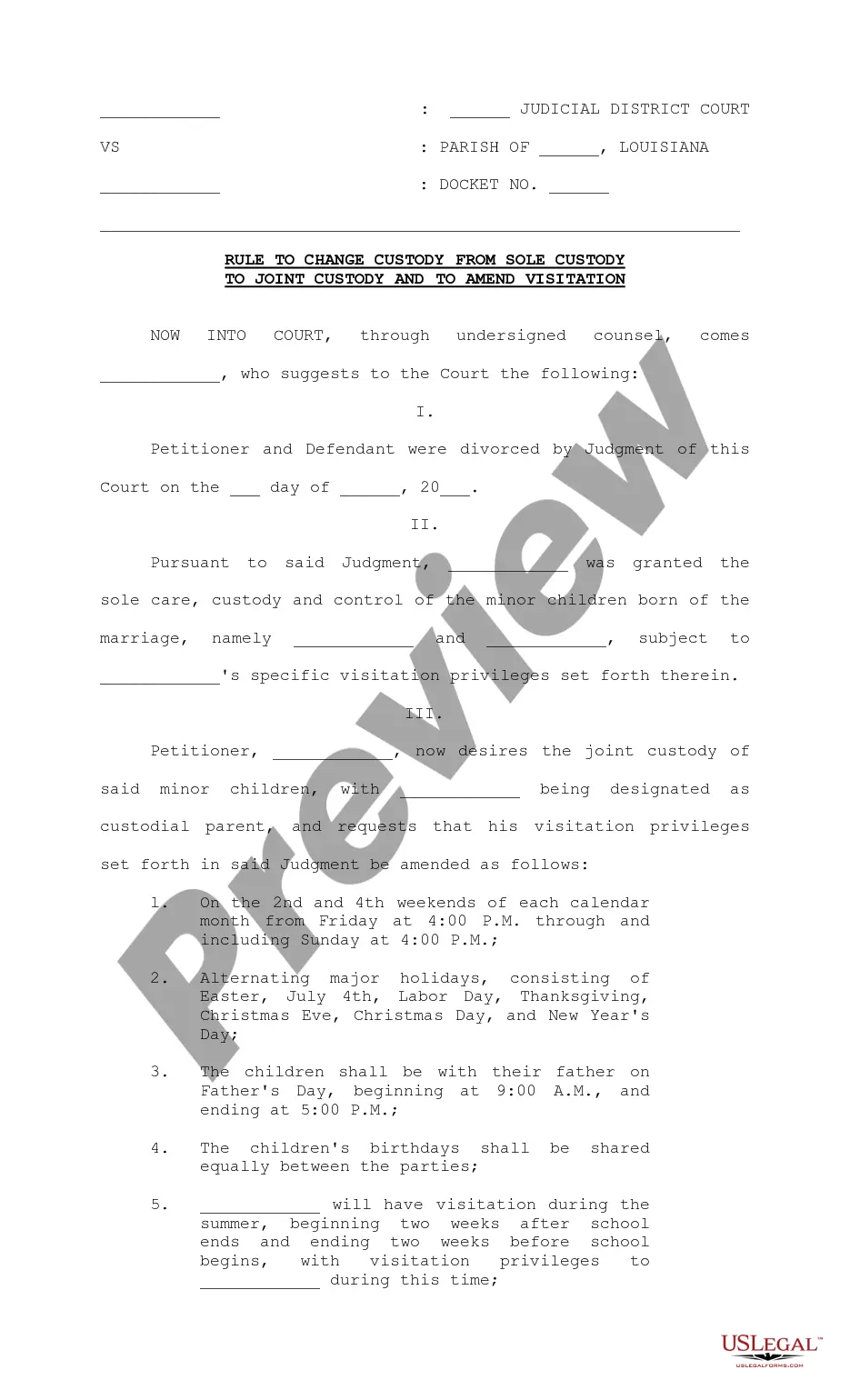
How to fill out Louisiana Rule To Change Custody From Sole To Joint And To Designate Custodial Parent, And Order?
- If you're a returning user, log in to your account and select your necessary form from the library. Verify that your subscription remains active before proceeding.
- If this is your first time, start by previewing the form descriptions to ensure you select the right custody document that fulfills your jurisdiction's requirements.
- Should you find discrepancies in your chosen template, utilize the search feature above to locate the appropriate form that suits your specifications.
- Proceed to purchase the form by clicking the 'Buy Now' button and selecting a subscription plan that fits your needs. You'll need to create an account for access.
- Complete your transaction by entering your payment details using your credit card or PayPal account.
- Finally, download the form and save it to your device. You can also access it anytime through the My Forms section of your profile.
US Legal Forms not only provides a robust collection of custody forms but also offers premium support from experts that guarantee your legal documents are precise and compliant. This user-friendly system minimizes the stress associated with legal paperwork.
Take control of your custody situation today! Start your journey with US Legal Forms and access the most comprehensive library of legal documents designed for your needs.
Form popularity
FAQ
When filing for custody, your document should clearly state your relationship to the child and the type of custody you are seeking. Include a concise summary of your parenting abilities, past involvement, and how you plan to support your child's needs. Using US Legal Forms can simplify this process, providing templates that ensure you include all necessary information and comply with legal requirements for filing.
When speaking to a judge for custody, emphasize your commitment to your child's well-being, and explain your understanding of their needs. Clearly articulate your plans for providing a stable home and your willingness to cooperate with the other parent. Use respectful language and stay focused on your child's best interests, as this approach will resonate positively with the judge overseeing the custody case.
The best evidence for child custody includes documentation that demonstrates your involvement in the child's life, such as school records, medical records, and witness statements from friends or family. Additionally, any records of your parenting time and stability in living conditions can strengthen your case. Presenting a well-documented account can significantly impact a custody decision, making it easier to establish your role as a caring and responsible parent.
When writing a statement for a custody case, begin by outlining relevant facts about your relationship with your child. Include information on your parenting skills, your child's needs, and why you believe custody should be awarded to you. Use clear and straightforward language; consider using US Legal Forms to guide you in creating an effective, organized statement that highlights your strengths as a parent.
In your custody agreement, include details about physical and legal custody arrangements, visitation schedules, and decision-making responsibilities. Clearly outline how you and the other parent will handle important matters such as education, healthcare, and travel. Be specific to avoid misunderstandings, and consider using a platform like US Legal Forms to help you draft a comprehensive and legally sound agreement.
When someone is described as being in custody, it signifies that they are legally confined or detained by authorities. This status can arise during criminal investigations or issues concerning child welfare. If custody impacts your situation, consider utilizing resources like uslegalforms to help clarify your rights and navigate legal options effectively.
Being taken into custody means that law enforcement has detained an individual for questioning or legal proceedings. This action can occur during an arrest or when a person needs protection due to potential harm. If you or someone you know faces this situation, understanding the legal procedures tied to custody can aid in navigating the complexities involved.
To be placed in custody means that an individual is officially taken into the care of law enforcement or legal guardians. This action usually occurs when there are concerns about the individual's safety or if they have been accused of a crime. It’s important to understand the implications of being placed in custody, including legal rights and responsibilities.
Being in custody typically means that an individual is under the care or control of law enforcement or legal authorities. This status often applies to individuals who are detained while facing legal charges or investigations. Knowing your rights regarding custody can significantly impact the legal process and outcomes.
Custody refers to the legal right or duty to care for someone or something, typically in relation to children or property. In family law, custody often pertains to the guardianship of a child following a divorce or separation. Understanding custody is essential for ensuring the welfare of children and making informed decisions about their upbringing.