Demand Letter To Landlord With Tenant
Description


Get your form ready online
Our built-in tools help you complete, sign, share, and store your documents in one place.
Make edits, fill in missing information, and update formatting in US Legal Forms—just like you would in MS Word.
Download a copy, print it, send it by email, or mail it via USPS—whatever works best for your next step.
Sign and collect signatures with our SignNow integration. Send to multiple recipients, set reminders, and more. Go Premium to unlock E-Sign.
If this form requires notarization, complete it online through a secure video call—no need to meet a notary in person or wait for an appointment.
We protect your documents and personal data by following strict security and privacy standards.

Make edits, fill in missing information, and update formatting in US Legal Forms—just like you would in MS Word.

Download a copy, print it, send it by email, or mail it via USPS—whatever works best for your next step.

Sign and collect signatures with our SignNow integration. Send to multiple recipients, set reminders, and more. Go Premium to unlock E-Sign.

If this form requires notarization, complete it online through a secure video call—no need to meet a notary in person or wait for an appointment.

We protect your documents and personal data by following strict security and privacy standards.
Looking for another form?



Form popularity
FAQ
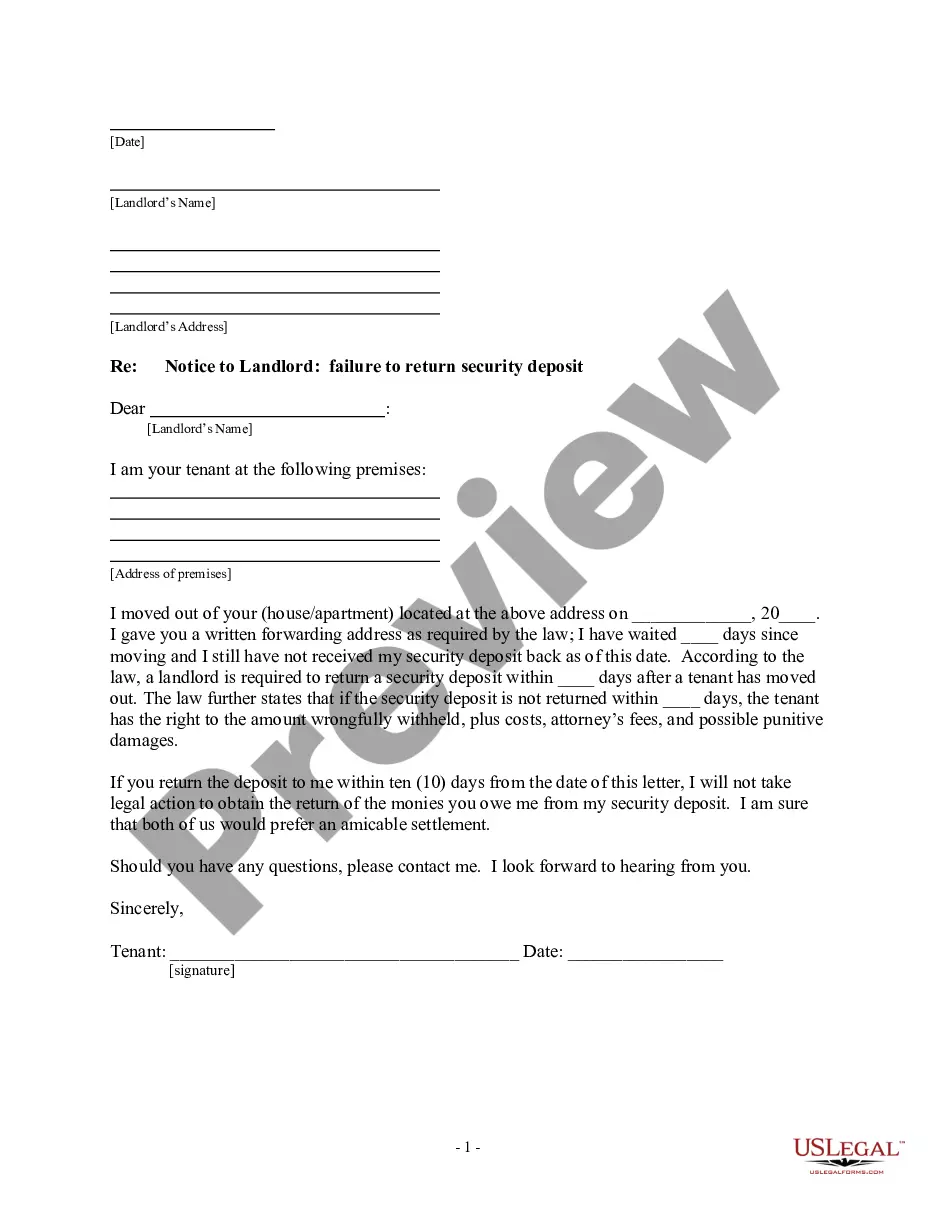
To write a demand letter to your landlord with tenant concerns, start by clearly stating your name and address, along with the landlord’s information. Include a detailed description of the issue you are facing, such as maintenance requests or inability to access common areas. Make sure to articulate what you expect from your landlord, whether it's repairs or a resolution to a dispute. Finally, set a reasonable deadline for a response and keep a copy of the letter for your records.
Getting a landlord letter involves reaching out to your landlord directly and clearly stating your needs. Be polite and specific about the information you require in the letter, and mention any relevant dates or agreements. This clarity helps your landlord prepare the document quickly. Additionally, platforms like ulegalforms can provide you with effective templates, making this process smoother for you.
To obtain a landlord letter, you first need to determine the purpose of the letter and then communicate this to your landlord. Prepare a concise summary of your rental history, including payment dates and any lease agreements. A well-structured request helps your landlord process your inquiry promptly. For a more streamlined process, consider using ulegalforms, which offers templates to assist you in drafting the request effectively.
To request a landlord reference letter, you should reach out directly to your landlord either through email or a formal letter. Be clear about the reason for your request, mentioning how the letter will be used, such as for future rental applications. Providing details regarding your tenancy, like duration and payment history, can significantly help your landlord in writing the letter. This approach builds a cooperative relationship, making it easier to obtain a favorable response.
To write a demand letter, begin with your contact information and the date, followed by the recipient's details. Clearly state the purpose of the letter and include all relevant facts. Be direct about what you are requesting and provide a deadline for a response. Crafting a strong demand letter to landlord with tenant can be made easier using platforms like USLegalForms, which offers templates to guide you through the process.
As a tenant, writing a letter to your landlord starts with addressing them respectfully. Clearly state the purpose of your letter in the opening paragraph, whether it's a request for repairs or a change in terms. Provide any necessary details to support your request, and end with a polite closing. This is especially important in a demand letter to landlord with tenant matters, where constructive communication can lead to positive outcomes.
When writing a recommendation letter for a tenant, start by providing your relationship with the tenant and how long they have lived in your property. Highlight their positive qualities, such as reliability and cleanliness. Finally, invite potential landlords to contact you for further information. This type of recommendation can be crucial in building trust in relationships involving demand letter to landlord with tenant scenarios.
To write a dispute letter to a landlord, first outline the specific issue you wish to address. Clearly explain your concerns and provide any relevant details, such as dates and facts. Be respectful in your tone, and express your desire for a resolution. This approach will help, especially in a demand letter to landlord with tenant situations, where clear communication is essential.
To start a letter to your landlord, clearly state your name and address at the top. Then, include the date, followed by the landlord's name and address. Begin the letter with a polite greeting, such as 'Dear Landlord’s Name.' If your letter is a demand letter to landlord with tenant matters, make sure to specify the issue right away.
