Living Life Benefits
Description

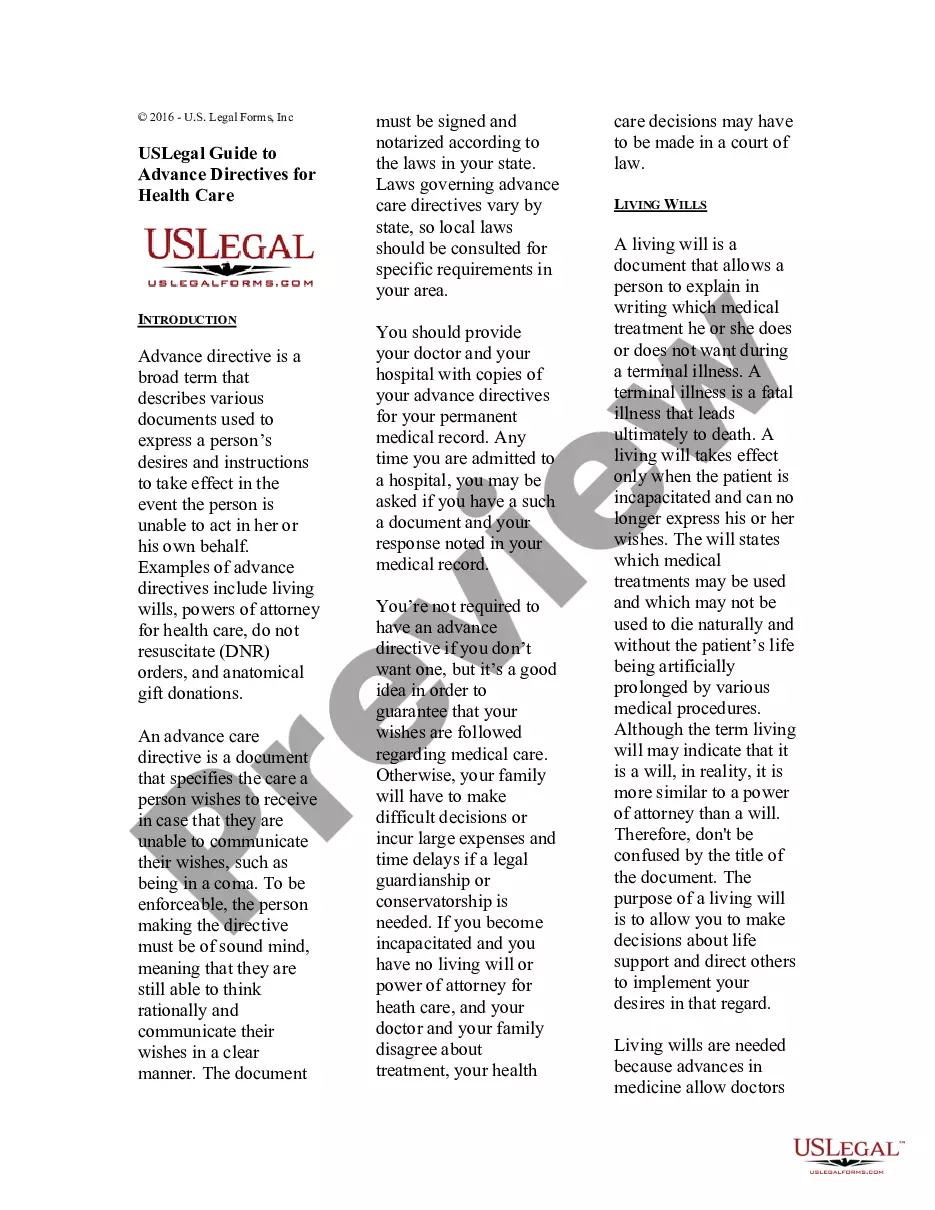
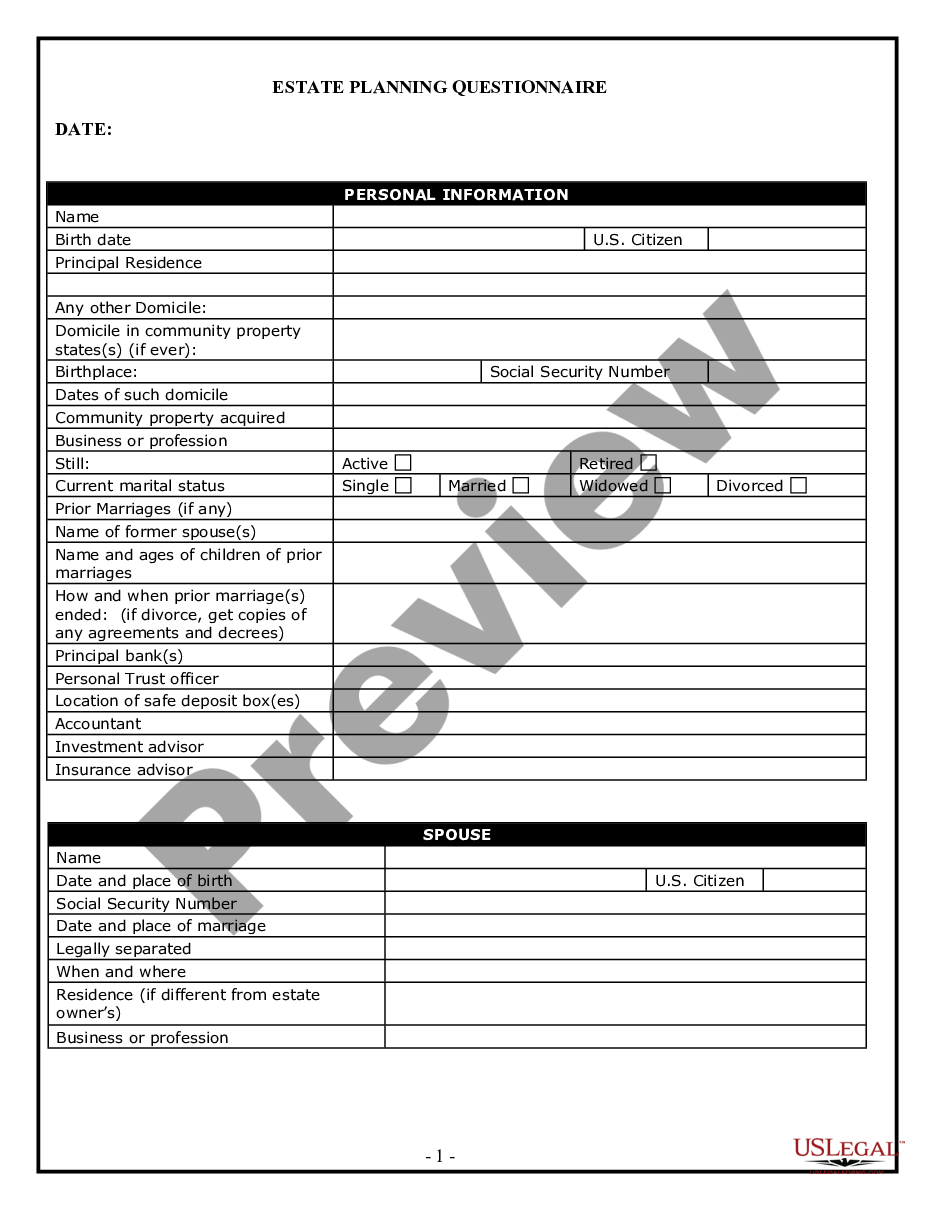
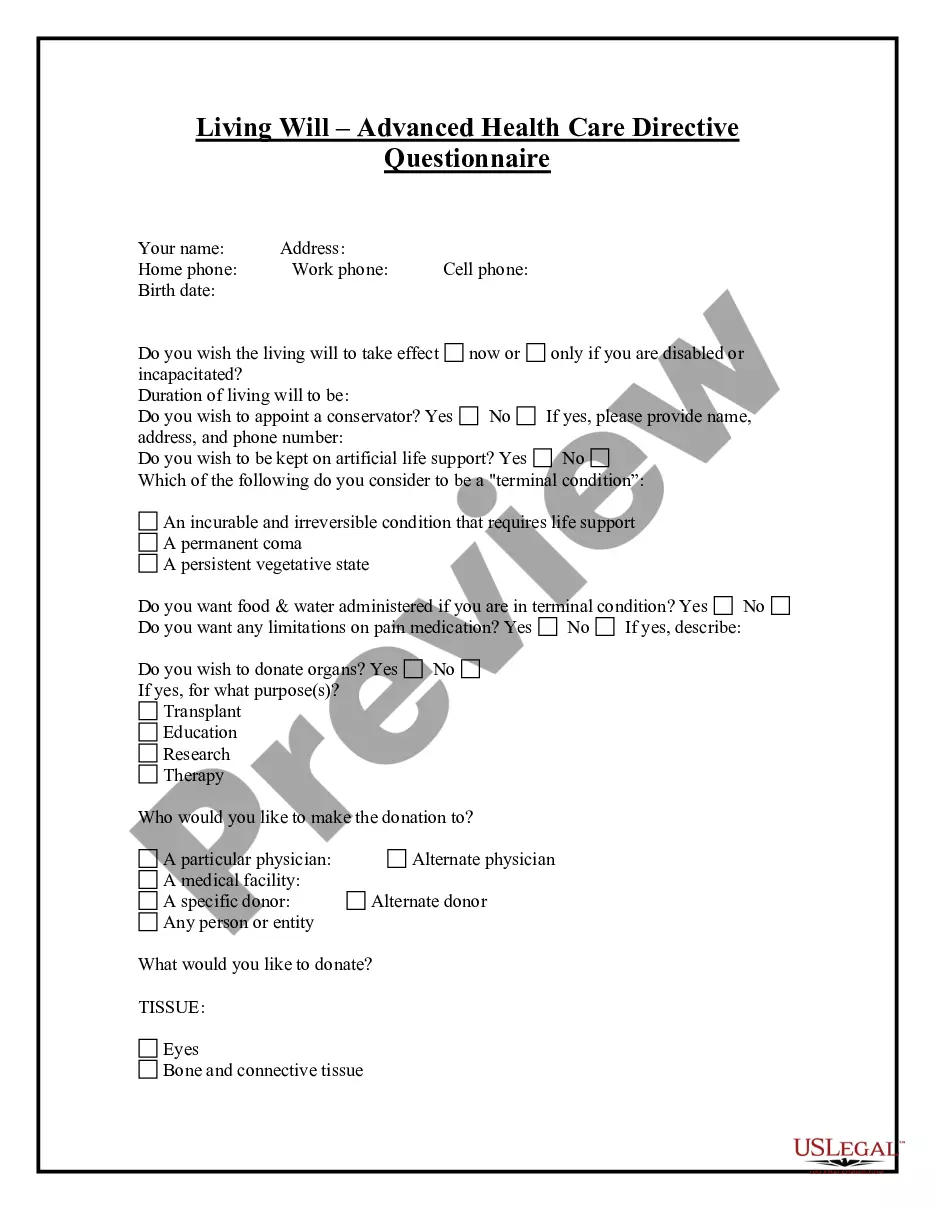
Get your form ready online
Our built-in tools help you complete, sign, share, and store your documents in one place.
Make edits, fill in missing information, and update formatting in US Legal Forms—just like you would in MS Word.
Download a copy, print it, send it by email, or mail it via USPS—whatever works best for your next step.
Sign and collect signatures with our SignNow integration. Send to multiple recipients, set reminders, and more. Go Premium to unlock E-Sign.
If this form requires notarization, complete it online through a secure video call—no need to meet a notary in person or wait for an appointment.
We protect your documents and personal data by following strict security and privacy standards.

Make edits, fill in missing information, and update formatting in US Legal Forms—just like you would in MS Word.

Download a copy, print it, send it by email, or mail it via USPS—whatever works best for your next step.

Sign and collect signatures with our SignNow integration. Send to multiple recipients, set reminders, and more. Go Premium to unlock E-Sign.

If this form requires notarization, complete it online through a secure video call—no need to meet a notary in person or wait for an appointment.

We protect your documents and personal data by following strict security and privacy standards.
Looking for another form?






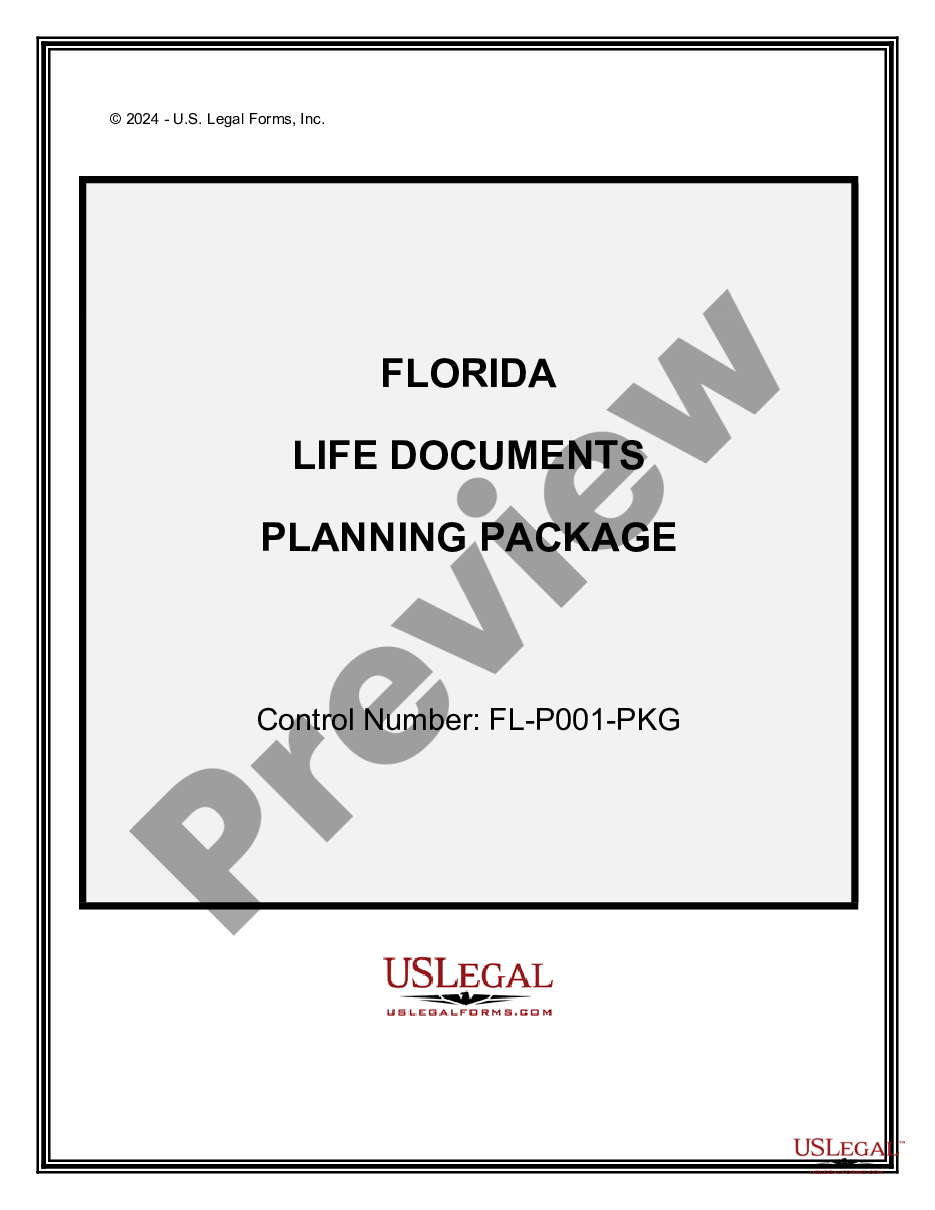
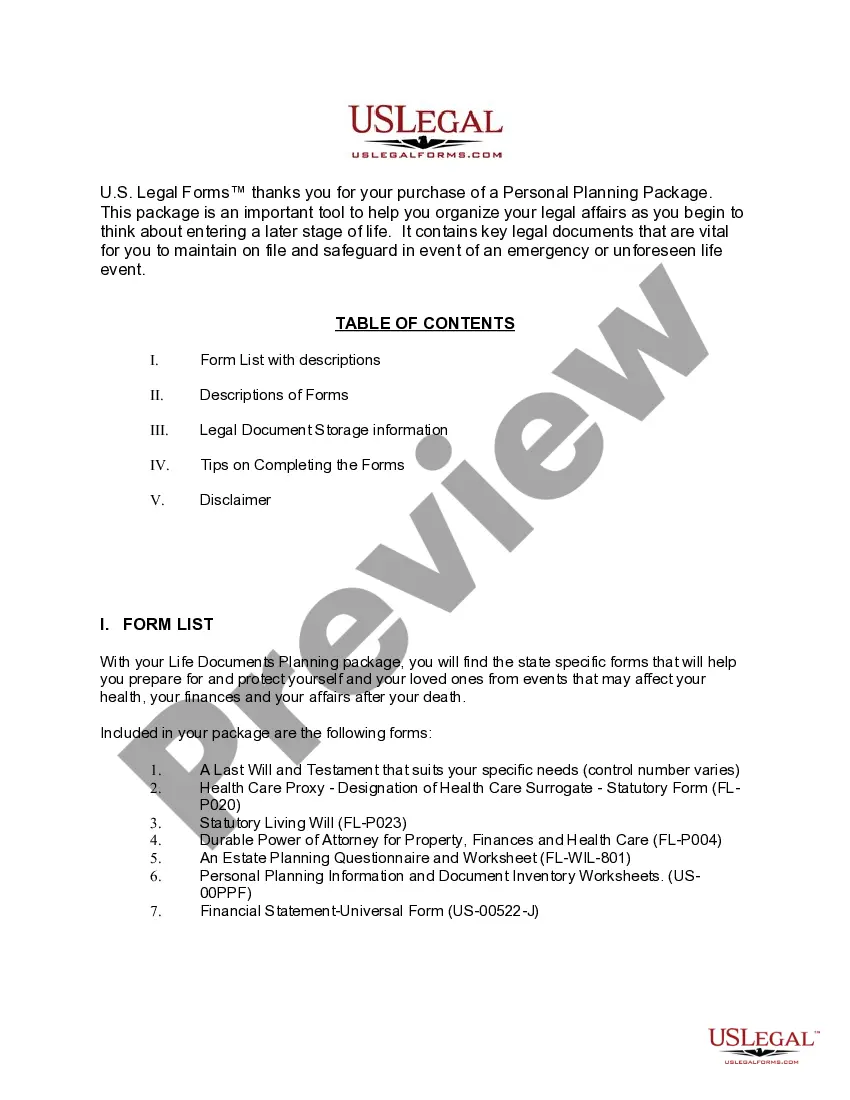
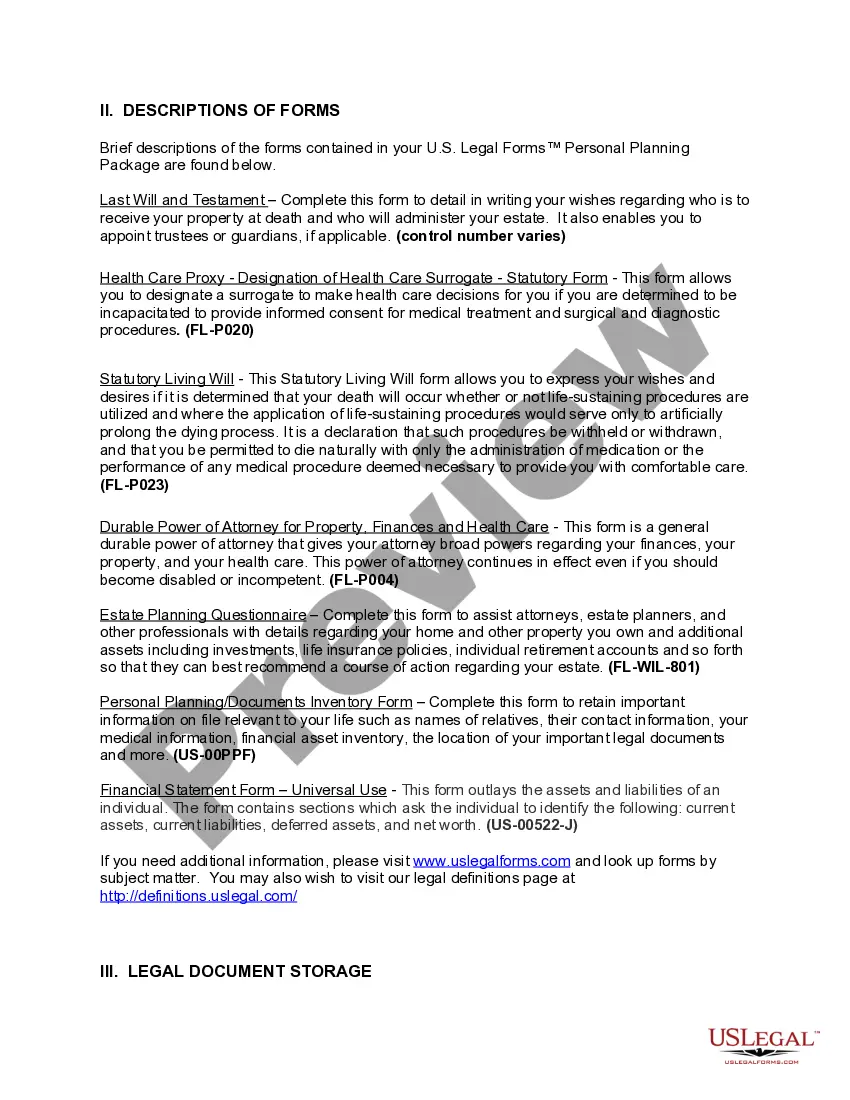
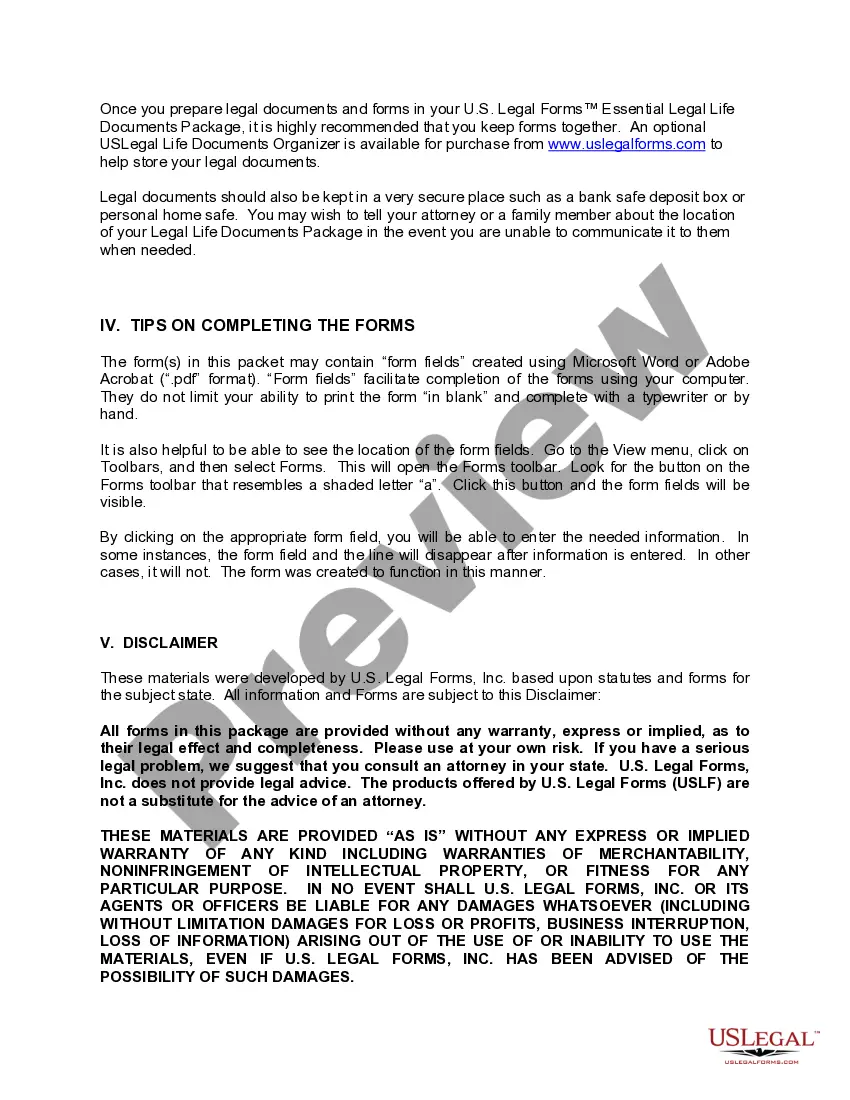
How to fill out Florida Life Documents Planning Package, Including Will, Power Of Attorney And Living Will?
Securing a reliable location to obtain the latest and pertinent legal templates represents half the challenge of engaging with bureaucracy.
Identifying the appropriate legal documents necessitates precision and meticulousness, which is why it is vital to acquire samples of Living Life Benefits solely from reputable sources, such as US Legal Forms. An incorrect template will squander your time and prolong the situation you are facing. With US Legal Forms, you have minimal concerns.
Eliminate the inconvenience that comes with your legal documentation. Explore the extensive US Legal Forms library to discover legal templates, assess their relevance to your situation, and download them immediately.
- Utilize the catalog navigation or search bar to locate your sample.
- Review the form’s description to verify if it meets the requirements of your state and locality.
- Access the form preview, if available, to confirm the form is indeed the one you need.
- Return to the search and seek the appropriate document if the Living Life Benefits does not suit your needs.
- If you are confident about the form’s relevance, download it.
- If you are a registered user, click Log in to verify and access your chosen forms in My documents.
- If you do not have an account yet, click Buy now to acquire the template.
- Choose the pricing option that aligns with your preferences.
- Proceed to the registration to finalize your transaction.
- Conclude your purchase by selecting a payment method (credit card or PayPal).
- Choose the file format for downloading Living Life Benefits.
- Once you have the form on your device, you may modify it with the editor or print it and fill it out manually.
Form popularity
FAQ
A living benefit rider guarantees a payout while the annuitant is still alive. A death benefit rider protects beneficiaries against a decline in the annuity's value.
What are examples of living benefits? Living benefits are typically attached to your life insurance policy in the form of riders like terminal illness riders, critical illness riders, and long-term care riders and cash value benefits like loans and withdrawals.
Living benefits refer to the cash benefits available to the insured after they have paid premiums over a specific period. The cash values and the endowment proceeds of a permanent life insurance policy are considered living benefits since they are made available to the insured while they are alive.
Living benefits essentially allow the insured to access money from the policy's death benefit while they're still alive. These funds can be used to pay for expenses associated with terminal or chronic illness, such as medical care, hospice or nursing home care, in-home caretakers and more.
You may add living benefits to your term or permanent life insurance policy through a rider, which costs extra. Typically, you may have access to your life insurance policy's living benefits once a triggering event occurs, like a terminal illness or disability.