Trust Amendment
Description
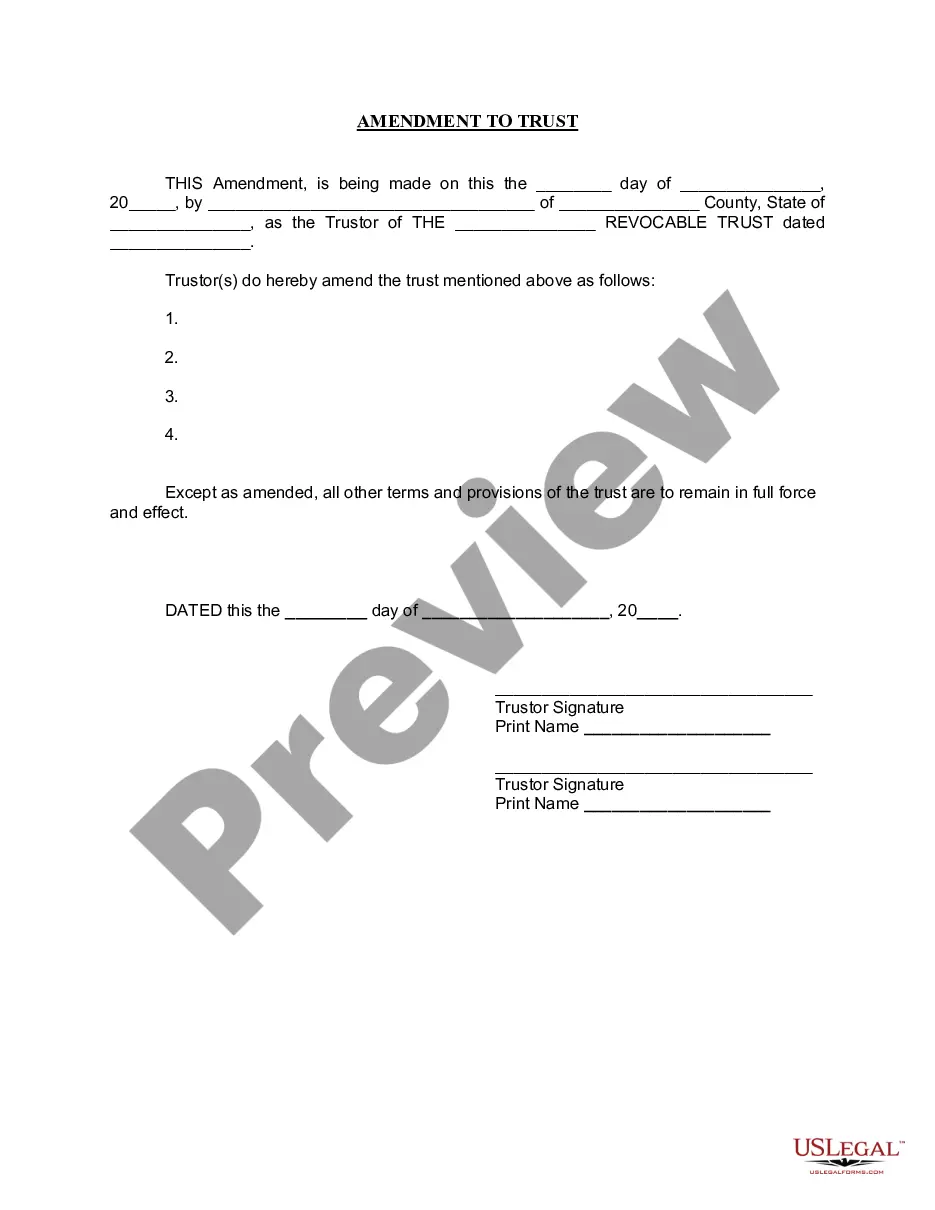
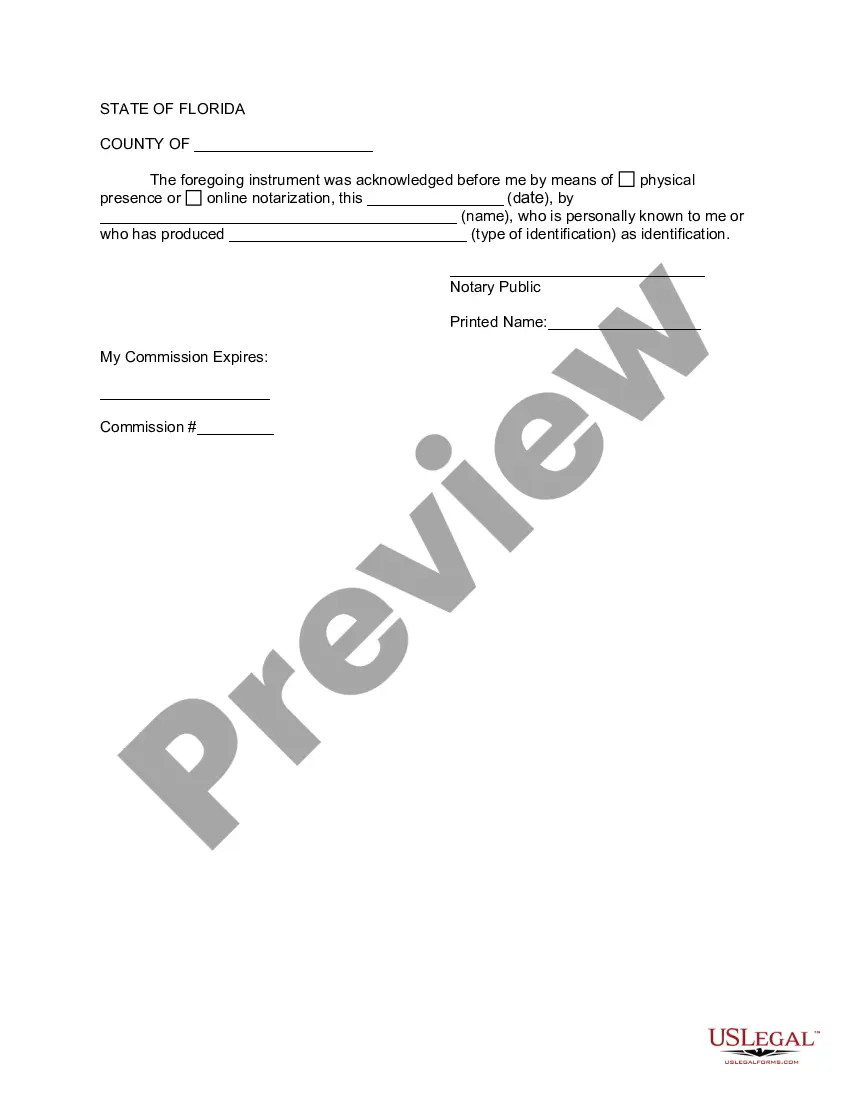

Get your form ready online
Our built-in tools help you complete, sign, share, and store your documents in one place.
Make edits, fill in missing information, and update formatting in US Legal Forms—just like you would in MS Word.
Download a copy, print it, send it by email, or mail it via USPS—whatever works best for your next step.
Sign and collect signatures with our SignNow integration. Send to multiple recipients, set reminders, and more. Go Premium to unlock E-Sign.
If this form requires notarization, complete it online through a secure video call—no need to meet a notary in person or wait for an appointment.
We protect your documents and personal data by following strict security and privacy standards.

Make edits, fill in missing information, and update formatting in US Legal Forms—just like you would in MS Word.

Download a copy, print it, send it by email, or mail it via USPS—whatever works best for your next step.

Sign and collect signatures with our SignNow integration. Send to multiple recipients, set reminders, and more. Go Premium to unlock E-Sign.

If this form requires notarization, complete it online through a secure video call—no need to meet a notary in person or wait for an appointment.

We protect your documents and personal data by following strict security and privacy standards.
Looking for another form?





How to fill out Florida Amendment To Living Trust?
- Log in to your US Legal Forms account if you’re a returning user. Ensure your subscription is active to access the required templates.
- Review the form description and preview mode to confirm that it aligns with your needs and jurisdictional standards.
- If the chosen template doesn't meet your requirements, use the Search tab to explore additional options until you find the perfect fit.
- Once satisfied with your selection, click on the Buy Now button and select your preferred subscription plan. Create an account for full access to the document library.
- Complete your payment process using your credit card or PayPal to finalize your subscription.
- After purchasing, download the trust amendment form to your device from the 'My documents' section in your account.
In conclusion, US Legal Forms empowers users with its extensive library and expert assistance, ensuring you have the tools necessary for precise legal documentation. Don't hesitate to explore the platform for your trust amendment needs.
Start your journey with US Legal Forms today and streamline your legal document preparation!
Form popularity
FAQ
Unlike wills, a trust does not utilize a codicil; instead, you can execute a trust amendment. A trust amendment outlines changes or additions to the original trust document and must comply with specific legal standards. For clarity and proper legal standing, using a structured platform like US Legal Forms can simplify the process of creating a trust amendment and help ensure all legal requirements are met.
Handwritten changes to a trust, often referred to as holographic amendments, can be legal, but they must meet certain criteria. Firstly, the changes should clearly express your intentions regarding the trust amendment. Furthermore, it is essential to ensure that the handwritten amendments are signed and dated appropriately. To avoid potential issues and ensure compliance with state laws, consider using official documents through platforms like US Legal Forms for trust amendments.
To write a codicil to a trust, begin by stating its purpose and referencing the trust you are modifying. Clearly outline what changes you wish to make and ensure that the language is unambiguous. After drafting, sign and date the codicil, observing any required legal formalities in your state to secure its enforceability.
An example of a written codicil might start with a statement like 'I, Your Name, hereby amend my will dated Date by adding the following provision…'. This document will then detail the changes you wish to make, whether it’s adding or removing beneficiaries. Clarity and precision are key, so consider using templates from platforms like US Legal Forms to guide your drafting.
An amendment to a trust agreement is a legal document that modifies the terms of an existing trust. This amendment outlines specific changes, such as altering beneficiaries or changing management provisions. Understanding the nuances of a trust amendment can be complex, which is why using a service like US Legal Forms is beneficial to ensure all legal requirements are met.
To amend a trust document, create an amendment that specifies which parts of the original trust you wish to modify. Include clear and concise language that outlines the changes. Once you draft the amendment, sign it and follow your state’s laws for witnessing or notarizing the document for added validity.
A codicil does not have to be handwritten, but certain states may require specific formalities for it to be valid. You can type your codicil if it follows your state’s requirements for signatures and witnesses. It’s always best to consult an expert or use a service like US Legal Forms to ensure compliance.
Yes, you can write a codicil yourself, but it is important to follow your state’s legal requirements. A codicil modifies your existing will, and it is essential to clearly state your intentions and changes. Using a platform like US Legal Forms can help ensure that you meet all legal criteria while drafting your codicil.
To write an amendment to a trust, start by clearly stating the document title, like 'Amendment to the Trust Name'. Next, identify the specific sections you wish to change and clearly outline each amendment. Finally, sign and date the document in accordance with your state's laws to ensure validity.
A trust amendment refers to the process of altering the terms of an existing trust document. This legal adjustment allows you to update beneficiaries, change the distribution of assets, or address any specific needs as circumstances evolve. It is important to understand that a trust amendment must follow the original trust's rules and legal requirements to be valid. Using a reliable platform like US Legal Forms can simplify the process of creating a trust amendment, ensuring your changes are properly documented and enforceable.