Florida Amendment to Living Trust
About this form
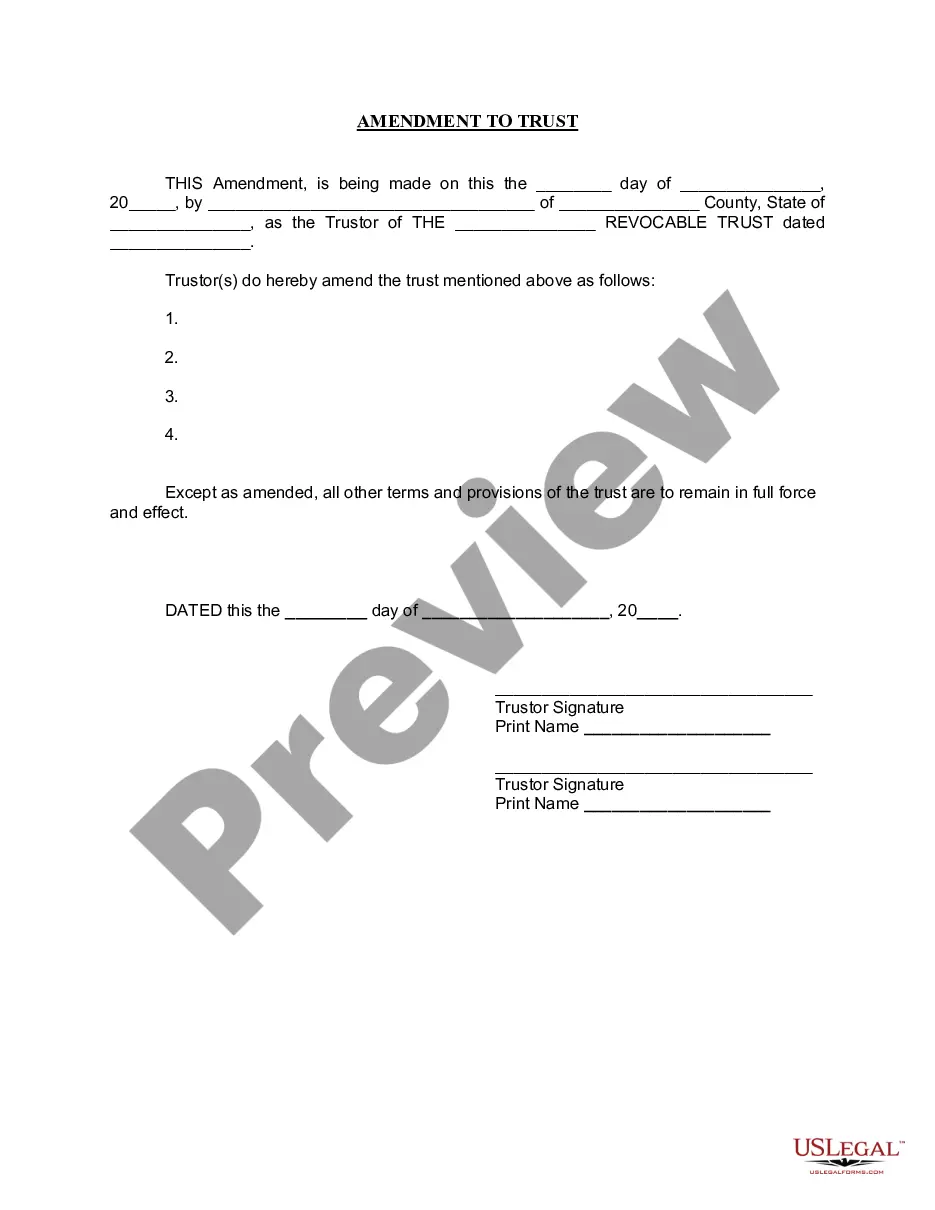
The Amendment to Living Trust is a legal document that allows the Trustor to make changes to an existing living trust without altering its fundamental purpose. This form is specifically designed for individuals who wish to update provisions within their living trust, such as asset allocations or beneficiaries, while retaining all other terms. Unlike creating a new trust, amending a living trust provides a simpler and more efficient way to modify trust provisions in estate planning.
Key components of this form
- Date of the amendment.
- Name of the Trustor and their county and state of residence.
- Name of the trust being amended, including its original date.
- Specific amendments being made to the trust.
- Trustor's signatures and printed names.
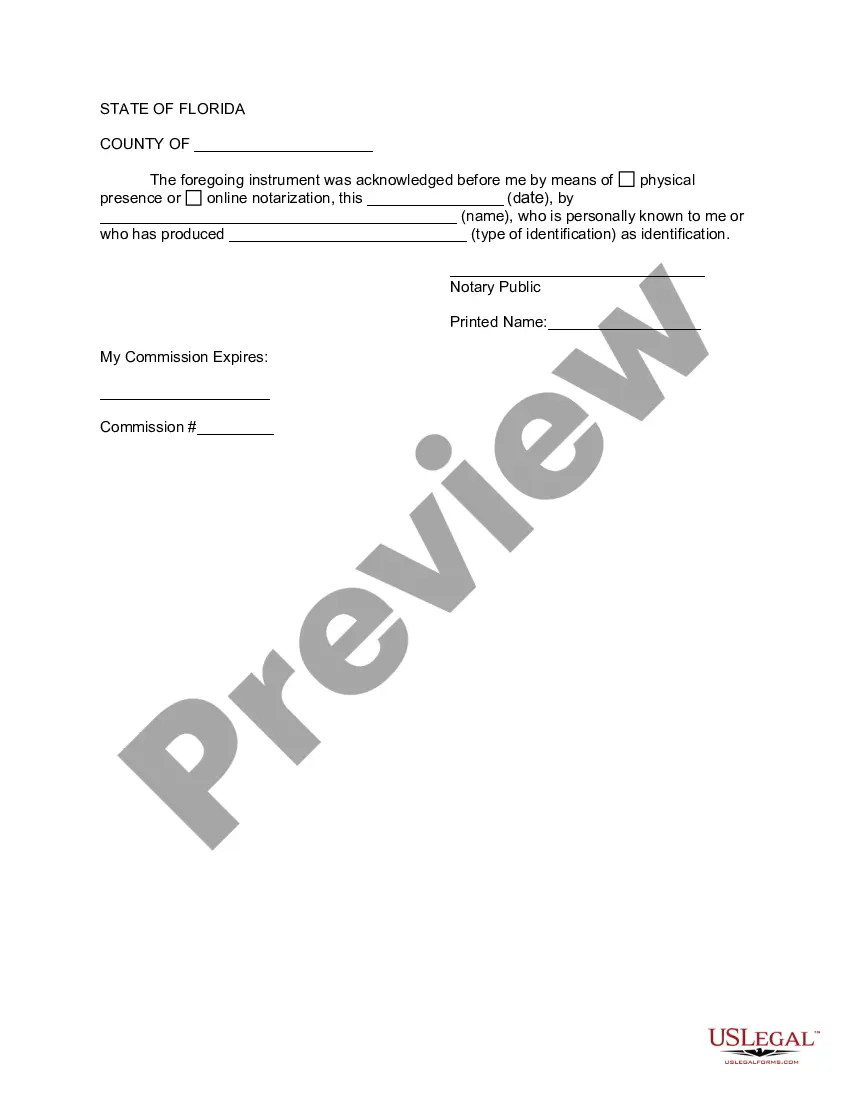
- Notary acknowledgment block including details about the notary and identification used.



When this form is needed
This form should be used when a Trustor needs to amend their existing living trust. Typical scenarios for using this amendment include changing beneficiaries, adjusting the distribution of assets, or updating the terms to reflect new circumstances such as marriage, divorce, or the birth of a child. It allows for flexibility in estate planning while ensuring that the overall structure of the trust remains intact.
Who should use this form
- Individuals who have established a living trust and wish to modify its terms.
- Trustors looking to ensure that their estate plan aligns with current wishes or circumstances.
- Those who want a straightforward method for updating their living trust without initiating a new trust.
How to prepare this document
- Identify the date of the amendment.
- Fill in the name and address of the Trustor, including county and state.
- Specify the name of the trust being amended and its original date.
- Clearly outline the amendments being made to the trust.
- Have all Trustors sign the document in the presence of a notary public.
- Ensure the notary completes their section with the appropriate details.
Does this form need to be notarized?
Yes, this form must be notarized to be legally valid. The signatures of the Trustor(s) must be acknowledged in front of a notary public, ensuring that the identity of the signers is verified. US Legal Forms offers integrated online notarization with 24/7 availability, secure video calls, and legal equivalence, making the process straightforward and efficient.
Get your form ready online
Our built-in tools help you complete, sign, share, and store your documents in one place.
Make edits, fill in missing information, and update formatting in US Legal Forms—just like you would in MS Word.
Download a copy, print it, send it by email, or mail it via USPS—whatever works best for your next step.
Sign and collect signatures with our SignNow integration. Send to multiple recipients, set reminders, and more. Go Premium to unlock E-Sign.
If this form requires notarization, complete it online through a secure video call—no need to meet a notary in person or wait for an appointment.
We protect your documents and personal data by following strict security and privacy standards.

Make edits, fill in missing information, and update formatting in US Legal Forms—just like you would in MS Word.

Download a copy, print it, send it by email, or mail it via USPS—whatever works best for your next step.

Sign and collect signatures with our SignNow integration. Send to multiple recipients, set reminders, and more. Go Premium to unlock E-Sign.

If this form requires notarization, complete it online through a secure video call—no need to meet a notary in person or wait for an appointment.

We protect your documents and personal data by following strict security and privacy standards.
Avoid these common issues
- Failing to specify amendments clearly, leading to confusion.
- Not obtaining the required signatures from all Trustors involved.
- Neglecting to have the form notarized, where required.
- Using outdated information about the trust.
Benefits of completing this form online
- Instant access to a legally vetted document tailored for your needs.
- Easy editing options to customize the form as necessary.
- Secure electronic delivery, ensuring privacy and compliance.
Quick recap
- The Amendment to Living Trust allows for updates to existing trusts without complete restructuring.
- It is essential to clearly outline the amendments made within the document.
- Notarization is required for the document to be legally valid.
Looking for another form?



Form popularity
FAQ
Updating a living trust in Florida can require various steps depending on the extent of the changes. You might need to create an amendment for minor updates or, in some cases, establish a completely new trust. Always ensure that any update complies with Florida law by clearly outlining the changes and signing the new documents in front of witnesses. For a streamlined experience, consider utilizing the resources available on the US Legal Forms platform to manage your Florida amendment to living trust.
Writing an amendment to a living trust involves creating a document that outlines the specific changes you want to implement. Start with a title that indicates this is an amendment and reference the original trust document. Include the particular sections of the trust you are changing and provide the new details. If you're uncertain about the process, using US Legal Forms can simplify the drafting process for your Florida amendment to living trust.
To amend a living trust in Florida, you typically start by drafting a formal amendment document. This document should clearly state the changes you wish to make to your existing trust. Once you have prepared the amendment, sign it in front of a notary to ensure its legality. For assistance, consider using the US Legal Forms platform, which provides templates tailored for Florida amendments to living trusts.
You can change your living trust, usually without incurring lawyer bills.Because you and your spouse made the trust together, you should both sign the amendment, and when you sign it, get your signatures notarized, just like the original. Another way to go is to create a "restatement" of your trust.
A trust restatement involves rewriting the original trust agreement with the changes included. You must be clear that you are not revoking the original trust, simply restating it. Like an amendment, you may need to execute the restatement in front of a notary and the Trustee may also need to sign the restatement.
Locate the original trust. The grantor must locate the original trust documents and identify the specific provisions that require amendment. Prepare an amendment form. Get the amendment form notarized. Attach amendment form to original trust.
An amendment to a trust is not required to be notarized or witnessed unless the terms of the original trust require it.
You can change your living trust, usually without incurring lawyer bills.Because you and your spouse made the trust together, you should both sign the amendment, and when you sign it, get your signatures notarized, just like the original. Another way to go is to create a "restatement" of your trust.
Generally, no. Most living or revocable trusts become irrevocable upon the death of the trust's maker or makers. This means that the trust cannot be altered in any way once the successor trustee takes over management of it.
Locate the original trust. The grantor must locate the original trust documents and identify the specific provisions that require amendment. Prepare an amendment form. Get the amendment form notarized. Attach amendment form to original trust.