Ohio Construction Contract Cost Plus or Fixed Fee
Understanding this form
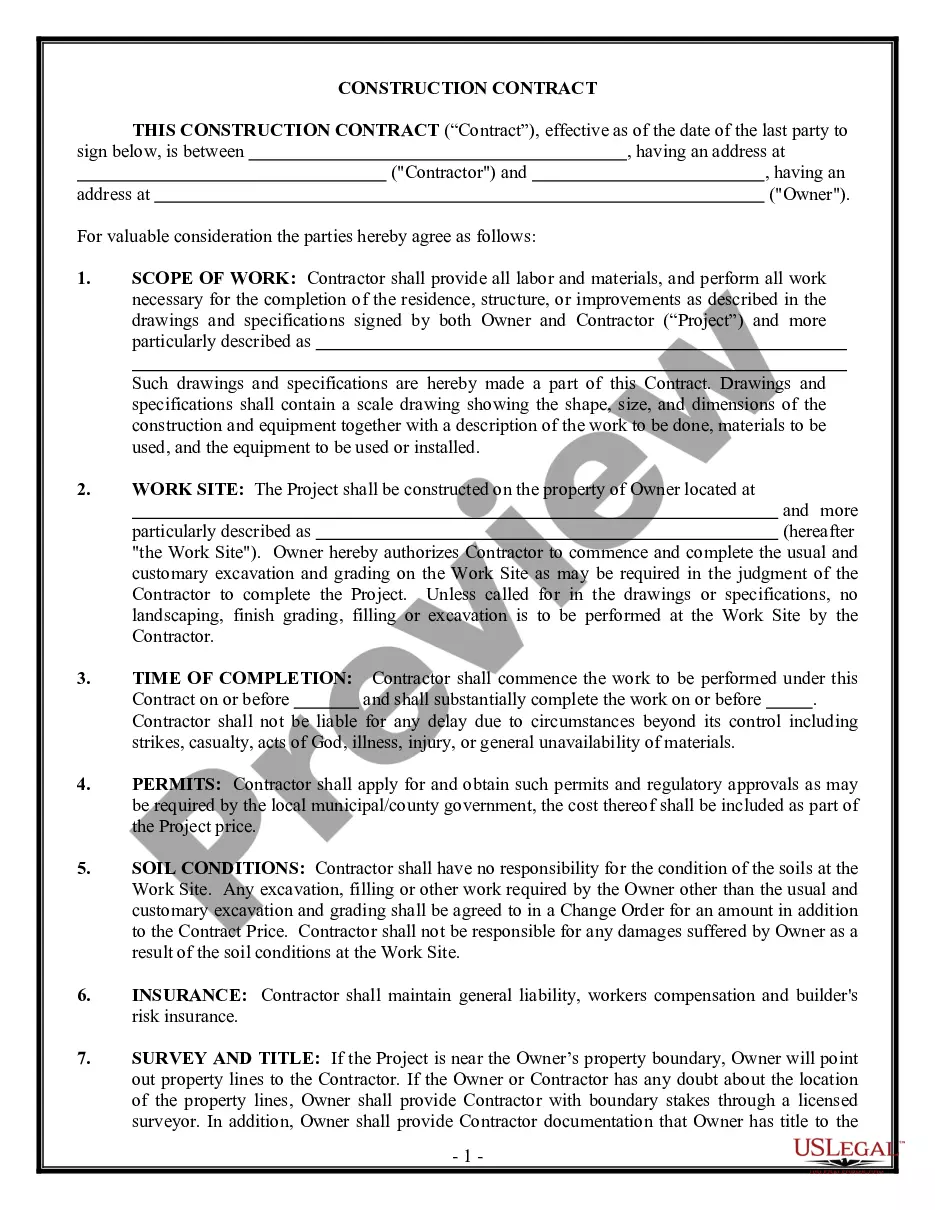
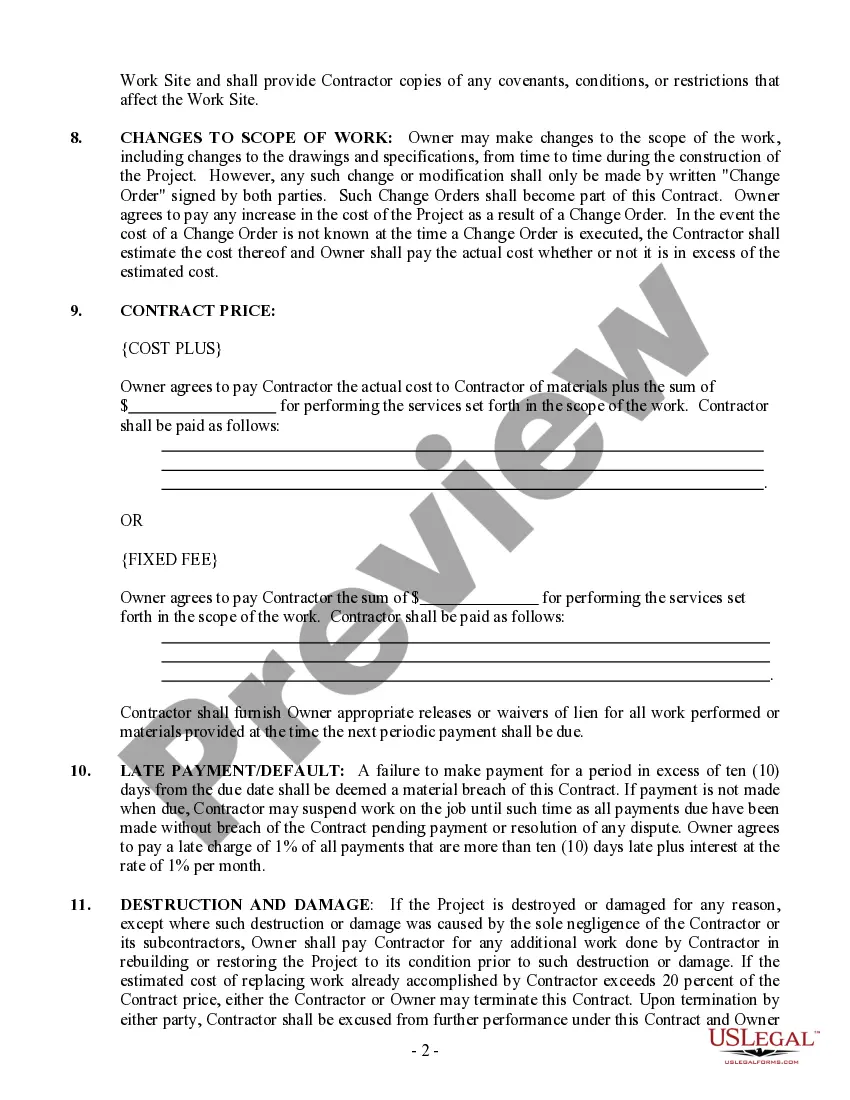
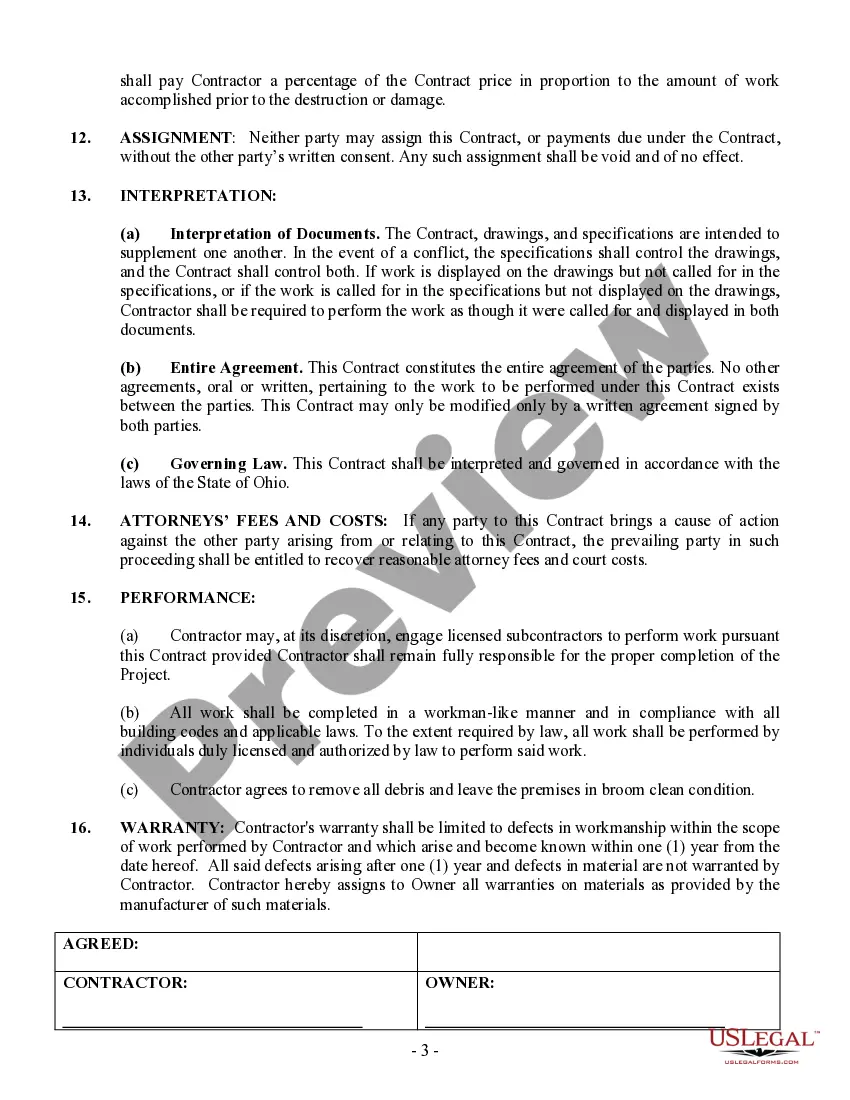
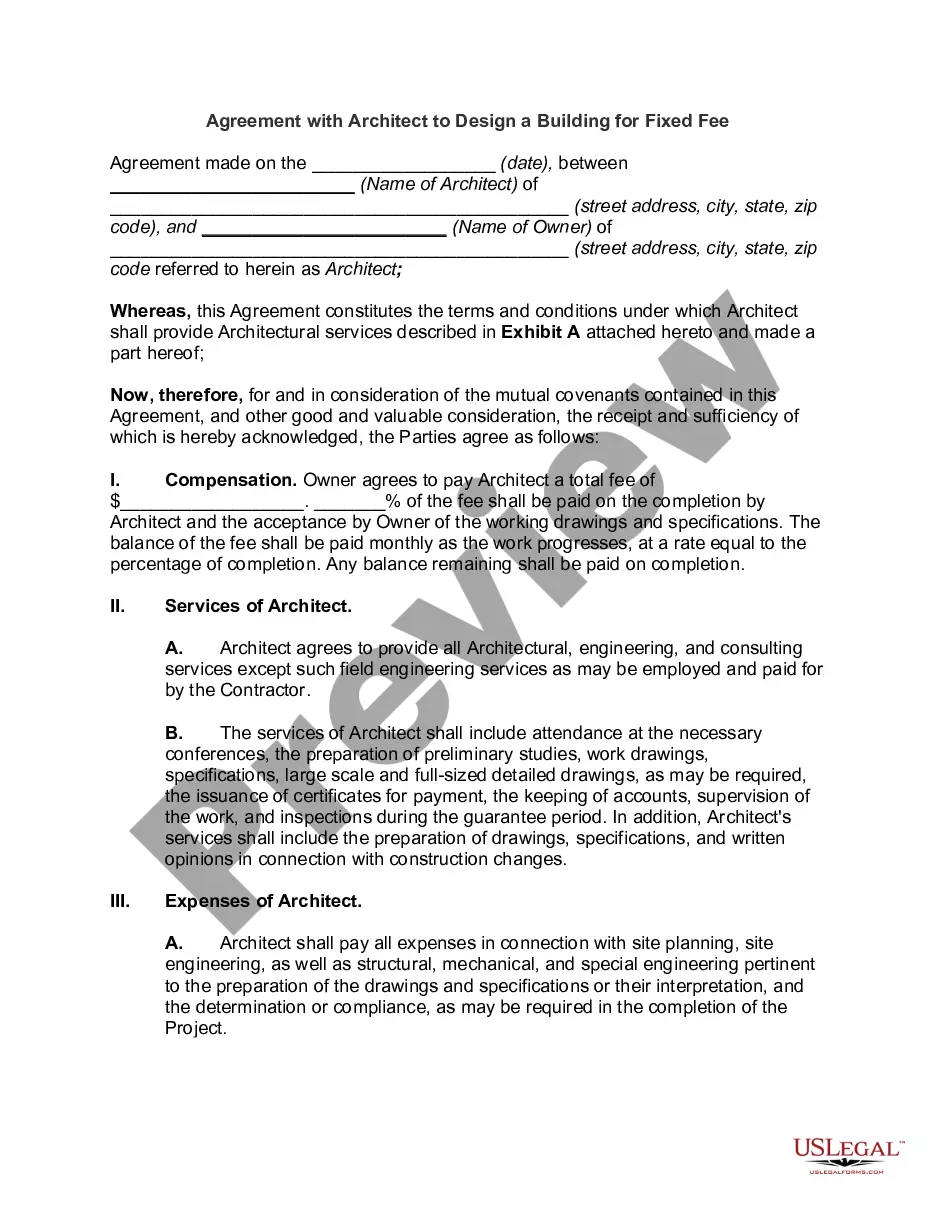
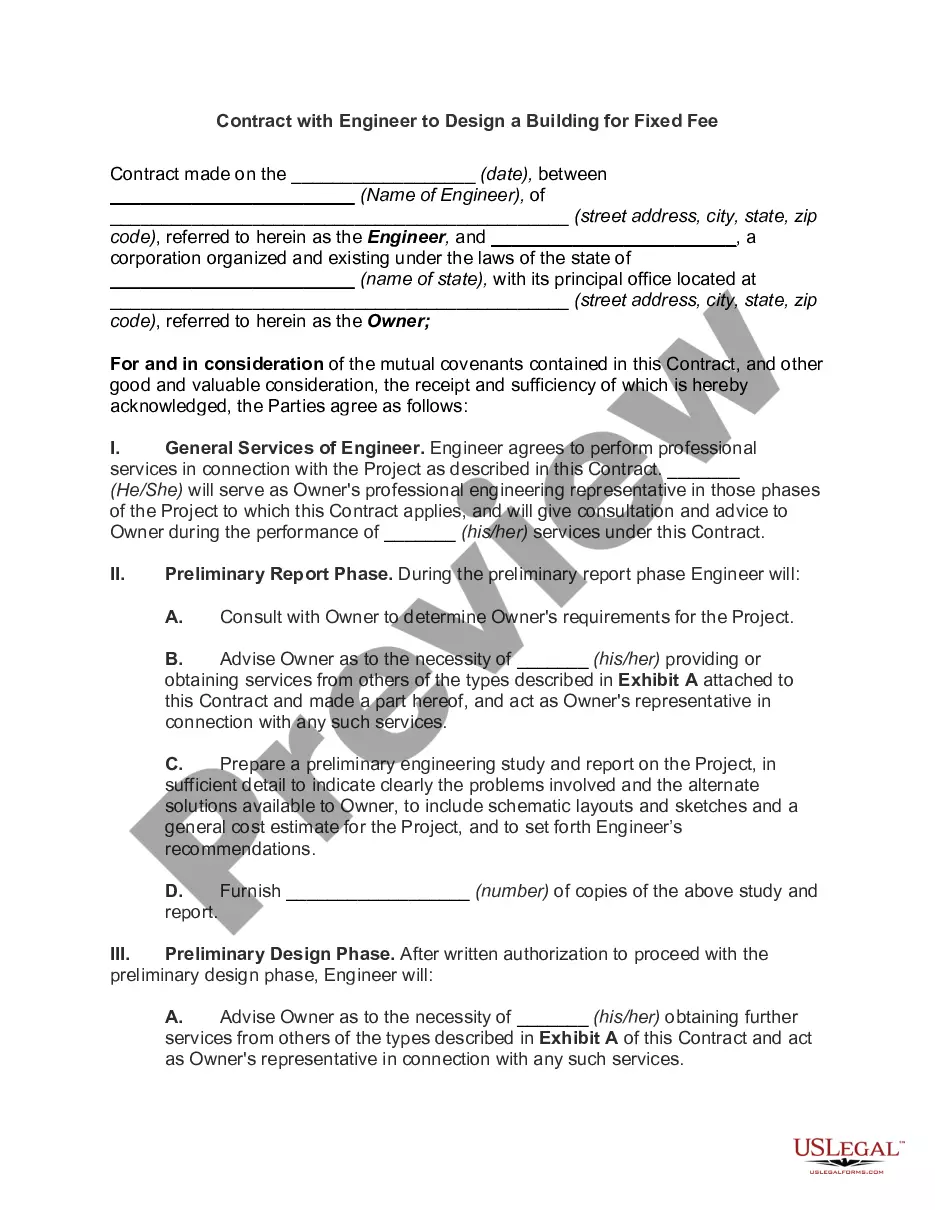
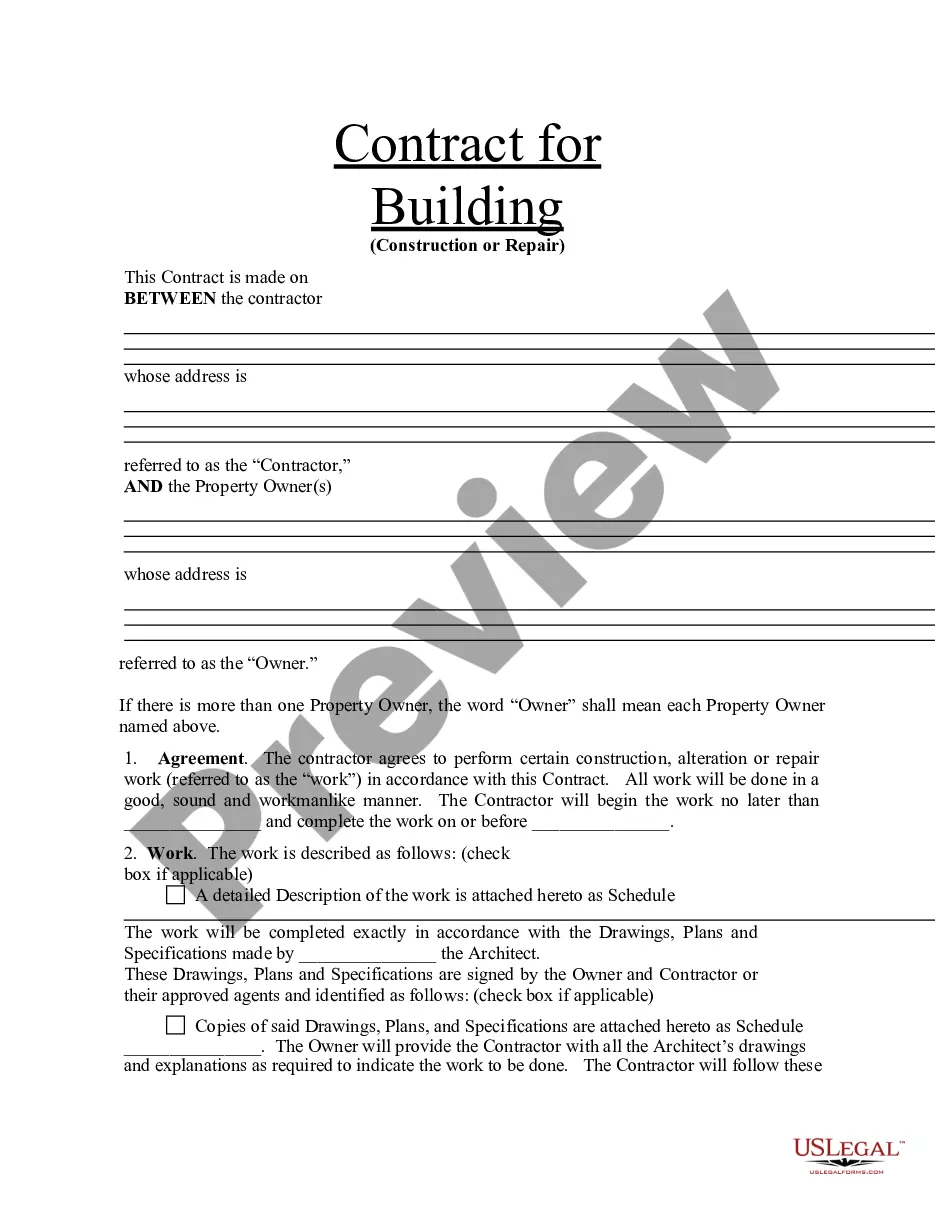
The Construction Contract Cost Plus or Fixed Fee is a legal document that establishes an agreement between a property owner and a contractor regarding a construction project. This form allows for two types of payment arrangements: cost plus, where expenses are reimbursed with an additional fee, and fixed fee, where a set price is determined in advance. It is specifically designed to comply with Ohio laws and includes essential components such as the scope of work, work site details, and insurance requirements.
Form components explained
- Work site description, specifying the location of the construction
- Insurance requirements for contractor coverage, including general liability and workers' compensation
- Soil conditions, clarifying contractor responsibilities
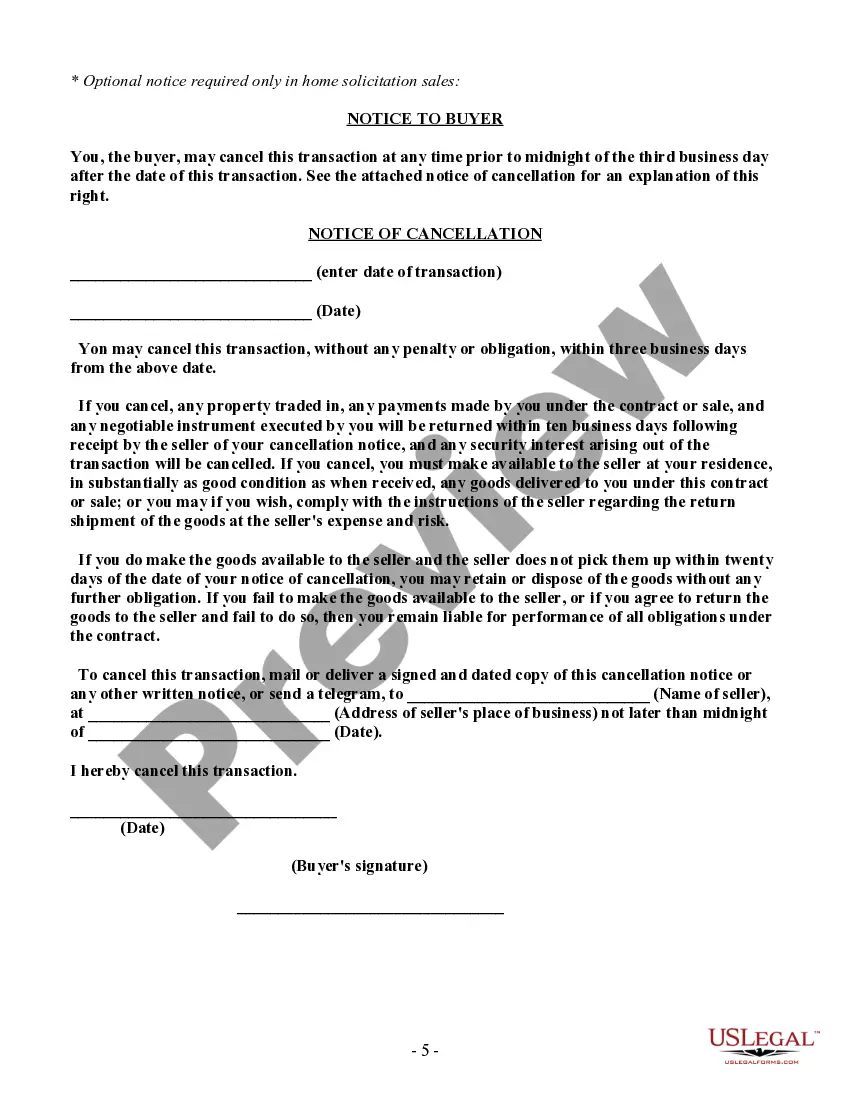
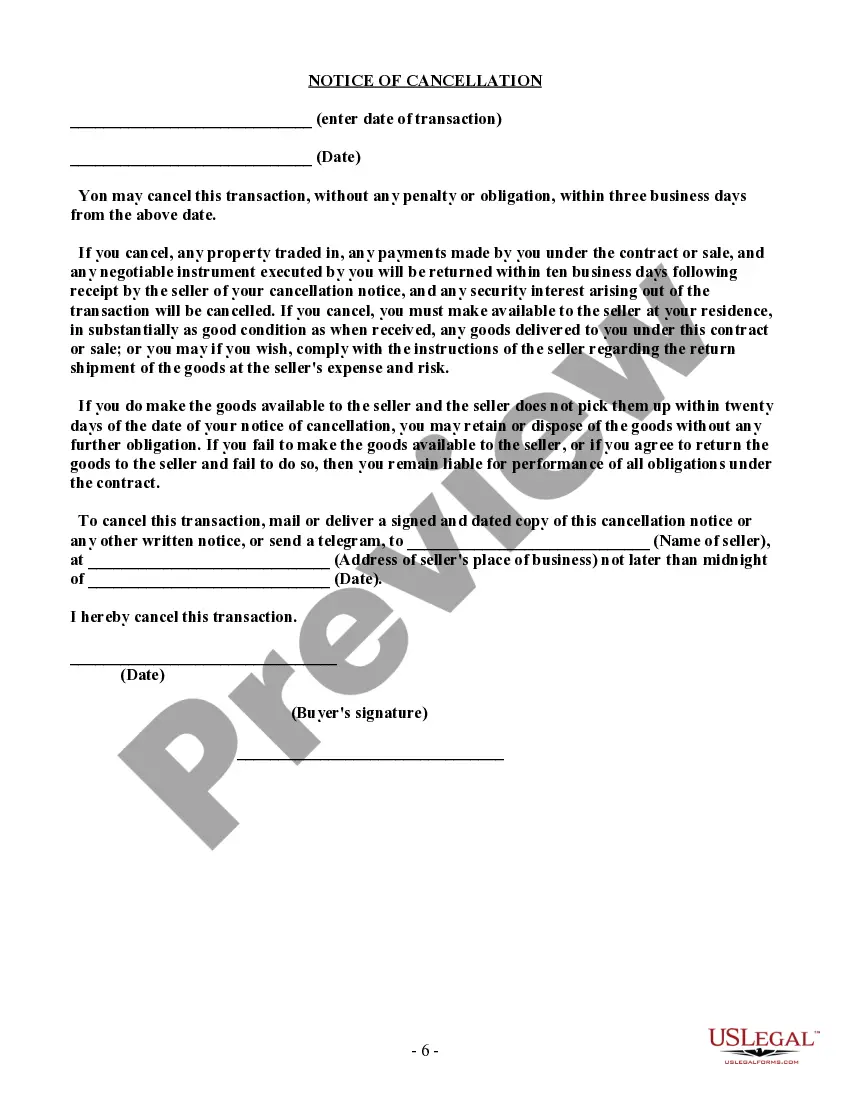
- Change order provisions for modifications to the project scope
- Late payment terms, including applicable fees and penalties
- Warranty coverage details for workmanship
- Governing law under the State of Ohio


When to use this form
This Construction Contract is essential when initiating a construction project where the payment structure is either a fixed fee or a method based on actual costs incurred. It is useful in scenarios such as building new structures, renovating existing properties, or executing major repairs where costs may fluctuate. The form provides detailed legal protection and clarity for both parties involved in the contract.
Who should use this form
- Property owners looking to engage a contractor for construction services
- Contractors who need a clear and legally binding agreement with property owners
- Real estate developers managing multiple construction projects
- Individuals or businesses requiring modifications to project scope
Completing this form step by step
- Identify the parties involved, including the owner and the contractor
- Clearly specify the work site address and project details
- Choose the payment type: cost plus or fixed fee, and determine the contract price
- Review and incorporate any necessary change orders, if applicable
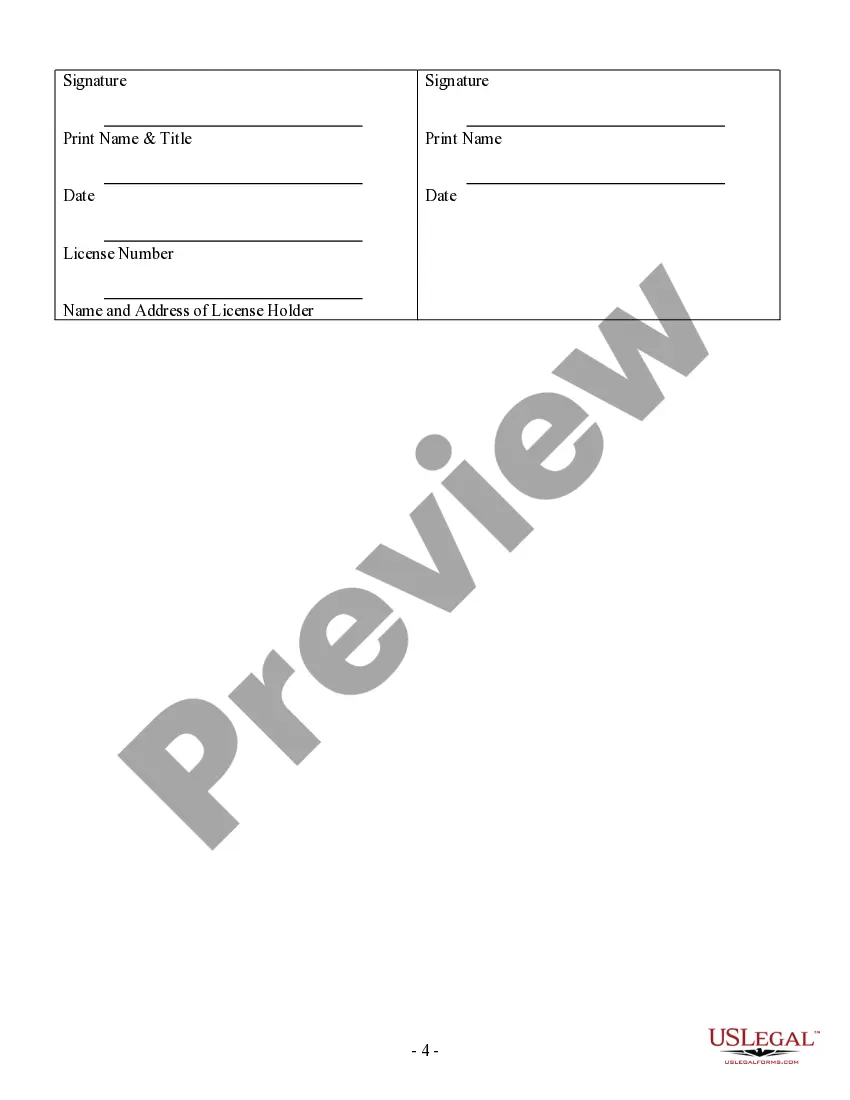
- Ensure signatures from both parties to finalize the agreement
Notarization guidance
This form does not typically require notarization unless specified by local law. Itâs always advisable to check local regulations to ensure compliance with any specific notarization requirements.
Get your form ready online
Our built-in tools help you complete, sign, share, and store your documents in one place.
Make edits, fill in missing information, and update formatting in US Legal Forms—just like you would in MS Word.
Download a copy, print it, send it by email, or mail it via USPS—whatever works best for your next step.
Sign and collect signatures with our SignNow integration. Send to multiple recipients, set reminders, and more. Go Premium to unlock E-Sign.
If this form requires notarization, complete it online through a secure video call—no need to meet a notary in person or wait for an appointment.
We protect your documents and personal data by following strict security and privacy standards.

Make edits, fill in missing information, and update formatting in US Legal Forms—just like you would in MS Word.

Download a copy, print it, send it by email, or mail it via USPS—whatever works best for your next step.

Sign and collect signatures with our SignNow integration. Send to multiple recipients, set reminders, and more. Go Premium to unlock E-Sign.

If this form requires notarization, complete it online through a secure video call—no need to meet a notary in person or wait for an appointment.

We protect your documents and personal data by following strict security and privacy standards.
Avoid these common issues
- Failing to specify the payment arrangement clearly, leading to misunderstandings
- Not detailing the scope of work, which can result in disputes
- Ignoring local permit requirements, potentially causing delays
- Neglecting to have all parties sign the contract, making it unenforceable
Benefits of completing this form online
- Convenient access to the latest legal templates anytime and anywhere
- Editable formats to customize the contract as per specific project needs
- Templates reviewed by licensed attorneys to ensure legal compliance
- Time-saving with immediate downloadable options
Legal use & context
- This contract legally binds both parties and serves as a framework for the construction project.
- It delineates responsibilities and rights, reducing the potential for disputes.
- Changes made should be documented through written Change Orders to ensure enforceability.
What to keep in mind
Key Takeaways:
- Clearly outline payment structures to ensure mutual understanding.
- Document changes in writing to maintain contract integrity.
- Always comply with local laws and regulations to ensure the contractâs enforceability.
Looking for another form?

Form popularity
FAQ
A cost-plus contract is an agreement to reimburse a company for expenses incurred plus a specific amount of profit, usually stated as a percentage of the contract's full price.
A cost plus percentage of cost contract or CPPC is a cost reimbursement contract containing some element that obligates the non-state entity to pay the contractor an amount, undetermined at the time the contract was made and to be incurred in the future, based on a percentage of future costs.
A cost-plus contract, also known as a cost-reimbursement contract, is a form of contract wherein the contractor is paid for all of their construction-related expenses. Plus, the contractor is paid a specific agreed-upon amount for profit.
Determine your COGS (cost of goods sold). For example $40 . Find out your gross profit by subtracting the cost from the revenue. Divide profit by COGS. Express it as a percentage: 0.25 100 = 25% . This is how to find markup... or simply use our markup calculator!
A fixed-price contract is a type of contract where the payment amount does not depend on resources used or time expended. This is opposed to a cost-plus contract, which is intended to cover the costs with additional profit made.
In the cost plus a percentage arrangement, the contractor bills the client for his direct costs for labor, materials, and subs, plus a percentage to cover his overhead and profit. Markups might range anywhere from 10% to 25%.
Firm Fixed Price (FFP) The price will be set on the buyer's request. A FFP should be used for a product or service that is a repeated process. As an example, a car manufacturer would enter into a FFP contract for a standard model car. The manufacturer knows what it takes to complete the car and the associated cost.
A cost-plus fixed fee contract is a specific type of contract wherein the contractor is paid for the normal expenses for a project, plus an additional fixed fee for their services.
A fixed price contract sets a total price for all construction-related activities during a project. Many fixed price contracts include benefits for early termination and penalties for a late termination to give the contractors incentives to ensure the project is completed on time and within scope.