Revocable Living Trust Tax Filing Requirements
Description

Get your form ready online
Our built-in tools help you complete, sign, share, and store your documents in one place.
Make edits, fill in missing information, and update formatting in US Legal Forms—just like you would in MS Word.
Download a copy, print it, send it by email, or mail it via USPS—whatever works best for your next step.
Sign and collect signatures with our SignNow integration. Send to multiple recipients, set reminders, and more. Go Premium to unlock E-Sign.
If this form requires notarization, complete it online through a secure video call—no need to meet a notary in person or wait for an appointment.
We protect your documents and personal data by following strict security and privacy standards.

Make edits, fill in missing information, and update formatting in US Legal Forms—just like you would in MS Word.

Download a copy, print it, send it by email, or mail it via USPS—whatever works best for your next step.

Sign and collect signatures with our SignNow integration. Send to multiple recipients, set reminders, and more. Go Premium to unlock E-Sign.

If this form requires notarization, complete it online through a secure video call—no need to meet a notary in person or wait for an appointment.

We protect your documents and personal data by following strict security and privacy standards.
Looking for another form?







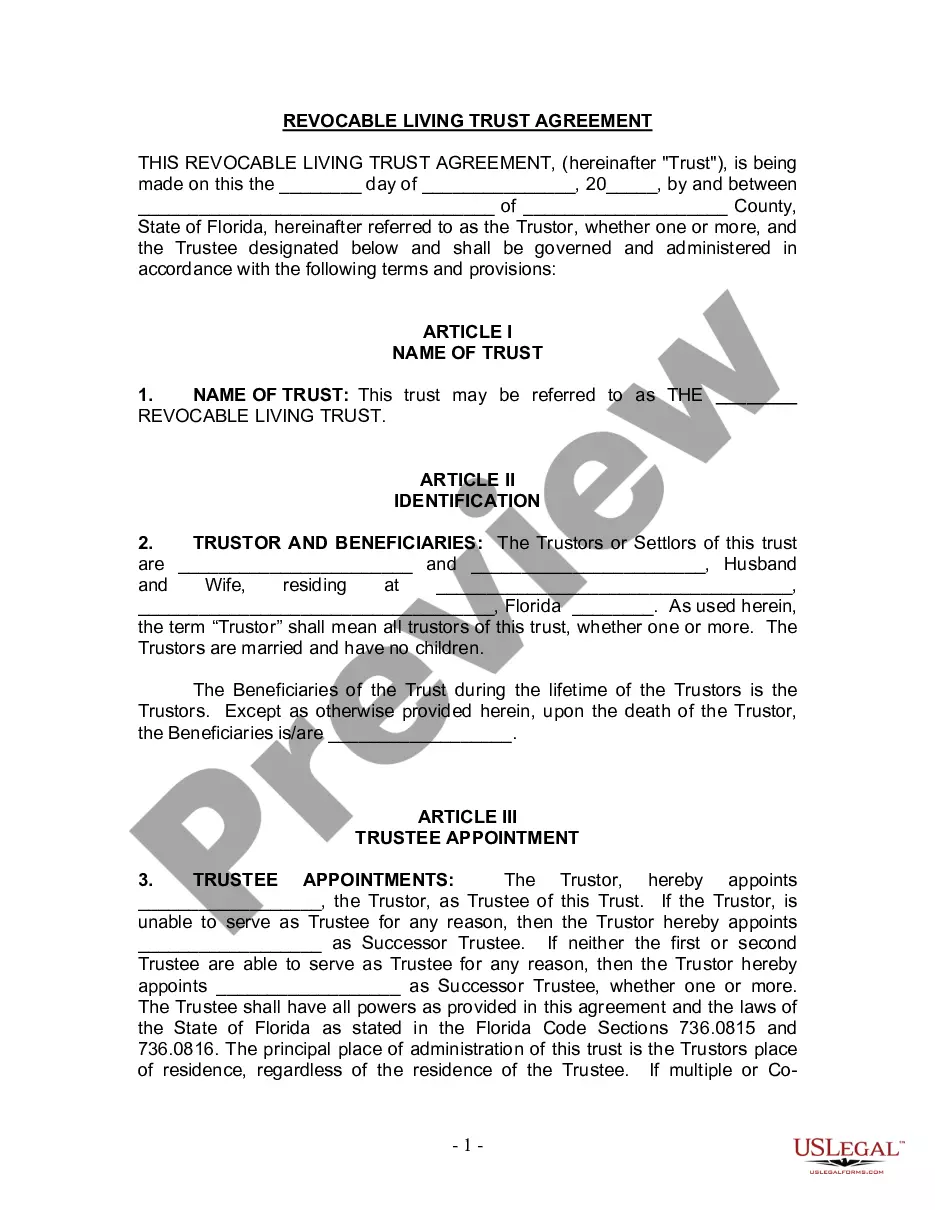

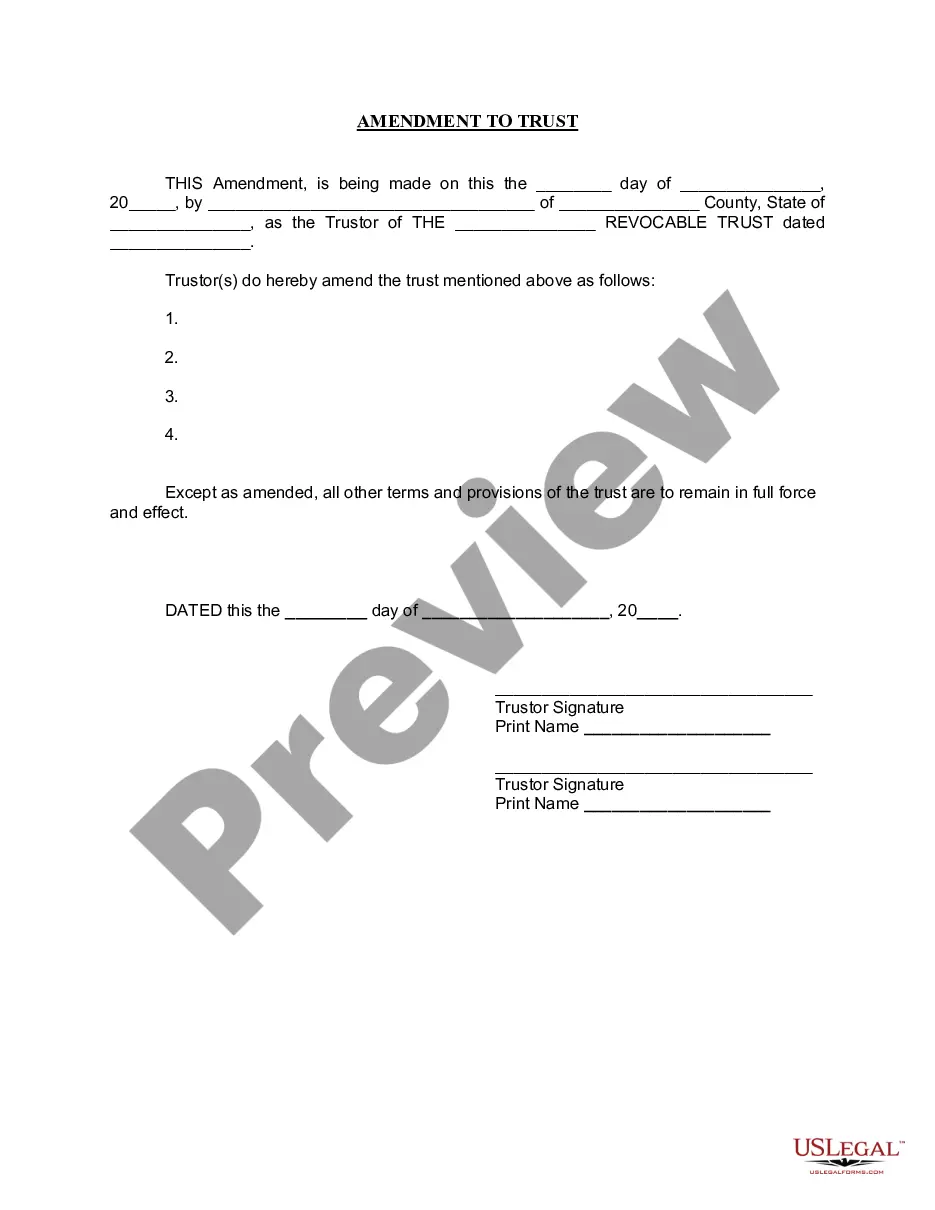
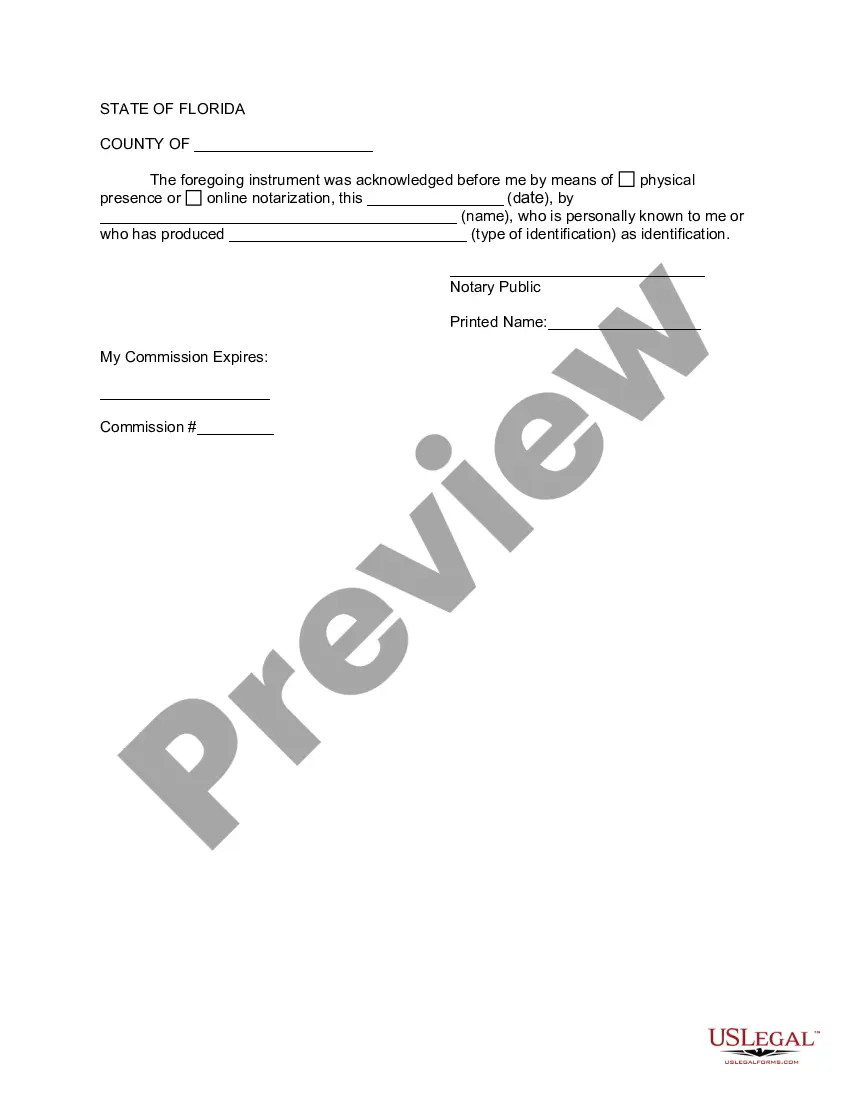
How to fill out Florida Amendment To Living Trust?
Managing legal documents can be exasperating, even for proficient professionals.
When seeking Revocable Living Trust Tax Filing Requirements and unable to invest time finding the correct and current version, the process may become stressful.
US Legal Forms caters to all your needs, from personal to business documents, all in one convenient location.
Leverage innovative tools to complete and oversee your Revocable Living Trust Tax Filing Requirements.
Here are the steps to follow after accessing the desired form: Verify its accuracy by previewing and examining its details. Ensure that the template is validated in your state or county. Select Buy Now when you are prepared. Choose a monthly subscription option. Decide on the format you prefer, and Download, fill out, eSign, print, and submit your document. Make the most of the US Legal Forms online library, which is supported by 25 years of experience and trustworthiness. Transform your everyday document management into a seamless and user-friendly experience today.
- Tap into a collection of articles, guides, and resources pertinent to your circumstances and requirements.
- Save time and effort searching for the forms you need by utilizing US Legal Forms’ advanced search and Review tool to locate and obtain Revocable Living Trust Tax Filing Requirements.
- If you hold a subscription, Log In to your US Legal Forms account, look for the form, and obtain it.
- Check your My documents tab to see the documents you have previously downloaded and organize your folders as desired.
- If it's your first experience with US Legal Forms, create a free account to gain unlimited access to all platform benefits.
- A robust online form library can significantly enhance efficiency for anyone handling these matters.
- US Legal Forms stands out as a leader in the online legal forms industry, offering over 85,000 state-specific legal forms accessible at any time.
- With US Legal Forms, you can access legal and business forms tailored to your state or county.
Form popularity
FAQ
You must file Form 1041 for a domestic trust that has: Any taxable income for the tax year. Gross income of $600 or more (regardless of taxable income) A beneficiary who is a non-resident alien.
Beneficiaries of a trust typically pay taxes on the distributions they receive from a trust's income rather than the trust paying the tax. However, beneficiaries aren't subject to taxes on distributions from the trust's principal, the original sum of money put into the trust.
Revocable Trusts Typically during the creator's lifetime, the taxpayer identification number of the trust will be the creator's Social Security number. All items of income, deduction and credit will be reported on the creator's personal income tax return, and no return will be filed for the trust itself.
When trust beneficiaries receive distributions from the trust's principal balance, they don't have to pay taxes on this disbursement. The Internal Revenue Service (IRS) assumes this money was taxed before being placed into the trust. Gains on the trust are taxable as income to the beneficiary or the trust.
Q: Do trusts have a requirement to file federal income tax returns? A: Trusts must file a Form 1041, U.S. Income Tax Return for Estates and Trusts, for each taxable year where the trust has $600 in income or the trust has a non-resident alien as a beneficiary.